

Quick answer
Is ChatGPT safe for kids? It was built for teens and adults, not young children, and its terms have long set a minimum age of 13 with parental permission for younger users, so it is not a good fit for most kids under that age. Used alone, it can give wrong answers, drift into mature topics, and invite long open-ended chats. If your child is curious about AI, a short, shared session with you beside them is far safer than solo use, and a tool made for kids is better still. Sleepytale is one option, with Cleo the Cloud as a safe AI friend built for children ages 2 to 10.
Your kid saw an older cousin ask a chatbot to write a poem, or a classmate used one for a report, and now the question lands on your kitchen table: can I try it? It is a fair thing to ask, and a hard one to answer quickly, because the internet gives you everything from alarm to shrugging. This guide takes a calm middle path. We cover what ChatGPT was built for, where the real risks sit, how age changes the answer from 9 to 12 and into the teen years, what to do if your child already uses it, and a simple checklist for judging any AI your child might talk to.
Is ChatGPT Safe for Kids? The Short Version
ChatGPT is a general purpose chatbot. It was designed for people who can judge an answer, spot a mistake, and walk away from a conversation. Its terms have long set 13 as the minimum age, with a parent or guardian involved for those under 18. Those terms and settings change, so check the current version before you decide.
That does not make it a dangerous app that will hurt your child the moment they open it. It makes it a tool built for someone else. The question for a parent is not whether the tool is good or bad, but whether it matches the child using it.
For most kids under 13, the honest answer is not yet, or not alone. For kids 13 and up, it can be useful with some ground rules and a lot of conversation.
Can Kids Use ChatGPT at All?
Can kids use ChatGPT? Technically, children can and do find ways onto general chatbots, through a parent's account, a school device, or a friend's phone. That is different from the product being made for them.
The more useful framing is who is in the room. A parent and child looking up how volcanoes work together is a very different experience from a ten year old chatting alone at night. Pediatric groups have generally advised that younger children use any AI alongside an adult, and that chatbots are not a substitute for human relationships.
If you do allow a shared session, treat it like using a search engine together. You sit beside them, you read the answers aloud, and you talk about whether they sound right.
What Are the Real Risks for Children?
Parents raise the same handful of concerns again and again, and they are worth taking seriously without panic.
Confident wrong answers. A chatbot can state something false in a calm, certain voice. Young children tend to believe whatever sounds sure of itself.
Content that is too mature. A general chatbot has safeguards, but it was not designed around a seven year old's questions. A curious kid can wander into topics you would never choose for them.
Endless conversation. There is no natural ending. A chat can run as long as a child keeps typing, which makes bedtime and screen limits harder.
Oversharing. Children do not always understand that what they type may be stored. Names, schools, photos, and family details are easy to give away.
Emotional reliance. A responsive, always available voice can feel like a friend. For a young child, that feeling can get ahead of their ability to understand what it is.
None of these are unique to one product. They are the questions to ask of any AI your child touches.
Is ChatGPT Safe for 9, 10, 11, and 12 Year Olds?
Parents often ask about specific ages, so here is a practical way to think about each one.
Nine and ten. This is the age to keep things shared. A 9 or 10 year old is still learning to tell a reliable source from a persuasive one. If they use a general chatbot at all, do it together, on a shared device, for a specific question.
Eleven and twelve. Kids this age are more independent and more curious, and many will meet AI at school or through friends. They are still below the usual minimum age in the terms, so the cleanest path is a parent led session, a clear purpose like explaining a math idea, and a talk about checking answers elsewhere.
Thirteen and up. Teens meet the stated minimum and can use it more on their own. Open conversation works better than a ban. Ask what they use it for, try it yourself, and talk about privacy and about not treating it as a confidant for serious problems.
Across every age, the same habit helps: ask your child to tell you one thing the AI said that they want to double check.
What About Pictures, Play, and Privacy?
Parents also search whether ChatGPT is safe for pictures, for play, and in general. A few plain principles cover most of it.
Pictures. Be cautious about uploading photos of your child, other children, or your home to any general AI tool. Check the product's current privacy settings and terms, since they change, and when in doubt, leave the photo out.
Play. Kids sometimes use chatbots for games, riddles, or role play. That can be harmless fun with you nearby. Role play that runs open ended, especially with a character that acts like a friend, is the part to watch.
Privacy. In the United States, apps aimed at children under 13 generally need verifiable parental consent to collect personal information under COPPA. A general chatbot is not designed as a children's app, which is another reason to treat it as an adult tool.
A simple family rule covers a lot: never type full names, addresses, school names, or passwords into a chatbot.
A Checklist for Any AI Your Child Might Use
Whether it is ChatGPT, a toy that talks, or a new app, run it through these questions. Is ChatGPT safe to use for your family is really a question about fit, and this checklist helps you answer it for any product.
Who was it built for? Look for a product designed for children, not an adult tool with a filter added later.
What is the minimum age? Read the terms. If your child is under it, that is your answer for solo use.
How is content handled? A kid-built tool should screen its responses for age appropriate content.
What happens to data? Look for a clear privacy policy, no ads, and no unnecessary personal data collection.
Is it honest about being a computer? A good AI says so when asked and does not pretend to have human feelings.
Does a session end? Tools built around an activity, like a story or a song, have a natural stopping point. Open chat does not.
Can you stay involved? You should be able to listen in, set limits, and turn it off without a fight.
Is There a Kid Version of ChatGPT?
Parents ask this a lot, and the honest answer is that products and features change often, so check the current settings and terms of any tool directly. Some general chatbots offer parental controls or teen oriented options, and those are worth reading about if your child is a teenager.
For younger kids, the better question is whether you want a general chatbot with guardrails or something built for children from the start. A tool made for kids is designed around how a five or eight year old talks, what they should hear, and when a session should end. That is a different starting point than an adult product adjusted to be safer.
If you want a side by side view of kid-focused options, this comparison of AI friends for kids walks through what to look at.
Talking With Your Child About AI
The best safety feature is a child who understands what they are talking to. You do not need a technical lecture. A few sentences go a long way.
Explain what it is. Tell them it is a computer program that is very good at guessing which words come next. It is not a person, and it is not alive.
Say it can be wrong. Make checking a habit. Ask, how could we find out if that is true?
Set the privacy rule. We do not tell it our full names, where we live, or secrets.
Keep the door open. Let them know they can show you anything strange or upsetting, and that they will not be in trouble.
Meet Cleo, a Kid-Built Option for Bedtime
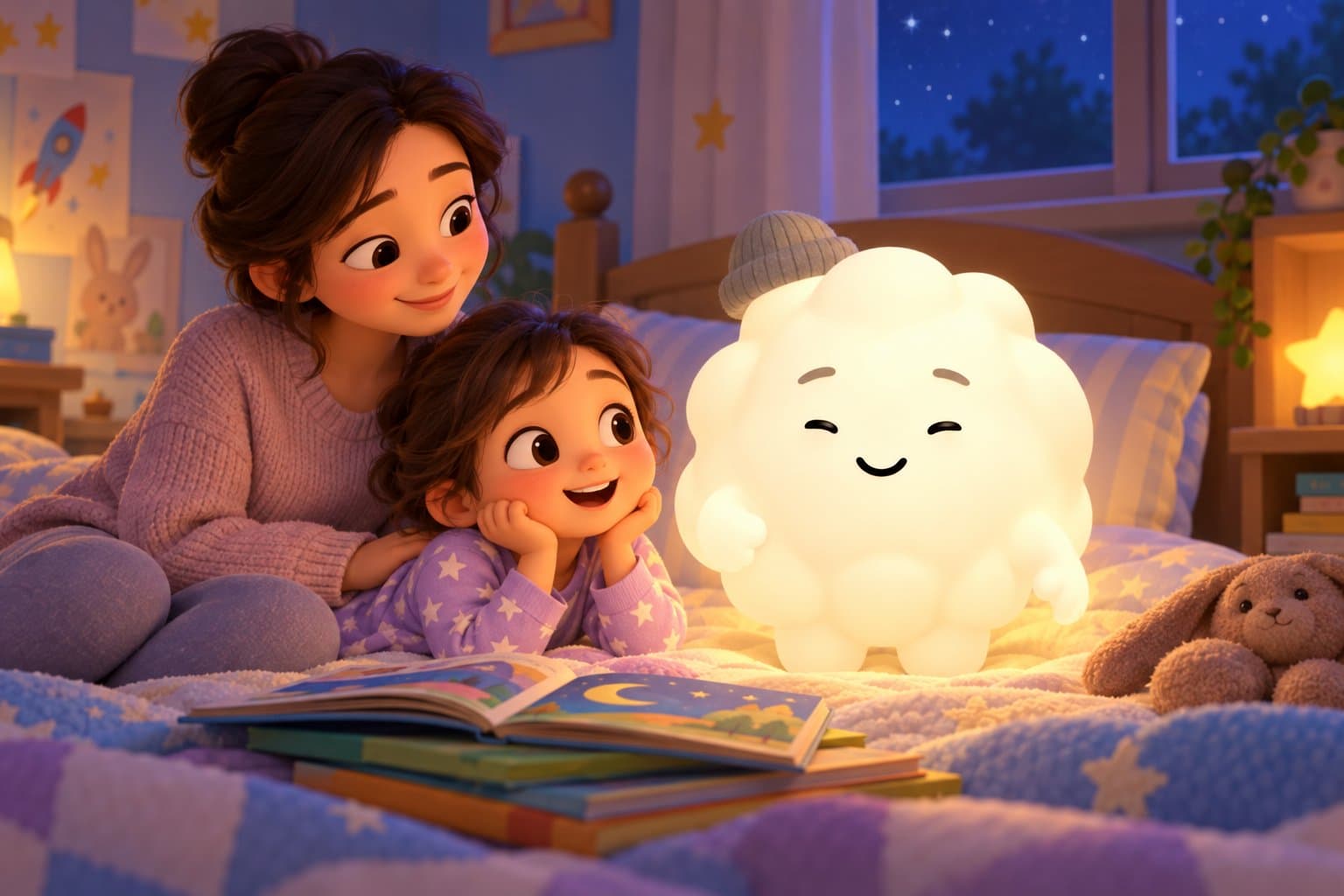
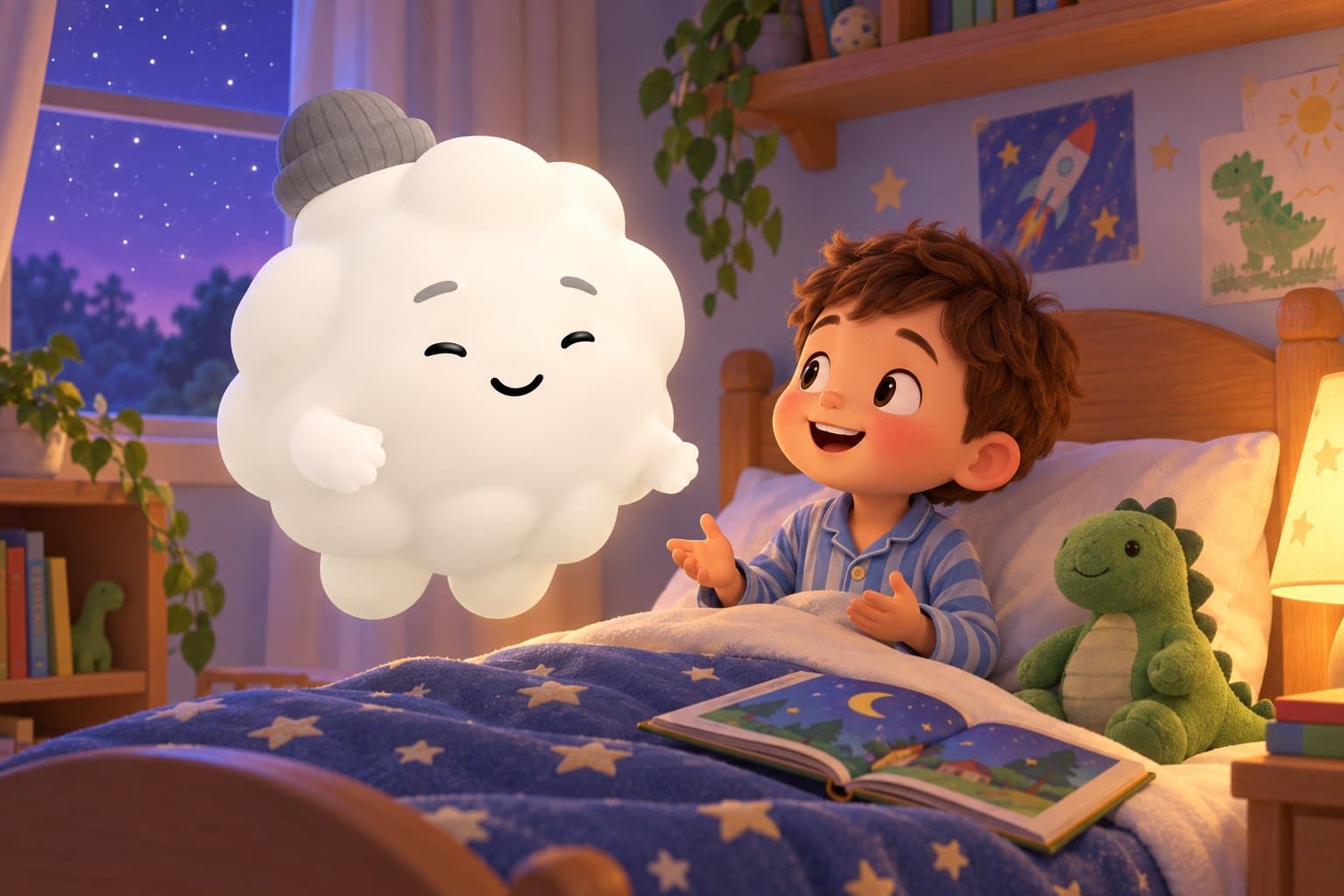
If you decide a general chatbot is not right for your young child, there are tools made for them. Cleo the Cloud is a safe AI friend for kids in the Sleepytale app, made for children ages 2 to 10. Your child talks with Cleo, and together they make personalized bedtime stories, lullabies, lessons, and rhymes built around what they love.
Cleo is voice first, so the screen can stay off at lights out. Every response is filtered for age appropriate content, and there are no ads and no unnecessary personal data collection. Sleepytale was founded by a registered nurse and is designed to help kids wind down, not stay up longer.
Cleo is a storyteller made of code, not a stand in for real friends, and she works best as the last calm step in a bedtime routine rather than an all day companion. It is one option among several, and the checklist above works for judging it too.
Frequently Asked Questions
Is ChatGPT safe for kids?
It was built for teens and adults, and its terms have long set a minimum age of 13, so it is not designed for young children. Risks parents raise include wrong answers, mature content, endless chats, and oversharing. For younger kids, shared use or a tool made for children is the safer choice.
Can kids use ChatGPT?
Children can reach it through a parent's account or a shared device, but that is different from it being made for them. If your child is under the age in the terms, keep use short, shared, and focused on one question. Always check the product's current settings and terms.
Is ChatGPT safe for 10 year olds?
A 10 year old is still learning to judge whether an answer is trustworthy, and is below the usual minimum age. If they use it at all, sit beside them, read answers together, and double check anything important. A kid-built AI is a better fit for solo use.
Is ChatGPT safe for teens?
Teens meet the stated minimum age and can use it more independently, but they still benefit from ground rules. Talk about privacy, checking facts, and not treating a chatbot as a stand in for friends, family, or professionals when something serious comes up.
Is there a ChatGPT version for kids?
Features and parental controls on general chatbots change often, so check the current options directly. For young children, many parents prefer a tool built for kids from the start, with filtered content, no ads, and minimal data collection.
What should my child never tell a chatbot?
Full names, home addresses, school names, passwords, phone numbers, and private family details. Photos are worth leaving out as well. A simple family rule is that we do not share anything with a chatbot that we would not tell a stranger.
Should I let my kid use ChatGPT?
For kids under 13, most parents are better served by waiting or using it together for a specific purpose. For teens, allow it with clear ground rules and open conversation. In every case, pick the tool that fits your child's age, and stay involved.
A Gentler Way to Meet AI Together
Sleepytale gives your child a safe AI friend with a bedtime job: Cleo the Cloud listens to what they love and turns it into a personalized story or lullaby, with the screen off. Calm, kid-built, and easy to check against your own list. Try it free tonight.
Looking for more parenting guides?
Is Character AI Safe for Kids? A Parent Guide
Is Character AI safe for kids? A plain-spoken guide to the risks parents raise, what to check, and what a safe AI companion for children looks like. Sleepytale.
Can AI Be a Friend to Your Child
Can AI be a friend to your child? A calm parent's guide to what AI companions are, the real risks, healthy limits, and how Sleepytale fits in.
Benefits of AI for Kids
Explore the real benefits of AI for kids, from learning support to creativity, plus the limits that matter. A calm parent guide from Sleepytale.
AI Imaginary Friends for Kids
Is an AI imaginary friend healthy for your child? Sleepytale explains why kids bond with AI, the real risks, the right age, and how to set limits that keep real friends first.
Free Stories to Read to Baby in Womb
Looking for free stories to read to your baby in the womb? Sleepytale shares three gentle read-aloud tales, plus when babies start hearing and easy reading tips.
Characteristics of Fairy Tales
What makes a story a fairy tale? Sleepytale breaks down the characteristics of fairy tales, the classic elements, and clear examples from the tales kids know.