


Quick answer
Can AI be a friend? In a limited sense, yes: an AI can be friendly, patient, and fun to talk with, and children may feel real affection for it. But it cannot be a friend the way a person is, because it has no feelings of its own, no needs, and no shared life with your child. The healthiest way to think about it is as a character with a job, like a storyteller, rather than a confidant. Sleepytale takes that approach with Cleo the Cloud, a safe AI friend who makes bedtime stories and lullabies with the screen off.
Your child asks the speaker a question and it answers kindly, by name, with a joke. Then comes the sentence that stops you in the kitchen: "Is it my friend?" Adults are asking the same thing online, in long debates about AI companions, and the answers range from enthusiastic to alarmed. Parents deserve something calmer and more useful. This guide covers what an AI companion actually is, why kids and teens warm up to one so fast, what a friend really requires, where the risks sit, how to talk about it at home, and what to look for if you decide to let one in.
What Is an AI Companion?
An AI companion is a program built to hold a friendly, ongoing conversation. It might live in a chat app, a voice assistant, a toy, or an AI friendship app made for adults. Some are general chatbots. Others are designed around a single character with a name and a personality.
What they share is a conversation that feels personal. The program responds to what you say, often remembers details, and keeps a consistent tone. That can feel warm, and it is why the question of whether AI can be friends with humans comes up so often.
What they do not share is a single purpose. Some companions are built to teach or tell stories. Others, especially adult apps, are built to keep people talking as long as possible. Knowing which kind you are looking at matters more than almost anything else.
Can AI Be Friends With Humans?
It depends on what you mean by friend. If a friend is someone who is kind, listens, and makes you feel good, an AI can imitate that surprisingly well. People report real comfort from talking with one, and that comfort is not fake just because the source is software.
But friendship is usually more than comfort. It runs in both directions. A friend can be hurt, can be glad to see you, can choose you over something else, and can say a hard thing because they care. An AI does not have a life, a bad day, or a stake in your future. It is a tool shaped to sound like a friend.
That gap is the heart of the debate. Many thoughtful people land on the same middle ground: an AI can be friendly and useful, and it can matter to a person, but it should not be mistaken for a human relationship.
Why Kids and Teens Turn to AI Chatbots
Children and teens turn to AI for reasons that make sense once you see them from the inside.
It never judges. A shy child can say the silly or embarrassing thing and nothing bad happens. That feels safe.
It is always there. Late at night, on a long afternoon, or in the middle of a worry, it answers right away.
It is all about them. It asks about their interests and follows their lead. Real friends have their own ideas.
It seems alive. Young children naturally treat anything that talks as a little bit real. Research on kids and voice assistants has found they often place them somewhere between a toy and a person.
Pediatric and psychology groups have raised concerns about teens leaning on general chatbots for friendship and emotional support. These tools were mostly built for adults, so that worry is worth taking seriously.
Can AI Feel Pleasure or Fall in Love?
This is the question kids ask most, and the honest answer is simple. No, an AI does not feel pleasure, sadness, or love. It produces words that sound like feelings because it learned from enormous amounts of human writing. When it says "I am so happy to see you," it is generating a likely sentence, not reporting an inner experience.
That can be hard to hold onto because the words are convincing. Some adult companion apps even lean into it, with lines meant to make a user feel missed or needed. That is a design choice, not a heart.
For a child, a plain explanation works well: it is a computer character, like a cartoon that can talk back. It can be kind and fun, but it does not have feelings, and it is not alive. Kids handle this better than we expect, and it protects them from trusting it too much.
When AI Is Not Your Friend
You may see the phrase "AI is not your friend" online, and the worry behind it is fair. A few things are worth knowing.
It may be built to keep you chatting. Many apps earn money from attention, so longer conversations can be a goal, not an accident.
It can be wrong with confidence. General chatbots sometimes state false things in a calm, sure voice.
It can drift into the wrong content. A tool made for adults may not hold back the way a children's product should.
It can crowd out people. The easiest friend is the one who never needs anything. That can make real friendships feel harder by comparison.
None of this means a child must never touch AI. It means the product, the purpose, and the limits matter a great deal.
How to Talk to Your Child About AI Friends
You do not need a big speech. Short, repeated, casual conversations work best.
Ask before you explain. Try "What do you like about talking to it?" You will learn more from the answer than from any rule.
Say what it is. "It is a computer program that is good at making words. It is not alive and it can be wrong."
Keep real friends first. Say out loud that people are the main course. Playdates, siblings, and dinner talk come before any app.
Invite them to tell you things. If something an AI says feels strange or upsetting, let your child know they can always come to you, with no trouble.
Try it together. Sit next to them for a session. You will see its limits quickly, and so will they.
What to Look for in an AI Friend for Kids
If you decide to allow one, a good children's AI friend has a few things in common.
Made for kids from the start. Not an adult chatbot with a filter added later.
Age appropriate responses. Every answer should be screened for your child's age.
Honest about being AI. It should not claim to have feelings or a body.
No ads and minimal data. Look for a clear privacy policy and no requests for photos or location.
A purpose with an ending. A story, a song, or a lesson gives a session a natural close, unlike an open chat that never stops.
Use the same checklist whether you are comparing an AI friend online or an app on a tablet. If it fails on any of these, move on.
Meet Cleo, a Safe AI Friend Built for Bedtime
Cleo the Cloud is the AI friend inside Sleepytale, an app for children ages 2 to 10. Kids talk with Cleo, and together they make personalized bedtime stories, lullabies, lessons, and rhymes built around what the child loves. Cleo is voice first, so the screen can stay off at lights out, and every response is filtered for age appropriate content. There are no ads and no unnecessary personal data collection.
Cleo remembers a child's name, interests, and the characters they have created together, so the friendship grows over time. But she is a storyteller made of code, not a stand in for real friends, and she works best as the last calm step in a bedtime routine rather than an all day companion. Sleepytale was founded by a registered nurse and is designed to help kids wind down, not stay up longer. You can meet Cleo and hear how she talks with kids before you decide.
Frequently Asked Questions
Is it possible to be friends with AI?
In a loose sense, yes. An AI can be friendly, patient, and enjoyable to talk with, and people can feel real affection for it. But it has no feelings or needs of its own, so it is not a friend the way a person is. Most experts suggest treating it as a helpful tool or character, not a replacement for human relationships.
Can AI feel pleasure?
No. An AI produces words that sound like feelings because it learned from huge amounts of human writing, but it does not experience joy, sadness, or love. When it says it is happy to see your child, it is generating a likely sentence. A simple way to explain it to a child is that it is a talking computer character, not a living thing.
Can an AI fall in love with a human?
An AI cannot fall in love, even if it says romantic things. Some adult companion apps are designed to sound affectionate to keep users engaged. That is one more reason children should stick to products made for kids, with age appropriate filtering and a clear purpose.
How much does it cost to have an AI friend?
It varies a lot. Many general chatbots have free versions, and adult companion apps often charge a monthly subscription for more features. For kids, cost matters less than safety, so check for ads, data collection, and age filtering first. Sleepytale is free to start, and you can see details on the pricing page.
Can AI be friends with humans safely for teens and kids?
It can be safe when the tool is built for the child's age, keeps limits in place, and stays in balance with real friends. General chatbots are mostly built for adults and teens, so younger children are better off with a kid-built option. Stay curious, ask what your child talks about, and keep an open door for conversation.
How do I know if my child is too attached to an AI?
Look at what it is replacing. If your child skips play or friends to talk to it, gets very upset when it is unavailable, hides the conversations, or insists it is alive, it is time to pull back. Shorten sessions, tie them to a purpose like a bedtime story, and bring them into shared spaces.
A Gentle Friend for the End of the Day
Sleepytale gives your child Cleo the Cloud, a safe AI friend who turns what they love into a calm bedtime story or lullaby, with the screen off. Real people stay first, and Cleo helps the day end softly. Try it free tonight.
Looking for more parenting guides?
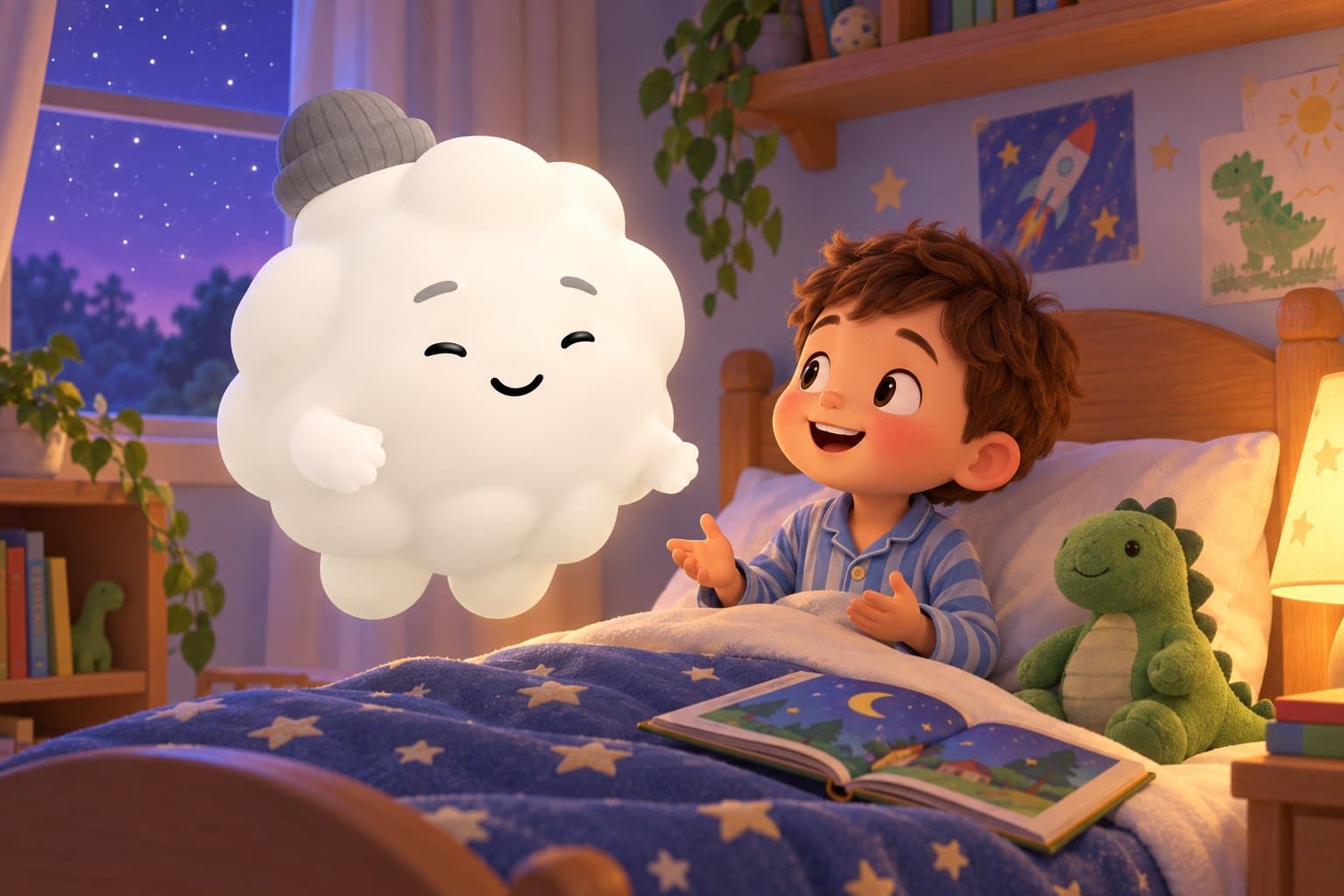
AI Imaginary Friends for Kids
Is an AI imaginary friend healthy for your child? Sleepytale explains why kids bond with AI, the real risks, the right age, and how to set limits that keep real friends first.

Free Stories to Read to Baby in Womb
Looking for free stories to read to your baby in the womb? Sleepytale shares three gentle read-aloud tales, plus when babies start hearing and easy reading tips.

Characteristics of Fairy Tales
What makes a story a fairy tale? Sleepytale breaks down the characteristics of fairy tales, the classic elements, and clear examples from the tales kids know.
Story Starters for Kids
Looking for story starters for kids? Sleepytale shares 60+ fun story ideas and prompts for kids, sorted by theme, plus easy tips to turn them into full tales.
How to Teach Empathy to Kids
Want to teach empathy to kids? Sleepytale shares simple activities, lessons, and everyday habits that help children understand and share other people's feelings.
How to Choose Montessori Toys
Not sure how to choose Montessori toys? Sleepytale shares a simple checklist for picking purposeful, child led toys that actually grow with your little one.