
Perseus And Medusa Bedtime Story
By

Dennis Wang, Bedtime Story Expert
6 min 2 sec
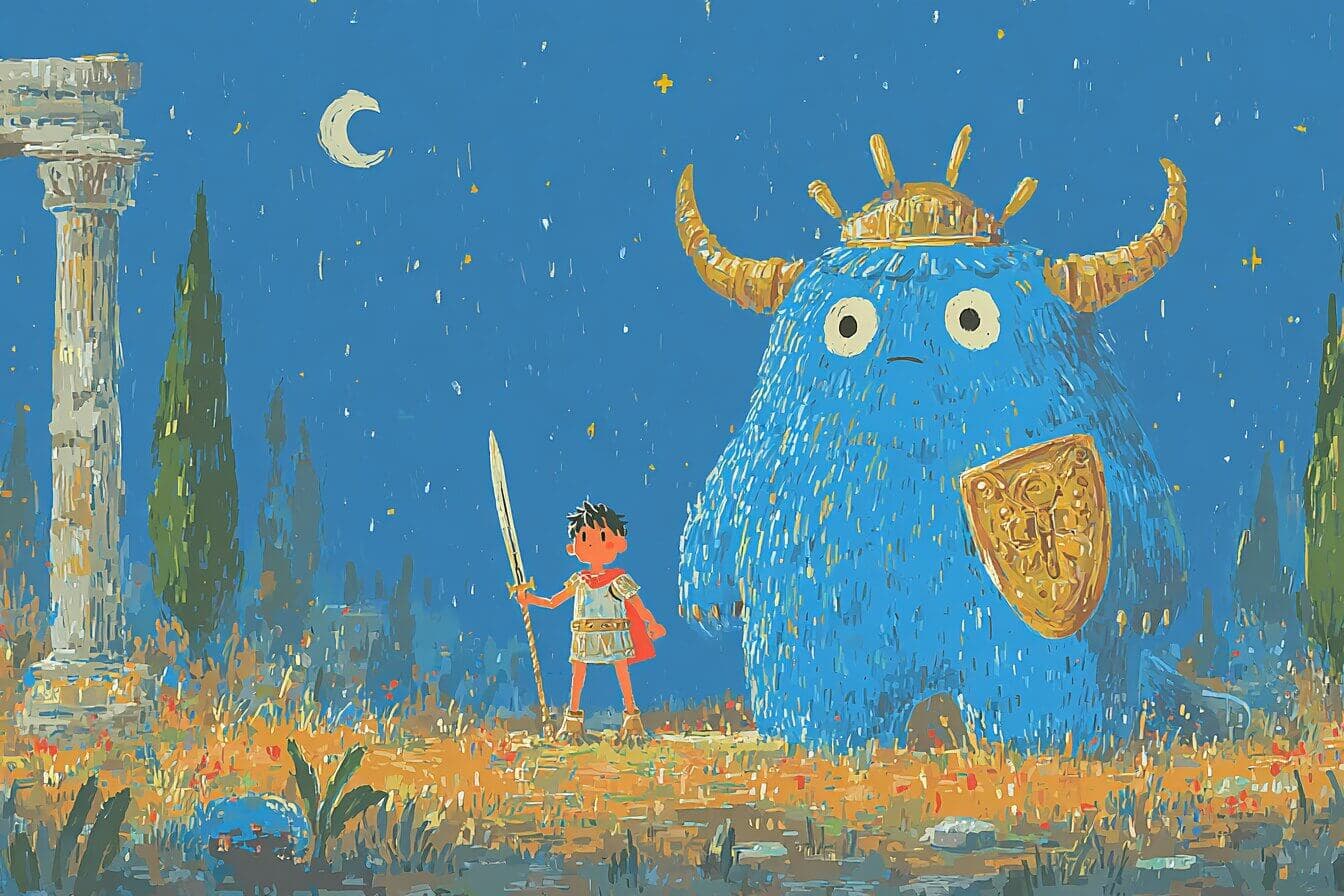
There is something about myths at bedtime, the way ancient heroes feel both impossibly far away and deeply familiar, like a friend you have not seen in years but recognize instantly. In this story, a twelve-year-old Perseus faces the Gorgon Medusa armed not with brute strength but with a mirrored shield, careful footsteps, and a heart brave enough to show mercy in a dark cave. It is a perfect Perseus and Medusa bedtime story for kids who like their adventures seasoned with quiet courage. If you want to shape the tale to fit your child's mood tonight, you can create your own version with Sleepytale.
Why Perseus and Medusa Stories Work So Well at Bedtime
Myths about Perseus and Medusa tap into something kids already understand: the world can feel scary, and facing that fear is better than hiding from it. The story follows a clear arc from home to danger and safely back again, which mirrors the rhythm of a child's own day. There is a monster, yes, but the hero defeats it through cleverness rather than violence, so the tension dissolves into relief instead of lingering dread.
A bedtime story about Perseus also gives children a kind of emotional rehearsal. The cave is dark, the snakes hiss, the heart pounds, and then it is over, and the hero is flying home through sunrise colors. That sequence lets kids feel a small thrill of fear in a completely safe setting, then settle into the warm knowledge that everything turned out fine. It is like a practice run for bravery, tucked under a blanket.
Perseus and the Mirror of Stone 6 min 2 sec
6 min 2 sec
High on the hill of Olympus, the gods looked down on a fishing village so small it did not appear on any map. Perseus lived there with his mother. He was twelve, wiry from hauling boats, and his hands smelled permanently of rope and salt.
One gray dawn, King Polydectes rode to the shore surrounded by guards who looked like they would rather be anywhere else. He announced that the Gorgon Medusa had awakened in the western caves, that her gaze turned living things to cold stone, and that someone needed to stop her before she reached the village. He said this the way a person announces rain, as though the problem belonged to everyone except him.
No warrior stepped forward. Every one of them had heard the stories of heroes who now stood as statues in the forest, their swords raised against enemies they never struck.
Perseus stepped out of the crowd. His voice cracked when he spoke, splitting right down the middle of the word "go," and a few people laughed. But the gods heard.
That night, while Perseus packed bread, olives, and a strip of dried fish his mother pressed into his hands without a word, a silver flash filled the doorway. Hermes stood there, sandals fidgeting against the stone floor as if they had somewhere to be. He held out a battered bronze shield polished so smooth Perseus could count his own eyelashes in it.
Then Athene appeared. She set winged sandals at his feet and lowered a helm of darkness onto his head. It smelled faintly of old leather.
"Wear these," she said. "And remember that cunning outshines brute force."
Perseus thanked them both, tied the sandals, and felt the earth fall away. The village shrank to a handful of lights, then to nothing, and the wind tasted like cold metal and pine.
He soared over forests where stone wolves snarled at nothing, past farms where marble farmers leaned on marble plows, one of them mid-yawn. Each statue made his stomach twist, but he kept flying west toward cliffs where something hissed in the dark.
When he landed, dew soaked his tunic instantly. Fear pricked at his skin like tiny needles. He tightened the helmet until he vanished like morning mist, then crept along the narrow path with his heart thudding louder than the sea below.
The cave mouth was lit by torches made of bone that burned a pale, sickly blue.
He saw the coils first. Then the claws, curled like fishhooks. Medusa slept with her snake hair still writhing, each serpent dreaming its own small dream.
Perseus raised the mirrored shield. In the bronze surface he could see her face safely, reversed and slightly warped, terrible but contained. He stepped sideways, blade ready, eyes locked on the reflection.
A pebble rolled under his foot.
It clattered once, twice, and the echoes piled on top of each other until the sound filled the cave like thunder. Medusa's golden eyes snapped open. For half a breath, everything stopped. Then Perseus swung the shield so her gaze met her own reflection.
The magic turned inward. Stone surged through her veins, and the mighty Gorgon froze into a statue of herself, mouth half open, claws reaching for something that was already gone. The snakes hardened into marble curls. The claws became gray petals. And the cave went so quiet Perseus could hear his own blood moving.
He stood there for a long moment, just breathing.
From the shadows came a sound he did not expect: weeping. Two small Gorgons crouched behind a rock, their snake hair limp and trembling, their eyes squeezed shut so they would not hurt him. They were crying over their sister.
Perseus lowered his sword. He promised that no further harm would come to them if they kept to the deep caves and stayed away from the village. They nodded without opening their eyes and slithered backward into the dark. One of them whispered something that might have been "thank you," though the echo swallowed the word before he could be sure.
He wrapped the stone head in his cloak and tied it to his belt. It was heavier than he expected, and it knocked against his leg with every step.
Outside, the sky was already turning. He leapt into the air, and the winged sandals carried him eastward as sunrise painted the horizon in rose and gold, the kind of colors that look like someone spilled warm tea across a tablecloth.
The village erupted when he landed. King Polydectes went pale and hid behind two guards, which was not particularly dignified. Perseus laid the head on a stone bench where it could harm no one, and the cheers came all at once, mothers grabbing children, fishermen thumping his back so hard he stumbled.
That night there was a feast: roasted lamb, honey cakes sticky enough to glue your fingers together, and songs that praised both bravery and wit. Perseus told them about the two small Gorgons and how he had let them go. Some people frowned, but the children in the crowd nodded as though it were obvious.
When the moon climbed high, Perseus slipped down to the shore alone. He returned the sandals, the helm, and the shield to the sky, setting each one on the water where the moonlight took it. He thanked the gods quietly, the way you thank someone who lent you an umbrella.
The waves lapped the pebbles. The world felt larger than it had that morning, full of wonders waiting for a heart both bold and kind.
Years later, travelers still found the marble wolves and farmers along the western road, but they also told of a boy who turned horror into mercy. Perseus grew up guiding lost sailors, calming storms with songs, and proving that even the smallest voice can change the shape of things.
And so the boy who once mended nets became a story that drifted across the seas like soft starlight, settling wherever a child needed reminding that monsters fall before mirrors, and even a dark cave can go quiet again.
The Quiet Lessons in This Perseus and Medusa Bedtime Story
This story weaves together courage, mercy, and the idea that cleverness can matter more than strength, all wrapped in a plot that feels safe enough for bedtime. When Perseus's voice cracks in front of the crowd and he volunteers anyway, children absorb the truth that bravery does not mean the absence of fear, just the willingness to keep going. His decision to spare the two small Gorgons introduces mercy as something practical and instinctive, not a grand lecture but a quiet choice made in a dark cave. These are exactly the kinds of reassurances that settle well before sleep: tomorrow you might feel scared, and that is fine, because fear is not the end of the story.
Tips for Reading This Story
Give Perseus a slightly wobbly voice when he volunteers, letting the crack on the word "go" land as a real, funny moment your child can laugh at. When he enters the cave and the pebble clatters, slow way down and drop your voice almost to a whisper, then pause before swinging the shield so your child has a second to hold their breath. For the two weeping Gorgons, try a small, thin voice, and when one of them might whisper "thank you," leave it hanging so your listener can decide for themselves what was said.
Frequently Asked Questions
What age is this story best for? Children ages four through eight tend to enjoy this version most. Younger listeners connect with the clear structure of home, adventure, and safe return, while older kids appreciate details like Perseus sparing the Gorgons and the humor of King Polydectes hiding behind his guards. The scary moments are brief and always resolved quickly, so even sensitive listeners usually feel comfortable.
Is this story available as audio? Yes, you can press play at the top of the story to listen. The audio version brings out moments that work especially well spoken aloud, like the echo of the pebble in the cave and the contrast between the hissing snakes and the sudden silence after Medusa turns to stone. Hermes's restless energy and Athene's calm instructions also come alive with distinct character voices in narration.
Does the story stay faithful to the original Greek myth? It keeps the core elements: the mirrored shield from Athene, the winged sandals from Hermes, and Perseus's clever use of reflection instead of direct combat. Some details are softened for younger listeners, like the Gorgon's defeat being shown through the magic of her own gaze rather than graphic imagery. The addition of mercy toward the remaining Gorgons is a gentle expansion that gives the story a warmer ending without contradicting the spirit of the original myth.
Create Your Own Version
Sleepytale lets you reshape this myth into exactly the bedtime tale your child needs tonight. You can swap the cave for a moonlit forest, trade the mirrored shield for a still pond, or turn Perseus into a pair of siblings who face the challenge together. In just a few taps you will have a calm, personalized story ready to read or play aloud whenever the lights go down.
Looking for more bedtime story classics?

Once Upon A Time Stories
What happens when June opens a golden book with no title? One of the sweetest short once upon a time stories about a forest, a hedgehog, and a blank page.

Fairy Tales Written By Hans Christian Andersen
Anders discovers short fairy tales written by Hans Christian Andersen as his grandmother reads from a soft brown book by lamplight.

Bluebeard Fairy Tale
In this short bluebeard fairy tale, the forbidden room holds not horror but a music box and memories of the people Lord Corvus loved most.

Red Shoes Fairy Tale
What happens when Karen's magical red shoes refuse to stop dancing? Discover this short red shoes fairy tale tonight.
Twinkle Twinkle Little Star Bedtime Story
Lily watches a kind star and floats up to help deliver dreams in this short twinkle twinkle little star bedtime story. A warm, quiet tale for sleepy nights.
Through The Looking Glass Bedtime Story
Step into a calm, magical short through the looking glass bedtime story and drift toward sleep with gentle wonder. Enjoy a soothing retelling that feels cozy from start to finish.