
Bunny Bedtime Stories
By

Dennis Wang, Bedtime Story Expert
7 min 38 sec
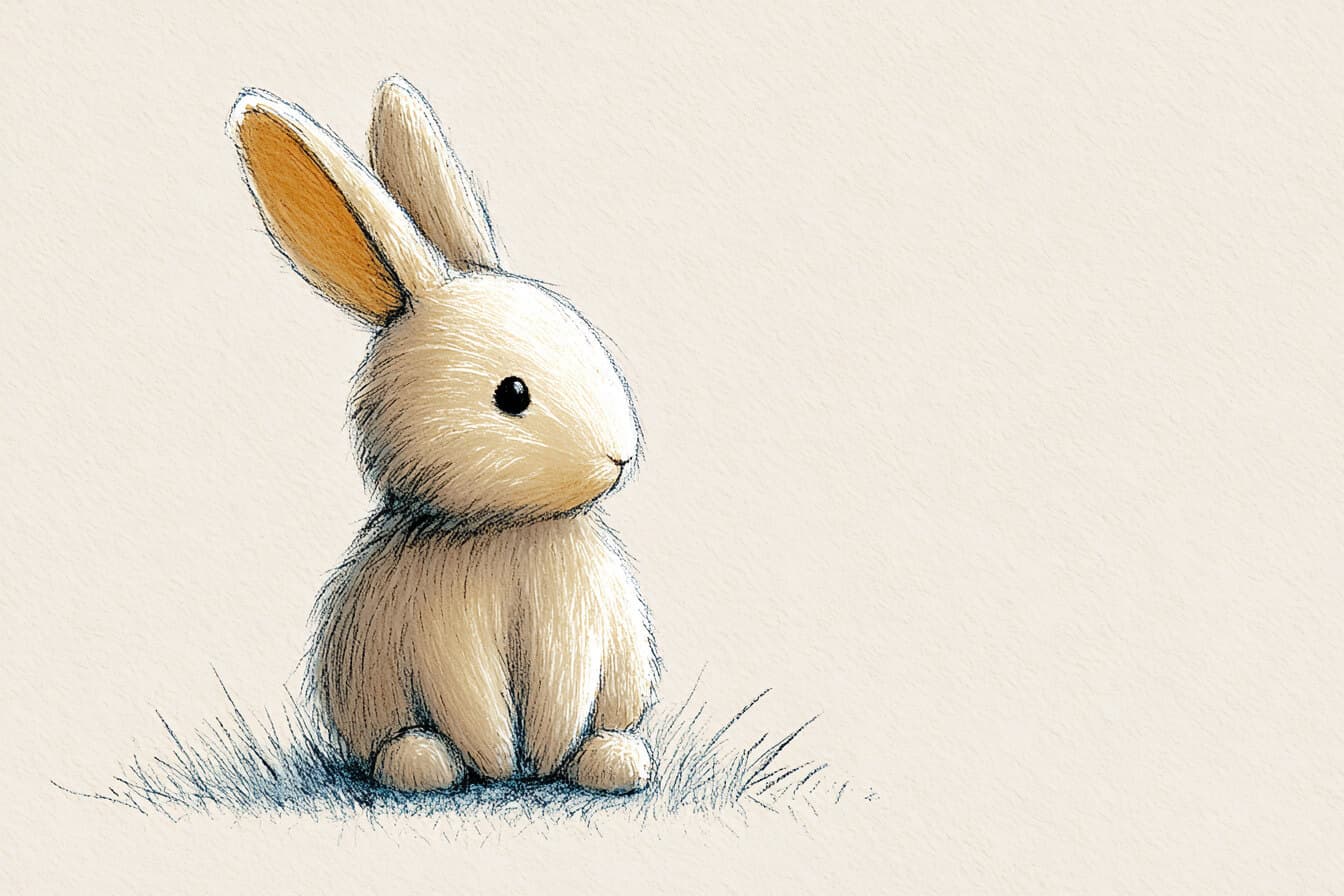
There is something about a soft, twitchy-nosed bunny that makes a child's whole body relax against the pillow. Tonight's story follows Bella, a brown bunny who feels out of place among her white-furred family and sets off into the woods, where she discovers that the thing she wanted to hide is actually the thing that keeps her safe. It is one of those bunny bedtime stories that turns a small worry into a warm, quiet ending. If your child has a favorite color, animal, or worry of their own, you can shape a version that fits them perfectly with Sleepytale.
Why Bunny Stories Work So Well at Bedtime
Bunnies live close to the ground. They nestle into burrows, twitch their noses at the evening air, and curl up in soft places. For kids, that world maps neatly onto what bedtime already feels like: small, warm, and hidden away from anything too loud. A bedtime story about a bunny invites a child to imagine themselves tucked inside a hillside den where the grass smells sweet and the wind hums overhead.
There is also something calming about the way bunnies move through problems. They do not roar or charge. They listen, hop carefully, and find friends along the way. That gentle pace mirrors the kind of thinking children do best right before sleep, when the day's big feelings are finally slowing down and the world outside the blanket starts to feel far away.
The Unique Story of Bella the Bunny 7 min 38 sec
7 min 38 sec
In a meadow where wildflowers leaned sideways in the breeze, a little brown bunny named Bella lived with her family.
Every other bunny in the meadow had white fur, the kind that caught the sunlight and turned almost silver at noon. Bella's fur was the color of bark, of acorn shells, of the mud at the edge of the pond where she sometimes sat by herself.
She would look at her reflection in that pond on quiet mornings.
The water wobbled, and her brown face wobbled with it, and she would think, "Why don't I match?"
Her siblings never said anything cruel. They just played together in a bright white cluster that moved across the meadow like a cloud touching the ground, and Bella hung back near the tall grass, watching.
At the meadow's annual carrot festival, the white bunnies formed circles for their games. Bella stood at the edge. It was not that anyone told her she could not join. It was that her brown fur felt like a stain on a clean tablecloth, and she could not stop noticing it.
One afternoon by the stream, a group of young white bunnies hopped toward her.
Their leader, a bunny named Snowy, tipped his head sideways. "How come you look like a muddy patch?"
Bella's ears drooped.
She opened her mouth, closed it, then said, very quietly, "I was born this way."
Snowy blinked. Then he laughed, a short little snort through his nose, and the group bounced away without looking back.
That evening Bella packed a tiny bag with clover leaves. She tucked one extra leaf in the bottom, just in case, and set off as the sky turned the color of a ripe peach.
The path curled into a forest where the trees were old enough to creak when they shifted their weight. Bark peeled in long strips. Somewhere above, an owl cleared its throat but said nothing.
Bella noticed something strange: she could barely see herself.
Her brown fur matched the tree trunks so perfectly that when she pressed against an oak, her own paws disappeared. She held one paw out and wiggled it, and for the first time in her life she laughed at her own body instead of worrying about it.
A rustle.
A family of deer stepped through the ferns, and the mother deer walked right past Bella before stopping, ears swiveling. "Who's there?"
"Me," Bella said, stepping away from the bark.
The mother deer blinked twice. "Well, you are good at that."
The deer family welcomed her as if she had always belonged among the roots and fallen leaves. They showed her where the blackberries grew fattest, right at the base of a mossy stump where the sun hit for exactly one hour each morning. They led her to a stream so clear she could count the pebbles on the bottom.
"Your fur," the mother deer said one evening, while the fawns chased fireflies in slow, looping circles. "In the forest, brown means safe. White would glow like a lantern out here."
Bella thought about that for a long time. She sat with her chin on her paws and listened to the crickets tick like tiny clocks.
She stayed for several days. The fawns taught her a hiding game where she would press against a log and they would try to find her. They almost never could. The smallest fawn, who had a crooked ear, would stomp his hoof and say, "You're cheating!" and Bella would pop out grinning, bark dust on her nose.
One morning she knew it was time to go home.
The deer family strung acorn caps on a thin vine and tied it around her neck. The caps clinked softly when she moved, like a tiny wind chime she could carry with her.
When Bella hopped back into the meadow, her ears were up. Not stiffly, the way you hold your ears when you are trying to look brave. They were just up, the way ears sit when you have stopped thinking about them.
The white bunnies gathered around almost immediately.
"Where did you go?"
"What's that necklace?"
"You look different."
Bella told them about the forest. She told them about the deer, the berries, the fawn with the crooked ear. She told them how she had pressed against a tree and vanished.
Then she showed them. She crouched against a patch of bare earth, and for a breath, the other bunnies lost her.
Snowy's mouth hung open.
"Do that again," he said.
She did.
Snowy sat down slowly. "I never thought about it like that," he said. He did not apologize for the muddy-patch comment, not out loud, but something in his voice had softened around the edges, and Bella decided that was enough for now.
Over the weeks that followed, Bella became the meadow's unofficial forest guide. She would scout ahead on trails, her brown fur blending with shadows and soil, and wave an ear when the path was clear.
The white bunnies started dabbing themselves with berry juice and clay during games, not to make fun of Bella but because they wanted to try being invisible too. They were terrible at it. A white bunny smeared with blueberry juice looks less like bark and more like a bunny who lost a fight with a pie, but they laughed about it, and Bella laughed loudest of all.
Her family set out a special dinner: clover honey drizzled over fresh greens, with a single dandelion puff in the center of the table because her youngest brother thought it looked fancy.
The elder bunnies shared old stories about times the meadow had needed different skills from different bunnies, brown and white and gray, to get through a hard winter or find a new water source.
Seasons turned. More brown bunnies were born, and each one was met with genuine curiosity instead of whispers. Bella started the Meadow Explorer's Club, where bunnies of every color learned to read animal tracks and find the spots where wild thyme grew thick enough to smell from ten hops away.
She still visited the deer family. The fawn with the crooked ear was taller now, almost as tall as his mother, but he still stomped his hoof and called her a cheater when she hid.
On evenings when the air cooled and the meadow went quiet, bunnies of white and brown and every shade between would sit together at the pond's edge.
The sky shifted through colors none of them could name, and for a while nobody said anything at all.
Bella's acorn-cap necklace clinked once, softly, in the breeze.
The Quiet Lessons in This Bunny Bedtime Story
This story gives children a safe way to sit with the feeling of being different before sleep, then gently shows them where that feeling can lead. When Bella presses against the oak and laughs at her own disappearing paws, kids absorb the idea that the thing you worry about most can surprise you by becoming useful. Snowy's half-apology, the softened voice without the actual words, teaches that change in others is sometimes slow and unfinished, and that is okay. The deer family's warmth shows that belonging does not always come from the group you started with; sometimes you have to wander a little to find people who see you clearly. These are reassuring ideas to carry into sleep, when a child's mind is replaying the day and deciding what to feel about it.
Tips for Reading This Story
Give Snowy a slightly nasal, know-it-all voice for his "muddy patch" line, and let the mother deer sound low and unhurried, like she has all the time in the world. When Bella presses against the oak and disappears, pause for a beat and let your child look at you, because kids love the moment of realizing she is invisible. At the very end, when the acorn-cap necklace clinks in the breeze, you can tap a fingernail lightly against a glass or a wooden surface to make the sound real in the room.
Frequently Asked Questions
What age is this story best for?
It works well for children aged 3 to 7. Younger listeners enjoy the animal characters and the hiding game with the fawns, while older kids connect with Bella's feelings of not fitting in and the moment when Snowy quietly changes his mind. The plot is simple enough for a three-year-old but layered enough to hold a first-grader's attention.
Is this story available as audio?
Yes. Press play at the top of the story to listen. The audio version brings out the contrast between the quiet meadow scenes and the livelier forest moments, and the dialogue between Bella and the deer family has a natural warmth that sounds especially good read aloud. It is a nice option for nights when you want to rest your voice and let your child drift off on their own.
Why is Bella brown when her family is white?
The story uses Bella's brown fur as a simple, visual way to explore what it feels like to look different from the people closest to you. It is not tied to a specific real-world explanation. Instead, it gives children a concrete image they can understand, one color among another, so they can talk about difference without the conversation feeling too big or abstract for bedtime.
Create Your Own Version
Sleepytale lets you reshape this story to fit your child's world in just a few taps. Swap the meadow for a garden, give Bella a spotted coat instead of a brown one, or replace the deer family with a wise old hedgehog. You can adjust the tone to be sillier, shorter, or even quieter, so every night's story feels like it was written just for your little one.
Looking for more animal bedtime stories?
Polar Bear Bedtime Stories
A shimmering palace appears the sea ice, and a small wish turns into shared laughter. Drift into short polar bear bedtime stories with a bright, gentle twist.
Bear Bedtime Stories
Drift off with short bear bedtime stories that feel warm and soothing, plus a simple way to create your own cozy version in Sleepytale.
Tropical Fish Bedtime Stories
Sunlight paints golden paths across a coral reef as a brave little fish leads a pattern parade. Drift into short tropical fish bedtime stories with gentle pride and calm sea sounds.
Pufferfish Bedtime Stories
Drift under turquoise waves with short pufferfish bedtime stories where a jumpy little fish turns surprise bounces into a brave stage dance. A conch charm makes the twist feel tender.
Piranha Bedtime Stories
Drift into the Amazon with short piranha bedtime stories where a toothy fish hosts a leafy picnic and wins hearts one crunch at a time.
Pigeon Bedtime Stories
Ease into comfort as Pablo delivers tiny folded notes tied with a sky blue ribbon to lift lonely hearts. Settle in with short pigeon bedtime stories that bring warmth, hope, and easy sleep.