
Thumbelina Bedtime Story
By

Dennis Wang, Bedtime Story Expert
7 min 40 sec
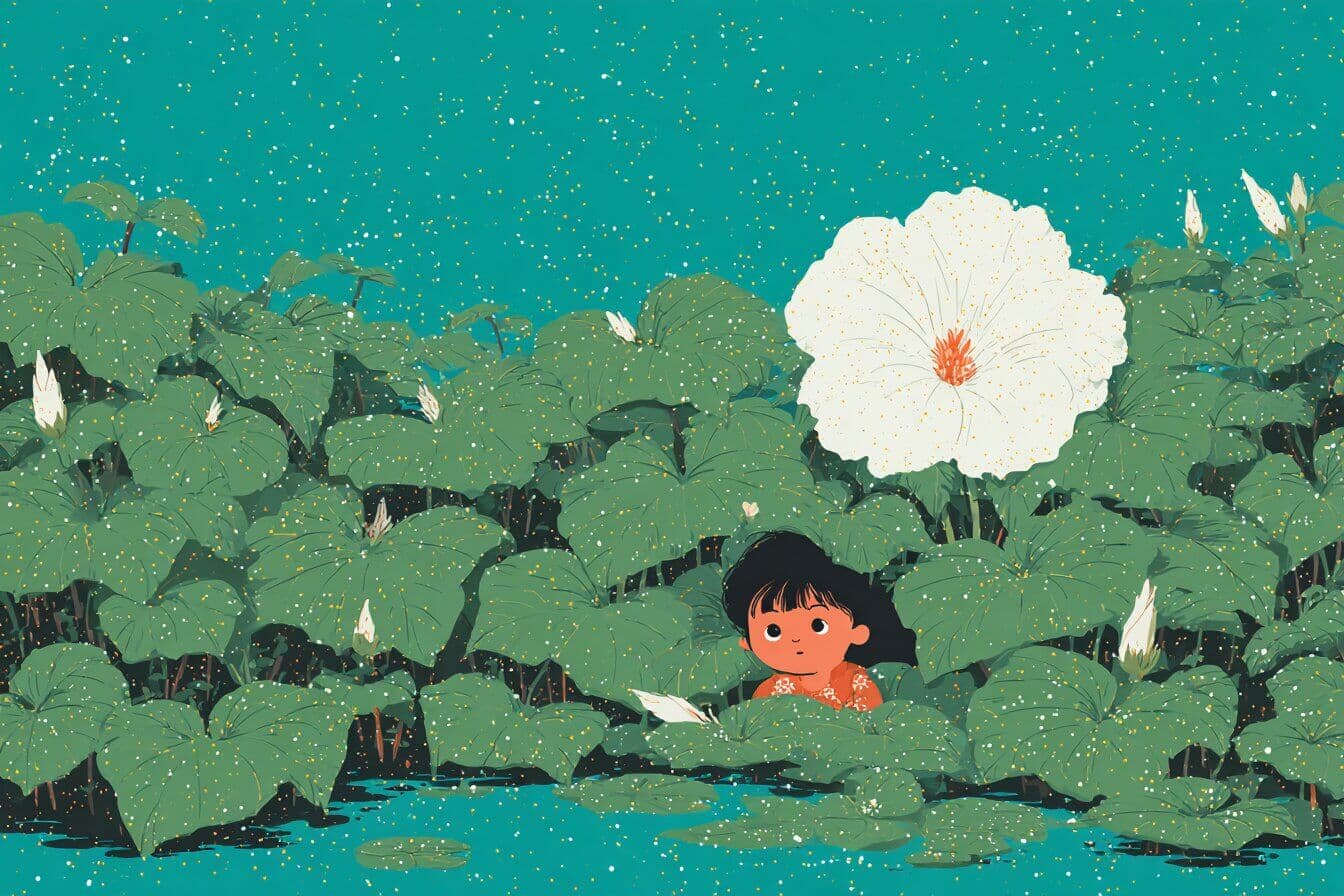
There is something about a girl no bigger than a thumb that makes children pull the covers up to their chins and lean in closer. This retelling follows Thumbelina from the moment she uncurls inside a crimson tulip through a string of strange encounters with toads, moles, and a half-frozen swallow, until she finally discovers where she belongs. It is one of those Thumbelina bedtime story classics that trades big battles for small, brave choices, and the quiet hum of a garden at night. If your child loves fairy-sized adventures, you can shape your own version with Sleepytale.
Why Thumbelina Stories Work So Well at Bedtime
Everything in a Thumbelina story is scaled down. The dangers are lily-pad sized, the rescues happen on the back of a bird, and home turns out to be a single flower. That miniature world meets children right where they are, because at bedtime they already feel small under a big dark ceiling. When the story keeps its stakes gentle and its details close, a child's breathing naturally slows to match.
A bedtime story about Thumbelina also follows a clear emotional arc, from feeling lost to feeling found, that mirrors what kids need before sleep. She moves through water, earth, and sky, each setting a little warmer and safer than the last. By the time she gains her wings, the listener has already traveled from worry to comfort without anyone having to spell it out. That journey feels earned, and earned comfort is the kind that sticks.
Thumbelina's Big Wide World 7 min 40 sec
7 min 40 sec
Inside a crimson tulip that nodded in the spring sunshine, a tiny girl stirred awake.
She was no bigger than a thumb. Her hair was the color of cornsilk, and her dress had been sewn from the palest petal anyone had ever peeled from a blossom.
The flower opened. She yawned, stretching miniature arms toward the sky.
Around her the garden buzzed, and the soil smelled the way it only smells after rain, dark and alive and a little bit sweet.
A kind old woman who longed for a child had planted this very bulb the autumn before. She had sung lullabies to the dirt every single night, which the neighbors thought was odd, and now her wish had bloomed into life.
The girl stepped onto a leaf and felt the breeze tickle her bare feet, still dusted with golden pollen.
She laughed. The sound was so small it could have fit inside a thimble, but the breeze heard it anyway and lifted her up, swirling her into the air like a seed on the wind.
She tumbled gently onto a lily pad where a speckled toad wearing a crown of reeds greeted her with a croak that rattled her teeth.
Before she could speak, the toad snatched her between sticky fingers and declared she would marry his son in the swamp palace below.
"I don't even know your son," she said, but the toad had already leapt into the stream and paddled away, lily pad and all.
Night fell. Fireflies appeared, their lights shimmering on the water like dropped coins.
She wept, pressing her face into the cool lily pad, until a school of minnows heard her sobs and nibbled the stem that held her prisoner. The pad broke free. She drifted downstream.
The current carried her beneath arching ferns and under a wooden bridge where a field mouse in wire spectacles found her shivering on the bank.
He tucked her into his hole beneath the roots of a wheat stalk. The walls were packed earth, and the whole place smelled of dry grain and candle wax.
"Stay as long as you like," he said, polishing his spectacles on his belly, "so long as you tell me stories by candlelight."
She could do that.
She spun tales of flower castles and starlight until autumn painted the fields gold and the candle burned down to a nub. One evening the mouse introduced her to a wealthy mole who wore a velvet waistcoat and had not seen the sun in years.
The mole proposed marriage, explaining that underground tunnels were safer than the open sky.
She said no, as politely as she could manage.
The mouse pulled her aside. "Winter is coming. Food is scarce. Think it over."
She thought it over. She thought about the sky.
While walking the tunnel one afternoon she discovered a swallow half frozen in the dark, one wing bent at a wrong angle.
The mouse warned against helping creatures of the air. "They never stay," he said.
She helped anyway. She fed the bird crumbs of bread and drops of honey she had saved from supper, and she talked to him the way the old woman had once talked to a bulb in the ground, as though he could hear every word even when he was too weak to answer.
Spring returned. The swallow shook out his mended wing, testing it against the tunnel air.
"I can take you anywhere," he said. His voice was rough, like dry leaves sliding together.
She climbed onto his back. His feathers were softer than she expected, and warmer.
They soared above meadows stitched with daisies and rivers that caught the light. Wind tangled her hair. She laughed again, and this time the sound was big enough to startle a hawk circling below them.
They flew over forests, across mountains capped with snow, and past a village where someone was hanging laundry on a line. She could see the clothespins.
Then the scent changed, jasmine and something cooler, like moonlight if moonlight had a smell.
Below them spread a garden where hundreds of flower fairies danced among roses, their wings catching the last of the sun.
The swallow circled low, and the fairies looked up. They clapped, not politely but the way you clap when someone you have been waiting for finally arrives.
Their queen stepped forward. She was tall for a fairy, which is to say she was about the height of a teacup, and her gown looked as if someone had woven it from the shine on still water.
"You were born of fairy magic," the queen said simply. "You were always meant to live here."
She touched the girl's forehead, and wings unfurled from her shoulder blades. They shimmered like dew on a web.
The girl gasped. Not because the wings were beautiful, though they were. Because they felt right, the way a word you have been searching for feels right the moment it arrives on your tongue.
That night the fairies held a feast. Nectar in acorn cups, honey cake on leaves, and fireflies who insisted on hanging themselves between the roses like living lanterns.
The girl, now called Thumbelina by the fairies, stood on a daisy and sang of rivers, roots, and sky. She did not plan the song. It just came out.
Tears appeared in more than a few fairy eyes, because every one of them knew what it felt like to be somewhere you did not quite fit.
When the song ended, the queen crowned her Guardian of Small Blossoms, protector of every shy violet and hidden primrose.
Thumbelina accepted.
She thanked the swallow, who bowed low, feathers brushing the petals. "I will visit whenever the seasons turn," he said, and she believed him.
In the weeks that followed she learned fairy customs: how to coax color from a sunset, how to weave a rainbow after a storm, and how to guide lost butterflies home by humming a note they recognized. She flew beside bees, helped spiders mend torn lace, and told bedtime stories to seedlings who had not yet decided what color to become.
Summer ripened into autumn, and the garden prepared for the Flower Festival, when every bloom opened its secret music.
Thumbelina practiced a melody on a blade of grass. Her fingers were tiny, but steady.
On the night of the festival, roses hummed bass notes, lilies sang clear alto, and trumpeting daffodils joined in. Thumbelina stood on the queen's own cupped hands and sang the story of her journey, from tulip cradle to toad capture, from mouse hole to sky.
Nobody clapped when she finished. They just breathed, which was better.
Years passed like petals opening.
She flew daily rounds, checking buds for aphids, singing lullabies to seedlings, and guiding lost ants back to their hills. Each spring she greeted the old tulip where she had first awakened, and each autumn she released its seeds on the wind.
One winter evening she spotted a sprout pushing through snow.
She knelt. She brushed the frost from its leaves and whispered, not courage exactly, but the kind of sound you make when you want someone to know they are not alone.
The sprout quivered. Then it straightened, revealing a bud no bigger than a teardrop.
Thumbelina smiled. Inside that bud slept a new sister, waiting for spring.
She wrapped the shoot in a cocoon of warm air and hovered nearby until dawn, listening to the frost crack and melt around them.
When sunlight spilled across the snow the bud unfurled, and there was another girl, thumb-sized, with hair like dandelion fluff and eyes still blinking at the brightness.
Thumbelina took her hand. Her wings glowed.
Together they rose into the brightening sky, and the garden stretched below them, roots twining beneath the soil, shoots reaching upward, flowers humming to every small traveler who might one day find wings of her own.
The Quiet Lessons in This Thumbelina Bedtime Story
This story is woven through with moments about choosing kindness even when it costs something. When Thumbelina feeds the injured swallow against the mouse's advice, children absorb the idea that helping someone is worthwhile even if others tell you not to bother. Her polite refusals of the toad and the mole show kids that saying no can be gentle and still be firm, a reassuring thought to carry into sleep. And the final scene, where she kneels beside a frost-covered sprout and simply stays close, teaches that belonging is something you give as much as something you find. These are the kinds of lessons that settle quietly into a child's mind at bedtime, offering comfort without any pressure.
Tips for Reading This Story
Give the toad a big, booming croak voice and let the field mouse sound fussy and a little breathless, like he is always worried about something. When Thumbelina climbs onto the swallow's back and the wind tangles her hair, speed up your reading just slightly and then slow back down once they spot the jasmine garden below. At the very end, when she kneels beside the sprout in the snow, drop your voice almost to a whisper and pause before "the bud unfurled" to let your child lean in.
Frequently Asked Questions
What age is this story best for?
This version works well for children ages 3 to 7. Younger listeners love the tiny-world details like the acorn cups and firefly lanterns, while older kids connect with Thumbelina's choices, especially her decision to help the swallow when everyone told her not to. The language stays simple enough for a three-year-old but has enough texture to hold a seven-year-old's attention.
Is this story available as audio?
Yes. You can press play at the top of the story to hear it read aloud. The audio version brings out the contrast between the booming toad scenes and the quieter moments in the mouse's candlelit burrow. The final flight with the swallow has a rhythm that sounds especially lovely when spoken, and the Flower Festival singing scene is one of those passages that just works better out loud.
Why does Thumbelina refuse the mole's proposal?
The mole offers safety, but it comes at the cost of daylight and the open sky, two things Thumbelina needs to feel alive. In this retelling, her refusal is gentle rather than dramatic, which helps young listeners understand that you can appreciate someone's kindness and still know that their world is not the right fit for you. It is a small but important distinction for kids learning to trust their own feelings.
Create Your Own Version
Sleepytale lets you reshape this tiny adventure into something that feels like it was written just for your child. Swap the tulip for a rose or a crocus, replace the toad with a bossy beetle, or move the whole journey to a moonlit pond instead of a river. You can adjust the tone, add a favorite animal companion, and have a cozy new version ready in moments, perfect for tonight's bedtime.
Looking for more bedtime story classics?

Once Upon A Time Stories
What happens when June opens a golden book with no title? One of the sweetest short once upon a time stories about a forest, a hedgehog, and a blank page.

Fairy Tales Written By Hans Christian Andersen
Anders discovers short fairy tales written by Hans Christian Andersen as his grandmother reads from a soft brown book by lamplight.

Bluebeard Fairy Tale
In this short bluebeard fairy tale, the forbidden room holds not horror but a music box and memories of the people Lord Corvus loved most.

Red Shoes Fairy Tale
What happens when Karen's magical red shoes refuse to stop dancing? Discover this short red shoes fairy tale tonight.

Twinkle Twinkle Little Star Bedtime Story
Lily watches a kind star and floats up to help deliver dreams in this short twinkle twinkle little star bedtime story. A warm, quiet tale for sleepy nights.
Through The Looking Glass Bedtime Story
Step into a calm, magical short through the looking glass bedtime story and drift toward sleep with gentle wonder. Enjoy a soothing retelling that feels cozy from start to finish.