
The Steadfast Tin Soldier Bedtime Story
By

Dennis Wang, Bedtime Story Expert
7 min 3 sec
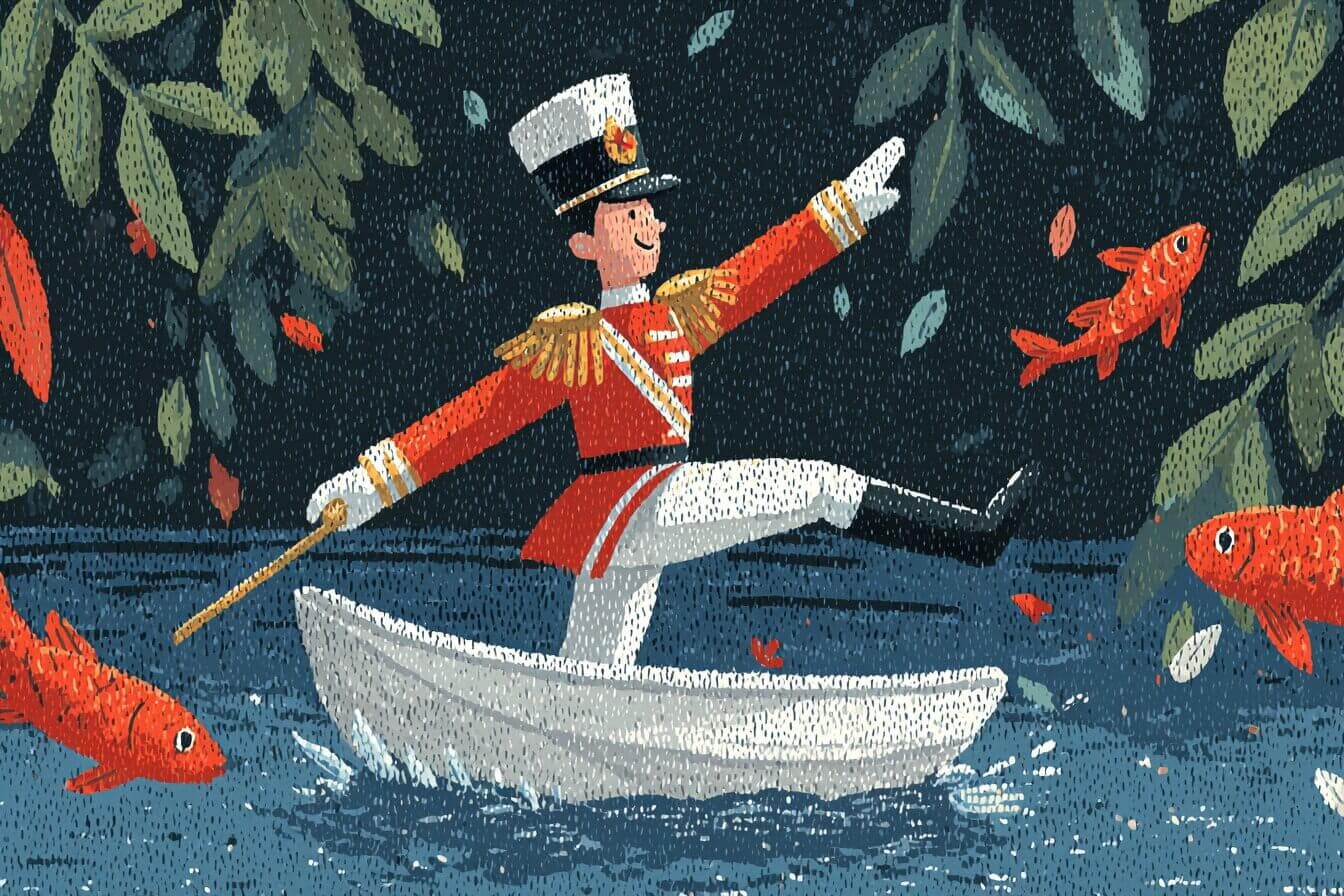
There is something about a toy soldier standing guard in the dark that makes a child pull the blanket a little higher and feel perfectly safe. This gentle retelling follows a one-legged tin soldier who tumbles out a window, survives a storm drain and a fish's belly, and finds his way back to the paper ballerina he loves. It is the kind of steadfast tin soldier bedtime story that lets the night feel smaller and warmer. If you want to shape your own version with different details and a softer pace, you can create one in Sleepytale.
Why Tin Soldier Stories Work So Well at Bedtime
A tin soldier is small enough to fit in a child's palm, yet brave enough to face an entire world of rushing water and darkness. That combination mirrors exactly how children feel at bedtime: tiny in a big room, but quietly courageous. Stories about a steadfast toy soldier at bedtime give kids a companion who does not crumble under pressure, and that steadiness is contagious. The soldier never shouts or fights; he simply stands straight and waits, which is a rhythm that naturally slows a child's breathing.
There is also something comforting about a story where the hero's only real power is patience. Children do not need to understand grand quests to relate to someone who just wants to get back to the shelf where they belong. The journey is frightening but short, the homecoming is warm, and the message settles in without anyone having to explain it.
The Steadfast Tin Soldier 7 min 3 sec
7 min 3 sec
In a nursery that smelled faintly of cedar and spilled milk, a one-legged tin soldier stood on a wooden shelf.
He had been cast last from an old tin spoon, so there was not quite enough metal left for his second leg. He stood anyway, steady as a nail, his weight balanced on that single foot as though he had never needed the other one at all.
His uniform was red. His musket caught the lamplight and threw a thin stripe of silver across the wallpaper.
On the shelf across the room, inside a paper castle with blue-painted turrets, lived a ballerina cut from stiff white card.
She danced on one leg too, the other stretched so high behind her that the soldier, at first glance, thought she might also be made with only one.
He watched her there, arms lifted, chin tilted just slightly to the left, and something turned over inside his tin chest like a key finding its lock.
Night after night, while the children slept and the clock on the mantel ticked its slow, lopsided tick, the soldier stood at attention and looked at her.
She never spoke. Paper ballerinas do not.
But sometimes, when a draft from the hallway made her tremble on her cardboard stage, she seemed to glance his way with those painted eyes, and the soldier held his breath, which is no small thing for someone who does not breathe.
He wanted to tell her she was lovely. Tin soldiers are not built for speeches, though, and the distance between their two shelves might as well have been the sea.
Still, his love grew. It was steady, the way his one leg was steady, the way the shelf itself was steady beneath him.
One morning the youngest child, a boy with jam on his fingers, picked the soldier up and stood him on the window ledge to dry after pretending he had fallen in a puddle.
A gust came through. Not a dramatic, howling gust, just an ordinary Tuesday breeze that bumped the curtain and nudged the soldier over the sill.
He fell three stories in silence.
He landed on cobblestones with a bright, ringing clatter, and lay on his back staring up at the enormous sky. A passing boy found him, turned him over, and grinned.
The boy folded a newspaper into a boat, tucked the soldier inside with his musket still pointing forward, and set the boat sailing down the gutter stream.
The water was cold and fast and smelled of rain. The paper boat spun once, twice, then straightened and rushed toward the mouth of the storm drain.
Inside the boat the soldier thought of the ballerina. He thought of the way her paper arm caught the lamplight, and he held on.
Darkness swallowed him. The drain was loud with echoing drips, and somewhere ahead a rat sat on a broken brick, whiskers twitching.
"Toll," the rat said. "You owe me a toll."
The soldier had nothing, not a crumb, not a coin, not even a second leg to trade. The rat lunged, but the current was faster, and the little boat shot past with the rat's claws scraping empty air.
Deeper the tunnel went. The paper softened. Water seeped through the folds and the boat sagged like a tired mouth.
The soldier stood as straight as he could, which by now was only mostly straight, and he thought: she is still dancing on her shelf.
The tunnel opened into a wide canal, and the boat finally gave up. It came apart in slow, soggy pieces, and the soldier sank.
He touched the muddy bottom, and the cold was enormous.
Then a shadow passed over him, a mouth opened, and the world went dark and close and tasted of seaweed.
Inside the fish it was quiet in a strange, muffled way, like being inside a rubber boot. The soldier kept his musket pointed forward because that was all he knew how to do. He did not count the days. Time inside a fish does not work the way time works on a shelf.
He thought about the ballerina's castle, how one of its paper turrets had a small crease where a child had once bent it by accident. He thought about how the crease made the castle look more real, not less. He thought about that a lot.
Then, light.
The fish was caught, carried to market, bought by a cook with flour on her apron, and brought to a kitchen in the very same street. When the cook opened the fish with her heavy knife, she stopped mid-cut and laughed out loud.
"Well," she said, holding the soldier up by his musket. "You have had a journey."
She rinsed him under the tap, dried him on a tea towel, and carried him upstairs. The nursery door opened, and there was the shelf. There was the wallpaper with the silver stripe of lamplight.
And there, across the room, the ballerina still danced inside her castle with the creased turret.
The soldier's tin chest felt warm, which should not have been possible.
The children crowded around. The cook set him back in his old spot, and his single foot found the familiar groove in the wood as though it had been waiting.
That night the youngest child, the one with the jam fingers, opened the castle door and moved the ballerina out onto the open shelf. She twirled, turned by his careful hand, until she stood beside the soldier, her paper palm resting against his tin shoulder.
Nobody said anything.
The clock ticked its lopsided tick. The curtain moved once, softly, and then was still.
From then on they stayed together, the soldier and the dancer, side by side through every quiet night. The children checked on them each morning, and each morning found them exactly where they had been left, standing close, facing the window where the ordinary breezes came and went without any trouble at all.
When winter arrived and frost drew ferns on the glass, the nursery was kept warm, and the two small figures on the shelf looked, if you tilted your head just right, like they were leaning toward each other.
The soldier never left the shelf again.
The ballerina never danced alone.
And somewhere in the walls of the old house, if you pressed your ear to the plaster, you could almost hear a faint, steady rhythm, no louder than a heartbeat, no softer than a promise.
The Quiet Lessons in This Tin Soldier Bedtime Story
This story is built around patience, devotion, and the courage it takes to simply endure when everything is uncertain. When the soldier sinks to the bottom of the canal and still keeps his musket pointed forward, children absorb the idea that holding steady is its own kind of bravery, even when you cannot fix the situation. The ballerina's crease in the castle turret is a small, unspoken lesson about imperfection being part of what makes something lovable. These themes land especially well at bedtime because they reassure a child that tomorrow's challenges do not need grand solutions, just the willingness to stand back up and keep going.
Tips for Reading This Story
Give the rat a scratchy, impatient voice when he demands his toll, and let the soldier's silence afterward do the work; a pause of two or three seconds there makes the escape feel more thrilling. When the cook discovers the soldier inside the fish, try sounding genuinely surprised and amused, because that laugh breaks the tension and signals to your child that the scary part is over. At the very end, when the ballerina's paper palm rests against the soldier's tin shoulder, slow your voice almost to a whisper and let the image sit for a moment before moving on. That stillness is the real goodnight.
Frequently Asked Questions
What age is this story best for?
Children ages 3 to 7 tend to connect with it most. Younger listeners are drawn to the simple, repeating image of the soldier standing on one leg, while older kids appreciate the journey through the storm drain and the surprise of the fish. The gentle reunion at the end avoids anything too intense, so even sensitive listeners can enjoy it comfortably.
Is this story available as audio?
Yes. You can press play at the top of the story to listen. The audio version brings out details that work especially well when heard aloud, like the echoing drips inside the storm drain and the lopsided tick of the nursery clock. The rat's one-line demand for a toll is a fun moment to hear performed, and the quiet ending, with the ballerina leaning against the soldier, settles into a hush that is perfect for drifting off.
Why does this version have a happy ending when the original does not?
Hans Christian Andersen's 1838 tale ends with both the soldier and the ballerina in the fire, which carries its own beauty but can be unsettling for young children at bedtime. This retelling keeps the same journey, the same devotion, and the same quiet tone, but lets the soldier return safely to the shelf. The warmth of the reunion gives children a sense of completion and comfort right before sleep.
Create Your Own Version
Sleepytale lets you reshape this classic into a version that fits your family perfectly. You could move the nursery to a mountain cabin, swap the paper boat for a leaf raft drifting down a creek, or turn the ballerina into a music box dancer who hums a little tune. In just a few taps you will have a cozy, replayable story with your child's favorite details woven in and a gentle ending ready for lights out.
Looking for more bedtime story classics?

Once Upon A Time Stories
What happens when June opens a golden book with no title? One of the sweetest short once upon a time stories about a forest, a hedgehog, and a blank page.

Fairy Tales Written By Hans Christian Andersen
Anders discovers short fairy tales written by Hans Christian Andersen as his grandmother reads from a soft brown book by lamplight.

Bluebeard Fairy Tale
In this short bluebeard fairy tale, the forbidden room holds not horror but a music box and memories of the people Lord Corvus loved most.

Red Shoes Fairy Tale
What happens when Karen's magical red shoes refuse to stop dancing? Discover this short red shoes fairy tale tonight.

Twinkle Twinkle Little Star Bedtime Story
Lily watches a kind star and floats up to help deliver dreams in this short twinkle twinkle little star bedtime story. A warm, quiet tale for sleepy nights.
Through The Looking Glass Bedtime Story
Step into a calm, magical short through the looking glass bedtime story and drift toward sleep with gentle wonder. Enjoy a soothing retelling that feels cozy from start to finish.