
The Ugly Duckling Bedtime Story
By

Dennis Wang, Bedtime Story Expert
10 min 3 sec
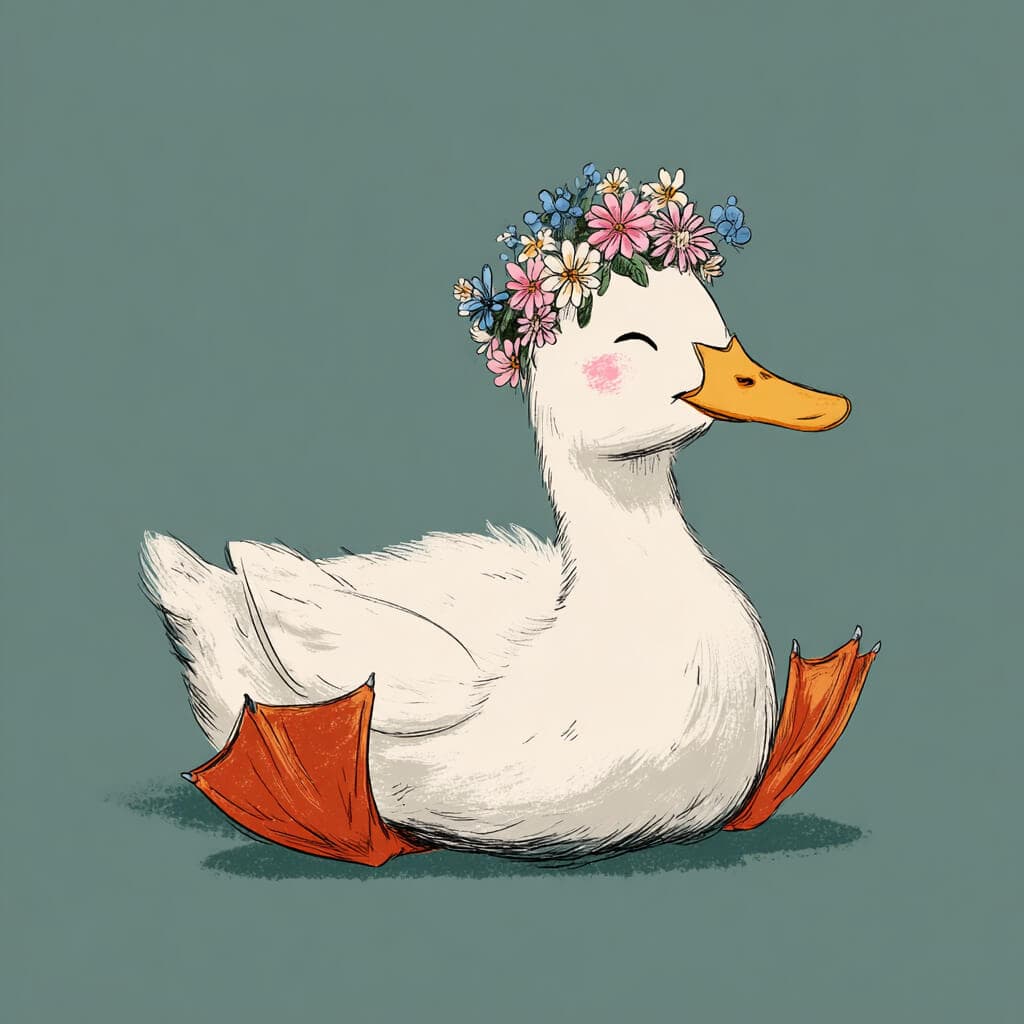
There is something about a story where a small, overlooked creature slowly discovers they were beautiful all along that makes kids breathe a little deeper under the covers. This version follows Petal, a gray duckling who would rather press her beak into wildflowers than splash around the pond, and who slowly learns that her own reflection has been blooming right alongside the garden she tends. It is one of the gentlest ways to share the ugly duckling bedtime story, because the transformation arrives so quietly a child might drift off before the last petal opens. If your little one loves this kind of tale, you can create your own version with Sleepytale.
Why Ugly Duckling Stories Work So Well at Bedtime
Children carry small worries to bed with them, things they said wrong at lunch or the way their drawing did not look like everyone else's. A bedtime story about the ugly duckling meets that feeling head-on without forcing a conversation, letting a child see a character who feels out of place and then, slowly, discovers that "out of place" was just "not finished yet." The pacing of these tales, where change happens over days and seasons instead of in a single dramatic scene, mirrors the way a child's own body relaxes into sleep.
What makes ugly duckling stories especially soothing is that they do not ask the listener to be brave or loud. They ask for patience, which is the easiest thing to practice when you are lying still in a warm bed. The gentle repetition of tending a garden, visiting a pond, watching a stem grow taller, gives a child something calm and steady to picture as their eyes close.
Petal the Duckling Who Dreamed of Blossoms 10 min 3 sec
10 min 3 sec
Petal hatched on a mild spring morning beside Silver Pond.
Reeds whispered along the banks, and tiny waves tapped the shore in no particular rhythm, like someone drumming their fingers while thinking.
Her brothers and sisters tumbled straight into the water, paddling messy zigzags, their quacks bouncing off the surface and coming back softer.
Petal tried to follow. She did. But something kept tugging at her gaze.
Along the bank, buttercups shone like drops of sunlight, and daisies turned their faces to the sky with a kind of lazy confidence she envied.
She waddled toward them, heart fluttering, and brushed their petals with the tip of her beak. One daisy bobbed under the weight, then sprang back up as if it had been tickled.
While the other ducklings chased dragonflies, Petal wandered between blossoms, naming each color under her breath.
She loved the velvety purple of clover and the tiny white stars of yarrow and the way the tall grasses bowed when the wind ran through them.
Whenever she passed the pond, she peeked at her reflection. Dull gray fluff. Big, clumsy feet that seemed to belong to a different, larger animal. She looked away fast.
One afternoon her siblings played a game of mirror splashes, diving in and popping up to admire how smooth their yellow down looked in the water.
Petal stepped closer, hoping the pond might surprise her with a prettier picture.
It did not.
She saw a small, uneven duckling whose feathers seemed to grow in whichever direction they pleased.
A pair of young geese paddled by. "Looks more like a rain cloud than a duck," one muttered, not quite loud enough for the whole pond to hear but loud enough.
Heat rushed into Petal's chest and up into her face. She turned from the water, blinking hard, and buried her beak in a patch of clover that smelled like honey and fresh earth and something older she could not name.
"I wish I could bloom," she told the flowers softly. "You get to open into something lovely. I just stay like this."
The clover swayed.
A dandelion puff trembled nearby and released a single seed. It drifted toward Petal, landed right on her beak, and clung there. She sneezed, and the tiny seed floated off again, spinning in the last of the afternoon light like it had somewhere important to go.
That evening the sky turned peach and the pond calmed and the wildflowers folded themselves for the night the way they always did, without fuss.
An idea tiptoed into Petal's mind. If flowers could change so much from seed to blossom, maybe someone in the world knew how to help a duckling grow into something new.
At dawn she tucked one fallen buttercup petal under her wing for courage, which felt a little silly but also a little necessary, and followed the stream that fed Silver Pond.
The water chattered over stones, guiding her between ferns and under low willow branches that brushed her back like kind hands. A frog on a rock watched her pass without comment, blinking once.
After a long, slow walk, Petal reached an old wooden gate woven with morning glory vines. Their blue trumpets opened wide, drinking the first sunlight. A ladybug peeked out from a leaf, her red shell so shiny Petal could see her own small face reflected in it.
"Why has a duckling come so far from her nest?" the ladybug asked.
Petal told her everything in one long breath: the gray fluff, the teasing geese, the wish to feel as lovely as the flowers she loved. She got a bit tangled in the middle and had to start one part over, but the ladybug did not seem to mind.
"Beyond this gate," the ladybug said, "there is a Hidden Garden. A quiet gardener tends it. She helps every living thing find the shape it was meant to have."
The gate creaked open at the slightest nudge of Petal's head.
Inside, flowers rose taller than any reed she had ever seen. Their colors were deeper than sunset, so rich they almost hummed. Paths of soft moss wound between beds of herbs and roses and plants whose names she did not know but whose scents made her shoulders loosen and her breathing slow.
At the center stood a figure in a plain green cloak, hands dusty with soil. The gardener's face was lined like old bark, but her eyes shone bright as morning dew. She knelt to see Petal more closely.
"What brought you here, small one?"
Petal repeated her wish, slower this time. "I want to bloom the way your flowers do. I do not need to be grand. Only not so wrong."
The gardener smiled. It was a weathered smile, the kind that takes years to grow. She brushed one finger along Petal's head and said that flowers did not rush to match the blossoms around them. They grew from what was already true inside their seeds.
From a pocket she drew a tiny silver seed that glowed faintly, like a star seen through mist.
She set it in Petal's open wing. "Plant it beside the place where you feel most yourself," she said. "Then tend it with patience and honest care."
Petal thanked her and began the long walk home. The seed shivered softly with each step, as if it were humming a song too quiet for ears. By the time she reached Silver Pond again, the sky had faded to lilac and the first evening star watched from above.
She chose a patch of earth near the clover where she had cried. Gently she pressed the seed into the soil, covered it with a sprinkle of mud, and whispered a promise to visit every morning.
Days passed.
Petal rose with the light, checked the little patch, and hummed small songs she made up on the spot, most of them only three or four notes because she was not a very good singer and knew it. Her siblings raced along the shore. She split her time between short swims and long, patient moments beside the hidden seed. The swims were getting easier, she noticed, though she did not think about why.
A pale green sprout slipped through the soil one morning, thin and fragile. Petal shielded it with her body when the wind gusted too hard and warned curious beaks to nibble elsewhere. "That is not a snack," she told a particularly persistent sparrow. "Find your own garden."
The sprout thickened into a stem and wrapped itself in silver-tinged leaves that caught the moonlight even on cloudy nights.
Seasons moved over the pond in a slow circle. Petal's gray fluff fell away, and she tried not to stare at it floating on the water's surface. Smoother feathers arrived, pale and cool and sleek. She grew taller than the other ducks. Her neck lengthened. Her shape stretched into lines that did not match anyone around her, which was confusing, and sometimes lonely, and sometimes just fine.
The teasing softened to puzzled glances, then to a quiet sort of respect when they saw how carefully she guarded the strange plant by the shore. No one knew what kind of flower it would become.
One still morning, when the air smelled of new rain and the pond sat as smooth as glass, Petal woke to a soft glow on her closed eyelids.
She hurried to the water's edge.
The plant had opened at last.
At the top of the long silver stem bloomed a single white flower larger than any lily on the pond. Its petals curved like folded wings, and at its center shimmered a pool of light that rippled without wind, as if something alive breathed just beneath it.
Petal stepped closer and peered in.
The surface cleared, becoming a mirror. For the first time, she saw herself clearly.
Her feathers shone pale as polished shells, catching hints of rose and blue from the sky. Her neck arched with a strength she had not noticed building. Her wings opened wide.
She was not a small gray duckling anymore.
She was a swan.
Her breath caught. But instead of fear, a calm warmth spread through her, as if the light inside the flower had flowed straight into her chest and settled there. Every slow morning of tending, every kind word to the sprout, had been part of her own blooming. She did not need anyone to explain this. She just knew.
She stepped into the pond and pushed away from the shore. The water held her differently now, lifting her with ease, the way it lifts something that finally fits its own shape. She glided across the surface, leaving a soft V of ripples behind.
Her siblings stared from the reeds. The geese who had once called her a rain cloud dipped their heads in a clumsy, awkward sort of greeting that was probably the closest thing to an apology geese can manage.
Petal gave them a gentle nod and invited the youngest ducklings to climb onto her back for a ride. They scrambled up, stepping on each other, one of them honking in protest. It was not graceful. She did not mind.
As she carried them, she told stories about seeds and patience and how something lovely can arrive later than you expect but still fit perfectly when it comes. The little ones listened with their chins resting on her feathers, eyes heavy, feeling safe.
Each evening Petal returned to the glowing flower by the bank. Its light dimmed with the fading day but never fully went out, and sometimes it flickered when the wind hit it a certain way, as if it were winking.
She thanked it for showing her who she had become.
The buttercup petal she had tucked under her wing that first brave morning was crisp and brown now. She kept it in a hollow of the bank anyway, the way you keep a ticket stub from a trip that changed everything.
When a shivering gosling arrived one spring, convinced his own feathers were too rumpled and wrong, Petal sat beside him and told him about the seed and the garden and the slow, loyal work of growing. She did not promise it would be quick. She said it would be worth it.
Then they floated side by side as the light softened. The pond stilled. The reeds rustled. And somewhere near the bank, a silver flower glowed just enough to see by.
The Quiet Lessons in This Ugly Duckling Bedtime Story
This story explores what it feels like to look different and not understand why, and it shows children that tending something with patience, even when you cannot see the result yet, is itself an act of bravery. When Petal shields her tiny sprout from the wind and shoos away a nosy sparrow, kids absorb the idea that caring for something outside yourself can quietly build the confidence you thought you were missing. The moment she looks into the blooming flower and simply knows what she has become, without needing anyone to announce it, gives children a model for self-recognition that does not depend on applause. These are reassuring ideas to carry into sleep: that growing takes time, that being different is not the same as being wrong, and that tomorrow is always another morning to tend whatever you are becoming.
Tips for Reading This Story
Give the ladybug a brisk, cheerful voice, and let the gardener speak slowly, with pauses between her sentences, so the two characters feel like completely different people. When Petal sneezes the dandelion seed off her beak, pause for a beat and let your child laugh or try their own sneeze before you move on. At the very end, when Petal and the gosling float together and the reeds rustle, lower your voice almost to a whisper and slow your pace to match the stillness of the pond.
Frequently Asked Questions
What age is this story best for?
This story works well for children between ages 3 and 7. Younger listeners will enjoy the sensory moments, like the dandelion seed landing on Petal's beak and the scramble of ducklings climbing on her back, while older children can follow the longer arc of planting the seed and waiting for it to bloom. The pacing is gentle enough that even toddlers tend to settle into it.
Is this story available as audio?
Yes, you can press the play button at the top of the story to listen. The audio version brings out the contrast between the chatty stream scene and the hushed moments in the Hidden Garden, and the slow reveal of the blooming flower is especially lovely to hear read aloud, because the rhythm of the sentences stretches out to match the stillness of the pond.
Why does Petal turn out to be a swan instead of a duck?
The story follows the classic tale where a misfit "duckling" was actually a cygnet all along. Petal does not change into something she was not; she grows into what she always was. The blossom and the silver seed are the story's way of making that transformation visible and gentle, so children understand that looking different from the group can mean you simply have not finished becoming yourself yet.
Create Your Own Version
Sleepytale lets you reshape this tale to fit your child's world. You can swap the pond for a backyard garden or a city park, replace Petal with your child's name or a favorite pet, and choose whether the journey feels cozy and quiet or a little more adventurous. In a few taps you can save a personalized story to read or listen to whenever someone in your home needs a reminder that growing at their own pace is perfectly okay.
Looking for more bedtime story classics?

Once Upon A Time Stories
What happens when June opens a golden book with no title? One of the sweetest short once upon a time stories about a forest, a hedgehog, and a blank page.

Fairy Tales Written By Hans Christian Andersen
Anders discovers short fairy tales written by Hans Christian Andersen as his grandmother reads from a soft brown book by lamplight.

Bluebeard Fairy Tale
In this short bluebeard fairy tale, the forbidden room holds not horror but a music box and memories of the people Lord Corvus loved most.

Red Shoes Fairy Tale
What happens when Karen's magical red shoes refuse to stop dancing? Discover this short red shoes fairy tale tonight.

Twinkle Twinkle Little Star Bedtime Story
Lily watches a kind star and floats up to help deliver dreams in this short twinkle twinkle little star bedtime story. A warm, quiet tale for sleepy nights.
Through The Looking Glass Bedtime Story
Step into a calm, magical short through the looking glass bedtime story and drift toward sleep with gentle wonder. Enjoy a soothing retelling that feels cozy from start to finish.