
The Tin Soldier Bedtime Story
By

Dennis Wang, Bedtime Story Expert
7 min 43 sec
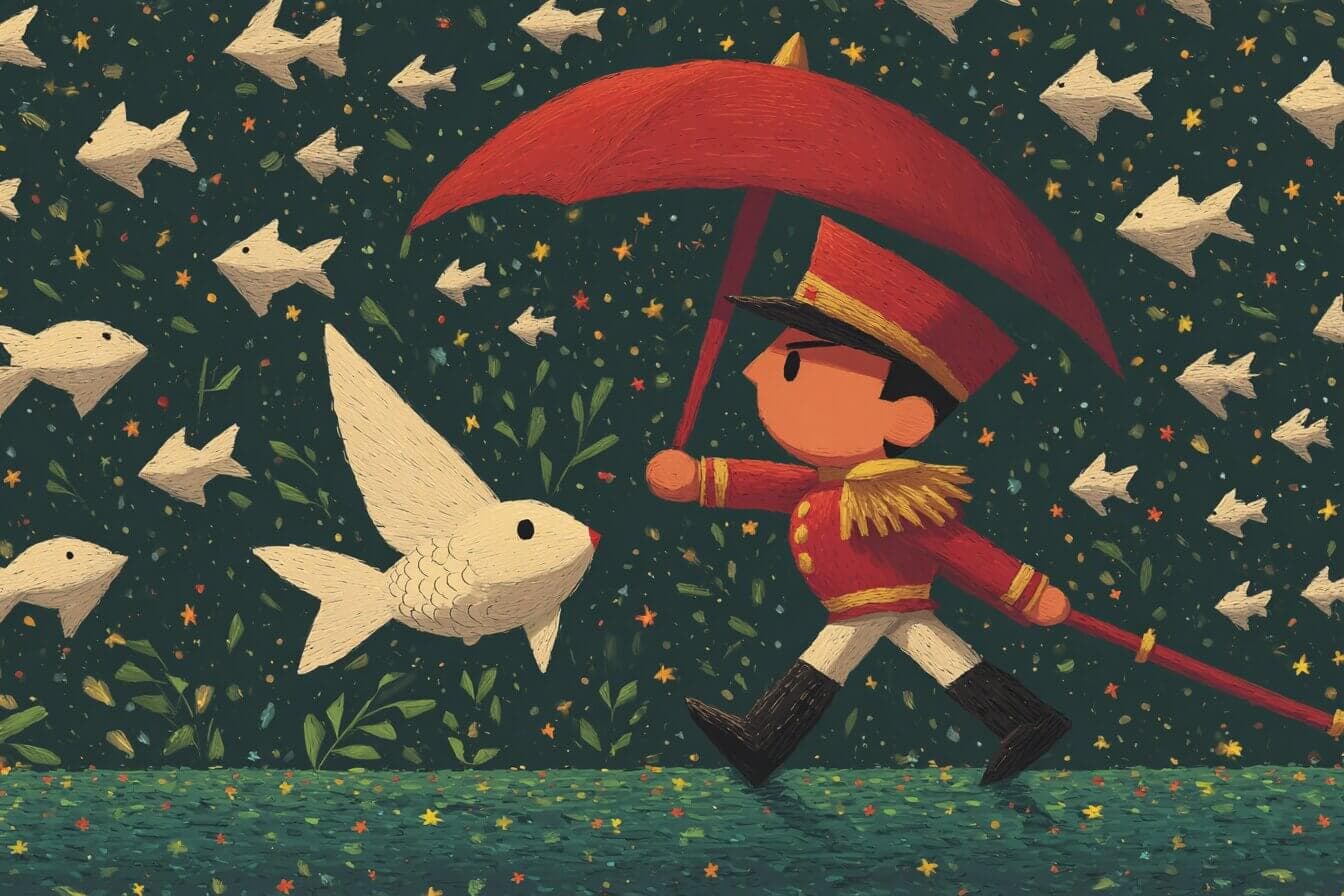
There is something about a small, loyal figure standing perfectly still that makes children go quiet in the best possible way. This retelling follows a one legged tin soldier who tumbles from a windowsill, drifts through dark waters, and somehow finds his way back to the paper dancer he loves. It is the kind of the tin soldier bedtime story that feels like candlelight on a rainy evening, slow and warm and a little bit brave. If you would like to reshape the journey for your own child, you can create a personalized version with Sleepytale.
Why Tin Soldier Stories Work So Well at Bedtime
A tin soldier is small, still, and steady, three qualities that mirror exactly what we hope a child will feel as sleep approaches. Stories about toy soldiers tap into something children already understand: the idea that a tiny figure can be brave without being loud, that standing firm counts as its own kind of courage. When the world of the story shrinks to a shelf, a windowsill, or the inside of a fish, the scale feels safe rather than overwhelming.
There is also a quiet loyalty running through a bedtime story about a tin soldier that reassures kids on a level they might not be able to name. The soldier does not fight monsters or win a race. He simply holds on and keeps loving. For a child settling under the covers, that message lands softly: you do not have to do anything grand tonight. You just have to rest, and everything you care about will still be there in the morning.
The Steadfast Tin Soldier and the Paper Dancer 7 min 43 sec
7 min 43 sec
In a toy shop on a narrow cobblestone street, twenty five tin soldiers stood in a neat row.
Each one was painted red and held a musket at his shoulder. They looked almost identical, like stamps pressed from the same mold, which they were.
The very last soldier had only one leg. There had not been enough tin to finish him.
He stood as tall as his brothers anyway, balanced on that single foot with a stubbornness that would have impressed anyone watching, though nobody was.
On the shelf across from him, a paper dancer twirled on one toe inside a music box.
Her dress was made of tissue, colored like a sunset that could not decide between orange and pink, and she held her arms up as if greeting someone she had been waiting for. The tin soldier thought it might be him. It was not, of course. She was a paper dancer in a music box. She greeted everyone and no one.
But he loved her anyway, with every rivet of his being.
Each evening, when the shopkeeper blew out the lamps, the soldier stood guard and watched her spin to that tinkling tune. He longed to speak. Tin lips do not move. So he loved in silence, which is harder than it sounds and also, somehow, enough.
One morning a boy with jam on his fingers bought the soldiers for a penny.
He lined them on the window ledge, flicked a marble at them for fun, then with a careless laugh tipped the one legged soldier right out into the street.
Down he clattered onto the cobblestones. The sound was surprisingly loud for such a small thing.
Rain began to fall. The gutters filled and rushed. The soldier balanced on his single leg while water swirled around him, and a paper boat made from someone's homework swept past like it had places to be. Two sparrows swooped low, eyeing his shine. A passing boot kicked him sideways into the current before he could so much as tip his musket in protest.
He sailed like a knight, musket raised, thinking only of the dancer's turn.
The stream carried him beneath a stone bridge where rats watched from the shadows, whiskers twitching, eyes like wet beads. One of them sneezed. The soldier drifted on.
The gutter spilled into a great drain, and the world went dark and cold. Then a fish, a large stupid one with no sense of what was food and what was not, swallowed him whole.
Inside the belly, the walls pressed close. It smelled of seaweed and salt and something else he could not name, something deeply fishy and warm. He stood firm.
Days passed in that dark. He never forgot the paper dancer's sunset dress.
He pictured her turning, turning. The image kept his tin heart steady the way a metronome keeps time for a musician who has lost the beat.
One lucky night the fish was caught. A fisherman sold it at market, and a cook sliced it open for supper. She found the soldier inside, still gleaming despite everything, and she let out a small shriek before laughing at herself.
She wiped him clean and set him on the kitchen mantel beside a cuckoo clock that had not cuckooed in years.
From there he could see a window, and beyond it the toy shop's roof. He wondered if the dancer still danced. He hoped so, in the way you hope for things you cannot check on.
The cook's grandson noticed the lonely soldier and tucked him into his apron pocket. The boy ran upstairs to show his grandmother. But as he bounded along, the soldier slipped through a hole in the fabric.
He tumbled into the glowing hearth.
Orange flames licked at his coat, hotter than any battle, hotter than anything he had words for. His edges began to soften. He stood straight, thinking of the dancer's outstretched arms, because that was the only thought that fit.
The fire cracked and hissed. Slowly the heat melted him into a small, heart shaped lump of gleaming metal.
Just then the grandmother opened the stove door. She spotted the glowing heart and scooped it onto the hearthstone with tongs. When it cooled, she lifted it and turned it in the light. Perfect shape. She smiled the way people smile when something sad becomes something beautiful, which is a complicated smile but a real one.
Upstairs in the attic, she kept a box of paper scraps for making ornaments. Among the scraps lay the paper dancer, whose music box had broken long ago. The grandmother had glued the dancer to the center of a greeting card. The card was never sent, so the dancer waited in the dark of that box, one toe still pointed, arms still raised.
On this bright afternoon the grandmother carried the tin heart and the card to her worktable. She pressed the warm metal heart into the dancer's tiny paper hands, and the glue held fast.
When the soldier felt the dancer's touch, even though he was now a heart and she was still paper, something settled inside him. Not a flutter this time. A stillness. The good kind.
The grandmother propped the card on her windowsill where the sun could reach. There the dancer stood, arms out, holding the heart that had once been the steadfast soldier. Children passing in the street sometimes pointed. The dancer and the heart simply gazed at each other.
Seasons turned. The grandmother grew older. Her hands shook a little more each winter.
One spring cleaning day she gave the card to her visiting niece, a girl with freckles and braids who loved it at once. The girl placed it on her bedroom shelf, and each night she wound a music box. The tune was different from the dancer's original song. It did not matter. The dancer and the heart listened together.
The girl imagined how the heart had traveled through gutters and fish bellies and fire to find its partner. She whispered these tales before she slept, and in the moonlight the paper dancer seemed to glow, though that was probably just the moon doing what moons do.
Years later, when the girl herself became a grandmother, she passed the card along. The paper dancer's edges had softened with time, but she still held the tin heart close.
They had become more than decorations. They were proof that love outlasts storms, fish bellies, and even flames.
One quiet evening, the newest child of the family set the card on the windowsill during a thunderstorm. Lightning flashed. In that bright moment the paper dancer lifted one foot ever so slightly, as if to curtsey.
The tin heart gleamed, catching the lightning's silver fire.
Outside, rain washed the world clean. Inside, the dancer and the heart stayed together, steadfast and still.
The child, half dreaming, thought she heard a faint metallic heartbeat echoing the thunder. She smiled, tucked the card beneath her pillow, and drifted into sleep.
In her dream, the tin soldier stood whole on two legs. The paper dancer leapt from her card and danced across moonbeams while a music box played their favorite tune, a tune nobody else in the world remembered. When morning came, the card lay peaceful on the pillow, the dancer and heart exactly as before.
The child carried the card downstairs to breakfast, promising to keep their secret forever.
And every night, when the house goes still and the last light clicks off, the music box plays a gentle lullaby. Somewhere inside it, a paper dancer twirls, holding a shining heart that once marched bravely on a single leg.
The Quiet Lessons in This Tin Soldier Bedtime Story
This story is built around loyalty, patience, and the kind of courage that does not need a sword. When the soldier stands firm inside the fish's belly, thinking only of the dancer's sunset dress, children absorb the idea that holding on through a dark, uncomfortable stretch is its own form of bravery. The moment the grandmother turns a melted lump into a perfect heart shows kids that loss can reshape into something unexpectedly beautiful, a reassuring thought right before sleep. And the card passing from hand to hand across generations gently teaches that the things we love do not disappear just because they change form, which is exactly the kind of certainty a child needs as the lights go out.
Tips for Reading This Story
Give the tin soldier a calm, low voice in your mind as you read his scenes, almost monotone, to capture his steadiness, and let the boy with jam on his fingers sound careless and quick. When the soldier tumbles into the fish, slow your pace way down and drop your volume so the darkness of that belly feels real. At the very end, when the child tucks the card beneath her pillow, pause for a breath and let the silence do the work before you close.
Frequently Asked Questions
What age is this story best for?
Children around ages 4 to 8 tend to connect with it most. Younger listeners love the journey through water and the surprise of the fish swallowing the soldier, while older kids pick up on the quieter thread of the tin heart passing through generations of grandmothers and granddaughters. The story's gentle pace and lack of anything truly frightening make it comfortable even for sensitive listeners.
Is this story available as audio?
Yes. You can press play at the top of the story to hear it read aloud. The audio version brings out details that might slip past on the page, like the contrast between the rushing gutter scene and the hush inside the fish's belly. The music box moments especially benefit from a narrator's pacing, letting each turn of the dancer land with a little weight.
Why does the tin soldier only have one leg?
In both the original Hans Christian Andersen tale and this retelling, the toymaker simply ran out of tin before finishing the last soldier. It is not a flaw but a detail that makes him distinct from his brothers and gives the story its emotional center. His ability to stand tall on one leg becomes the symbol of his steadfastness, proving that being incomplete does not make someone less brave or less worthy of love.
Create Your Own Version
Sleepytale lets you reshape this classic into something that fits your child's world perfectly. You could swap the cobblestone street for a space station shelf, turn the paper dancer into a folded origami crane, or change the fish into a gentle whale. In a few moments you will have a cozy, personal tale ready to read tonight.
Looking for more bedtime story classics?

Once Upon A Time Stories
What happens when June opens a golden book with no title? One of the sweetest short once upon a time stories about a forest, a hedgehog, and a blank page.

Fairy Tales Written By Hans Christian Andersen
Anders discovers short fairy tales written by Hans Christian Andersen as his grandmother reads from a soft brown book by lamplight.

Bluebeard Fairy Tale
In this short bluebeard fairy tale, the forbidden room holds not horror but a music box and memories of the people Lord Corvus loved most.

Red Shoes Fairy Tale
What happens when Karen's magical red shoes refuse to stop dancing? Discover this short red shoes fairy tale tonight.

Twinkle Twinkle Little Star Bedtime Story
Lily watches a kind star and floats up to help deliver dreams in this short twinkle twinkle little star bedtime story. A warm, quiet tale for sleepy nights.
Through The Looking Glass Bedtime Story
Step into a calm, magical short through the looking glass bedtime story and drift toward sleep with gentle wonder. Enjoy a soothing retelling that feels cozy from start to finish.