
The Three Musketeers Bedtime Story
By

Dennis Wang, Bedtime Story Expert
9 min 59 sec
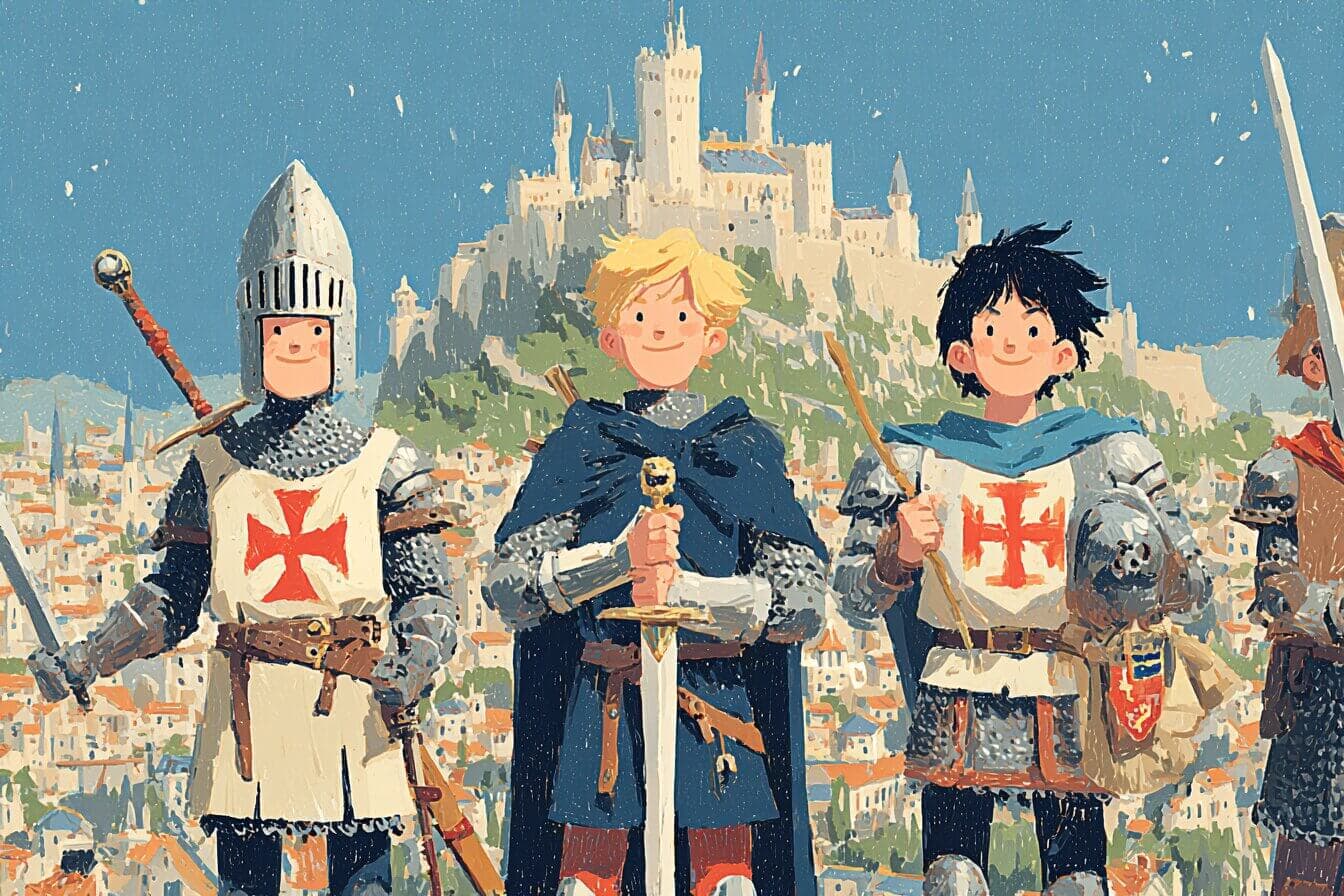
There is something about swords, secret missions, and loyal friends that makes a child's eyes go wide right before they start to droop. This tale follows young D'Artagnan as he stumbles into Paris, accidentally challenges three famous guards to duels, and ends up joining them to protect the queen's diamond brooch. It is our favorite kind of the three musketeers bedtime story, full of gentle bravery and warm bread shared between new friends. If your little one loves adventure with a cozy ending, you can create your own version with Sleepytale.
Why Three Musketeers Stories Work So Well at Bedtime
Kids are drawn to loyalty. Even very young ones understand the pull of having someone who will stand beside you no matter what, and that is exactly what musketeer tales deliver. The rhythm of these stories, a small misunderstanding that melts into fierce friendship, mirrors the way children process their own playground conflicts before sleep. When the swords come out, they carry no real menace. They ring and flash for a moment, then the characters sit down together and share a meal.
A bedtime story about musketeers also gives children a safe framework for big feelings like pride, embarrassment, and the nervousness of being new somewhere. D'Artagnan arrives in a strange city with nothing but a crumpled letter and too much courage, and by the end he belongs. That arc, from outsider to family, is one of the most reassuring shapes a story can take right before lights go out.
The King's Bravest Guard 9 min 59 sec
9 min 59 sec
Young D'Artagnan stepped off the coach in Paris with a heart full of dreams and a letter tucked in his pocket. He had come from a small farm in Gascony to join the king's guards, just like his father before him.
The cobblestone streets buzzed with merchants, children chasing pigeons, and the clatter of horses whose shoes threw sparks off the wet stone. D'Artagnan breathed in and got bread, leather, and something sharper underneath, maybe the river, maybe just the city being itself.
He straightened his worn blue cloak. The feather in his cap was bent from the coach ride, and no amount of smoothing fixed it, so he left it crooked and marched toward the royal barracks.
On the way, a careless bump from a stranger sent his letter flying into the street. As he bent to grab it, a tall man in a splendid guard uniform planted one polished boot right on the parchment.
"Mind where you place your boots," D'Artagnan said, cheeks burning.
The man lifted an eyebrow. "A country boy with a temper. How amusing."
D'Artagnan challenged him to a duel at noon, then stormed away before his voice could crack.
Around the next corner, another guard, Aramis, accidentally splashed mud across D'Artagnan's boots. Another challenge, another duel, this one set for one o'clock. And before the morning ended, he had also promised a contest with the jolly Porthos at two. Three duels stacked up like dishes he would eventually have to wash.
He reached the barracks and presented his letter to the captain, who turned it over twice, squinting at the ink smudges.
"Three duels in one day? That must be a record."
Still, he admired the boy's nerve and assigned a narrow bunk in the attic where the ceiling beams were so low you could press your palm flat against them while lying down. D'Artagnan spent the next hour polishing his father's sword, whispering the words his dad had taught him: "All for one and one for all." His dad claimed those words could change the world. D'Artagnan was not sure about the world, but they steadied his hands.
When the cathedral bell tolled twelve, he hurried to the meadow behind the chapel. Athos, the first guard, waited with calm eyes and a blade that caught the noon light.
They saluted. They crossed swords. The duel was swift, and each parry rang with something that felt less like anger and more like a conversation neither of them expected to enjoy.
Before either could claim victory, a band of the cardinal's guards appeared, eager to arrest them both for dueling without permission. Athos lowered his sword, glanced at D'Artagnan, and gave a single nod. Then Aramis and Porthos arrived for their own appointments, took one look at the situation, and fell in beside them.
Four against twelve. The boys fought as one, ducking, leaping, occasionally bumping into each other and apologizing mid-swing. D'Artagnan used his farm strength to disarm two attackers. Athos moved like he had all the time in the world. Aramis fought the way some people pray, quiet and precise. Porthos laughed every time he blocked a strike, which unnerved his opponents more than any war cry could.
When the last cardinal's guard fled, the meadow lay still except for the grasshoppers.
Athos extended a gloved hand. "You fought well, farm boy."
Aramis smiled. "And you arrived exactly when we needed you."
Porthos clapped D'Artagnan's shoulder hard enough to rattle his teeth. "I say we forgive the duels and share bread instead."
So they did. Over warm baguettes and cheese that Porthos produced from somewhere inside his enormous coat, the four spoke of honor, of protecting people who could not protect themselves, and of dreams that felt too big to say out loud but small enough to carry in a pocket. D'Artagnan told them about his father's motto. Athos repeated it slowly, testing each word.
"All for one and one for all. That is the heart of true courage."
From that moment, they became brothers in spirit.
The next weeks were a blur of training. D'Artagnan learned to balance on narrow beams, to read shadows in candlelit corridors, and to listen so carefully to the city that he could tell the hour by the sound of the baker's door opening three streets away. Athos taught him quiet strength. Aramis taught him cleverness, and the trick of hiding a message inside a folded napkin. Porthos taught him joy, which turned out to be the hardest lesson of all.
One evening, as the four strolled along the Seine watching lanterns float on the dark water, they overheard whispers. A plot to steal the queen's diamond brooch, a gift from her mother. Without it, the king would be humiliated before the visiting Spanish prince. The cardinal's agents planned to snatch it during tomorrow's masquerade ball.
D'Artagnan's eyes flashed. "We cannot let that happen."
Athos nodded. "All for one."
Aramis added, "And one for all."
Porthos grinned. "Then let's dance."
They sought an audience with the queen. She received them in a garden so thick with roses that the air tasted pink. Her worried eyes brightened when she heard their plan. She entrusted them with the brooch for safekeeping until the ball ended.
D'Artagnan tucked the treasure inside his doublet. It was heavier than he expected, and warm, like it remembered the queen's mother's hand.
That night, the four friends disguised themselves as traveling musicians. They entered the glittering ballroom among swirling masks and flickering chandeliers. Lutes sang. Goblets clinked. Laughter drifted between the pillars like something you could almost touch.
D'Artagnan spotted the cardinal's captain, a man with a sharp nose and a peacock feather mask, eyeing the queen's empty jewelry case from across the room. The music rose, the dancers spun, and the plan unfolded.
Athos drifted toward the cardinal's guards and trapped them in stories about foreign wars so detailed that one guard actually sat down. Aramis slipped between servants, gathering gossip and planting small confusions. Porthos twirled every duchess in the room, creating pockets of laughter so loud and bright that every eye turned his way.
At the stroke of midnight, the captain signaled. Three masked figures crept toward the queen's chamber.
D'Artagnan followed. His heart was loud.
Inside the chamber, moonlight pooled across marble. The thieves rifled through jewel boxes, working fast, not speaking. D'Artagnan stepped from behind the curtain, sword steady.
"Looking for this?"
He held up the brooch, and it caught a sliver of moonlight so perfectly that even the thieves paused to stare.
Then they lunged. Steel rang against steel. D'Artagnan used every trick his friends had taught him: parrying high, ducking low, and tangling one foe in a velvet curtain so thoroughly that the man looked like an angry caterpillar. When the last thief fled through the window, the brooch remained safe in D'Artagnan's hand, and his bent feather had somehow gotten more bent.
The next morning, the queen placed white plumes in their caps and called them the kingdom's bravest guards. The king himself shook D'Artagnan's hand. D'Artagnan said thank you and then could not remember a single other word for about ten seconds, which Porthos found hilarious.
Yet greater tests waited.
Weeks later, news came that a village near the border was suffering raids. Bandits stole food, burned rooftops, and left families with nothing but smoke and fear. The four friends volunteered without hesitating.
They rode hard for two days, reaching the village at dusk. Smoke still curled above one collapsed barn. Families huddled in the square. A girl with soot on her face held a loaf of bread so tightly her knuckles were white.
Athos knelt beside her. "We are here to stand with you."
Aramis handed out bandages and bread from the saddlebags. Porthos hoisted children onto his wide shoulders, promising songs and stories until his voice went scratchy.
D'Artagnan gathered the village elders beneath an ancient oak whose roots had buckled the cobblestones. He learned that the bandits hid in the forest and struck at night, taking not only grain but the courage to plant more.
That night, the four devised a plan. Using farm carts, lanterns, and every bell they could find, they created a false caravan on the village road. D'Artagnan and Porthos drove the carts while Athos and Aramis waited in the tree line.
When the bandits attacked, the friends rang bells all at once. Horses spooked. Shadows scattered. Villagers emerged from doorways carrying torches, their faces fierce with something that had not been there that morning.
Together they drove the bandits deep into the forest, where thickets and night noises finished the job. By dawn, the village was free.
Children laughed again. Fires crackled in hearths instead of on rooftops. Bread rose in ovens. Before leaving, the four friends helped plant a garden of white roses at the edge of the square, a small bright thing the village could watch grow.
Back in Paris, they ducked into a tavern that smelled of stew and old candle wax. A cat slept on the counter and did not move for anyone.
Athos raised his cup. "To brotherhood."
Aramis added, "To justice."
Porthos laughed. "To tomorrow's adventures."
D'Artagnan looked at each of his friends. He thought of the crooked feather, the stolen brooch glinting in moonlight, the girl clutching bread, Porthos producing cheese from inside his coat. He thought of his father's motto, now carved above the barracks door where every new guard would see it first thing in the morning.
All for one and one for all.
Outside, stars scattered across the sky, and the city settled into sleep, knowing that four hearts stood watch, quiet and steady and not going anywhere.
The Quiet Lessons in This Three Musketeers Bedtime Story
This story is really about what happens after you make a mistake. D'Artagnan challenges three strangers to duels out of wounded pride, and instead of punishment, he finds friendship. Kids absorb the idea that a hot temper does not have to define you, that the same fierceness can become loyalty when you point it in the right direction. The village scenes carry a different lesson: that courage is not only swords and clever plans but also handing bread to someone who is scared, or planting roses where a barn burned down. At bedtime, these ideas land gently because nothing is lectured. They arrive through action, through characters doing small real things, which gives a child permission to close their eyes feeling like tomorrow's mistakes will be manageable too.
Tips for Reading This Story
Give D'Artagnan a slightly breathless, eager voice, especially when he challenges Athos, and let Porthos sound big and warm, the kind of voice that fills a room. When D'Artagnan holds up the brooch in the moonlit chamber and says "Looking for this?", slow way down and drop your voice to almost a whisper so the scene feels electric. During the village bell-ringing scene, you can actually clap your hands once or tap the bed frame to give your child that jolt of surprise before the story settles back into calm.
Frequently Asked Questions
What age is this story best for? This version works well for children ages 4 through 8. Younger listeners enjoy the bell-ringing bandit scene and Porthos pulling cheese from his coat, while older kids connect with D'Artagnan's embarrassment about losing his temper and the satisfaction of the midnight brooch rescue. The plot moves quickly enough to hold attention but winds down gently at the end.
Is this story available as audio? Yes, you can press play at the top of the story to listen. The audio version brings out the contrast between the clanging duel scenes and the quiet moments, like the four friends sharing bread in the meadow. Porthos's booming laugh and the midnight confrontation in the queen's chamber sound especially vivid when narrated aloud.
Why does D'Artagnan challenge everyone to duels? In this retelling, D'Artagnan arrives in Paris eager to prove himself and accidentally lets his pride do the talking. Each bump and splash feels like an insult to a nervous country boy trying to look brave. The story shows how that same fierce energy becomes a strength once he learns to fight beside people instead of against them, which is a reassuring idea for kids who sometimes react before they think.
Create Your Own Version
Sleepytale lets you reshape this musketeer adventure into something that fits your child perfectly. Swap Paris for your own neighborhood, replace the diamond brooch with a lost stuffed animal, or turn the four friends into siblings, classmates, or even talking cats in capes. In just a few taps you will have a cozy, personalized story with illustrations and a gentle pace, ready to replay whenever bedtime needs a little bravery.
Looking for more bedtime story classics?

Once Upon A Time Stories
What happens when June opens a golden book with no title? One of the sweetest short once upon a time stories about a forest, a hedgehog, and a blank page.

Fairy Tales Written By Hans Christian Andersen
Anders discovers short fairy tales written by Hans Christian Andersen as his grandmother reads from a soft brown book by lamplight.

Bluebeard Fairy Tale
In this short bluebeard fairy tale, the forbidden room holds not horror but a music box and memories of the people Lord Corvus loved most.

Red Shoes Fairy Tale
What happens when Karen's magical red shoes refuse to stop dancing? Discover this short red shoes fairy tale tonight.

Twinkle Twinkle Little Star Bedtime Story
Lily watches a kind star and floats up to help deliver dreams in this short twinkle twinkle little star bedtime story. A warm, quiet tale for sleepy nights.
Through The Looking Glass Bedtime Story
Step into a calm, magical short through the looking glass bedtime story and drift toward sleep with gentle wonder. Enjoy a soothing retelling that feels cozy from start to finish.