
The Tale Of Squirrel Nutkin Bedtime Story
By

Dennis Wang, Bedtime Story Expert
8 min 11 sec
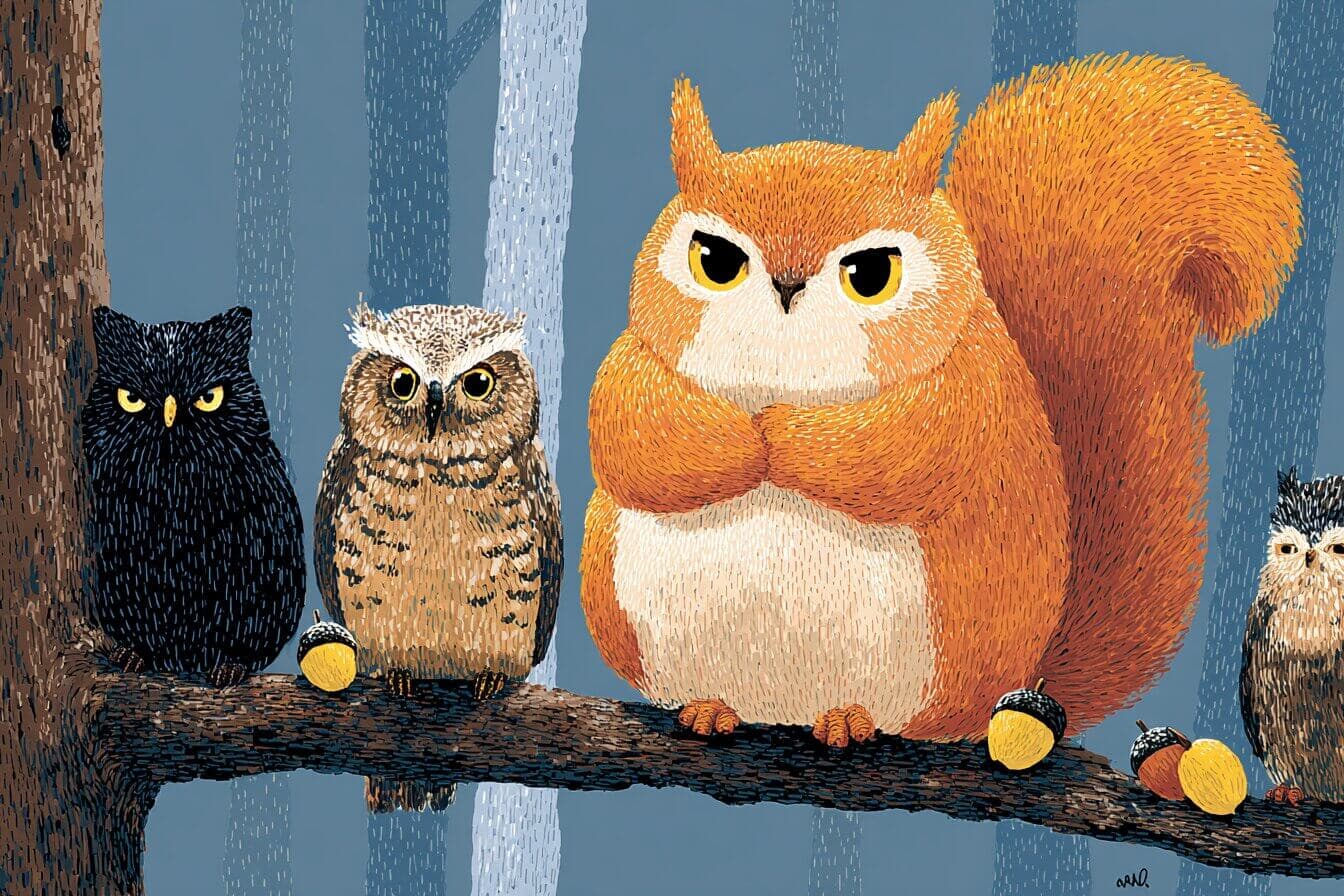
There is something about an autumn forest at dusk, the smell of damp bark, the last bit of amber light caught in the canopy, that makes children want to hear about the creatures who live there. This retelling follows Pip, a lively squirrel who pesters a weary old owl one too many times and has to figure out how to make things right after losing half his glorious tail. It is our favorite kind of the tale of Squirrel Nutkin bedtime story, one where mischief leads somewhere tender. If you would like to shape your own version with different characters or settings, you can build one inside Sleepytale.
Why Squirrel Nutkin Stories Work So Well at Bedtime
There is a reason kids have loved the Squirrel Nutkin tale for over a century. The story follows a pattern children find deeply satisfying at bedtime: a small creature pushes boundaries, meets a consequence, and then finds a way back to safety. That arc mirrors what kids process every single day, testing limits, stumbling, and needing reassurance that repair is possible. The familiar forest setting, with its acorns, hollow trees, and sleepy owls, wraps the whole thing in a world that feels both wild and cozy.
A bedtime story about Squirrel Nutkin also gives children permission to sit with imperfect endings. Pip does not get his tail back, and the owl does not suddenly become cheerful. But things get quieter and gentler, which is exactly the emotional temperature a child needs before sleep. The woods settle, the characters settle, and so does the listener.
The Squirrel Who Lost Half His Tail 8 min 11 sec
8 min 11 sec
In Maplewood Forest, where the oaks grew so close together their branches tangled like fingers, there lived a young squirrel named Pip who had never once in his life left well enough alone.
His cousins Hazel and Nutkin spent autumn mornings doing sensible things. Gathering acorns. Sorting walnuts by size into neat rows inside their family's nest. Pip watched them sometimes from the lip of a high branch, his tail draped behind him like a flag in no particular wind, and felt genuinely baffled by how they could stand it.
He had discovered something better. At the edge of the forest stood a hollow oak, and inside that oak lived Mr. Hoot, an owl who had been old for as long as anyone could remember. Mr. Hoot valued three things: silence, darkness, and being left entirely alone. Pip found this hilarious.
Every morning, just as the sun cracked through the branches, Pip would scramble down to the base of Mr. Hoot's tree with a new riddle he had been turning over all night. His tail, the fluffiest in his entire family, would twitch so fast it blurred.
"Mr. Hoot! How many feathers does an owl lose when he sneezes?"
One golden eye would crack open. A low groan.
Pip never waited for answers. He did not actually want answers. He wanted the groan. The groan was the whole point.
His cousins tried. Hazel once stopped mid-acorn-carry and said, "Pip, you are going to regret this." Nutkin said something similar but with fewer words and more sighing. Pip stuck out his tongue at both of them and went back to work on a new bit about owl table manners.
The thing is, Pip was not untalented. Some of his riddles were genuinely funny. "Why don't owls get invited to birthday parties?" he asked one Tuesday, and a passing jay laughed so hard it dropped a berry. The rabbits twitched their noses. Even the old turtle by the pond paused mid-stroll, which for the turtle was practically a standing ovation.
But Mr. Hoot did not laugh. Mr. Hoot shifted on his perch and tried pressing his wings over his ears, which does not work well when your ears are hidden under feathers.
He tried flying to other trees. Pip followed, leaping branch to branch like the gaps were nothing. He tried being polite once, thanking Pip for sharing and asking calmly if perhaps that could be the last riddle for the season. Pip took this as encouragement.
The more Mr. Hoot resisted, the more Pip escalated.
As the air turned sharper and the mornings arrived with frost on the grass, Pip showed up wearing an acorn cap he had modified to look like an owl's face. He had glued button eyes to it and stuck on bits of paper for feathers. The left eye was noticeably higher than the right, which somehow made it worse.
Mr. Hoot nearly slid off his perch.
Pip performed a full routine that morning, complete with observations about owl hygiene, owl romance, and the specific way Mr. Hoot's feathers stuck up on the left side when he was annoyed. He had even convinced three sparrows to chirp backup, though they kept losing their place.
Word spread. Animals started timing their morning routines around the shows. A family of mice brought seeds to snack on. The hollow oak became the busiest spot in Maplewood, which was exactly what its occupant had spent forty seasons avoiding.
Pip's cousins warned him again. "There will be consequences," Hazel said, in the exact tone their mother used.
Pip flicked his tail, his magnificent, ridiculous tail, and said, "He's an owl, Hazel. What's he going to do, hoot at me?"
He had never felt more alive. More important. More certain he was doing something worthwhile. Never mind that his cousins' stores were full and his were empty. Never mind that winter was close enough to smell. The laughter of the forest was louder than any warning.
On the morning of the first hard frost, the grass crunched under Pip's paws as he crossed to Mr. Hoot's tree. His breath made small clouds. His tail was enormous that morning, puffed against the cold.
He had prepared his masterpiece. A riddle song. He had watched robins for choreography reference and rehearsed the whole thing by moonlight until a bat asked him to please stop.
He began. He danced. He sang about owl intelligence, owl night vision, the particular way Mr. Hoot blinked when confused. The sparrow chorus came in a beat late but rallied.
He did not see Mr. Hoot move.
The owl came down from his perch in one motion, wings open, silent the way only owls can be. The gust scattered the audience like leaves. Pip, mid-spin, felt something catch and release at the base of his tail.
Then cold air where there should not have been cold air.
He stopped. The forest stopped. Even the frost seemed to pause.
Pip looked behind him. Half his tail lay on the ground, still fluffy, going nowhere.
Nobody spoke. The sparrows had vanished. The mice clutched their seeds and stared. Mr. Hoot returned to his perch, settled his feathers, and closed both eyes.
Hazel stepped forward first. She took Pip's paw without saying anything, which was worse than if she had said "I told you so," because he could hear her thinking it. Nutkin picked up the ruined acorn cap, brushed it off, and tucked it under his arm.
Pip had nothing. No riddle. No joke. No clever comeback. His mouth opened and closed and opened again, and what came out was a very small sound that was not a word.
They walked him home.
His tail still worked. It still twitched when he was nervous, which was constantly now. But it ended in a clean diagonal line where something magnificent used to be, and every time he caught sight of it he remembered the sound of the forest going quiet.
That evening he sat in the family nest while his cousins sorted acorns around him. The light faded. He stared at the wall and thought about all those mornings. Each riddle. Each joke. Each time Hazel had tried to tell him and he had not listened.
It had not been clever. It had been mean. The realization sat in his chest like a stone.
He did not sleep much.
Before sunrise, while the sky was still more gray than blue, Pip climbed down from the nest and crossed the frosted meadow to the hollow oak. He carried no riddles. He carried a small woven basket filled with golden acorns, the only stores he had, saved almost by accident over the weeks he had spent performing instead of gathering.
He set the basket at the base of the tree and waited.
When Mr. Hoot opened his eyes, he saw the squirrel standing below, head low, tail tucked. Not bouncing. Not chattering. Just standing there.
"I'm sorry," Pip said. His voice barely carried. "I was foolish and I was unkind and I wasted time I did not have. I will not bother you again."
Mr. Hoot looked at the basket. He looked at the squirrel. His expression did not change, exactly, but something behind his eyes shifted, the way a branch shifts when it releases a held breath of snow.
He nodded once.
Pip turned and walked home.
After that, the mornings were different. Pip joined his cousins and worked harder than either of them, racing up and down the oaks until his paws ached, filling their stores before the first snow. He did not complain. He did not perform. When other animals asked about the shows, he shrugged and changed the subject.
His shortened tail grew familiar. He stopped noticing it, mostly. On certain mornings, when the light hit it right, he would remember, and the remembering was enough.
Some quiet autumn dawns, Mr. Hoot would find a single golden acorn left at the foot of his tree. He never mentioned it. But he stopped locking his hollow with moss at night, which in owl terms was practically an open invitation.
And sometimes, if the forest was very still and you listened carefully, you could hear the old owl make a sound that might have been a chuckle. Or might have been a cough. It was hard to tell with owls.
But Pip, gathering acorns on a branch nearby, heard it. And his half-tail twitched once, just slightly, before he went back to work.
The Quiet Lessons in This Squirrel Nutkin Bedtime Story
This story carries a few ideas that settle well just before sleep. There is the slow recognition of how our actions land on others, something Pip only understands after the consequence arrives, not before. When he stands beneath Mr. Hoot's tree in the gray morning light and offers his only acorns, children absorb the idea that saying sorry means giving something up, not just saying words. There is also the way Hazel takes Pip's paw without lecturing him, which shows kids that people who love you stay close even when you have messed up. These themes, repair, humility, the quiet grace of being forgiven, are exactly the kind of reassurance a child needs before closing their eyes.
Tips for Reading This Story
Give Mr. Hoot a slow, rumbling voice that sounds like he has not had nearly enough sleep, and let Pip talk fast and bright, almost tripping over his own words. When the talon catches Pip's tail and the forest goes silent, stop reading for a real beat, let the room get quiet too, so your child feels the weight of that moment. During the final scene where Pip leaves the acorn basket before sunrise, drop your voice to nearly a whisper and slow way down; it is the natural wind-down that cues sleep.
Frequently Asked Questions
What age is this story best for? This story works beautifully for children ages 3 to 7. Younger listeners enjoy the silliness of Pip's riddles, the funny acorn-cap costume, and the repeated trips to Mr. Hoot's tree. Older kids pick up on the emotional turn when Pip realizes his jokes were actually hurting someone, which makes for gentle conversation about empathy.
Is this story available as audio? Yes, you can press play at the top of the story to listen. The audio version really shines during the contrast between Pip's chattery morning performances and the hush that falls after Mr. Hoot swoops down. The moment of silence after the tail is lost lands perfectly in narration, and Mr. Hoot's single nod at the end feels even more powerful when you hear the pause around it.
Why does Pip lose half his tail instead of learning his lesson another way? The half-tail is borrowed from Beatrix Potter's original story, where Squirrel Nutkin barely escapes Old Brown the owl. In this retelling, the lost tail is not meant as a harsh punishment but as a visible, permanent reminder. It gives Pip something he carries with him every day, which is more honest than a tidy fix. Kids often find this detail fascinating rather than scary, especially because Pip's tail still works and still twitches when he is nervous.
Create Your Own Version
Sleepytale lets you reshape this woodland tale into something perfectly suited to your child's bedtime mood. You could swap Maplewood for a snowy pine forest, turn Mr. Hoot into a grumpy badger or a sleepy tortoise, or give Pip a sister who joins him on his journey toward making amends. In just a few taps you will have a cozy, personalized story ready to read aloud or play as audio whenever the night needs a little extra softness.
Looking for more bedtime story classics?
Once Upon A Time Stories
What happens when June opens a golden book with no title? One of the sweetest short once upon a time stories about a forest, a hedgehog, and a blank page.

Fairy Tales Written By Hans Christian Andersen
Anders discovers short fairy tales written by Hans Christian Andersen as his grandmother reads from a soft brown book by lamplight.
Bluebeard Fairy Tale
In this short bluebeard fairy tale, the forbidden room holds not horror but a music box and memories of the people Lord Corvus loved most.
Red Shoes Fairy Tale
What happens when Karen's magical red shoes refuse to stop dancing? Discover this short red shoes fairy tale tonight.
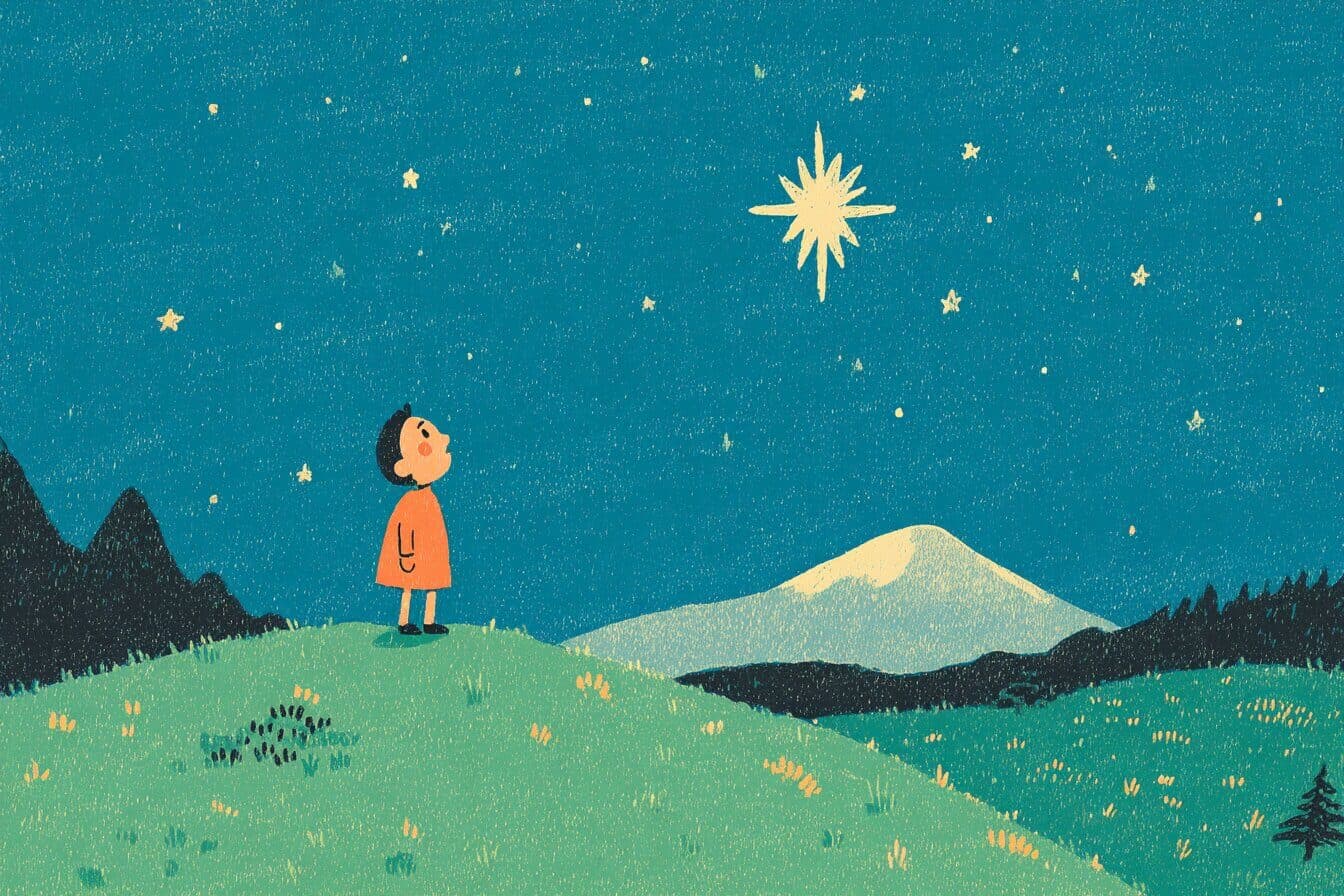
Twinkle Twinkle Little Star Bedtime Story
Lily watches a kind star and floats up to help deliver dreams in this short twinkle twinkle little star bedtime story. A warm, quiet tale for sleepy nights.
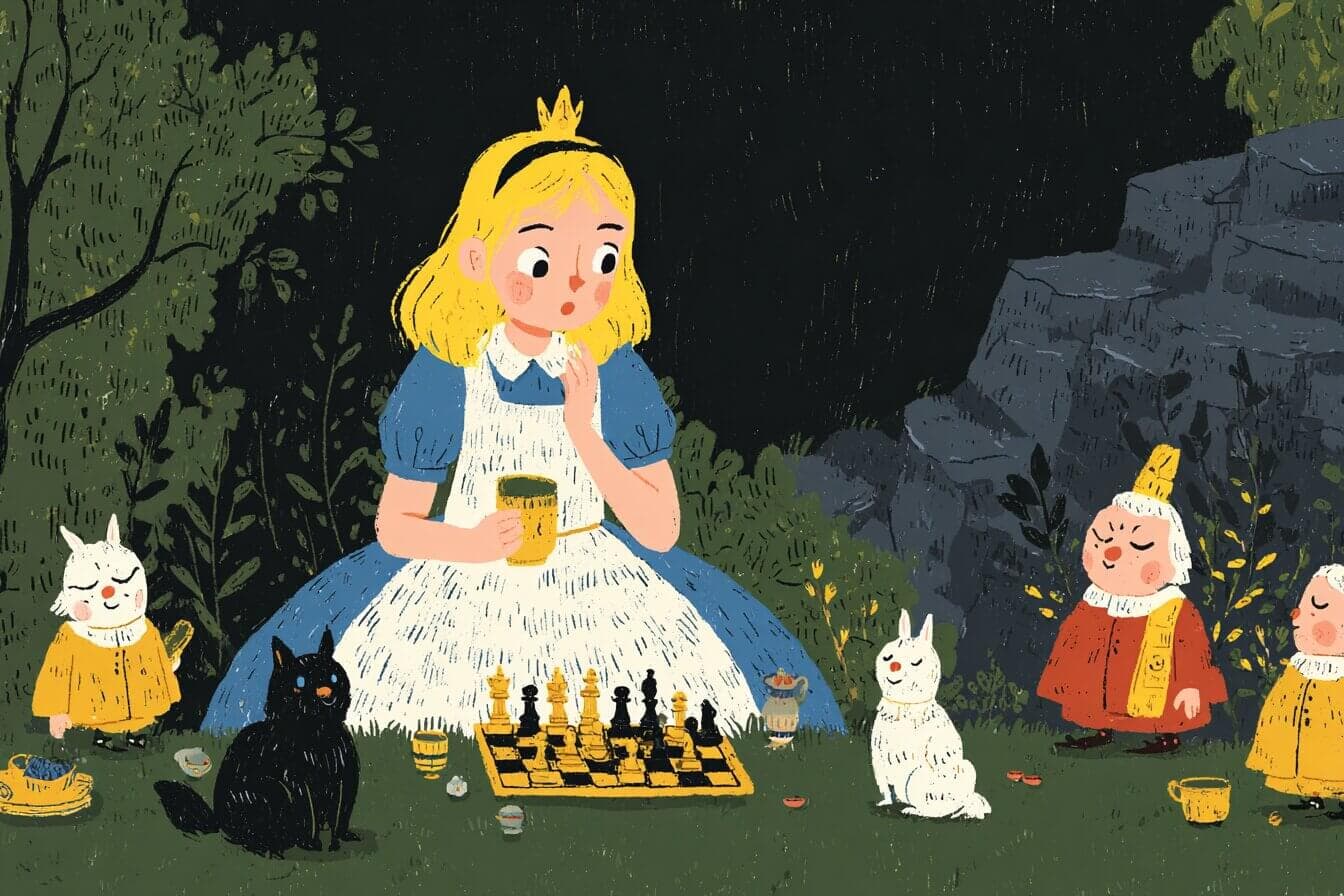
Through The Looking Glass Bedtime Story
Step into a calm, magical short through the looking glass bedtime story and drift toward sleep with gentle wonder. Enjoy a soothing retelling that feels cozy from start to finish.