
The Six Swans Bedtime Story
By

Dennis Wang, Bedtime Story Expert
7 min 35 sec
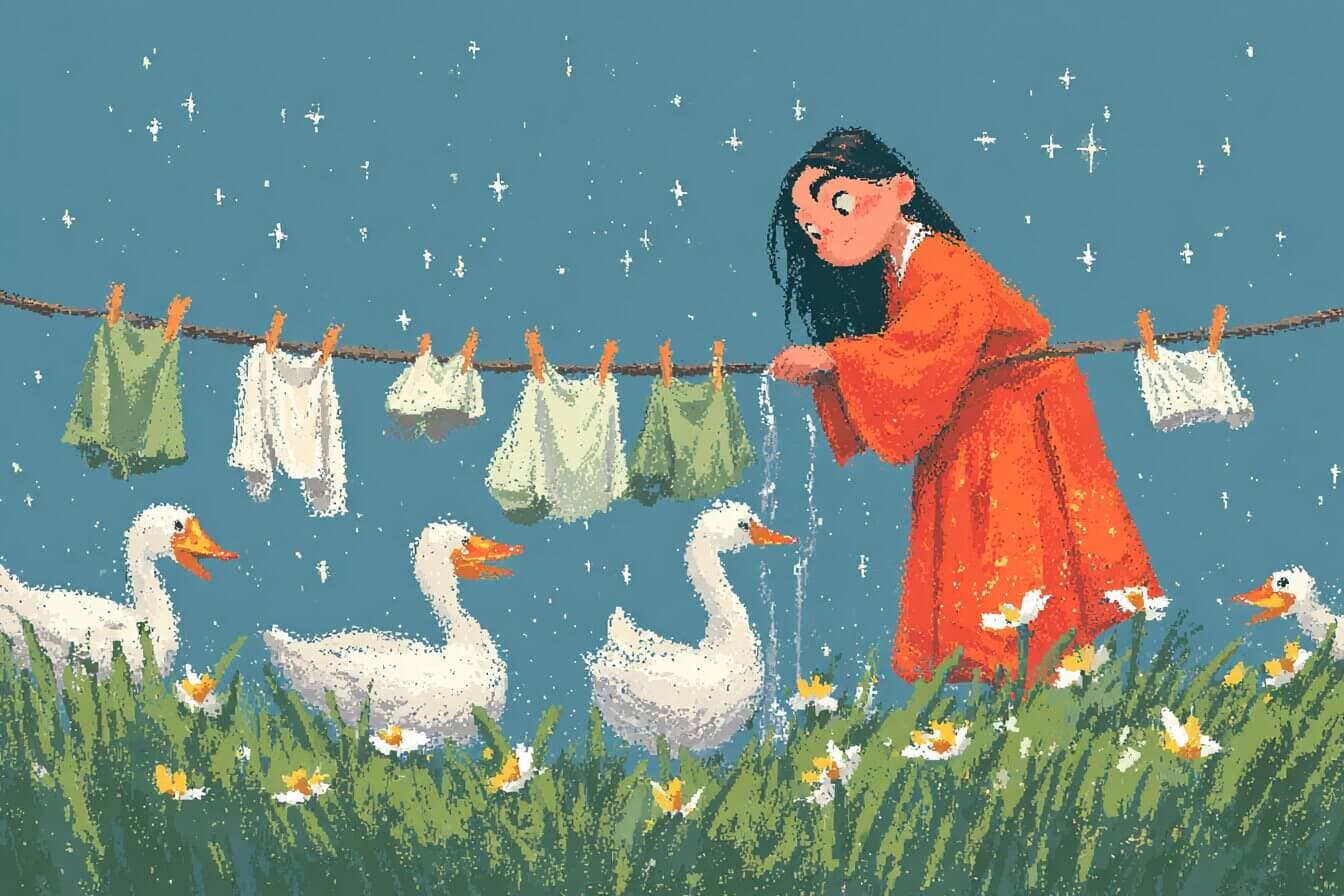
There is something about a story with feathers and silence that settles over a child's mind like a quilt pulled to the chin. In this retelling, a girl named Elara discovers her seven brothers have been turned into swans, and she embarks on a years-long task of gathering starflowers and sewing in total silence to bring them home. It is the kind of the six swans bedtime story that rewards patience, where love is measured in stitches rather than words. If your family loves fairy tales with quiet courage, you can shape your own gentle version with Sleepytale.
Why Six Swans Stories Work So Well at Bedtime
Fairy tales about transformation tap into something children already understand: the world changes around them constantly, and they need to believe it can change back again. The image of swans gliding on still water is naturally calming, and the idea that someone would work in patient silence for years carries a deep, slow rhythm that mirrors the feeling of winding down for the night. A bedtime story about six swans turned brothers offers that reassurance without rushing it.
There is also something powerful about a heroine who chooses not to speak. For children who spend their days learning, talking, and processing, Elara's silence gives them permission to stop. The world of starflowers, candlelight, and lakeside evenings creates a sensory landscape that invites rest rather than excitement, making it one of those stories that seems designed for the last quiet hour of the day.
The Starflower Promise 7 min 35 sec
7 min 35 sec
Elara loved her seven brothers more than anything.
They had taught her to climb apple trees, to whistle through blades of grass, and to spot shapes in clouds that nobody else could see. The oldest one, Rowan, always claimed the clouds looked like boats. Elara never agreed, but she never told him that.
One spring morning she woke to find their beds empty.
White feathers drifted across the wooden floor, catching in the cracks between planks. The cottage was so quiet she could hear the well rope creaking outside in the wind. Their laughter, their arguing over breakfast, the thud of boots on the stairs, all of it gone.
Mother sat at the kitchen table with red eyes and told her the truth: a jealous sorceress had twisted her brothers into swans. Their wings would carry them far from home, and no amount of searching would bring them close again.
Elara pressed both hands flat on the table, feeling the grain of the wood, and said nothing for a long time.
That night an old woman appeared in her dreams. Her voice sounded like someone speaking from the far end of a long hallway.
She told Elara about starflowers that bloomed on the highest hill only under clear skies. If Elara could gather six baskets of those silver petals and sew six shirts without speaking a single word for six full years, the spell would break. Her brothers would be boys again.
Six years.
Elara lay awake until the ceiling turned gray with dawn, then kissed her mother's cheek, tucked sewing needles into her pocket, and walked toward the distant ridge.
The first year passed in busy silence. She collected blossoms at twilight when dew made them glow, then stitched by candlelight until her fingers ached and the flame guttered low. She wanted to sing the lullabies her brothers used to love. Instead she pressed her lips tight and hummed only inside her own head, where no spell could hear.
Seasons turned.
Farmers offered apples. Children offered stories and riddles they wanted her to solve. Elara only smiled and kept her needle moving, terrified that one careless sound, even a sneeze at the wrong moment, would doom her brothers forever.
In the second year wolves prowled near the hill, so she climbed at noon when sunshine kept them hiding in the tree line. She learned which berries tasted sweet and which leaves could soothe a scrape. Knowledge her brothers would have just shouted across the meadow to share, the way Rowan used to yell, "Not those ones, Elara, those'll turn your tongue blue!"
She missed the yelling. She missed the teasing. She missed the sound of seven people breathing in one room at night.
Each finished shirt she folded with care, pressing the fabric the way her mother pressed tablecloths, running a thumbnail along the crease. She imagined the warm arms that would someday fill its sleeves.
The third year brought heavy rains that washed starflowers down the slope in rivulets of mud.
Elara crawled on hands and knees, rescuing every petal, her dress soaked through, the cold reaching her bones. She thought of her brothers flying somewhere above storm clouds, perhaps circling, perhaps wondering why the world below had gone so silent.
She wanted to call out. She bit her tongue hard enough to taste copper and let her needle speak instead.
By the fourth year her hands moved like wind through wheat. Village folk began leaving gifts at the foot of the hill: bread wrapped in cloth, a jar of blackberry jam with a wax seal, once a pair of wool socks with a note she could not read because rain had smeared the ink. She never learned who left the socks. She wore them until they had holes.
She discovered the starflowers' secret that year. They opened widest when she held a happy memory in her mind, as if joy itself coaxed the petals apart. So she kept those memories close, rationing them like firewood through cold nights: the time Rowan fell into the duck pond, the afternoon her youngest brother tried to teach the cat to whistle.
During the fifth year soldiers marched through, searching for a legendary silent seamstress whose skill might mend war banners.
They climbed the hill in clanking armor and found only a thin girl who shook her head and pointed to her lips. The captain studied her for a long moment. He looked at the shirts, looked at her red, cracked hands, and left behind a heavy woolen cloak without saying a word.
Elara wrapped it around her shoulders. It smelled like horse and woodsmoke. She wore it every night for the rest of the year.
The sixth year arrived like the final page of a book you have been reading all winter.
Only one shirt remained. Her baskets overflowed with petals that shimmered like something between starlight and frost. She worked faster, her fingers remembering the pattern the way your feet remember the path to the kitchen in the dark.
One autumn afternoon, golden leaves spiraling around her like an audience, she tied the last knot, cut the thread with her teeth because the scissors had gone dull months ago, and held all six shirts against her chest.
Tears came. She swallowed the sound and let them fall silently onto the fabric.
She hurried to the lake where swans gathered each evening. The water lay flat and gray, reflecting the first pale stars. There they were, her brothers, seven necks curved like questions she had been answering for six years.
Elara stepped onto the shore and spread the shirts across the stones.
One by one the swans approached, lowering their heads to the fabric. She could hear the soft scrape of beaks against linen.
A hush.
Then light, gentle as the sun coming up over a hill you have been climbing all night.
Where seven swans had floated, seven boys stood blinking, knee-deep in water, looking at their own hands as if they had forgotten what fingers were for.
The noise that came next was extraordinary. Laughter and shouting and splashing and someone, probably Rowan, saying, "Elara, your hair got long."
They ran to her, hugging her, spinning her, calling her name over and over. Words clogged her throat. Six years of silence pressed against her teeth. When she opened her mouth, all that came out was a laugh, small and light, like a petal lifting off water.
Her brothers understood.
They wrapped her in their arms and promised to talk enough for all of them, to sing every lullaby she had saved, to make enough noise to fill six years of quiet.
Together they walked home beneath the first bright stars of evening. Somewhere behind them the lake settled back to glass, and the last starflower on the hill closed its petals and slept.
The Quiet Lessons in This Six Swans Bedtime Story
This story weaves together patience, sacrifice, and the stubborn kind of love that keeps going when nobody is watching. When Elara crawls through mud to rescue starflower petals, children absorb the idea that devotion sometimes looks unglamorous and difficult, not like a grand quest but like showing up on a rainy day. The moment where the captain leaves his cloak without a word shows kids that kindness can be silent, too, and that generosity does not always need to announce itself. These themes settle well at bedtime because they reassure a child that love persists even through long, quiet stretches, and that tomorrow's challenges are smaller when someone cares enough to keep trying.
Tips for Reading This Story
Give Rowan a slightly louder, bossier voice whenever he speaks or is quoted, and let the old dream-woman sound distant and echoey, like she is calling from another room. When Elara ties the final knot and cuts the thread with her teeth, pause for a beat and let your child feel the weight of six years ending in one small action. At the lake scene, slow your voice almost to a whisper so the flash of light feels sudden by contrast.
Frequently Asked Questions
What age is this story best for?
This story works well for children ages 4 through 9. Younger listeners connect with the swans, the glowing petals, and the reunion at the lake, while older children appreciate why Elara's silence is so difficult and notice the smaller details, like the ruined socks and the captain's wordless gift.
Is this story available as audio?
Yes. You can press play at the top of the story to hear it read aloud. The audio version brings out the contrast between the long, quiet sewing years and the sudden burst of noise when the brothers return. Rowan's teasing lines and the hush before the transformation scene sound especially vivid in narration.
Why does Elara have to stay silent for six years?
In fairy tale tradition, silence is often the price of powerful magic. The old woman's rule means Elara must prove her love through endurance rather than words, which makes the moment she finally laughs at the end feel earned and deeply satisfying for young listeners.
Create Your Own Version
Sleepytale lets you reshape this classic fairy tale into a personalized bedtime experience your child will ask for again and again. You can move the starflower hill to a seaside cliff, swap swans for cranes, or turn Elara into a hero whose name and personality match your own little listener. In just a few taps you will have a calm, cozy retelling ready to play or read aloud at bedtime.
Looking for more bedtime story classics?

Once Upon A Time Stories
What happens when June opens a golden book with no title? One of the sweetest short once upon a time stories about a forest, a hedgehog, and a blank page.

Fairy Tales Written By Hans Christian Andersen
Anders discovers short fairy tales written by Hans Christian Andersen as his grandmother reads from a soft brown book by lamplight.

Bluebeard Fairy Tale
In this short bluebeard fairy tale, the forbidden room holds not horror but a music box and memories of the people Lord Corvus loved most.

Red Shoes Fairy Tale
What happens when Karen's magical red shoes refuse to stop dancing? Discover this short red shoes fairy tale tonight.
Twinkle Twinkle Little Star Bedtime Story
Lily watches a kind star and floats up to help deliver dreams in this short twinkle twinkle little star bedtime story. A warm, quiet tale for sleepy nights.
Through The Looking Glass Bedtime Story
Step into a calm, magical short through the looking glass bedtime story and drift toward sleep with gentle wonder. Enjoy a soothing retelling that feels cozy from start to finish.