
The Shoemakers Elves Bedtime Story
By

Dennis Wang, Bedtime Story Expert
7 min 57 sec
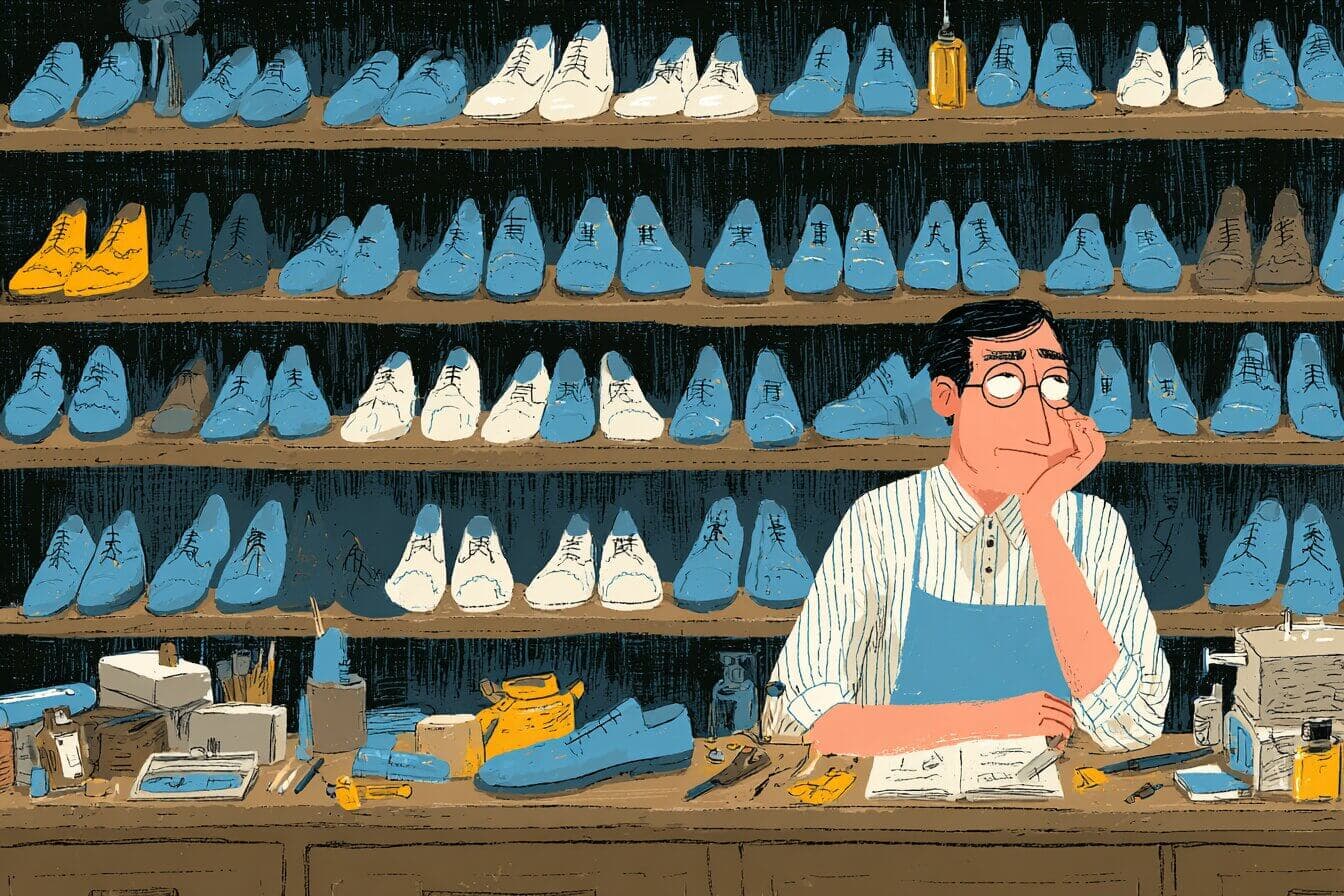
There is something about a quiet workshop at night, the smell of old leather and the tick of a clock, that makes children pull their blankets a little higher and lean in to listen. This gentle retelling follows Mr. Belfry, a shoemaker whose shelves have gone bare and whose hope hangs on a single scrap of leather, only to discover that kindness given freely has a way of coming back on very small feet. If you love the shoemakers elves bedtime story tradition, you will find a cozy version here to read aloud tonight. And if you want to reshape the tale with your child's name or favorite details, you can build your own version with Sleepytale.
Why Shoemakers Elves Stories Work So Well at Bedtime
There is a reason children have loved this story for generations: it turns nighttime into something magical rather than something to fear. The idea that while you sleep, small helpers are quietly at work making the world better, mirrors the reassurance kids need most at bedtime. Shoes appear by morning, problems get a little smaller overnight, and the dark hours become a time of gifts rather than worry.
The rhythm of the tale helps, too. Each night follows the same pattern, leather set out, sleep, and a bright surprise at dawn, and that predictable loop mirrors the routines that help young minds settle. A bedtime story about elves working in moonlight gives children permission to trust the quiet, to believe that good things can happen even when their eyes are closed. That is a powerful feeling to carry into sleep.
The Shoemaker's Secret Helpers 7 min 57 sec
7 min 57 sec
In a tiny cottage at the end of Twisty Lane lived Mr. Belfry, a shoemaker whose pockets were as empty as his shoe racks. The shelves had a fine layer of dust on them, the kind you could write your name in, and the front bell had not rung in eleven days.
Each night he set out scraps of leather on the bench, smoothing them flat with his palms. "If I could finish one decent pair," he told the empty room, "folks might come back." He brewed mint tea, pulled a patchwork quilt up to his chin, and slept. The fridge in the back corner hummed its one low note all through the dark.
While moonlight crept across the workshop, something stirred.
From a crack beneath the cupboard, gold flickers appeared, then miniature figures no taller than thimbles. They wore acorn caps and tunics stitched from spider silk, and their eyes caught the light like wet stones by a river. One of them sneezed, a sound so small it could have been a grain of rice dropping on wood, and the others shushed him without stopping their work.
They lifted the leather with careful fingers, measured it against markings only they could read, and cut with scissors that might have been made from cricket legs. Thread pulled from cobwebs ran through needles so fine they disappeared when turned sideways. They hummed as they worked, not a tune exactly, more like wind nudging a set of glass bottles on a windowsill.
By sunrise the bench held a pair of emerald green shoes trimmed with silver bells that rang when you so much as breathed near them.
Mr. Belfry awoke. Rubbed his eyes. Picked the shoes up and turned them over three times, looking for a note, a clue, anything. No footprints on the dusty floor but his own slippers. He set the shoes in the window, and before noon a traveling dancer bought them and paid enough coins for a week of food and a fresh block of beeswax.
That evening he left more leather on the bench, plus a plate of honey cakes and a thimble of warm milk. He did not know who deserved the thanks, but leaving it out felt right.
The elves came again, giggling at the treats. One of them dipped a whole arm into the milk thimble and licked his elbow, which made the others laugh so hard they had to press their faces into the leather to muffle the noise. Then they got to work and sewed ruby red boots with curly toes that looked like they were already mid-dance.
Each dawn brought new marvels. Sapphire slippers. Starlight sandals. A pair of rainbow roller skates that nobody had ordered but everybody wanted. Neighbors crowded the cottage, and the humble shop became the noisiest, happiest spot on the lane. Mr. Belfry's worry lines softened, though they did not disappear completely. Some lines just become part of your face after a while.
But curiosity grew.
Who were the midnight visitors? He had to know.
On the seventh night he poked a peephole through an empty spool, balanced a candle stub on a thimble, and sat very still behind the counter. His knees ached from crouching. The candle trembled because his hands trembled.
When the clock struck twelve, the cupboard door creaked open.
First came an elf with hair like dandelion fluff, already rolling up tiny sleeves. Then another, wearing a vest cut from violet petals that still smelled faintly of the garden. They climbed the bench, examined the leather the way a chef examines a fish at market, and began.
Mr. Belfry leaned closer.
The floor squeaked.
Both elves froze. Their glow dimmed like fireflies pressed under a glass.
Silence, the kind that rings in your ears.
Then Mr. Belfry spoke, barely above a whisper. "Dear friends, thank you for saving my shop. Please stay and share my home."
The elves looked at each other. Then at the honey cakes. Then at the man whose eyes held gratitude and nothing sharper.
Their light came back, brighter than before. They bowed and spoke in voices like small bells bumping together. "We help hearts who hope."
From that night on, the shoemaker never spied again. He set out two chairs beside the bench, one elf-sized and one human-sized, and sang old lullabies while the elves worked, sometimes off-key, which the elves did not seem to mind. Together they stitched something into every sole that was harder to name than leather or thread.
Children visited at twilight to hear the bells jingle. Sometimes a shoe would slide off the shelf and do a small shuffle across the floor all by itself, and the children would shriek and clap and the elves, hidden, would cover their mouths with delight.
Travelers carried the news far past the hills. The cottage began to glow at night, a warm yellow square visible from the ridge road, guiding walkers who were not sure where they were headed.
Mr. Belfry kept a sketchbook: acorn buttons, cobweb laces, starlight heels. He pressed a real dandelion seed inside the cover, because it reminded him of that first elf's hair. He learned their favorite snack was honey cake with lavender sprinkles, so he baked a fresh batch every evening, and the kitchen always smelled like a summer afternoon even in the dead of winter.
In return, the elves taught him how to whistle certain notes that made leather go supple and stitches pull tight on their own. He never quite got the third note right, but two out of three still worked wonders.
Seasons turned. Autumn painted Twisty Lane gold.
The shoemaker saved his finest leather, dyed it sky blue, and cut the tiniest pair of dancing shoes he had ever attempted, barely the length of his thumbnail. On the first winter eve he placed them on the bench.
The elves clasped their hands. They slipped the shoes on, and silver notes rose from the floor like bubbles lifting off the surface of a pond, filling the shop with music that had no source anyone could point to.
Outside, snow began to fall. Inside, the cottage felt like spring.
That night, Mr. Belfry dreamed of fields where shoes grew like wildflowers and every path curved gently home. When he woke, he found a single acorn cap on his bench, filled with something that glittered. Beside it lay a scrap of spider silk with words so small he had to squint: "Kindness returns on quiet feet."
He smiled, sprinkled the dust onto his thread, and began the day's work.
The village prospered, not just in coins but in stories told beside hearths, in children who learned to check beneath cupboards before bed, and in travelers who carried away more than shoes. They carried something lighter, tied with cobweb lace, and the world felt a little easier underfoot, one step at a time.
The Quiet Lessons in This Shoemakers Elves Bedtime Story
This story weaves together patience, gratitude, and the courage to trust what you cannot fully understand. When Mr. Belfry sets out leather and honey cakes without knowing who his helpers are, children absorb the idea that generosity does not require proof or guarantees. The moment the elves freeze and dim their glow, then brighten again when met with gentleness instead of grabbing, shows kids that trust is built in how you respond to vulnerable moments. These are exactly the kind of reassurances that settle well at bedtime, the feeling that kindness given quietly comes back, that asking for help is not weakness, and that tomorrow's surprises might be good ones.
Tips for Reading This Story
Give Mr. Belfry a slow, warm voice, someone who talks to an empty room the way you would talk to a cat, and let the elves speak in quick, high whispers that make your child lean in to hear. When the floor squeaks and the elves freeze, stop reading entirely for two or three seconds and let the silence do the work. During the final scene where the tiny dancing shoes go on, hum a few notes yourself before reading the next line, so your child feels the music filling the shop.
Frequently Asked Questions
What age is this story best for?
Children between ages 3 and 7 tend to enjoy it most. Younger listeners love the repeated pattern of setting out leather, sleeping, and discovering magical shoes each morning, while older kids get drawn into the suspense of Mr. Belfry's peephole stakeout and the moment the elves freeze on the bench.
Is this story available as audio?
Yes. You can press play at the top of the story to hear it read aloud. The elves' tiny dialogue and the description of silver notes rising like bubbles come alive in audio, and the repeated nightly rhythm makes it especially soothing to listen to as your child settles into bed.
Why does Mr. Belfry give the elves shoes at the end?
In many versions of this classic tale, the shoemaker makes shoes for the elves as a way to return the generosity they showed him. Here, Mr. Belfry's sky-blue dancing shoes are both a thank-you gift and a recognition that his helpers deserve the same care and craft they poured into his shop every night.
Create Your Own Version
Sleepytale lets you reshape this classic tale into something personal for your family. You can move the workshop from Twisty Lane to a houseboat, swap the elves for tiny foxes or helpful robots, or change the honey cakes to your child's actual favorite snack. In a few taps you will have a cozy, personalized story ready to read or play whenever bedtime needs a little extra magic.
Looking for more bedtime story classics?

Once Upon A Time Stories
What happens when June opens a golden book with no title? One of the sweetest short once upon a time stories about a forest, a hedgehog, and a blank page.

Fairy Tales Written By Hans Christian Andersen
Anders discovers short fairy tales written by Hans Christian Andersen as his grandmother reads from a soft brown book by lamplight.

Bluebeard Fairy Tale
In this short bluebeard fairy tale, the forbidden room holds not horror but a music box and memories of the people Lord Corvus loved most.

Red Shoes Fairy Tale
What happens when Karen's magical red shoes refuse to stop dancing? Discover this short red shoes fairy tale tonight.
Twinkle Twinkle Little Star Bedtime Story
Lily watches a kind star and floats up to help deliver dreams in this short twinkle twinkle little star bedtime story. A warm, quiet tale for sleepy nights.
Through The Looking Glass Bedtime Story
Step into a calm, magical short through the looking glass bedtime story and drift toward sleep with gentle wonder. Enjoy a soothing retelling that feels cozy from start to finish.