
The Secret Garden Bedtime Story
By

Dennis Wang, Bedtime Story Expert
6 min 32 sec
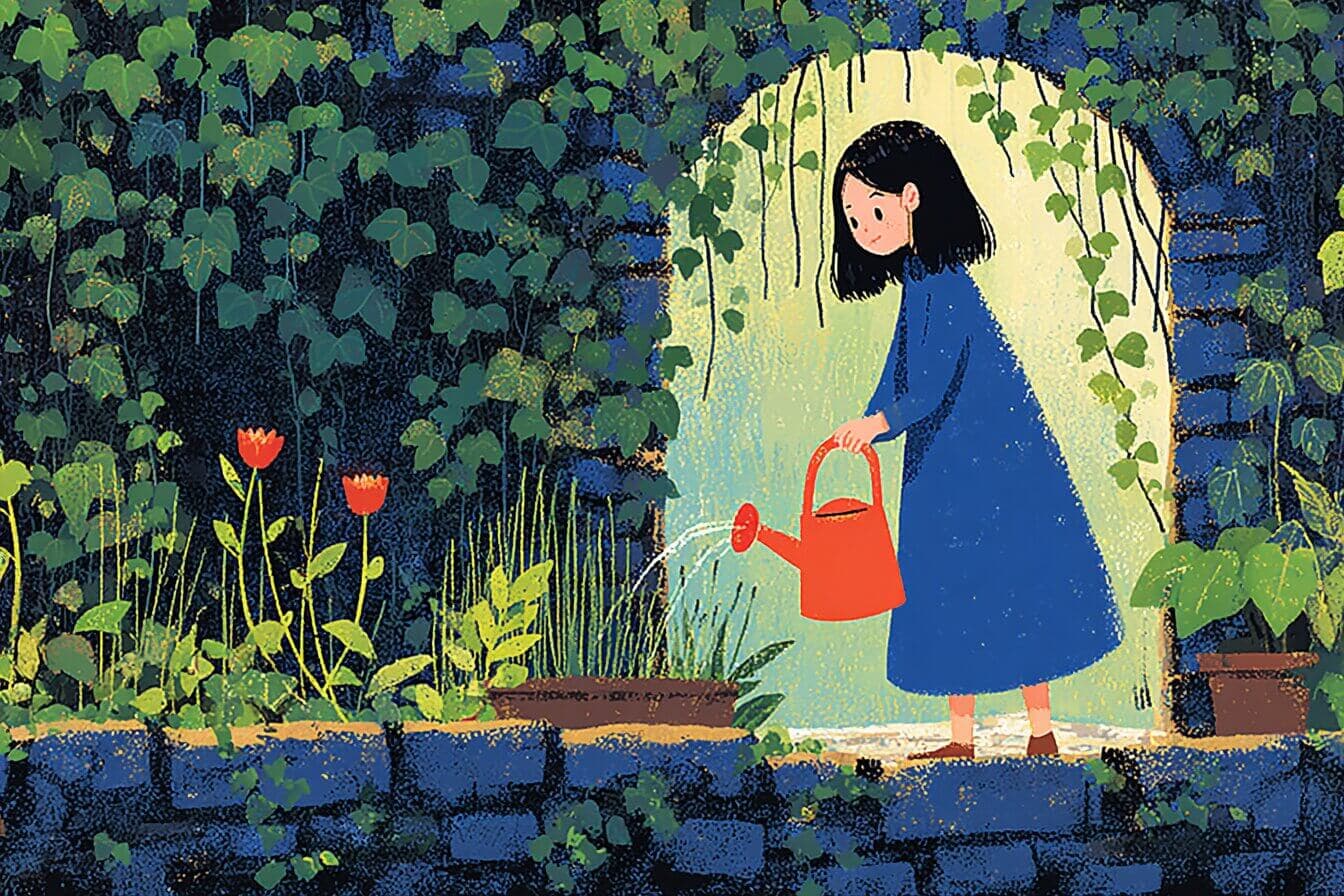
There is something about a hidden gate covered in ivy that makes a child's eyes go wide, even when those eyes are already heavy with sleep. This gentle tale follows Elara, a lonely girl at a strict orphanage, who discovers a forgotten walled garden and slowly brings it back to life alongside a shy friend named Milo. It is exactly the kind of the secret garden bedtime story that turns restlessness into quiet wonder, one watering can at a time. If your child loves the idea of tending something secret and green, you can make your own version with Sleepytale.
Why Secret Garden Stories Work So Well at Bedtime
Gardens are patient places. Nothing in a garden moves fast enough to spike a child's heart rate, and the rhythms of tending one, watering, waiting, watching something unfurl, mirror the gentle winding down that bedtime asks for. A secret garden adds a layer of privacy and safety, a space that belongs to the child alone, which is deeply comforting when the lights go out.
That is why a bedtime story about a secret garden resonates so naturally with young listeners. The imagery is sensory without being stimulating: cool stone, soft petals, the smell of damp soil. Children who feel anxious or overstimulated can mentally step through an ivy gate and find themselves somewhere enclosed and green and entirely theirs. It gives them a quiet room inside their imagination to fall asleep in.
The Secret Garden of Ivy Lane 6 min 32 sec
6 min 32 sec
In the quiet town of Willowbrook, where cobblestone streets wound between stone cottages, a girl named Elara polished the same brass doorknobs every morning and listened to the same creaking floorboards every night.
She was ten, with stormy eyes and hair that refused to stay in its braid no matter how many pins she used.
She lived at St. Agnes Home for Children.
The place had tall windows that let in good light but stricter rules than smiles, and a hallway that always smelled faintly of boiled cabbage and floor wax.
One autumn afternoon, while the other children chased each other around the yard, Elara drifted toward the far edge of the grounds where an old stone wall sagged under a thick curtain of ivy. She pushed the leaves aside, and her fingers found iron. A gate, rusted the color of dried blood, that she had somehow never noticed before.
It groaned when she pulled.
Beyond it, a narrow path twisted into shadow and then opened into something that made her stop breathing for a second. A garden, swallowed whole by time. Stone cherubs peeked from beneath roses gone wild, and a dry fountain stood clogged with last year's leaves, looking like a birdbath that had given up. One cracked flagstone had a dandelion growing right through its center, stubborn and bright.
Elara came back the next day with a dented tin watering can she found behind the shed. She watered the roses and whispered apologies for their thirst, which she knew was a silly thing to do, but it felt right. Day after day she returned. She pruned what she could reach, planted seeds saved from lunch apples, and hummed lullabies to seedlings that probably could not hear her. A robin with one white feather on its wing started showing up to watch, tilting its head like a tiny foreman on a job site.
One Saturday, while she wrestled with a dandelion whose roots seemed to go all the way to the center of the earth, footsteps crunched behind her.
A boy her age stood at the gate. Round glasses patched with tape. A sketchbook clutched against his chest.
"I saw you through the ivy," he said. His voice was barely louder than the wind. "May I draw your garden?"
She almost said no. The garden was hers, her one secret in a life that had very few of them. But something about the tape on his glasses made her nod.
His name was Milo, and he lived next door, though she had never once seen him outside. He sat on a cracked bench and his pencil moved fast, scratching across the page in little bursts. When he turned the sketchbook around, Elara's throat tightened. He had not drawn the garden as it was. He had drawn it as it could be: roses climbing trellises, the fountain throwing light, bees looping over lavender.
That picture kept her awake half the night, glowing behind her closed eyes like a lantern someone had left on.
The next morning she marched to the orphanage kitchen and asked Cook for leftover vegetable peels. Cook blinked, shrugged, and handed them over in a soggy paper bag. Elara and Milo built a compost pile, and when the worms wriggled out they both jumped back, then laughed so hard Milo's glasses fogged up.
They rescued cracked pots from rubbish bins and painted them colors that had no business being on a pot, orange stripes, purple dots, one that Milo insisted was "cerulean." Word got around. Soon other children from St. Agnes wandered through the gate. Tiny Daisy planted marigold seeds in the shape of a star, pressing each one into the soil with her thumb like she was posting letters. Serious Thomas built a beetle hotel from twigs and declared it had five rooms and a lobby.
Even Mr. Potts, the groundskeeper who never smiled before noon, left a wheelbarrow by the gate one morning without saying a word.
Weeks passed. Shoots pushed through soil. Buds cracked open.
Elara noticed she was standing straighter. She looked people in the eyes when she talked to them now. She did not remember deciding to do that; it just happened, the way the garden happened, slowly and then all at once.
One evening, golden light pouring sideways through the roses, the fountain coughed. Then it gurgled. Then water rose in a thin, unsteady arc and caught the light like a handful of scattered coins. A hidden pipe had cleared on its own, fed by an underground spring that had been there all along, just waiting. The robin sang three sharp notes from the top of a cherub's head, and nobody said anything for a full minute.
Mrs. Maple, the orphanage director, appeared at the gate the following day clutching a letter. Her eyes looked different. Softer.
"Elara," she said, "your aunt has been found. She lives by the sea. She wants to meet you."
The garden seemed to exhale.
Elara's knees went wobbly. She looked at Milo, at Daisy kneeling beside her marigolds, at Thomas adjusting a twig on the beetle hotel's roof. These people had become something she did not have a neat word for. More than friends. Less formal than family. Something in between that smelled like compost and paint.
She packed her small suitcase the next morning. She tucked Milo's drawing between her clothes where it would stay flat.
She walked through the garden one last time, touching petals, letting her fingers trail along the cool stone wall. Milo met her at the gate and handed her a tiny envelope. Inside was a single seed, brown and ordinary and full of everything.
"So you can grow a new one," he said. His voice shook, but he grinned anyway.
She hugged him so hard his glasses went crooked.
She promised to write every week. She meant it.
On the train heading toward the coast, Elara pressed her forehead against the cold window and watched fields blur into green and gold. She pictured the ivy gate, the fountain finally singing, the robin doing loops overhead like it was showing off.
Her aunt met her at the station with open arms and eyes that looked like her own, the same stormy gray.
That night Elara lay in a soft bed beneath a window overlooking the sea. Waves shushed against the rocks below, steady as breathing. She held the seed in her palm, feeling its small weight.
Tomorrow she would plant it.
Tomorrow she would begin again.
And somewhere back on Ivy Lane, the gate stood open, the fountain hummed its quiet song, and the garden went on growing in the dark, the way good things do, whether anyone is watching or not.
The Quiet Lessons in This Secret Garden Bedtime Story
This story carries lessons about loneliness, generosity, and the slow courage of letting people in. When Elara hesitates before allowing Milo into her garden, children absorb the idea that sharing something precious does not make it smaller; it makes it real. The moment the fountain clears itself, fed by a spring that was always there, mirrors the way confidence can surface in a child who simply needed time and a purpose. These are exactly the kinds of reassurances that settle well before sleep: you do not have to fix everything at once, the people who matter will find their way to your gate, and good things keep growing even after you close your eyes.
Tips for Reading This Story
Give Milo a soft, slightly hesitant voice, especially when he asks "May I draw your garden?" and let a pause hang before Elara nods. When the fountain coughs and gurgles back to life, slow your reading way down and let your child picture the water rising. At the very end, when Elara holds the seed in her palm, try closing your own hand gently and holding the silence for a breath before reading the last line.
Frequently Asked Questions
What age is this story best for?
Children ages 4 to 9 tend to connect most with this story. Younger listeners love the robin with the white feather and the painted pots, while older kids pick up on Elara's journey from loneliness to belonging and understand the weight of the seed Milo hands her at the end.
Is this story available as audio?
Yes. Press play at the top of the story to hear it read aloud. The audio version brings out moments that really shine when spoken, like the fountain gurgling to life and the robin's three sharp notes. Milo's quiet dialogue also lands beautifully in narration, where a reader's voice can capture all that shyness.
Why does Elara talk to the plants?
Elara whispers apologies to the roses for their thirst, which might seem funny but reflects something real about how children process caretaking. Talking to plants, stuffed animals, or even beetles is a way kids practice empathy and feel a sense of responsibility, and in the story it marks the first moment Elara starts to come alive again.
Create Your Own Version
Sleepytale lets you reshape this story to fit your child's world. You could move the garden to a rooftop in the city, swap Milo for a curious fox, or set the whole thing by the seaside where Elara ends up. In just a moment you will have a calm, personal tale with familiar details your child can drift off to, night after night.
Looking for more bedtime story classics?

Once Upon A Time Stories
What happens when June opens a golden book with no title? One of the sweetest short once upon a time stories about a forest, a hedgehog, and a blank page.

Fairy Tales Written By Hans Christian Andersen
Anders discovers short fairy tales written by Hans Christian Andersen as his grandmother reads from a soft brown book by lamplight.

Bluebeard Fairy Tale
In this short bluebeard fairy tale, the forbidden room holds not horror but a music box and memories of the people Lord Corvus loved most.

Red Shoes Fairy Tale
What happens when Karen's magical red shoes refuse to stop dancing? Discover this short red shoes fairy tale tonight.

Twinkle Twinkle Little Star Bedtime Story
Lily watches a kind star and floats up to help deliver dreams in this short twinkle twinkle little star bedtime story. A warm, quiet tale for sleepy nights.
Through The Looking Glass Bedtime Story
Step into a calm, magical short through the looking glass bedtime story and drift toward sleep with gentle wonder. Enjoy a soothing retelling that feels cozy from start to finish.