
The Reluctant Dragon Bedtime Story
By

Dennis Wang, Bedtime Story Expert
6 min 48 sec
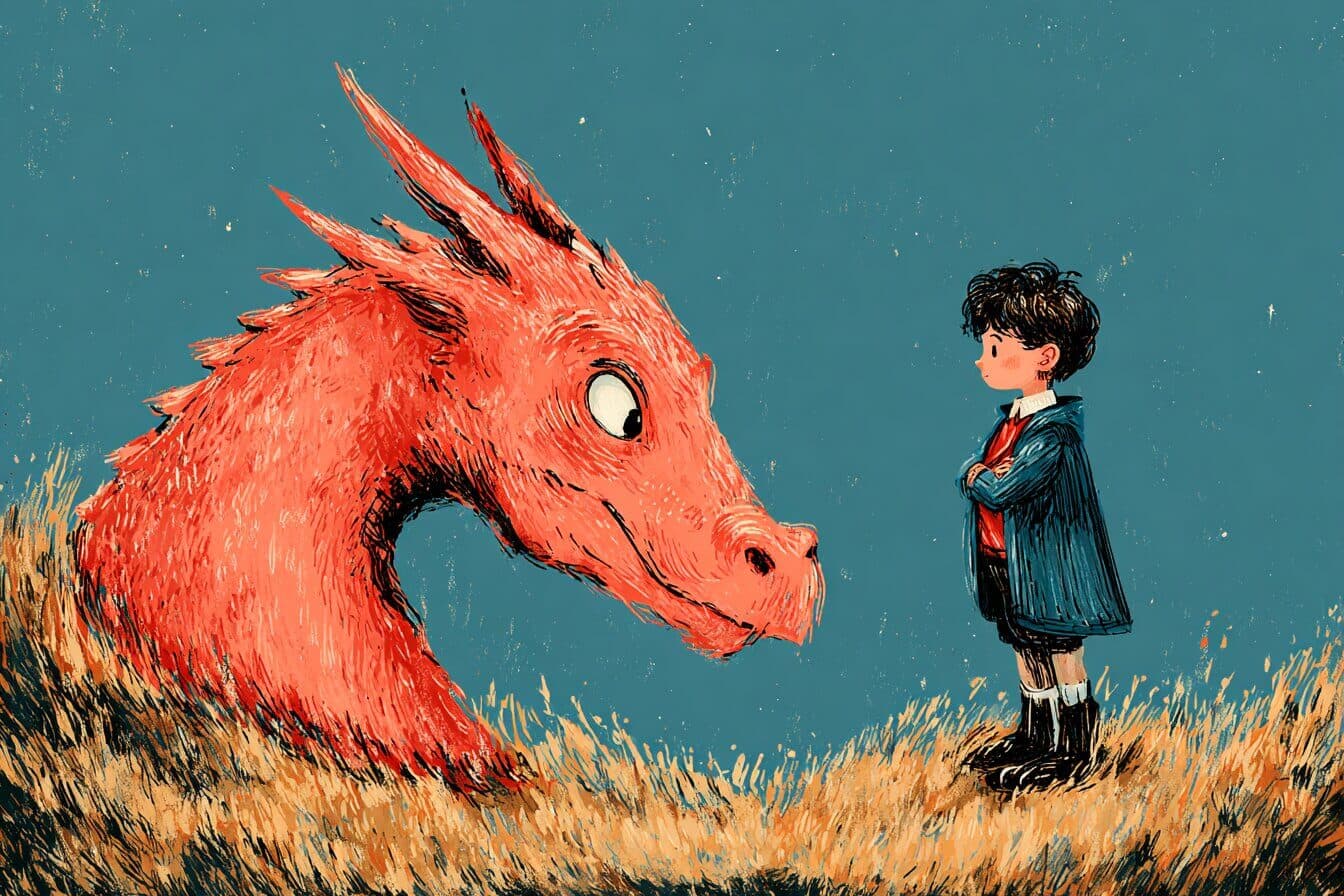
There's something about a dragon who would rather read poetry than breathe fire that makes kids lean in a little closer under the covers. This gentle story follows Puff, a verse-loving dragon, and a boy named Milo as they hatch a harmless plan to fool a visiting knight and keep their quiet valley safe. It's the kind of reluctant dragon bedtime story that trades swords for limericks and ends with the whole world feeling softer. If you'd like to shape your own cozy version with different characters or settings, you can make one with Sleepytale.
Why Reluctant Dragon Stories Work So Well at Bedtime
Kids are drawn to characters who don't fit the mold they're expected to fill. A dragon who refuses to fight, who would rather curl up with a book of sonnets than guard a pile of gold, mirrors something children feel deeply: the quiet wish to be accepted for who they actually are, not who the world assumes they should be. That kind of recognition is soothing right before sleep, when a child's mind is sorting through the small confusions of the day.
A bedtime story about a reluctant dragon also flips the usual tension on its head. There's no real danger, no villain to defeat, just a clever workaround and a lot of warmth. The stakes stay low enough for heavy eyelids, but the humor and heart keep listeners engaged until the last line. It's a story that says the world can be gentle, and that's a good thought to fall asleep holding.
The Dragon Who Loved Poems 6 min 48 sec
6 min 48 sec
In the rolling hills of a quiet valley lived a dragon named Puff, who spent most of his days reading poetry beneath a willow tree that had grown so old its lowest branches dragged along the ground like tired arms.
He had soft green scales. They shimmered like dewy grass in the morning, though by afternoon they looked more like the dull side of a leaf, and he didn't mind that one bit.
His voice rumbled like gentle thunder when he recited verses aloud, and sometimes the vibration shook loose a willow catkin or two, which drifted onto the page he was reading.
One morning a boy named Milo wandered past the willow, clutching a book of poems his grandmother had given him. The spine was cracked and the cover smelled like cedar drawers.
Puff peeked through the leaves, tilted his enormous head, and asked in a voice so careful it barely moved the air, "Do you like poetry too?"
Milo's eyes went wide. His first instinct was to run, but something about the way Puff held completely still, like a dog trying very hard not to scare a cat, made him stay.
He nodded and read a short rhyme about clouds.
Puff clapped his wings softly, one slow clap, the way someone does when they're genuinely impressed but also a little embarrassed for you.
"That's lovely," Puff said. "Your grandmother has excellent taste."
From that morning on, the two met every afternoon.
They traded poems and laughed at limericks so bad they were good, and Milo brought honey cookies his mother had baked, wrapped in a cloth that always had a small grease stain in one corner. Puff ate them whole, wrapper and all, the first time. After that Milo unwrapped them first.
Word of the friendly dragon spread, the way word always does, slowly and then all at once.
It reached the ears of the famous dragon slayer, St. George, who rode toward the valley in armor that clinked and flashed in the sun.
Milo heard hoofbeats on the hill road and ran to warn Puff.
He found the dragon pacing, which for a creature his size meant flattening a small circle of wildflowers with every turn.
"I've never harmed a living creature," Puff said, and his smoke came out thin and wobbly, like a candle flame in a draft. "I don't even like stepping on ants."
"Then we won't fight," Milo said. "We'll pretend."
Together they hatched their plan.
Milo gathered every pot and pan he could carry, stuffing them into a burlap sack that clanged with each step. Puff practiced roaring without fire, producing only warm puffs of smoke. One came out shaped like a heart, completely by accident, and they both stared at it until it dissolved.
"We're not mentioning that to anyone," Milo said.
"Agreed," said Puff.
When St. George arrived, chin high, lance gleaming, the dragon swooped down from behind the willow, flapping so hard the knight's cape blew sideways.
Milo crouched behind a bush and banged pots together, creating clatters that bounced off the valley walls and sounded, if you squinted with your ears, almost like clashing swords.
Puff roared. It was a decent roar.
St. George gripped his lance. Puff roared again, louder, then clutched his chest with one claw and toppled sideways onto a bed of moss, letting out a long, dramatic groan that echoed for several seconds longer than necessary.
One leg twitched. Then the other. Then he went completely still and stuck his tongue out.
Milo leapt from the bush, arms raised. "Victory!"
St. George blinked behind his visor, lowered his lance, and congratulated the brave boy with a firm handshake that rattled every bone in Milo's arm. Then he rode away, content, already composing a letter to his superiors.
The moment the hoofbeats faded, Puff sprang up, giggling smoke rings that floated through the willow branches.
They danced, if you could call it dancing, Milo hopping in circles and Puff stomping so the ground shook, and they laughed until Milo had to sit down on a rock and catch his breath.
They agreed to keep the secret.
Every year afterward, they restaged the harmless duel, inviting village children to watch. The kids brought blankets and sat in rows, cheering at the right moments and gasping at the wrong ones, which made it even better.
The valley grew famous for its peaceful dragon. Travelers came to share poems, cookies, and laughter beneath the swaying branches, and someone hung a little sign on the willow that read, "No swords. Sonnets only."
Puff and Milo stayed best friends. They wrote new verses together, argued about whether limericks counted as real poetry (Puff said no, Milo said absolutely yes), and spent long evenings listening to the frogs begin their own nightly chorus down by the stream.
One evening, as stars appeared in ones and twos, Puff recited a poem about friendship he had been working on for weeks.
It wasn't perfect. The third line was too long and the rhyme in the middle was a stretch.
Milo smiled anyway, because it was true, and that mattered more.
The valley slept. Moonlight settled over rooftops like dust on old books.
Puff's snores drifted across the hills, low and steady, a sound the villagers had grown so used to that silence would have woken them.
St. George returned one summer. Not to fight. He walked in without armor, carrying a folded piece of paper, and read aloud his own poem about learning to set down a lance.
It was short and a little stiff, the way a soldier's first poem always is.
Puff welcomed him with a nod and a smoke ring and quietly wiped his eye with the tip of his tail.
Together they built a small stage from old crates and planks, right beside the willow.
Children performed poems, songs, and plays there, some gentle, some loud, some so strange nobody understood them but everyone clapped.
The valley became a place where dragons, knights, and children wrote stories side by side.
Milo grew up. He still visited every week, bringing his own children, who climbed Puff's tail like a slide until he pretended to be annoyed.
Puff never aged, but his cave filled slowly with poetry, scroll by scroll, until you had to turn sideways to get through the entrance.
Travelers tucked verses into the willow bark, folding them into the grooves. On windy days the papers fluttered and the tree looked like it was breathing.
On quiet nights, Puff flew gentle loops above the rooftops, scattering glowing pollen from moonflowers so that dreams below might go somewhere kind.
Milo waved from his porch, mouthing a line they both loved: "Friendship is the poem the world never finishes writing."
And the valley rested, wrapped in rhymes and the slow heartbeat of a dragon who chose peace, a boy who chose loyalty, and a knight who, eventually, chose to listen.
The Quiet Lessons in This Reluctant Dragon Bedtime Story
This story is quietly packed with ideas about acceptance, cleverness, and the courage it takes to solve a problem without force. When Puff admits he doesn't even like stepping on ants, children absorb the notion that gentleness isn't weakness, it's a choice made by someone strong enough to have other options. Milo's quick thinking with the pots and pans shows that creativity can defuse conflict better than any weapon, and St. George's return with a poem of his own demonstrates that even the toughest people can change their minds when given room to. These are comforting themes right before sleep, because they promise a child that tomorrow's problems can be met with imagination, honesty, and a friend who has your back.
Tips for Reading This Story
Give Puff a slow, rumbly voice that vibrates in your chest, and make Milo sound quick and slightly breathless, especially when he's running to deliver warnings or shouting "Victory!" from behind the bush. During the staged battle, really ham up the pot-banging sounds with your own claps or table taps, and let Puff's dramatic death scene drag out with exaggerated groaning until your child laughs. When the story reaches the quiet final scene with moonflower pollen drifting over rooftops, drop your voice to almost a whisper and slow your pace to match the rhythm of Puff's snores.
Frequently Asked Questions
What age is this story best for?
Children ages 3 to 8 tend to enjoy it most. Younger listeners love Puff's silly staged collapse and the heart-shaped smoke, while older kids pick up on the cleverness of Milo's plan and appreciate St. George's change of heart when he returns with his own poem.
Is this story available as audio?
Yes. Press play at the top of the story to hear it read aloud. The audio version really shines during the pretend battle scene, where the clashing pots and Puff's exaggerated roar come alive in narration, and the quieter poetry moments toward the end settle into a rhythm that feels like a lullaby.
Why does Puff the dragon refuse to fight?
Puff simply prefers poems to battles. He has never harmed anyone and spends his days reading beneath his willow tree rather than hoarding gold or terrorizing villages. His gentle nature is the heart of the story, and it's what makes his friendship with Milo and eventually with St. George possible.
Create Your Own Version
Sleepytale lets you reshape this tale of a poetry-loving dragon into something perfectly suited to your family's bedtime routine. You could swap the willow valley for a seaside cliff, replace honey cookies with warm cinnamon bread, or turn Milo into a pair of siblings who prefer riddles over rhymes. In just a few taps you'll have a cozy, personalized story ready to read or listen to every night.
Looking for more bedtime story classics?

Once Upon A Time Stories
What happens when June opens a golden book with no title? One of the sweetest short once upon a time stories about a forest, a hedgehog, and a blank page.

Fairy Tales Written By Hans Christian Andersen
Anders discovers short fairy tales written by Hans Christian Andersen as his grandmother reads from a soft brown book by lamplight.

Bluebeard Fairy Tale
In this short bluebeard fairy tale, the forbidden room holds not horror but a music box and memories of the people Lord Corvus loved most.

Red Shoes Fairy Tale
What happens when Karen's magical red shoes refuse to stop dancing? Discover this short red shoes fairy tale tonight.

Twinkle Twinkle Little Star Bedtime Story
Lily watches a kind star and floats up to help deliver dreams in this short twinkle twinkle little star bedtime story. A warm, quiet tale for sleepy nights.
Through The Looking Glass Bedtime Story
Step into a calm, magical short through the looking glass bedtime story and drift toward sleep with gentle wonder. Enjoy a soothing retelling that feels cozy from start to finish.