
The Railway Children Bedtime Story
By

Dennis Wang, Bedtime Story Expert
5 min 17 sec
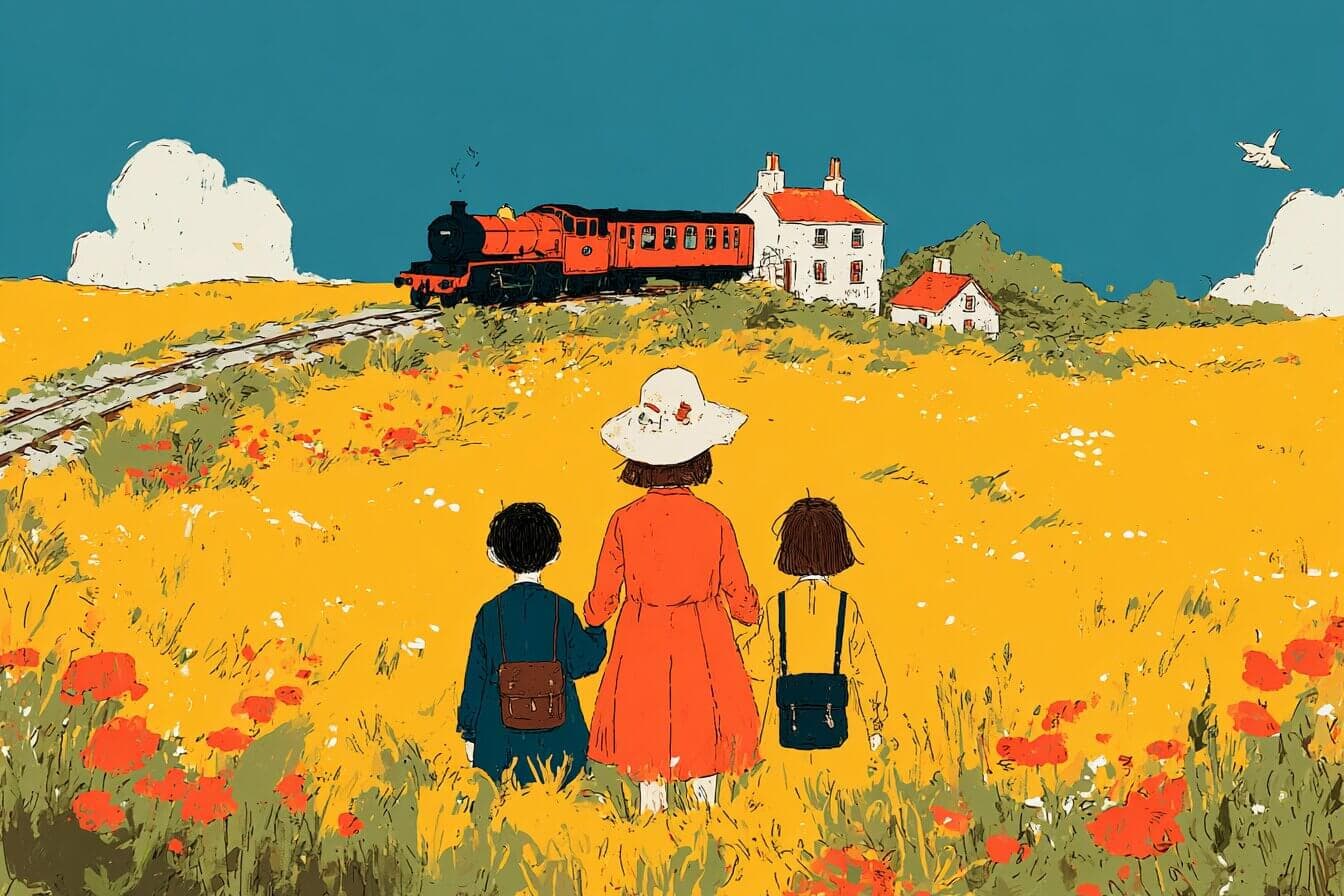
There is something about the low rumble of a train in the distance that makes the whole night feel steady, like the world is still running along on time and everything is going to be all right. This gentle retelling follows Peter, Roberta, and Phyllis as they settle into a small cottage by the tracks, wave at passing engines, and quietly try to bring their father home. It is the kind of the railway children bedtime story that wraps up with warmth rather than excitement, perfect for drifting off. If you would like to reshape it with your child's name, a different setting, or a softer ending, you can make your own version with Sleepytale.
Why Railway Children Stories Work So Well at Bedtime
Trains follow tracks, and tracks have a rhythm. That predictable motion, the clatter and hush, the clatter and hush, mirrors the kind of steady breathing a child settles into right before sleep. A story set along a railway line carries that built-in lullaby. The landscape scrolls past slowly, the whistle sounds far away, and every scene has a gentle forward momentum that does not jolt or surprise.
There is also something deeply comforting about children who face a big change and still find small joys each day. When kids hear about waving at engines and helping at a station, it reminds them that even unfamiliar places can become home. A bedtime story about railway adventures tells a child that the world is wide but not scary, and that the tracks always lead somewhere safe.
The Railway Children 5 min 17 sec
5 min 17 sec
Peter, Roberta, and Phyllis lived in a big white house where the banister was perfect for sliding and the garden went on forever. Then one evening two men came to the front door with hats in their hands, and Father left with them.
He did not come back.
Mother did not explain much. She packed their things into trunks that smelled of cedar and took the three of them on a long train ride to a cottage at the edge of a village. The cottage had low ceilings, a kitchen tap that coughed before the water came, and a view of the railway cutting from the back garden.
It was nothing like the old house. But the trains were something.
Every morning at seven minutes past, the green engine would come puffing up the hill, working hard, its whistle splitting the quiet like a cracked bell. Peter would count the carriages. Roberta would wave with both arms. Phyllis would stand on the bottom rail of the fence and wobble there, one sock always sliding down to her ankle.
The station master, Mr. Perks, was a broad man with a walrus mustache and a habit of jingling the coins in his pocket when he talked. He let them sweep the platform. He showed Peter how to hold the signal flag, two hands, stiff arms, no messing about. In return they earned a few pennies, which they spent on sticky buns at the village shop. The buns were always slightly stale by Thursday, but nobody minded.
Mother stayed inside most days, writing. Through the window they could see her hunched at the table, pen moving, teacup growing cold beside her. She looked thinner. She looked like she was listening for something that never arrived.
The children tried not to make noise. They tried to bring her wildflowers, though Phyllis once brought nettles by mistake and everyone's hands itched for the rest of the afternoon.
One Tuesday, after heavy rain, Peter spotted something wrong. A chunk of the hillside had slid across the tracks, a mess of earth and chalk and one uprooted bush lying right across the rails. The 11:29 was due.
"Petticoats," Roberta said suddenly.
"What?" said Peter.
"Red petticoats. We tear them into strips and wave them. Red means danger."
Phyllis looked horrified. Those were her only good petticoats. But she pulled them off behind a bush and handed them over without a word.
They tore the fabric and stood on the tracks waving the red strips, and the driver saw them, and the brakes screamed, and the train stopped with its nose ten feet from the landslide. People called them heroes after that. Peter pretended he did not care, but he kept the newspaper clipping folded inside his cap for weeks.
There was an old gentleman who rode the 9:15 every morning. He sat in the same first-class carriage, third window from the front. He always waved back, a small neat wave, just his fingers. They did not know his name. They called him the Old Gentleman, which Roberta felt was a bit rude, but they had nothing else to call him.
They made him a birthday card once, guessing the date completely wrong, and left it on his seat. He kept it anyway. Mr. Perks told them he saw it propped on the old man's windowsill the following week.
When Mother got sick, really sick, too tired to lift her pen, the children sat on the platform steps and felt the kind of fear that sits in your stomach like a cold stone.
Roberta wrote a letter. She did not know the old gentleman's address, so she wrote "For the kind old gentleman on the 9:15" on the envelope and gave it to Mr. Perks. The letter said their mother was ill and their father was gone and they did not know what to do. She sealed it before Peter could argue about pride.
The old gentleman read it. He did more than read it. He made inquiries. Quiet ones, the kind that take time and patience and knowing the right people. He discovered that Father had been accused of something he never did, and he set about proving it.
Months went by. The trains kept running. The green engine still puffed past every morning at seven minutes past. Phyllis's sock still slid down. The kitchen tap still coughed.
Then one afternoon a train pulled into the station that was not on any schedule. Mr. Perks stood on the platform looking like he might burst. The carriage door opened.
And there was Father.
He looked older. His coat was creased. But he smiled the same smile, and when the children ran to him, he caught all three of them at once, which should not have been possible but somehow was.
Mother came down the path from the cottage. She walked slowly, one hand pressed against her chest, and then she was not walking slowly anymore.
Nobody said anything important. Peter said, "Your shoes are muddy," and everyone laughed, the kind of laughter that comes out wet and shaky.
They went inside. The kitchen tap coughed. The kettle went on. Father sat in the chair by the stove, and Phyllis climbed into his lap even though she was really too big for that now.
The cottage stayed their home. They did not go back to the big white house. It turned out they did not need to. The old gentleman visited for tea on Sundays, and Mr. Perks always set an extra chair on the platform for whichever child wanted to sit and watch the afternoon trains roll through.
The green engine still came every morning. Peter still counted the carriages. Roberta still waved with both arms. And Phyllis stood on the bottom rail, wobbling, one sock down, grinning at the whistle as it echoed up the valley and slowly, slowly faded into quiet.
The Quiet Lessons in This Railway Children Bedtime Story
This story is threaded with moments where small, brave choices matter more than grand ones. When Phyllis hands over her only good petticoats without complaint, children absorb the idea that generosity sometimes means giving up something you care about, not just something easy. Roberta's letter to a stranger she barely knows shows kids that asking for help is not weakness but courage, and that trust in other people can be rewarded. Peter keeping the newspaper clipping in his cap, quietly proud but not boastful, models a kind of self-respect that does not need applause. These themes land especially well at bedtime, when a child's mind is open and soft, because they carry the reassurance that doing the right thing, even the small right thing, can bring the people you love back home.
Tips for Reading This Story
Give Mr. Perks a low, rumbly voice and let him jingle imaginary coins while he talks. When Roberta says "Petticoats!" make it sudden and bright, like the idea just cracked open in her head. Slow way down during the reunion scene, especially Peter's line about the muddy shoes. Let there be a pause after it so the laughter feels real. At the very end, when the whistle fades up the valley, drop your voice almost to a whisper and stretch the word "quiet" until your child's eyes are heavy.
Frequently Asked Questions
What age is this story best for?
This retelling works well for children aged 4 to 9. Younger listeners enjoy the train sounds, the waving, and the simple warmth of the family coming back together, while older children pick up on the tension around Father's absence and appreciate Roberta's bravery in writing the letter. The vocabulary is accessible but not oversimplified.
Is this story available as audio?
Yes. You can press play at the top of the story to listen. The audio version brings the railway sounds to life, especially the coughing kitchen tap, the whistle of the green engine, and the screech of brakes during the landslide scene. Mr. Perks and the three children each have their own feel in narration, which makes the dialogue scenes particularly enjoyable to hear aloud.
Why does the father leave at the beginning?
In this retelling, Father is taken away because he has been falsely accused of something he did not do. The story does not go into heavy detail, keeping things gentle for young listeners. The focus stays on how the children cope, help each other, and eventually find a way to bring him home through kindness and the help of the old gentleman on the 9:15.
Create Your Own Version
Sleepytale lets you reshape this classic into something perfectly fitted for your child's bedtime. You could swap the English countryside for a mountain village, change the green engine to a little red boat, or give the old gentleman a name your child already trusts, like Grandpa. In a few moments you will have a cozy railway tale with your own details woven in, ready to read tonight and every night after.
Looking for more bedtime story classics?

Once Upon A Time Stories
What happens when June opens a golden book with no title? One of the sweetest short once upon a time stories about a forest, a hedgehog, and a blank page.

Fairy Tales Written By Hans Christian Andersen
Anders discovers short fairy tales written by Hans Christian Andersen as his grandmother reads from a soft brown book by lamplight.

Bluebeard Fairy Tale
In this short bluebeard fairy tale, the forbidden room holds not horror but a music box and memories of the people Lord Corvus loved most.

Red Shoes Fairy Tale
What happens when Karen's magical red shoes refuse to stop dancing? Discover this short red shoes fairy tale tonight.

Twinkle Twinkle Little Star Bedtime Story
Lily watches a kind star and floats up to help deliver dreams in this short twinkle twinkle little star bedtime story. A warm, quiet tale for sleepy nights.
Through The Looking Glass Bedtime Story
Step into a calm, magical short through the looking glass bedtime story and drift toward sleep with gentle wonder. Enjoy a soothing retelling that feels cozy from start to finish.