
The Princess And The Goblin Bedtime Story
By

Dennis Wang, Bedtime Story Expert
10 min 55 sec
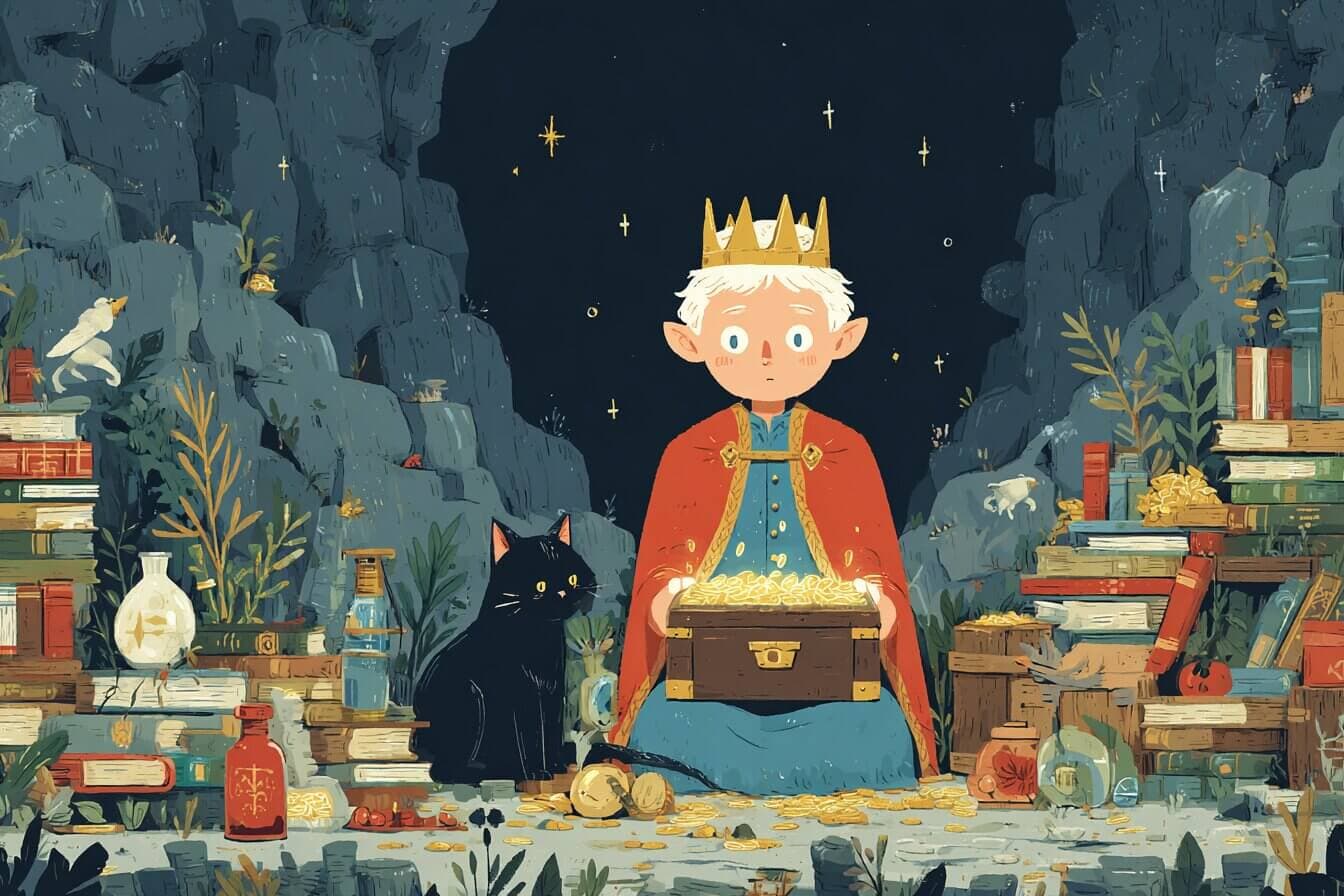
There is something about hidden doors and secret staircases that makes a child's eyelids feel heavier in the best possible way, as if the mystery itself is pulling them gently toward sleep. In this tale, Princess Marigold discovers a tower room she never knew existed, learns the mountain beneath her castle is in trouble, and teams up with a young miner named Pip to set things right through song and starlight thread. It is exactly the kind of the princess and the goblin bedtime story that wraps bravery inside a warm blanket of comfort. If you would like to shape your own version with different characters or a softer ending, you can build one in Sleepytale.
Why Princess and Goblin Stories Work So Well at Bedtime
Stories about princesses and goblins tap into one of the oldest patterns children recognize: something dark stirs beneath something beautiful, and courage is what bridges the two. The underground world of goblins gives kids a safe container for the fears that tend to surface at night, while the princess above represents the steady, warm world they are falling asleep in. When those two worlds meet and resolve peacefully, a child's nervous system gets a quiet signal that things can be set right.
A bedtime story about a princess facing goblins also lets children rehearse bravery from under the covers, which is the safest place to practice it. The rhythm of descending into tunnels and then climbing back up mirrors the arc of a bedtime routine itself: going down into stillness, then surfacing into rest. That loop of tension and release, repeated gently, is one of the reasons these tales have been putting children to sleep for generations.
The Castle above the Clouds 10 min 55 sec
10 min 55 sec
Princess Marigold loved the way sunrise painted the mountain peaks rose and gold. But she loved secrets more than any color.
One misty morning she followed a faint humming through the castle's tallest tower and found a narrow door she had never noticed. It was smaller than the others, set into the stone at an odd angle, as if whoever built it wanted people to walk past without looking twice.
Behind it, spiral stairs curled upward.
She climbed until the stone steps turned silver under her feet and the air changed, thinner and sweet, like lilac growing somewhere you could not see.
At the top, a round room opened, filled with wheels of shimmering thread that sang as they turned. Not music exactly, more like the sound a glass makes when you run a wet finger along the rim. At the biggest wheel sat a lady in moon colored robes, her silver hair so long it pooled on the floor and trailed toward the wall.
The lady's eyes matched the sky just before dawn.
"Great great Grandmother?" Marigold whispered, because the family portraits in the long hallway showed this exact face, the same slightly crooked smile, the same way of tilting her head as though listening to something nobody else could hear.
The lady did not answer right away. She finished one full turn of the wheel, then held out the glowing thread.
The moment Marigold's fingers closed around it, pictures crashed into her mind: deep tunnels, pickaxes striking stone, frightened people in miner helmets pressing their backs against wet walls. She gasped and nearly let go.
"Goblins have cracked the heart of the mountain," her ancestor said, as calmly as if she were describing the weather. "Only royal hands can weave a barrier strong enough to hold them back. But you will need courage from below as well as magic from above."
Marigold's heart thumped so hard she felt it in her teeth. She lifted her chin anyway.
"Tell me what to do."
The lady instructed her to braid three strands: one of sunrise light, one of mountain roots, and one of honest heart. Then she must carry the braid to the lowest mine before the next sunset. No later. The lady was very clear about that part.
Marigold tucked the thread into her pocket, promised to return, and hurried down the stairs so fast her slippers skidded on the silver steps. She caught herself on the wall with one hand and kept going.
In the courtyard she met Pip.
He was the youngest miner boy, skinny and freckled, and he carried a lantern almost as tall as himself. He bowed shyly, but when she explained her quest his whole face changed. His eyes went wide and sharp, the way a dog's ears prick forward at a sound in the woods.
"I know a hidden shaft that leads straight to the deepest level," he said. Not declared. Said, like it was the most obvious thing in the world.
Together they slipped past the kitchen gardens, where someone had left a basket of onions sitting on the wall and a cat was sniffing it with great suspicion. Through a mossy gate, onto a sheep path that zigzagged toward the valley. Sunlight warmed their faces. The castle bells chimed nine times above them, each note hanging in the air a little longer than the last.
Pip led her to a thicket of pines where a square wooden hatch lay half buried under golden needles. He heaved it open. Iron rungs disappeared into darkness that smelled like cold metal and rain on rock.
Marigold took a breath. Then another. Then she started down.
The rungs felt slick but steady under her palms. After what seemed like a very long time, their boots touched packed earth. A pale glow rose from Marigold's pocket, the magical thread pulsing like something alive.
The tunnel ahead was narrow and low. They had to walk with their heads ducked, and the lantern threw their shadows long and strange against the walls. Far below them, faint but unmistakable: clink, clink, clink. Goblin tools chipping rock.
They followed a rail track until it ended at a cavern so wide the lantern light simply gave up and faded into nothing before it reached the other side. Ugly laughter bounced off the walls. Orange torchlight flickered on jagged pillars of stone.
Between the pillars slept a mound of goblins. Gray skin blotched with soot, claws curled around pickaxes even in sleep, mouths hanging open. A squat captain with brass buttons strutted among them, counting sacks of glittering mountain crystals and muttering numbers to himself.
Marigold's knees trembled.
Pip squeezed her hand once, quick and firm, and she steadied.
She pulled out the glowing braid and held it high. The thread blazed brighter than the lantern, sending rainbow ripples across the cave walls like sunlight through a soap bubble. The goblin captain spun around.
"Intruders!" he screeched, and the word bounced three times before it died.
Goblins leaped up everywhere, surrounding the children in a ring of sharp tools and sharper teeth. One of them sneezed, a huge wet sneeze that echoed horribly, and the others glared at him.
Marigold swallowed hard. Courage from below as well as magic from above. She looked at Pip.
He was pale. His freckles stood out like dots of ink on paper. But he stepped forward, lifted his lantern, and sang.
It was the mountain work song his mother had taught him, the one miners hummed when the tunnels felt too close. His voice was clear and not particularly beautiful, a boy's voice, a little rough at the edges, but steady and real. It rang against the stone and did not falter.
One goblin lowered his pickaxe. Then another. Their pointy ears twitched, tracking the melody the way flowers track sunlight.
Marigold felt warmth flood her chest, starting somewhere behind her ribs and spreading outward. She began to hum along, weaving her own royal lullaby into the tune. The two melodies braided together, not perfectly, but that seemed to be the point.
The magical thread responded. It stretched from her hands into a shimmering net that floated above the goblins like a sunrise cloud. The captain swung his club at it. The net only glowed brighter, wrapping him in strands of light.
The other goblins squealed and stumbled backward.
"Leave the mountain heart," Marigold said. She was surprised at how steady her voice sounded, as if it belonged to someone who did this sort of thing regularly. "Take what you have already mined. But do not come back."
The net tightened. The captain kicked and spat. His brass buttons popped off one by one, pinging against the cave floor like tiny bells.
"We go," he finally squeaked. "We go, we go!"
The goblins scurried toward the dark side tunnels, dragging their sacks behind them, tripping over each other, grumbling and hissing but moving. One paused to grab a dropped crystal, thought better of it, and kept running.
When the last shadow vanished, the net dissolved into sparks that drifted down like fireflies settling for the night. Where the captain had stood, a smooth crystal column now rose from the floor, sealing the main passage with a quiet click.
The mountain sighed. A deep, gentle rumble that vibrated through the soles of their boots. It felt like gratitude, or maybe relief, the way a house settles after a storm passes.
Marigold and Pip looked at each other. Neither of them said anything for a moment. Then Pip laughed, a short surprised sound, and Marigold laughed too, and the echo carried it upward through the tunnels.
They retraced their steps along the rail track, up the iron rungs, through the hatch, and into air that smelled like pine needles and evening. Sunset brushed the sky lavender and peach.
In the tower room the silver haired lady waited beside her wheel. She opened her arms, and Marigold ran into them without thinking about whether princesses were supposed to run.
"You have given the mountain its voice back," the lady whispered against Marigold's hair. "And you have found a friend who carries courage in song."
Pip turned so red his freckles disappeared.
The lady snapped her fingers. Two small tokens appeared in the air: for Marigold, a spindle of starlight thread that would always remind her to listen for secrets; for Pip, a tiny crystal pickaxe pendant that would ring softly whenever danger neared the mines.
That night the castle celebrated with honey cakes and mountain berry juice. Musicians played in the courtyard. Even the oldest knights danced, badly and happily.
Marigold sat on the balcony beside Pip, watching constellations appear above the peaks one by one, as if someone were lighting them on purpose. Far below, the sealed tunnel glimmered faintly. A promise kept.
She knew that somewhere under the earth the goblins were already telling stories about the singing boy and the princess whose thread could hold the sunrise. She wondered if their version made her taller. Probably.
Marigold tucked the spindle into its velvet pouch. The mountain wind carried something upward, past turrets and towers, until it nestled among the stars like a small bright feather, ready for the next dreamer who might dare to climb.
The Quiet Lessons in This Princess and Goblin Bedtime Story
This story explores what happens when you face something frightening and discover you do not have to face it alone. When Marigold's knees tremble in the cavern but she holds steady after Pip squeezes her hand, children absorb the idea that bravery is not the absence of fear but the presence of someone beside you. Pip's imperfect singing voice, rough at the edges but unwavering, shows kids that you do not need to be polished or powerful to make a difference; you just need to be honest. And the goblins are not destroyed but simply sent away, which gently teaches that conflicts can end without cruelty. These are reassuring ideas to carry into sleep, the kind that make tomorrow feel a little less daunting.
Tips for Reading This Story
Give Marigold a quiet, thoughtful voice that grows bolder as the story progresses, and make Pip sound slightly breathless and practical, like a kid who is used to solving problems on the fly. When the goblin captain screeches "Intruders!" go loud and scratchy, then drop your voice very low for Marigold's reply so the contrast feels dramatic. At the moment the mountain sighs after the goblins leave, pause for a full breath and let the silence sit; that rumble of gratitude lands better when your child has a second to feel it in the quiet of the room.
Frequently Asked Questions
What age is this story best for?
This story works well for children ages 4 to 8. Younger listeners will enjoy the sensory details like the singing thread and the rainbow light in the cave, while older kids will appreciate Marigold's growing confidence and the way she and Pip solve the problem together rather than relying on a single hero.
Is this story available as audio?
Yes, you can press play at the top of the story to listen. The audio version brings out the contrast between the hushed tower room and the echoing goblin cavern especially well, and Pip's work song has a rhythm that sounds wonderful read aloud. It is a great option for nights when you want to close your eyes alongside your child.
Why are the goblins sent away instead of defeated in a battle?
The story follows a tradition where goblins represent fears that live underground, and the resolution mirrors how children can learn to manage worries rather than fight them violently. Marigold and Pip use music and light, not weapons, which keeps the story comforting rather than tense. It also means children are not left with images of conflict right before they fall asleep.
Create Your Own Version
Sleepytale lets you reshape this tale into something that fits your child perfectly. You could swap the cloud castle for an underground library, change the glowing thread to a lantern powered by lullabies, or turn Pip into a gentle badger who knows every tunnel by heart. In just a few taps you can create a cozy princess and goblin story with your child's name, favorite setting, and the exact level of adventure that helps them drift off.
Looking for more bedtime story classics?

Once Upon A Time Stories
What happens when June opens a golden book with no title? One of the sweetest short once upon a time stories about a forest, a hedgehog, and a blank page.

Fairy Tales Written By Hans Christian Andersen
Anders discovers short fairy tales written by Hans Christian Andersen as his grandmother reads from a soft brown book by lamplight.

Bluebeard Fairy Tale
In this short bluebeard fairy tale, the forbidden room holds not horror but a music box and memories of the people Lord Corvus loved most.

Red Shoes Fairy Tale
What happens when Karen's magical red shoes refuse to stop dancing? Discover this short red shoes fairy tale tonight.
Twinkle Twinkle Little Star Bedtime Story
Lily watches a kind star and floats up to help deliver dreams in this short twinkle twinkle little star bedtime story. A warm, quiet tale for sleepy nights.
Through The Looking Glass Bedtime Story
Step into a calm, magical short through the looking glass bedtime story and drift toward sleep with gentle wonder. Enjoy a soothing retelling that feels cozy from start to finish.