
The Pied Piper Of Hamelin Bedtime Story
By

Dennis Wang, Bedtime Story Expert
6 min 16 sec
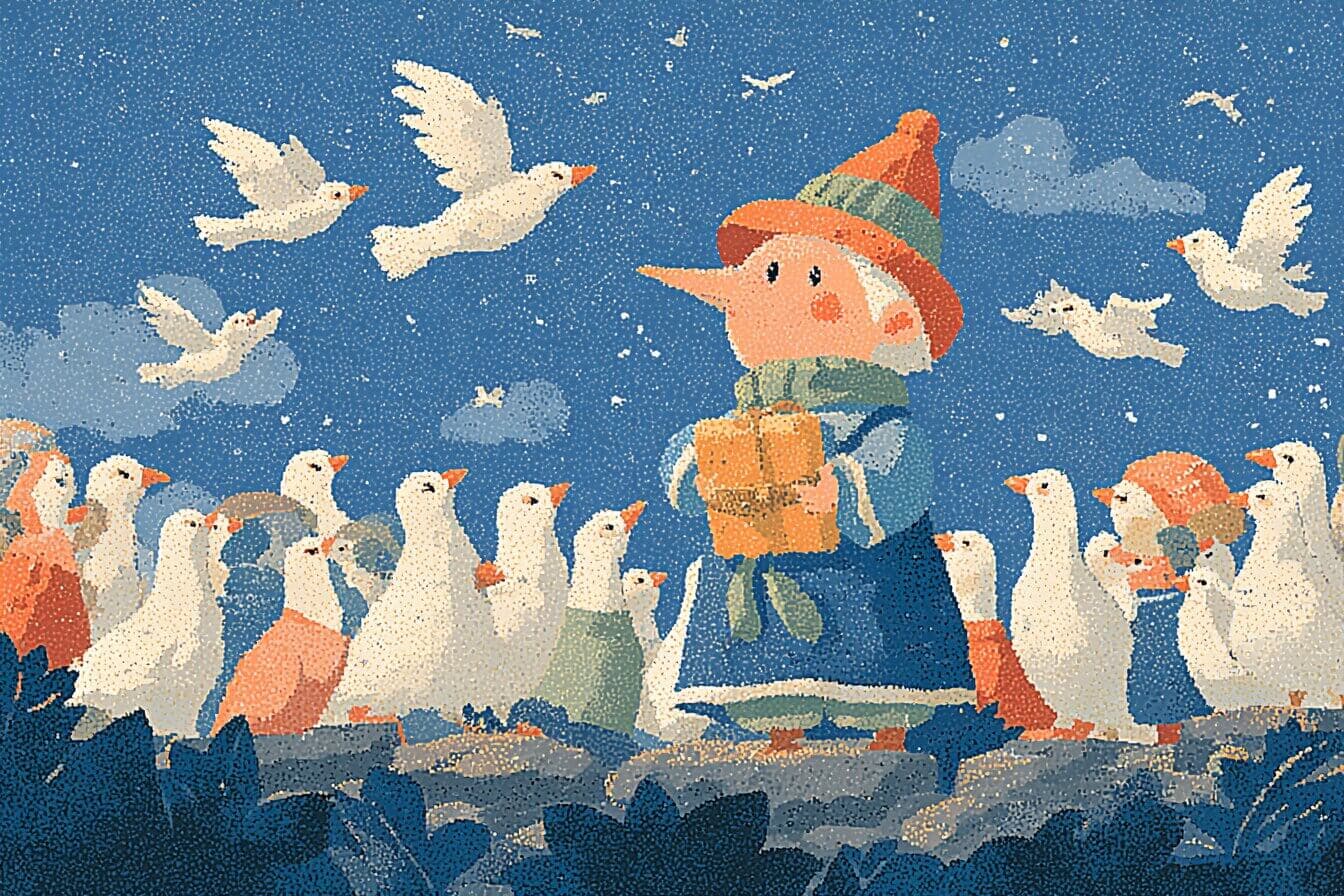
There is something about the sound of a lone flute drifting through an evening window that makes the whole world feel smaller, warmer, and ready for sleep. This retelling follows a bright-cloaked piper, a mayor who forgets his word, and a brave girl named Gretel who plays her grandfather's wooden flute to bring the children of Hamelin safely home. It is a Pied Piper of Hamelin bedtime story shaped for quiet voices and heavy eyelids. If you would like to shape your own version with different characters or a gentler ending, you can create one with Sleepytale.
Why Pied Piper Stories Work So Well at Bedtime
The Pied Piper tale has survived for centuries partly because it moves the way sleep does: music starts, the world narrows to a single melody, and everything else fades. Children are drawn to the idea that sound alone can lead you somewhere magical. At bedtime, when the house is finally still, that image of a distant pipe note carrying you forward mirrors the feeling of letting go and drifting off.
There is also something deeply reassuring about a story where a broken promise gets mended. Kids spend their days navigating fairness, taking turns, keeping their word, and hearing others break theirs. A bedtime story about the Pied Piper gives them a safe place to sit with that tension and then watch it resolve into warmth and homecoming before their eyes close.
The Piper of Hamelin's Promise 6 min 16 sec
6 min 16 sec
In the tidy town of Hamelin, where every roof was red and the window boxes dripped with geraniums that nobody remembered planting, a single rat scuttled across the market square at dawn.
By noon the square swarmed with whiskers and tails. By twilight the bells were ringing so hard the clappers left dents, and citizens barricaded their doors with whatever they could drag across the floor.
Into this mess walked a tall traveler dressed in cloth of every color.
His cloak caught the light the way oil puddles do, shifting from orange to violet when he turned. His boots had a faint sparkle to them, and the silver pipe tucked in his belt glowed as if it held its own tiny moon.
The mayor met him at the town hall steps, wringing his hat like a wet rag. The piper listened, nodded once, and said he could charm every rat out of Hamelin by morning. All he asked was a pouch of gold and the town's solemn word.
"Done," the mayor said, too quickly.
Children pressed their noses to shuttered windows as the stranger walked to the riverbank. He lifted the pipe, and the first note came out so light it felt less like sound and more like someone tickling the inside of your ear. The second note was lower, warm, the kind of hum a cat makes when it finds a patch of sun.
Rats poured from cellars, from attic beams, from cracks so narrow you would not think a whisker could fit. They flowed in a gray river that followed the music straight to the water's edge and tumbled in.
Gone.
The town erupted. People danced. Someone threw a wheel of cheese in the air for no reason at all.
But when the piper returned to the town hall and held out his hand, the mayor placed a single copper coin on his palm. "The coffers," the mayor mumbled, studying his shoes, "are bare."
They were not bare. Everyone in the square knew it. The piper knew it too.
His eyes went quiet, the kind of quiet that is louder than shouting. He said, softly, that promises bind tighter than rope. Then he turned and looked toward the square where children were already chasing each other between market stalls, their laughter bouncing off the red roofs.
The next evening, just as the sun touched the hills, a sweet tune threaded through Hamelin's streets. Adults heard nothing. Not a whisper. But every child stopped mid-step, head tilted, listening to something only they could reach.
Boys and girls slipped from doorways, skipping, twirling, following the piper toward the eastern hills as if the music had taken their hands. Parents ran after them, calling names that the breeze swallowed whole.
Through meadows thick with fireflies the procession glided. The children's bare feet left trails in the dew. Then a limestone archway appeared, half-hidden by ivy so old it had turned the color of iron.
The piper played one last spiraling note, high and thin as a thread.
The children passed beneath the stone.
The arch shimmered like moonlit water, then went still. Only a faint echo of laughter hung in the vines, and then even that was gone.
Hamelin woke to hollow streets.
Toys lay on doorsteps where they had been dropped mid-game. A wooden horse on its side. A ball still rolling, slowly, against a curb.
The mayor sent search parties into every forest and cave. They came back with nothing. Months dragged by, and the town grew so quiet you could hear the geraniums growing.
Then a girl named Gretel stepped forward.
She had been sick in bed the day of the piping, fever-flushed and tangled in blankets, and the music had not reached her. She was small for her age. She carried a wooden flute her grandfather had carved from a branch that fell during a storm, and she announced, with the calm certainty that only children possess, that she would bring the others home.
The adults looked at each other. Nobody believed her. Nobody stopped her either.
At sunrise Gretel walked to the archway. Moss had crept over more of the stone since the children vanished. She pressed her lips to the flute and played the lullaby her mother sang every night, the one with the wandering melody that never quite ended the same way twice.
The notes floated like dandelion seeds, slipping into cracks in the ancient rock.
For a long moment, nothing.
Then, from deep inside the hillside, an answering strain rose. Timid at first, almost a question. It brightened note by note until it matched Gretel's tune the way a reflection matches a face.
One by one the missing children stepped through the archway, rubbing their eyes as if waking from dreams that had lasted exactly one night and also a hundred years. A boy still clutched a wildflower he had picked on the other side. A girl yawned so wide her jaw cracked.
They talked about a hidden valley where time moved like honey and every game ended in giggles, but they said their chests had ached with a feeling none of them could name until Gretel's lullaby floated in and gave it a word: home.
Gretel took their hands, two at first and then a chain of them, and together they followed her tune back through the meadow. The fireflies were still there, blinking as if nothing had happened.
When the mayor saw them walking into the square, his face did something complicated. It crumpled and opened at the same time. He did not speak. He walked to the archway that afternoon and placed a pouch of gold beneath the ivy, though the piper was long gone and might never see it.
The piper never did return.
But every midsummer, Hamelin hangs ribbons on the stone gate and children dance to flutes carved from willow branches. The baker leaves honey cakes at the arch each dawn. The miller scatters flour for the birds. The mayor himself ties fresh ribbons, his hands slower now but steadier than they used to be.
Sometimes, when sunset paints the sky in colors that shift like a traveler's cloak, gentle music drifts along the breeze. Nobody can say where it comes from. Nobody tries too hard to find out.
Children skip rope to rhymes about the day the river carried away the rats. Grandparents add, more quietly, that honesty carried the children home again.
And beneath the limestone arch, wildflowers bloom in shapes that look, if you squint, like tiny pipes. They nod when the wind hums, as if agreeing with a tune only they remember.
If you pass through Hamelin on a clear night, you may hear a lullaby rising from windows left open to the stars.
It is a promise, kept alive in every note, that the town will not forget again.
The Quiet Lessons in This Pied Piper Bedtime Story
This story carries lessons about honesty, courage, and the power of keeping your word. When the mayor breaks his promise and watches the consequences unfold, children absorb the idea that trust matters even when no one is checking. When Gretel picks up her grandfather's flute and walks toward the archway alone, kids see that bravery does not require size or strength, just the willingness to try something kind. And when the children describe the ache they could not name until the lullaby arrived, the story gently shows that belonging is a feeling worth protecting. These are reassuring ideas to carry into sleep, the sense that honesty repairs what is broken and that home is always worth walking toward.
Tips for Reading This Story
Give the piper a smooth, unhurried voice, almost musical, and let the mayor sound flustered and a little too loud when he says "Done." When Gretel plays her lullaby at the archway, slow your reading pace way down and let each sentence hang in the air the way the notes do. At the moment the children emerge rubbing their eyes, pause and ask your child what they think the hidden valley looked like. It turns a quiet scene into a small conversation that eases them closer to sleep.
Frequently Asked Questions
What age is this story best for?
This version works well for children ages 4 to 8. Younger listeners enjoy following the sounds of the pipe and the parade of rats, while older kids connect with Gretel's bravery and the mayor's regret. The tension is gentle enough that it resolves before anyone feels truly worried.
Is this story available as audio?
Yes. You can press play at the top of the story to hear it read aloud. The shifting moods, from the chaotic rat scene to the hush of the archway to Gretel's quiet lullaby, translate beautifully into audio. The piper's spiraling final note is a moment that sounds especially lovely when you hear it spoken rather than read it silently.
Why does Gretel's lullaby work when the piper's magic could not be undone?
In this retelling, the piper's music drew the children away through spectacle and enchantment, but Gretel's lullaby reaches them through something simpler: familiarity and love. The children recognize the melody from their own homes, and it names the feeling they had been missing. It is a way of showing that the most powerful music is sometimes the quietest kind.
Create Your Own Version
Sleepytale lets you reshape this classic tale into something uniquely yours. You can move the story from Hamelin to a seaside village, swap the silver pipe for a hand drum, or turn Gretel into a sibling, a best friend, or even a gentle fox who finds the archway by scent. In a few taps you will have a cozy, read-aloud retelling that fits your child's imagination and your family's bedtime pace.
Looking for more bedtime story classics?

Once Upon A Time Stories
What happens when June opens a golden book with no title? One of the sweetest short once upon a time stories about a forest, a hedgehog, and a blank page.

Fairy Tales Written By Hans Christian Andersen
Anders discovers short fairy tales written by Hans Christian Andersen as his grandmother reads from a soft brown book by lamplight.

Bluebeard Fairy Tale
In this short bluebeard fairy tale, the forbidden room holds not horror but a music box and memories of the people Lord Corvus loved most.

Red Shoes Fairy Tale
What happens when Karen's magical red shoes refuse to stop dancing? Discover this short red shoes fairy tale tonight.

Twinkle Twinkle Little Star Bedtime Story
Lily watches a kind star and floats up to help deliver dreams in this short twinkle twinkle little star bedtime story. A warm, quiet tale for sleepy nights.
Through The Looking Glass Bedtime Story
Step into a calm, magical short through the looking glass bedtime story and drift toward sleep with gentle wonder. Enjoy a soothing retelling that feels cozy from start to finish.