
The Odyssey For Kids Bedtime Story
By

Dennis Wang, Bedtime Story Expert
8 min 42 sec
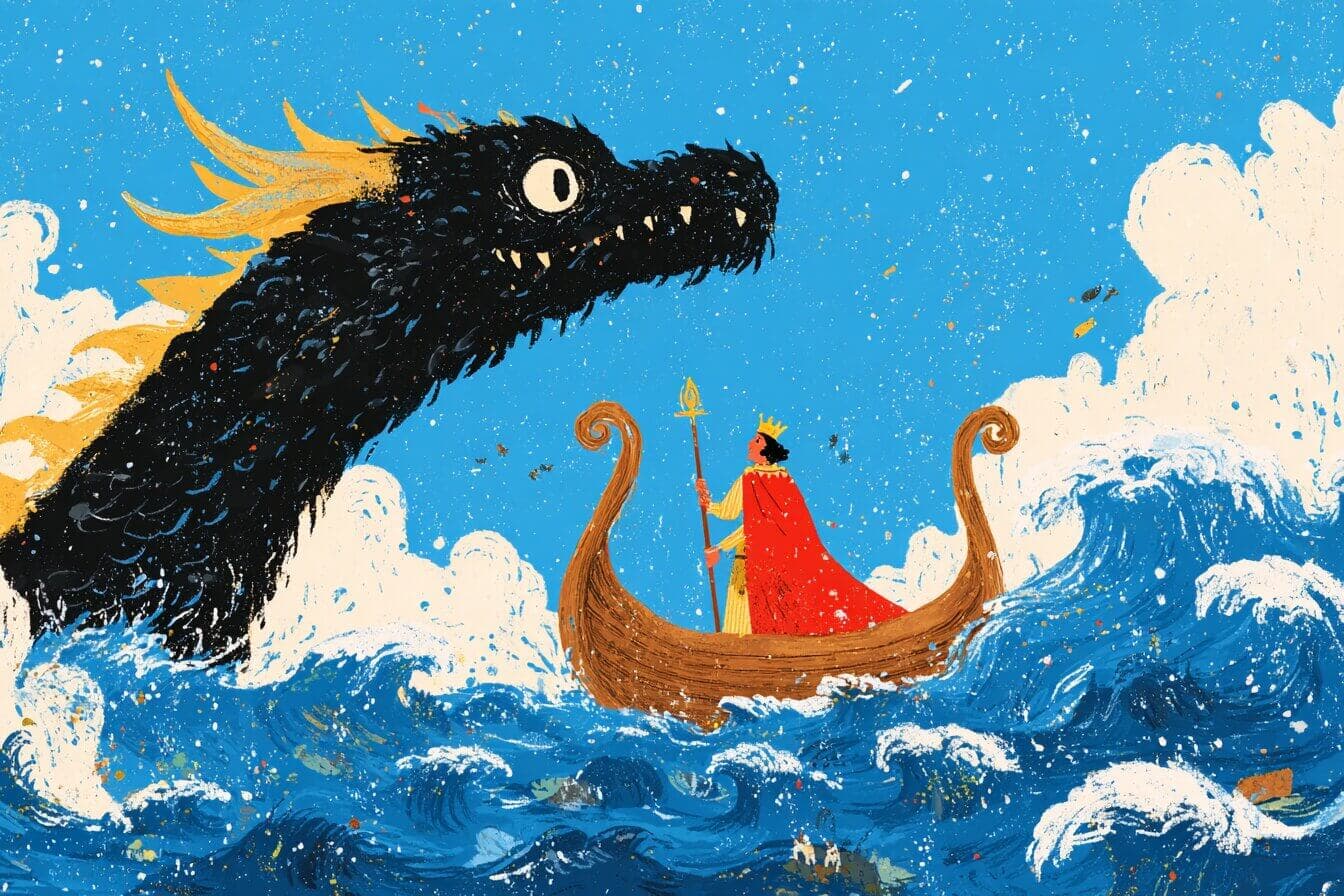
There is something about the sound of waves at night that makes even the longest journey feel safe. In this gentle retelling of the Odyssey for kids bedtime story, a kind king named Telemachus sails across strange seas, meets wonders both enormous and tiny, and counts the days until he can hold his family again. The plot unfolds slowly, like tide coming in, so every scene has room to settle before the next one arrives. If you want to shape your own version with different helpers, a cozier setting, or your child's name woven in, you can make one with Sleepytale.
Why Odyssey Stories Work So Well at Bedtime
A voyage home is one of the oldest story shapes we have, and it fits the rhythm of bedtime almost perfectly. Each leg of the journey gives a child a small arc of tension and release, a new island, a strange creature, a moment of courage, followed by calm water again. That pattern mirrors the way a child's breathing slows as they settle in, moving through little waves of wakefulness until sleep finally arrives.
Odyssey stories also carry a built-in promise: the traveler is heading somewhere warm and familiar. Kids who hear a bedtime story about a hero sailing home absorb the reassurance that the world outside the blanket might be wild, but the destination is always love. The sea becomes a kind of lullaby, constant and steady, carrying both the character and the listener toward rest.
The Long Way Home 8 min 42 sec
8 min 42 sec
King Telemachus stood at the prow of his little ship and watched the sunrise paint the waves gold.
Ten years had passed since the war ended. Every dawn carried him farther from home.
His heart ached for the green hills of Ithaka and the laughter of his wife, Penelope, who waited beneath the olive trees. A playful breeze tugged at his cloak, and the king smiled because he was sure, absolutely sure, that the wind itself carried her songs across the sea.
He pressed a painted wooden horse to his chest. It was a gift carved for the daughter he had never met. One of the horse's ears was slightly longer than the other because he had carved it during a storm, and he liked the mistake so much he kept it.
"Soon we will be together," he whispered.
Yet the ocean stretched wide and wild, and many wonders and dangers still waited between him and his island kingdom.
That morning a pod of dolphins leaped beside the hull, chattering like children arguing over who goes first down a hill. Telemachus took their joy as a promise that the gods were guiding him home. He raised his eyes to the horizon and set his course by the bright star of morning, unaware that the first test of his journey was already rising from the depths.
A shadow passed beneath the ship, longer than the vessel itself.
The dolphins vanished in silver flashes. The king gripped the rail and felt the deck tilt as the sea bulged upward, and from the swirling water emerged a gigantic eye, blinking slow as a moon passing behind cloud.
The one-eyed giant rose on a neck draped in seaweed and studied the tiny craft with a look that was more puzzled than angry, the way you might study a beetle walking across your breakfast plate. Telemachus bowed politely, for courtesy had served him well in strange courts, and he offered the creature a bronze mirror as a gift of friendship.
The giant turned the mirror over twice, saw his own reflection, and laughed. The sound rolled across the water like distant thunder. In return he blew a bubble that drifted onto the deck and burst into a map of currents, glowing faintly blue, that would speed the ship westward.
"Safe travels, little king," the giant rumbled, already sinking.
Telemachus thanked him and sailed on, following the shimmering path.
Days passed in bright succession. The crew sang rowing songs the dolphins had taught them, though nobody could agree on the words, so each man sang his own version and somehow it all sounded right. Then one twilight, voices sweeter than honey came floating across the water.
Penelope had warned him of sirens who sang longing into the hearts of sailors. Telemachus plugged every ear with wax from the ship's candles, and he himself tied his body to the mast so he could listen without leaping overboard.
The sirens swooped low, weaving trails of starlight. Their song was beautiful and sad and a little bit silly, if he was honest, like someone crying while trying to tell a joke. The ship sailed safely through, and the king stored their haunting melody in his memory to share as a lullaby for his children someday.
Night wrapped the world in velvet. The crew rested beneath constellations that seemed to lean closer, guiding them like lanterns hung from invisible branches.
By dawn they reached a stretch of water where the sea boiled and hissed. From the foamy center rose a serpent with scales of emerald and sapphire, coiled around a rock shaped like a throne. One scale near its jaw was cracked, an old scar that caught the light differently from the rest.
Telemachus spoke politely, calling the serpent Guardian of the Deep, and offered a chess piece carved from driftwood, a king to match the serpent's own majesty.
The serpent accepted the gift, held it in one coil, and bowed. Then it uncoiled to reveal a tunnel of calm water leading through the boiling chaos. The ship glided down the passageway while steam sang in the sails, and the crew cheered when they emerged into peaceful waves painted with rainbows.
The king marked the serpent's kindness on his chart, naming the place The Serpent's Gift, so future sailors would know to bring respect and a small carved token.
Weeks later they anchored beside an island shaped like a sleeping turtle. The trees grew pearls instead of fruit, and the streams ran with cool sweet milk. Telemachus dipped a finger in and tasted it. It was exactly the temperature of a drink left out on a summer afternoon, not cold, not warm, just right.
The inhabitants, no taller than a child's knee, rode upon dragonflies and offered the travelers honey cakes and stories that went on longer than anyone expected. Telemachus played his wooden flute for them, badly at first because his fingers were stiff from salt air, then better. In return they wove him a cap of silver leaves that would keep the sun from burning his thoughts.
When the ship departed, a thousand dragonflies escorted them to the edge of the coral reef. Their wings shimmered like tiny stained-glass windows, and one dragonfly landed on the king's shoulder and stayed there for half a mile before changing its mind and turning back.
Each sunset the king added a new knot to a rope, counting the days since he left the battlefield. Each sunrise he untied one. He liked the idea that hope should balance memory.
One evening the sea turned glassy and still, reflecting the sky so perfectly that the ship seemed to float among drifting constellations. The youngest sailor on the crew, a boy of fifteen, reached over the side and tried to touch a star. His hand came back wet and cold and empty, but he grinned anyway.
A hush fell over the world.
From the heavens descended a flock of bright geese made of starlight, beating wings of silver fire. They circled the mast three times, then flew onward, leaving a single feather that glowed softly on the deck. It was warm to the touch. Telemachus knew the final stretch of ocean had been blessed, and he ordered the sail raised full.
The crew took turns keeping the glowing feather aloft on the bowsprit, a beacon that outshone the lanterns and made the dolphins laugh with delight.
At last a familiar outline rose on the horizon. A mountain shaped like a lion resting beneath the stars.
Home was no longer a dream but a scent on the wind, pine resin and thyme, and a sound of crickets singing the same song they sang when he was a boy. He woke every sleeping sailor with gentle shakes and whispers of "Ithaka," a word sweeter than any music.
Together they guided the ship into the quiet harbor where fishing boats bobbed like sleeping ducks. The moon laid a silver bridge across the water.
Penelope stood on the shore, her hair unbound and shining, holding a lamp that did not flicker. Their daughter, now ten summers old, clutched her mother's hand and stared at the king with wide curious eyes that mirrored his own. She did not run to him. She studied him first, the way a careful person studies something they have only ever seen in stories.
Telemachus leaped from deck to sand, knelt to embrace his queen, then lifted his child onto his shoulders. She was heavier than he had imagined, and that surprised him, and the surprise made him laugh.
"I have stories," he told her. "One-eyed giants and singing stars and a serpent who likes chess."
"Tell them slow," she said.
The crew scattered to their own cottages. The king walked the paths he had traced in dreams, finding every olive tree grown taller but still rooted in the same red earth.
That night he placed the painted wooden horse into his daughter's eager hands. She noticed the uneven ears right away and ran her thumb over the longer one. She set it beside her bed where moonlight could keep it company.
Before sleep, Telemachus hung the glowing star feather from the mast of his little ship, now retired beneath the olive grove, so its light would guide any traveler who still sought the way home.
And whenever the wind stirred the leaves, their rustling sounded like distant waves, carrying songs and promises and the quiet certainty that every journey, no matter how long, leads back to love.
The Quiet Lessons in This Odyssey Bedtime Story
This story is built around patience, courtesy, and the courage it takes to keep going when the destination is still out of sight. When Telemachus bows to the one-eyed giant instead of reaching for a weapon, children absorb the idea that respect can open doors that force never could. His habit of tying and untying knots, balancing hope against memory, gives kids a gentle image for processing feelings they cannot yet name. And the daughter who studies her father before running to him shows that it is okay to be cautious with something new, even something wonderful. These are the kinds of reassurances that settle well right before sleep, when a child's mind needs permission to let go of the day and trust that tomorrow will be safe.
Tips for Reading This Story
Give the one-eyed giant a low, rumbly voice and let his laugh roll out slowly, like thunder far across the water. When the youngest sailor reaches over the side to touch a reflected star, pause and let your child guess whether he catches one. At the very end, when the daughter says "Tell them slow," try matching her pace by reading the final three paragraphs in almost a whisper, letting the spaces between sentences stretch a little longer each time.
Frequently Asked Questions
What age is this story best for?
Children between about four and eight tend to enjoy it most. Younger listeners love the dolphins and the tiny dragonfly riders, while older kids pick up on details like the uneven ears on the carved horse and Telemachus's rope-knotting habit. The pacing is slow enough for drowsy four-year-olds but the voyage has enough variety to hold an eight-year-old's attention.
Is this story available as audio?
Yes. Press play at the top of the story to hear it read aloud. The audio version works especially well for scenes like the sirens' song and the moment the star geese circle the mast, where the rhythm of the language almost becomes music on its own. Character voices, like the giant's rumbling laugh, come alive in narration and help younger listeners follow along without needing to see the page.
Why is the main character called Telemachus instead of Odysseus?
This retelling reimagines the classic voyage with Telemachus as the king sailing home, keeping the spirit of Homer's story while simplifying the cast for young listeners. It lets children follow a single hero on a single journey without the layered backstories that can overwhelm bedtime reading. The familiar Odyssey landmarks, the one-eyed giant, the sirens, the homecoming, are all here in gentler form.
Create Your Own Version
Sleepytale lets you reshape this ancient voyage into something that fits your child's world perfectly. Swap the sea for a river, trade the wooden horse for a stuffed animal your kid actually sleeps with, or turn the serpent guardian into a friendly whale. In just a few moments you will have a calm, personal story you can replay whenever bedtime needs a gentle path home.
Looking for more bedtime story classics?

Once Upon A Time Stories
What happens when June opens a golden book with no title? One of the sweetest short once upon a time stories about a forest, a hedgehog, and a blank page.

Fairy Tales Written By Hans Christian Andersen
Anders discovers short fairy tales written by Hans Christian Andersen as his grandmother reads from a soft brown book by lamplight.

Bluebeard Fairy Tale
In this short bluebeard fairy tale, the forbidden room holds not horror but a music box and memories of the people Lord Corvus loved most.

Red Shoes Fairy Tale
What happens when Karen's magical red shoes refuse to stop dancing? Discover this short red shoes fairy tale tonight.

Twinkle Twinkle Little Star Bedtime Story
Lily watches a kind star and floats up to help deliver dreams in this short twinkle twinkle little star bedtime story. A warm, quiet tale for sleepy nights.
Through The Looking Glass Bedtime Story
Step into a calm, magical short through the looking glass bedtime story and drift toward sleep with gentle wonder. Enjoy a soothing retelling that feels cozy from start to finish.