
The Oak And The Reeds Bedtime Story
By

Dennis Wang, Bedtime Story Expert
9 min 59 sec
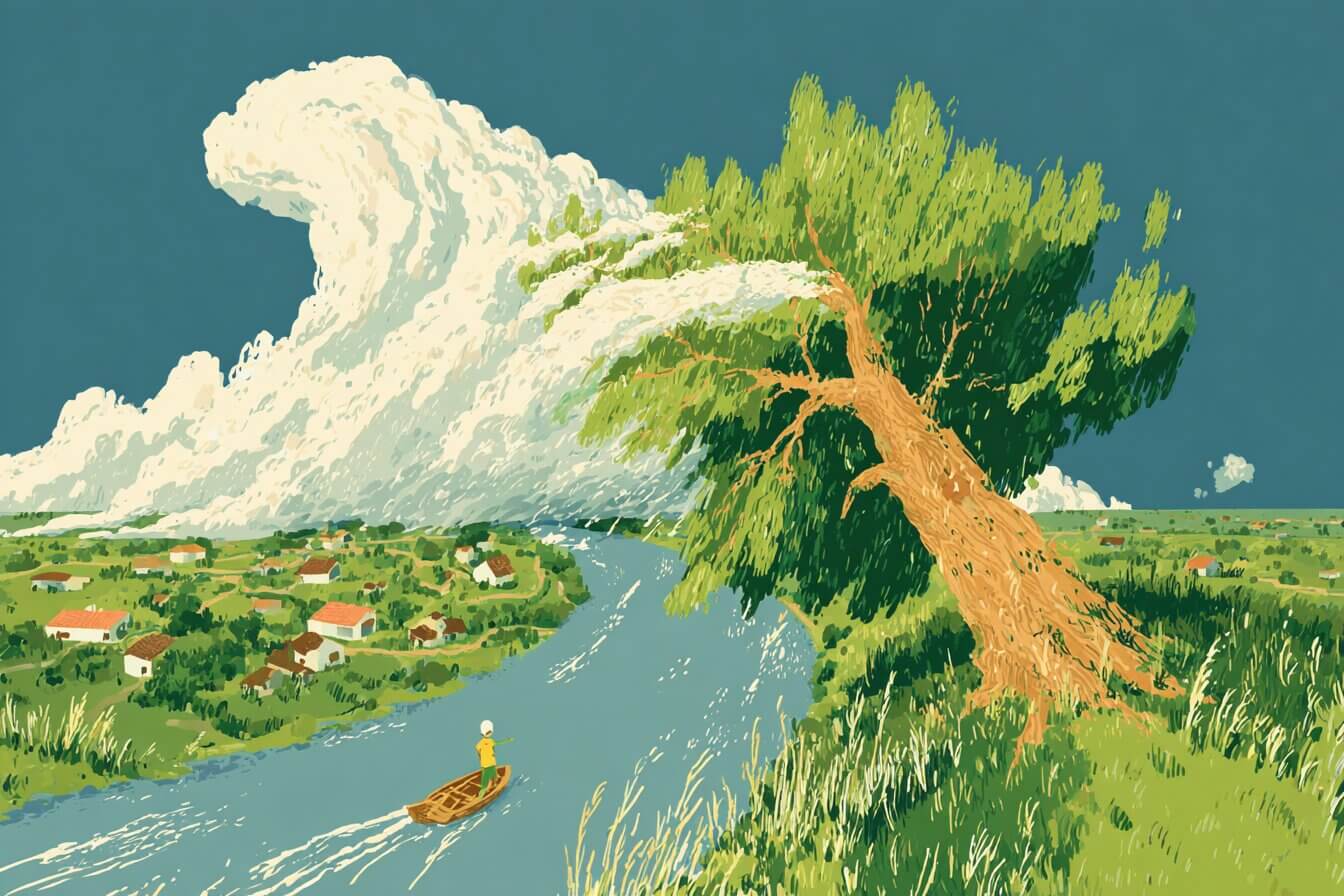
There is something about falling water and rustling leaves that makes a child's shoulders drop and their breathing slow, even before the first sentence of a story lands. This gentle tale follows Orla, a proud oak who believes strength means standing perfectly still, until a storm and a humble reed named Reedly show her otherwise. It is one of the most timeless versions of the oak and the reeds bedtime story, full of wind sounds, river light, and the kind of quiet courage kids understand in their bones. If you would like to shape a version around your own child's favorite details, you can create one in minutes with Sleepytale.
Why Oak and Reeds Stories Work So Well at Bedtime
There is a reason children return again and again to stories set beside rivers and beneath old trees. The rhythm of water and wind creates a natural lullaby inside the narrative, something a child's body responds to even when they are only listening. An oak standing firm while reeds sway is an image simple enough for a three year old to picture and rich enough for a seven year old to think about long after the lights go out.
A bedtime story about an oak and reeds also mirrors what kids feel at the end of a busy day. They have been told to sit still, stand up straight, pay attention, and now here is a tale that says bending is brave. That quiet permission to let go of rigidity, to stop gripping so hard, meets children exactly where they are when the pillow finally touches their cheek.
The Oak Who Learned to Bend 9 min 59 sec
9 min 59 sec
In the bend of the Silver River, where water sang over smooth pebbles and a permanent smell of wet clay hung in the air, there stood an enormous oak named Orla.
Her trunk was so wide that three children holding hands could not wrap their arms around it, and her bark was ridged in deep spirals that beetles liked to trace with their legs for no particular reason.
Orla loved to tell everyone how strong she was.
She told the robins. She told the beetles. She told the squirrels. And she especially told the slender reeds that grew along the muddy bank.
"Look at my thick roots," she would say, lifting one of her lowest branches like a proud arm. "Nothing can push me over. I have stood through a hundred seasons."
The reeds would bow politely in the breeze, their thin leaves rustling like soft applause.
They never argued, but Orla mistook their silence for agreement.
One spring afternoon, when the sky was the color of fresh blueberries and a single cloud sat on the horizon doing nothing, Orla called down to the tallest reed, Reedly.
"Little friend, you spend all day swaying and never stand straight. If you grew sturdier, you would not tremble at every puff of wind."
Reedly dipped his tasseled head. "We bend so we do not break," he answered.
Orla only laughed. The sound rustled her upper branches and startled a sparrow that had been napping between two twigs.
A pair of mallard ducks overheard the conversation and whispered to each other that weather wisdom sometimes comes from the slimmest voices. Orla was too busy admiring the shadow her canopy cast across the bank to notice.
Days passed. Orla continued boasting while the reeds practiced their gentle dance, swaying right, swaying left, touching the water and rising again. Children from the nearby village liked to play hide and seek among the stalks, giggling when the reeds tickled their cheeks. Orla watched and sniffed. If the reeds were dependable like her, she thought, the children could build treehouses that would last forever.
Still, the sun rose golden, the moon rose silver, and life along the riverbank drifted on.
One evening the barn swallows swooped low, stitching the sky with their twittering cries.
Old Tortoise, who had lived even longer than Orla, lumbered to the water's edge and blinked at the clouds. "Feel that pressure in my shell?" he muttered. "Storm's brewing." Then he paddled away to hide among the lily pads without waiting for a reply.
Orla flexed her limbs.
"I have weathered countless tempests. Let the wind try its worst."
The reeds said nothing, but they practiced bending lower than ever. Beneath the mud their roots interlaced like clasped fingers.
Fireflies lit the dusk. Somewhere downstream a fish splashed once, then again, as if it could not decide whether to jump or stay. The air felt heavy, as though the sky itself were holding its breath.
That night, thunder growled far off, and the river answered with quicksilver ripples. Orla's leaves quivered, yet she stood ramrod straight, gripping the earth with gnarled toes. Beside her Reedly and his family bowed until their heads nearly touched the water.
"You look like servants," Orla scoffed. "Stand tall with me and face the storm."
Reedly sighed. "Flexibility is not weakness," he replied, but the wind carried his words away before the last syllable landed.
The first blast struck like a giant's open hand.
It roared through the valley, pushing clouds before it like sheep before a shepherd. Rain followed, each drop the size of a hazelnut, and the sound they made against the river was a long continuous hiss.
Orla felt her branches thrash. For a moment she thrilled at the battle, creaking her defiance into the gale. Lightning scribbled white signatures across the sky. Thunder clapped.
Villagers huddled indoors.
Orla's limbs strained. Her roots clung to the soil, but the wind found every leaf, every twig, every proud inch of her, and tugged. She felt herself tilt, first a little, then more.
"I will not bend!" she cried, but the storm did not care about announcements.
A tremendous snap echoed across the river as one of her mighty branches split and crashed into the shallows. Still, Orla would not yield.
The reeds, meanwhile, lay nearly flat, letting the wind race over them like water over a stone. They did not fight. They flowed. Rain slid from their glossy surfaces, and when the gusts passed they rose again, only to bow once more when the next blast arrived. They whispered encouragement to one another, a hushed chorus beneath the roar.
Orla heard their murmur and thought it sounded like mockery. She stiffened even more.
The wind seized her crown and twisted.
With a groan that seemed to rise from the center of the earth, Orla felt her roots tear free. The ground gave way, and the great oak toppled. Down she crashed, shaking the valley, her branches splintering. The river received her with a splash that soaked every reed on the bank.
When dawn finally tiptoed across the sky, the storm had wandered away to bother some distant mountain. Sunlight spilled over the riverbank, and the reeds stood upright, sparkling with raindrop jewels.
Orla lay on her side, half her roots in the air, half in the cold water. She could feel the slow pulse of the current against her bark, and for the first time in her long life, she felt afraid.
Reedly bent over her, his reflection trembling beside her own.
"Good morning, friend," he said gently.
Orla's voice came out creaky, like a door that had not been opened in years. "I was strongest, yet I fell."
"Strength without give snaps," Reedly said simply.
Tears of sap seeped from Orla's bark. Around her, tadpoles wriggled through the water, and a dragonfly rested on her broken limb as if to say the world was still turning.
"Will I die here?"
Reedly let the breeze speak for a moment before answering.
"Trees are patient. If you listen, we will help you."
Orla wanted to scoff, but pain kept her quiet. So she listened instead. It was the hardest thing she had ever done.
Days passed, and the reeds did something extraordinary. They wove their roots around Orla's exposed ones, creating a living net that held her steady against the current. Beetles brought moss to pad the wounds. Birds carried seeds that sprouted in the crooks of her fallen branches, green stitches across broken bark.
Children returned, skipping along the bank. Instead of climbing Orla's trunk they now sat on her horizontal length, feet dangling above the water, telling stories of brave trees who learned to bend. One boy brought a sandwich and left crumbs on her bark by accident. A robin ate them.
Orla listened to the children. She learned their names, their games, their dreams.
She learned that strength felt different than she had thought.
One afternoon, a small girl named Mei pressed her palm against Orla's bark and held it there for a long time. "Tree, you are still big," she said. "You give us shade and stories."
Something warm unfurled inside Orla's heartwood, a feeling she had no word for.
Seasons turned. Buds became leaves, leaves became gold, gold became bare, and the cycle began again. Orla sent up new shoots toward the sky, thinner than before but stubborn with life. Her sideways trunk became a bridge for squirrels and a meeting place for beetles who had nowhere important to be.
Reedly often leaned close to share river gossip: which fish had built a nest, where the heron found a tasty frog, how the water had risen two inches overnight. Orla no longer boasted. Instead she asked questions.
"How do you dance with the wind without breaking?"
Reedly laughed, a papery sound. "We practice every day. Flexibility is a skill, not a gift."
So Orla practiced too. When breezes came she let her remaining branches sway, just a little at first, then more. She discovered that movement eased the ache where trunk met root. She discovered that listening taught more than speaking ever had.
She discovered that helping beetles feel safe inside her bark gave her a joy deeper than any boast.
One year, another great storm arrived. Clouds stacked like gray cotton, and the river swelled until it covered the lower reeds entirely. Orla felt the familiar thrill of wind in her leaves, but this time she did not stiffen. She bent, creaking, groaning, but bending. Reedly bowed beside her, and together they rode the tempest like partners in a slow, wild dance.
Rain lashed. Thunder scolded. Lightning glared.
Yet Orla remained rooted, held by reed fingers and her own new willingness to yield.
When the storm passed she stood, crooked yet unbroken. Sunrise painted her bark rose and gold, and Orla felt a pride of a different kind, quieter, warmer, and shared with every small creature sheltered in her hollows.
Mei returned with her classmates for a picnic. They sat beneath Orla's branches, and their teacher asked, "What lesson did the oak learn?"
Small hands shot up.
"Be flexible," said one.
"Listen to others," said another.
"Help friends," added Mei, patting the trunk as if it were a dog's broad head.
Orla listened, and inside her rings she stored their words like treasure.
That night fireflies blinked above the river. The fridge hum of crickets filled the dark. Orla whispered to Reedly, "Thank you for teaching me."
Reedly bowed. "Thank you for learning."
The moon rose silver, and the river sang its ancient song of growing, falling, and growing again. Orla's branches lifted in the breeze, not stiff, not rigid, just swaying, easy and slow.
If you walk along the Silver River today, you can still sit on Orla's friendly trunk, dip your toes in the cool water, and listen to the reeds rustling their gentle reminder: bend, and you will not break.
The Quiet Lessons in This Oak and Reeds Bedtime Story
This story carries several ideas that settle well into a child's mind right before sleep. When Orla refuses to bend and pays for it with a painful fall, children absorb the notion that stubbornness is not the same as courage, and that admitting you were wrong can be the start of something better rather than the end of something good. The reeds weaving their roots around Orla afterward shows that helping someone who once dismissed you is its own form of strength, a lesson in generosity that lands gently because it arrives through image rather than lecture. And Mei pressing her palm to the bark, simply saying "you are still big," gives children the reassuring idea that losing a piece of yourself does not erase your worth. These are exactly the kind of thoughts that help a child close their eyes feeling safe enough to face whatever tomorrow's small storms might bring.
Tips for Reading This Story
Give Orla a low, booming voice at the beginning that softens and cracks after she falls, so your child can hear the change in her without being told about it. When Reedly says "We bend so we do not break," slow way down and let each word land, maybe even sway a little yourself. During the storm scene, try tapping your fingers lightly on the bed or the book to mimic the hiss of rain, then go completely still when dawn arrives, so the silence itself becomes part of the story.
Frequently Asked Questions
What age is this story best for?
Children ages 3 to 8 tend to connect most with this tale. Younger listeners love the storm sounds, the image of fireflies, and Mei pressing her hand to the bark, while older children pick up on Orla's pride and the way Reedly quietly proves his point without ever raising his voice.
Is this story available as audio?
Yes. You can press play at the top of the story to hear it read aloud. The audio version brings the storm sequence to life especially well, with the contrasting rhythms of Orla's stiff, creaking defiance and the reeds' whispery calm creating a tension that resolves beautifully into the gentle dawn scene. It is a lovely one to listen to with the lights already dimmed.
Why does Orla survive after falling?
The story follows a version of the classic fable where the oak gets a second chance because the reeds choose to help rather than say "I told you so." It shows children that making a big mistake does not have to be the end. The reeds weave their roots around Orla's exposed ones, beetles bring moss, and birds carry seeds, so recovery becomes a community effort rather than a solo struggle.
Create Your Own Version
Sleepytale lets you reshape this classic fable into something that feels like it belongs to your family. You could swap the Silver River for a backyard pond, turn Orla into a tall sunflower, or replace Reedly with a wiggly piece of seagrass your child saw at the beach last summer. In a few taps you will have a cozy, personalized story ready to play or read aloud whenever bedtime calls.
Looking for more bedtime story classics?

Once Upon A Time Stories
What happens when June opens a golden book with no title? One of the sweetest short once upon a time stories about a forest, a hedgehog, and a blank page.

Fairy Tales Written By Hans Christian Andersen
Anders discovers short fairy tales written by Hans Christian Andersen as his grandmother reads from a soft brown book by lamplight.

Bluebeard Fairy Tale
In this short bluebeard fairy tale, the forbidden room holds not horror but a music box and memories of the people Lord Corvus loved most.

Red Shoes Fairy Tale
What happens when Karen's magical red shoes refuse to stop dancing? Discover this short red shoes fairy tale tonight.
Twinkle Twinkle Little Star Bedtime Story
Lily watches a kind star and floats up to help deliver dreams in this short twinkle twinkle little star bedtime story. A warm, quiet tale for sleepy nights.
Through The Looking Glass Bedtime Story
Step into a calm, magical short through the looking glass bedtime story and drift toward sleep with gentle wonder. Enjoy a soothing retelling that feels cozy from start to finish.