
The Magic Porridge Pot Bedtime Story
By

Dennis Wang, Bedtime Story Expert
6 min 45 sec
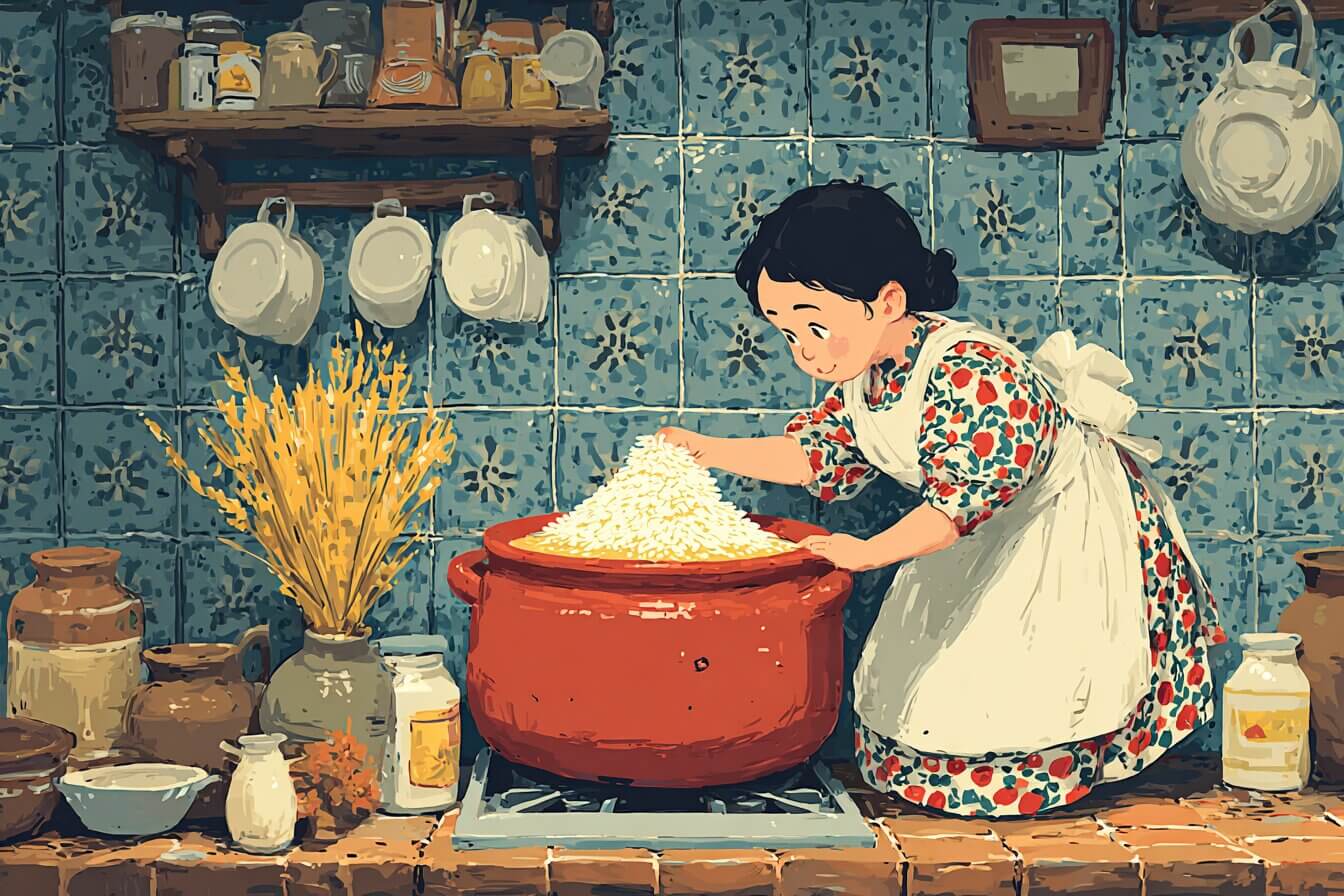
There is something about a warm kitchen and the smell of oats bubbling on the stove that makes everything feel safer before sleep. In this cozy retelling, a girl named Elara discovers a copper pot that cooks porridge on command, only for the magic to spill a little further than anyone planned. It is one of those magic porridge pot bedtime story classics that wraps hunger, generosity, and gentle chaos into a tale kids ask to hear again and again. If you would like to make your own version with your child's name or a different magical object, you can create one in minutes with Sleepytale.
Why Magic Porridge Pot Stories Work So Well at Bedtime
Food stories have a special hold on children at night. The idea of a warm meal appearing exactly when you need it taps into something deep: the comfort of knowing you will be taken care of. A bedtime story about a magic porridge pot puts that feeling front and center, wrapping security in cinnamon steam and full bowls. Kids do not have to worry about the characters going hungry, which frees them to enjoy the adventure without anxiety.
There is also the rhythm of it. Cooking follows steps, stirring, waiting, tasting, and that gentle repetition mirrors the wind-down of a bedtime routine. When the porridge finally stops and the village settles into quiet, the story has already done half the work of calming a busy mind. The mess gets cleaned up, the pot goes still, and everything is exactly where it should be.
The Porridge Pot That Would Not Stop 6 min 45 sec
6 min 45 sec
In a tiny cottage at the edge of Mapleberry Village lived a girl named Elara, whose pockets were mostly empty but whose head was full of plans.
Her mother, Mabel, mended nets for the fishermen down at the quay. The pay was small. Most nights their supper was watery turnip soup, and Elara had memorized the exact number of turnip chunks that floated in each bowl: usually five, sometimes six if Mabel was feeling generous with the knife.
One misty morning Elara went looking for blackberries at the edge of the forest. She found something else instead.
Half buried beneath gold and brown leaves sat a copper pot, not much bigger than a soup tureen, with a faint green patina around the handles. A robin landed on its rim, tilted its head, and sang a short, clear phrase: "Stir three times, speak the wish, and porridge will fill your dish."
Elara tucked the pot under her arm. It was heavier than it looked.
Back at the cottage she showed Mabel the rhyme etched inside the rim. The letters were tiny and a little crooked, as though someone had scratched them in a hurry. They decided to try it at dawn, since hunger usually woke them well before the sun did anyway.
That night the wind knocked against the shutters in bursts, but Elara dreamed of cinnamon and warm oats and woke up grinning.
At the first pale light she set the pot on the stove, poured in a splash of water, and stirred three slow circles. "O pot so bright, bring porridge tonight," she whispered, even though it was technically morning.
Steam curled up. The oats appeared from nowhere, thick and creamy, smelling of apples and cinnamon with a faint hint of something toasty underneath. Mabel leaned in and her glasses fogged completely.
They filled their bowls and ate without talking for a while. The only sound was spoons scraping the bottom.
When they had enough, Elara spoke the stopping words the robin had given her: "Enough, enough, my tummy is tough."
The pot cooled at once. It just sat there, small and shiny, like any ordinary pot you would find at a market stall.
But the smell had already drifted. Porridge scented air is surprisingly hard to contain. By mid-morning, neighbors were arriving at the door with empty pails and hopeful faces. Elara repeated the starting rhyme, ladled out portions, and spoke the stopping words each time. The pot obeyed perfectly.
By noon, children were dancing around the cottage holding sticky spoons. Even the mayor showed up, tipped his hat, and asked for seconds. Mabel was so busy greeting people she forgot to remind Elara of the stopping rhyme. It did not seem to matter. Everything was going fine.
Then Elara ran to the market for more bowls.
A toddler tugged Mabel's apron. "Porridge for the ducks?" he said. His face was extremely serious about it.
Mabel laughed, stirred the pot, and spoke the starting phrase. Porridge rose obediently, warm and perfect. But when it reached the brim, she opened her mouth and realized the stopping words had slipped away entirely. She could remember the shape of the sentence but not a single word.
Porridge slopped over the edge, slid across the floorboards, and crept out the doorway like a slow, warm tide.
"Help!" Mabel called, but the villagers outside assumed the overflow was part of the celebration. They simply stepped to one side and held their bowls higher.
The mixture rolled down the lane. Goats stood ankle-deep in it, chewing thoughtfully. Chickens hopped from one porridge island to the next.
Dogs went absolutely wild.
The sweet stream spread toward the square. The baker, never one to waste an opportunity, set loaves on the surface and declared porridge-baked bread a new specialty. Fishermen grabbed oars and paddled through the goo, laughing even as their trouser cuffs turned beige.
Elara came back carrying a stack of bowls and stopped dead.
Half the village was porridge-colored. The pot, now perched on an overturned cart, had swelled to twice its size and was glowing a stubborn crimson. She splashed through the mush calling, "Enough, enough, our tummies are tough!" Nothing happened. The pot did not even flicker.
She understood then. The stopping words only worked when spoken by the person who had started the spell. She grabbed her mother's hands.
"Mum. You have to say it."
Mabel tried, but her voice shook and the phrase came out tangled. "Tough my tummy, enough is, no, wait." Porridge kept coming.
It seeped into gardens, covering cabbages like frosting. It bubbled up through the well. Children sculpted porridge figures with raisin eyes and twig arms while babies napped contentedly in warm, oaty puddles that were, admittedly, quite soft.
Elara thought of the robin.
She whistled the bird's song, two short notes and a long trill, and within seconds the red-breasted friend swooped down and landed on her shoulder. Its claws were surprisingly sharp.
"Kind heart, clear mind," the robin chirped. "Try the rhyme in reverse, then add please and thank you for the universe."
Elara cupped her hands around her mouth, took a breath of cinnamon-thick air, and sang: "Tough is my tummy, enough is enough, please and thank you, make the pot quiet and fluffy."
The copper vessel shuddered. Its glow dimmed from crimson to amber to nothing. The porridge flow slowed to a trickle, then a drip, then silence. One final swirl, and the pot shrank back to its original size, sitting neat and harmless on the cobblestones, slightly warm to the touch.
Everyone stood there for a moment, dripping.
Then the cheering started.
They spent the rest of the evening scooping the village clean. Barrels were filled for winter stores. Suppers were generous under lantern light. Somewhere a fiddle started playing, because someone always has a fiddle in Mapleberry.
Elara apologized for the mess. The mayor wiped porridge from his eyebrows and declared it the sweetest disaster the village had ever tasted.
After that, the pot stayed in the cottage but the village shared it on rotation. The starting and stopping words were written on parchment and nailed above every hearth in town, just in case. Elara and Mabel never went hungry again. Neither did anyone else.
The robin came back each harvest, landing on the rim of the copper pot and singing one clear note before flying off toward the trees.
And on winter nights, when snow settled on the rooftops and the stove ticked as it cooled, Elara would sometimes open the cupboard just to look at the pot sitting quietly on its shelf. Small, ordinary, a little green around the handles.
She would close the cupboard door, pull her blanket up, and listen to the village sleeping.
The Quiet Lessons in This Magic Porridge Pot Bedtime Story
This story weaves together generosity, responsibility, and the courage to ask for help when things go sideways. When Elara shares porridge with every neighbor who knocks, children absorb the warmth of giving without keeping score. And when Mabel panics over the forgotten words, the story shows that mistakes are not disasters; they are just problems waiting for a steady voice and a little help from a friend. The robin's advice to add "please and thank you" is a small detail, but it lands well at bedtime because it reminds kids that kindness and good manners are a kind of magic in themselves. By the time the pot goes quiet, the feeling in the room is one of relief and safety, exactly what a child needs before closing their eyes.
Tips for Reading This Story
Give the robin a bright, chirpy voice that is noticeably higher than everyone else, and let Mabel sound a little breathless and flustered when she cannot remember the stopping rhyme. When the porridge starts overflowing, speed up your reading just slightly to build the sense of things getting out of hand, then slow way down when Elara sings the reversed rhyme. At the line where the pot shudders and the glow fades, pause for a beat of silence before you say "One final swirl." That little gap lets the calm land. If your child is still awake for the last paragraph, read it almost at a whisper and let the image of the pot sitting quietly on its shelf do the rest.
Frequently Asked Questions
What age is this story best for?
It works well for children ages 3 to 7. Younger listeners love the silliness of porridge flooding the village and the image of dogs chasing the oat stream, while older kids appreciate Elara's problem-solving and the twist that only the spell-starter can stop the pot. The language is simple enough for a three-year-old but the village chaos keeps a seven-year-old entertained.
Is this story available as audio?
Yes. You can press play at the top of the story to hear it read aloud. The audio version really shines during the overflow scene, where the pacing picks up and the descriptions of goats standing ankle-deep in porridge and fishermen paddling with oars feel wonderfully chaotic out loud. The robin's rhymes also have a natural sing-song quality that sounds lovely in narration.
Why does the pot only obey the person who started the spell?
It is a classic fairy tale rule that adds tension and teaches a practical lesson. Because only the spell-starter can stop the pot, the story shows children why it matters to pay attention to instructions and share important information. Elara learns to write the words down for the whole village, which turns a scary moment into a sensible solution everyone can use.
Create Your Own Version
Sleepytale lets you reshape this cozy porridge tale to fit your family perfectly. You can swap Mapleberry Village for a mountain town or a houseboat on a canal, change the copper pot to a painted bowl, or turn Elara into your own child with the robin replaced by a talking cat or a wise old owl. In just a few taps you will have a personalized story ready to read or listen to whenever bedtime rolls around.
Looking for more bedtime story classics?

Once Upon A Time Stories
What happens when June opens a golden book with no title? One of the sweetest short once upon a time stories about a forest, a hedgehog, and a blank page.

Fairy Tales Written By Hans Christian Andersen
Anders discovers short fairy tales written by Hans Christian Andersen as his grandmother reads from a soft brown book by lamplight.

Bluebeard Fairy Tale
In this short bluebeard fairy tale, the forbidden room holds not horror but a music box and memories of the people Lord Corvus loved most.

Red Shoes Fairy Tale
What happens when Karen's magical red shoes refuse to stop dancing? Discover this short red shoes fairy tale tonight.

Twinkle Twinkle Little Star Bedtime Story
Lily watches a kind star and floats up to help deliver dreams in this short twinkle twinkle little star bedtime story. A warm, quiet tale for sleepy nights.
Through The Looking Glass Bedtime Story
Step into a calm, magical short through the looking glass bedtime story and drift toward sleep with gentle wonder. Enjoy a soothing retelling that feels cozy from start to finish.