
The Little Match Girl Bedtime Story
By

Dennis Wang, Bedtime Story Expert
8 min 58 sec
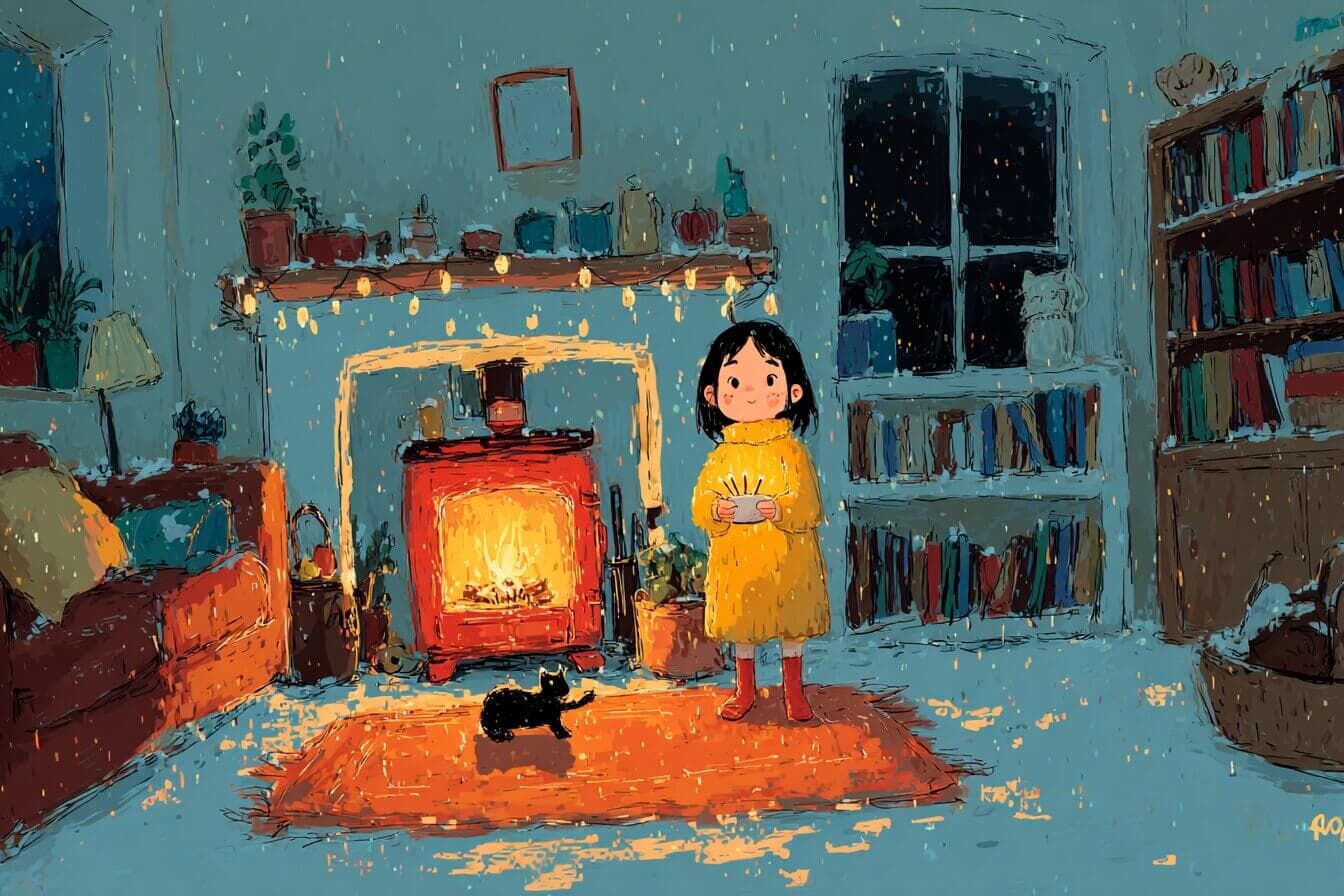
There is something about cold nights that makes a small, warm light feel like the most important thing in the world. This gentle retelling follows Lila, a young match seller with numb fingers and an almost empty basket, who discovers that the tiny sparks she carries can open doors she never expected. It is a beautiful the little match girl bedtime story about choosing to share your light even when you have very little left. If you would like to shape a version that fits your family perfectly, you can create your own with Sleepytale.
Why Little Match Girl Stories Work So Well at Bedtime
There is a reason this classic tale has been whispered at bedsides for generations. The image of a single flame glowing against a dark winter night mirrors the feeling of being tucked under warm covers while the world outside is cold and still. Children understand that contrast instinctively, and it draws them in. A bedtime story about the little match girl gives kids a small, brave character to root for, someone who is doing something simple and quiet rather than loud or overwhelming.
The pacing of a match story is perfectly suited to winding down. Each match is struck, a vision appears, and then it fades, almost like slow breathing. That gentle rhythm helps children settle without realizing it. And the core idea, that kindness and connection matter more than having the most or the best, is exactly the kind of reassurance kids need before they close their eyes.
The Little Match Girl's Brightest Flame 8 min 58 sec
8 min 58 sec
On the coldest New Year's Eve the city had ever known, tiny Lila stood barefoot on frozen cobblestones. Her shawl fluttered behind her like something trying to leave. She carried no shoes and no hat, only a small woven basket that had held dozens of match bundles that morning but now held a single row.
Street lamps wore halos of ice. Windows blushed with candlelight. Nobody paused to buy her matches.
Snowflakes drifted past her cheeks and clung to her lashes, and she blinked them away because crying would only make her colder. Her fingers trembled so hard the last matchbox rattled, a dry clicking sound like a beetle trapped under a cup. She whispered to herself that if she sold even one bundle she could buy a crust of bread, but the street had emptied early. Sensible people stayed indoors when the year breathed its last chilly sigh.
A clock tower chimed eight slow notes. Lila pictured the other children sipping cocoa by fireplaces, their laughter rising like golden bubbles. She pressed her back against a brick wall, drew one match, and struck it against the rough stone.
The spark jumped to life.
Suddenly the night felt softer, as though someone had wrapped her in an invisible quilt. In the trembling flame she saw not the dark street but a glowing iron stove with its door flung open, a merry blaze crackling inside. The vision was so real she stretched her hands toward it, and for a heartbeat the frost on her knuckles melted into shining beads. Then the match burned down, the stove vanished, and the cold bit back harder than before.
Her heart quivered, but she refused to let despair settle. She told herself the vision had been a promise, not a tease, and struck a second match.
This time the flame bloomed into a dining room where a holiday feast steamed on a lace covered table. Sugared berries, cinnamon buns shaped like stars, a golden soup that smelled the way summer gardens smell right after rain. A grandmother figure with rosy cheeks lifted a spoon toward Lila as though inviting her to taste. Lila leaned forward, almost believing she could. Then the match burned low, the room dissolved, and the cold returned.
Snow had begun to pile along the hem of her dress. She glanced at the stars and wondered, in a half formed sort of way, whether they watched over lost children or simply did not notice them.
She decided to light one more, not for warmth or food but for company. The third flame flared, and within it appeared her real grandmother, the one who had sung lullabies about silver boats ferrying dreams across the sky. Grandmother smiled, opened her arms, and Lila caught the faint perfume of lavender water that always clung to the old woman's collar, a scent she sometimes thought she imagined but that was here again, unmistakable. "Courage, little star," Grandmother said. "Shine even in darkness."
Lila cupped her hands around the match, protecting the vision the way you protect a soap bubble balanced on your fingertip. She realized that each match had shown her not what she lacked but what she already carried inside: the ability to make light.
The flame died. The street felt less empty, because Grandmother's voice still hummed somewhere behind her ribs. Lila's teeth chattered, but her mind buzzed with a plan.
Seven short sticks left. Instead of lighting the next one for herself, she would try something new.
She straightened, brushed snow from her dress, and walked toward the nearest window where a single candle burned. She tapped on the glass. A boy with tousled hair peered out, eyes wide. Lila held up her matches and smiled, though her lips were almost too stiff to manage it.
The boy disappeared. He came back tugging his mother's sleeve.
The door cracked open. Warm light spilled across the stoop, and Lila offered her matches, not for coins but for a chance to tell a story. The mother studied the girl's face for a moment, then stepped aside and let her in.
Lila's cheeks bloomed like winter roses once the heat reached them. She told the family about the visions in the flames: the stove that taught her warmth begins in the heart, the feast that taught her hope is a dish best shared, and the grandmother who taught her that love outlives every winter. The boy listened with his mouth open, then ran to fetch his own shoes. They were two sizes too big and lined with fleece, and he insisted Lila wear them immediately, pushing them across the floor with his foot because he was too shy to hand them over.
The mother wrapped a wool scarf around Lila's shoulders. Its pattern of running horses reminded her of summer meadows. Together they shared cocoa, bread, and apple slices while the grandfather added coal to the hearth until it roared like a friendly dragon. Somewhere in the house a cat knocked something off a shelf, and nobody cared.
Outside, midnight approached. Lila felt no dread. She asked if she might light one match for them all to see a vision together.
They agreed. She struck the fourth match.
In its flare they all glimpsed a future spring where children played beneath blossoming trees, where no one feared the cold, and where every child who had once stood alone found open doors. The vision faded, but the promise lingered.
The family invited her to stay the night. Lila thought of the other children still outside. She asked for a lantern instead. The grandfather provided a brass one, already glowing, its handle warm from sitting by the fire.
With six matches left, Lila stepped back into the night, determined to share what she had learned. She walked the alleys and bridges, offering light and stories to anyone huddled in doorways. Each match she lit revealed not only visions but possibilities. A cobbler saw enough hope to reopen his shop at dawn. A lost puppy wagged its tail and followed a new friend home. Two strangers who had been shivering in silence on opposite ends of a bench laughed together instead, surprising themselves.
When the final match burned, Lila did not despair, because the lantern's flame continued, fed by something steadier than sulfur.
The bells tolled midnight. Fireworks painted the snow in rainbow hues. Families opened their windows, cheering, and when they spotted the barefoot girl carrying a lantern, they beckoned her inside. Lila found herself surrounded by neighbors she had never met, all offering bread and songs and the particular kind of warmth that only comes from people deciding, together, to be generous.
Someone produced a fiddle. Another a drum. The street itself seemed to dance. Lila's basket, once empty, filled with oranges, nuts, and tiny star shaped cookies. She tucked the cookies into her pockets to share later.
The mayor, hearing of the girl who turned matches into something brighter, declared that no child would sell matches on New Year's Eve again. Instead the city would light a communal bonfire where everyone could toss in a match of gratitude, turning cold into company.
That night, when Lila finally lay down beside the hearth in a borrowed blanket that smelled faintly of cedar, she understood that the truest flame lives not on a stick but in every heart willing to kindle hope. Dawn painted the rooftops rose and gold. The city awoke to find the match girl no longer poor, for she possessed the richest treasure: the ability to ignite kindness wherever she walked.
Winter still gripped the chimneys and frost still laced the windows, but nobody felt alone. In the years that followed, children gathered at the annual Festival of First Flames, where they told stories, shared feasts, and remembered that even the smallest spark can guide a shivering world toward warmth.
Lila, now grown, always lit the first lantern. As its glow spread across the square she smiled at the memory of a freezing night when she chose to see not what she lacked but what she could give. The city never forgot that the new year began not with fireworks but with the courage of one small girl who believed a match could do more than burn. It could beckon. It could unite. And it could change the rhythm of a winter's eve forever.
The Quiet Lessons in This Little Match Girl Bedtime Story
Lila's journey weaves together courage, generosity, and the kind of stubborn hope that refuses to go out. When she chooses to knock on a stranger's window instead of curling up alone, children absorb the idea that asking for help is brave, not weak. The boy who shyly pushes his too big shoes across the floor shows that kindness does not have to be grand to matter. And Lila's decision to step back into the cold with a lantern rather than stay safe by the fire teaches kids that sharing what you have, even when it is little, makes the world warmer for everyone. These are reassuring ideas to carry into sleep, the sense that tomorrow you can be both the one who asks and the one who gives.
Tips for Reading This Story
Give Lila a soft, slightly breathless voice when she whispers to herself on the cold street, and let Grandmother sound warm and unhurried, the way someone talks when they have all the time in the world. When each match is struck, pause for a beat before describing the vision so your child can lean in with anticipation. At the moment the shy boy pushes his shoes across the floor, slow down and let the detail land; it is a great spot to ask your little one, "What would you share?"
Frequently Asked Questions
What age is this story best for? This retelling works well for children ages 4 to 8. Younger listeners connect with Lila's simple actions, like knocking on a window and sharing cookies, while older kids appreciate the bigger idea that each match reveals something Lila already carries inside herself. The cold is present but never frightening, and every scary moment resolves quickly into warmth.
Is this story available as audio? Yes. You can press play at the top of the story to hear it read aloud. The repeated rhythm of striking a match and watching a vision appear translates beautifully to audio, almost like a gentle refrain. Grandmother's "Courage, little star" line and the street celebrations at midnight are especially lovely to hear spoken, giving the story a cozy, lullaby like quality.
Does this version change the ending of the original tale? It does. Hans Christian Andersen's original ends on a much sadder note, but this retelling keeps Lila safe and surrounded by kindness. She finds real people who open their doors, shares her remaining matches with others, and ends the night warm and cared for. It preserves the spirit of the classic while offering the comfort children need before sleep.
Create Your Own Version
Sleepytale lets you reshape this classic into a bedtime tale perfectly suited to your child's age, mood, and comfort level. You can move the story from a city street to a quiet village, swap matches for a glowing candle or a jar of fireflies, or add a loyal cat who walks beside Lila through the snow. In just a few taps you get a calm, personalized story you can read or listen to whenever your family needs it.
Looking for more bedtime story classics?

Once Upon A Time Stories
What happens when June opens a golden book with no title? One of the sweetest short once upon a time stories about a forest, a hedgehog, and a blank page.

Fairy Tales Written By Hans Christian Andersen
Anders discovers short fairy tales written by Hans Christian Andersen as his grandmother reads from a soft brown book by lamplight.

Bluebeard Fairy Tale
In this short bluebeard fairy tale, the forbidden room holds not horror but a music box and memories of the people Lord Corvus loved most.

Red Shoes Fairy Tale
What happens when Karen's magical red shoes refuse to stop dancing? Discover this short red shoes fairy tale tonight.

Twinkle Twinkle Little Star Bedtime Story
Lily watches a kind star and floats up to help deliver dreams in this short twinkle twinkle little star bedtime story. A warm, quiet tale for sleepy nights.
Through The Looking Glass Bedtime Story
Step into a calm, magical short through the looking glass bedtime story and drift toward sleep with gentle wonder. Enjoy a soothing retelling that feels cozy from start to finish.