
The Little Engine That Could Bedtime Story
By

Dennis Wang, Bedtime Story Expert
9 min 7 sec
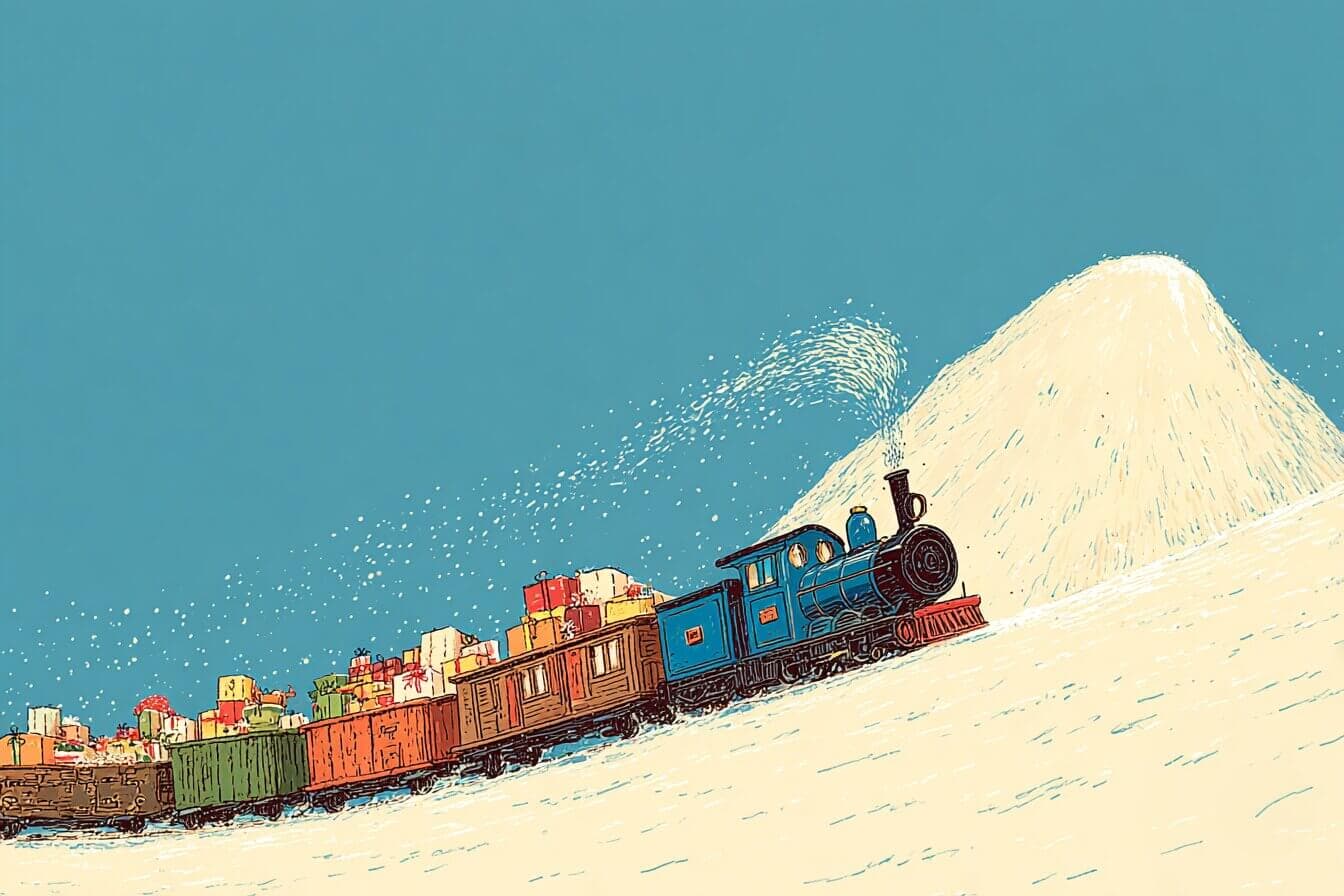
There is something about the steady click of wheels on a track that settles a child's breathing before you even finish the first page. In this little engine that could bedtime story, a small blue engine named Tilly faces a mountain she has no business climbing, hauling a trainload of toys and balloons to children who are counting on her. It is the kind of tale where courage comes not in one dramatic burst but in a quiet, repeated whisper that builds into something unstoppable. If you want to shape your own version of this classic journey, you can create one with Sleepytale.
Why Little Engine Stories Work So Well at Bedtime
A bedtime story about a little engine climbing a mountain mirrors the arc of a child's own day. They faced something hard, they pushed through, and now they are here, safe in bed. The repetition of "I think I can" works almost like a lullaby; the words become rhythmic, predictable, and deeply reassuring. Kids do not need to wonder if things will turn out okay, because the chant tells them so with every wheel turn.
There is also something quietly powerful about smallness winning. Children know what it feels like to be the littlest person in every room, and watching a tiny engine earn respect from bigger machines lets them feel seen. That feeling of "someone like me did something brave" is exactly the kind of thought that makes closing your eyes a little easier.
The Little Blue Engine That Could 9 min 7 sec
9 min 7 sec
In the sunny rail yard of Wishing Well Valley stood a small blue engine named Tilly.
She was the smallest engine among all the big shiny engines. Her paint was chipped near the left front wheel where she had bumped a loading dock the previous winter, and she had never quite gotten around to fixing it.
One morning the station master came running, his hat crooked and his shoelaces untied.
The big engine meant to pull the birthday train over Mount Hopeful had broken down, and children in Joyville were waiting for toys, treats, and balloons for their festival.
Tilly listened carefully.
Her wheels tingled with something that was half excitement, half dread, the way your stomach drops on the first hill of a roller coaster.
"I think I can help," she said. Her voice came out quieter than she meant it to.
The big engines laughed. One of them, a broad green locomotive named Gerald, snorted steam out both sides. "That mountain would chew you up before lunch, Tilly."
But Tilly remembered what her mother had told her once, late at night when the rail yard was still and the only sound was the cooling tick of metal: determination can move mountains if belief pushes the wheels.
The station master looked doubtful. Then he glanced at the birthday cake already softening in the sun, its frosting sliding sideways, and he sighed.
"All right, Tilly. You're all we've got."
She was coupled to the long line of colorful cars filled with stuffed bears, spinning tops, chocolate coins wrapped in gold foil, and hundreds of balloons tied in bright bunches. The whole train smelled like sugar and new plastic.
As she approached the mountain, she saw how the track curved upward like a giant snake winding into the clouds.
The first slope felt gentle, and Tilly repeated quietly, "I think I can, I think I can."
Her wheels turned steadily. The cars followed like obedient ducklings.
Then the track tilted steeper, and everything changed.
Every toy, every treat, every balloon tugged behind her like an anchor. The mountain wind shoved at her broadside, and loose gravel made her wheels spin uselessly for a terrible half second before they caught again.
Her fireman stoked the tiny furnace until it glowed the color of a summer peach, and her engineer wiped his forehead with a rag that was already soaked through. "You can do it, Tilly!"
Back at the yard, Gerald and the others watched through a telescope, certain she would stall.
Halfway up, Tilly's wheels began to slow.
Her "I think I can" became a tired whisper, almost lost in the wind.
She thought of the children. She thought of the balloons losing their lift in the heat, the chocolate going soft, the stuffed bears sitting in their crates with no one to hold them.
Her wheels felt like stones.
Just then, a family of mountain goats appeared on a rocky ledge. They stood there chewing, watching her with those strange sideways pupils, and the smallest one bleated something that almost sounded like words.
"Don't give up, little engine! My friends in Joyville are waiting!"
Tilly could not say whether a goat actually spoke to her or whether she just needed to hear it badly enough that she invented it. Either way, something unlocked inside her boiler.
Her voice grew louder. "I think I can! I think I can!"
The rhythm matched her wheels now, faster and stronger with every repetition, like a song that builds toward a chorus you cannot help singing along to.
Her small body shook. Metal groaned. But her spirit soared higher than the peak itself.
Clouds parted and there it was: the summit.
Tilly pushed harder than she had ever pushed for anything. "I think I can! I think I can!" became "I know I can! I know I can!" and the words rang across the valley below, bouncing off cliffs.
The long line of cars crested the final rise behind her, and suddenly the track curved down. The pull became a glide.
But Tilly kept her steady rhythm, because the children were close now and she was not about to get sloppy.
When she rolled into Joyville, the cheering hit her before she even saw the crowd.
Children waved homemade signs. Some of them had drawn little blue engines in crayon, and the proportions were all wrong, wheels too big, smokestacks crooked, but Tilly thought they were the most beautiful pictures she had ever seen.
They sang happy birthday songs and danced around her. The mayor pinned a golden star on her smokestack, and every child gave her a hug. One small girl pressed her cheek against Tilly's warm side and whispered, "Thank you."
Tilly's heart felt enormous.
She thought about Gerald and the others back at the yard, and for a moment she wanted to say something sharp. But she didn't.
She simply smiled and said, "I knew I could, I knew I could."
The return journey was lighter. The cars were empty, but Tilly's heart was the fullest it had ever been. When she pulled back into Wishing Well Valley, the big engines did not laugh. Gerald cleared his throat and said nothing, which, for Gerald, was practically an apology.
From that day forward, whenever a difficult job appeared, the station master would ask, "Who can help?"
And all the engines, big and small, would answer together: "We can!"
Children would wave at Tilly as she passed their towns, shouting, "There's Tilly! She believes she can!"
And Tilly would toot her whistle in reply, two short blasts that echoed off the hills.
The mountain that once seemed impossible became her favorite route. Not because it was easy now, but because every climb reminded her that belief and determination could move mountains, one wheel turn at a time.
And on quiet nights, when the rail yard cooled and the stars came out, you could still hear her, somewhere far off on the tracks, whispering to herself as the rails hummed beneath her wheels.
The Quiet Lessons in This Little Engine Bedtime Story
This story weaves together perseverance, humility, and the courage to step up when no one expects you to. When Tilly volunteers despite the laughter from bigger engines, children absorb the idea that speaking up matters even when your voice shakes. Her choice not to gloat when she returns shows kids that real confidence does not need to announce itself, a reassuring thought to carry into sleep. And the moment she is not sure whether the goat actually spoke or she just needed to believe it, children get a gentle nudge that sometimes hope is something you create for yourself, which is exactly the kind of quiet bravery that feels safe to practice under the covers.
Tips for Reading This Story
Give Gerald a low, rumbly voice and a slightly bored tone when he tells Tilly the mountain will "chew her up," and let Tilly's voice start small and breathy before growing stronger each time she says "I think I can." When the baby goat calls out from the ledge, pause for a beat afterward and let your child decide whether the goat really talked. At the end, when Tilly toots her whistle with two short blasts, tap twice on the bedframe or the book, because that little sound effect is the kind of thing kids ask for every single night.
Frequently Asked Questions
What age is this story best for?
This version works well for children ages 3 to 7. Younger listeners love the repetition of "I think I can" and the animal cameo on the mountain, while older kids connect with Tilly's quiet decision not to boast when she returns to the rail yard. The vocabulary is simple enough for a three year old but the emotional beats, like Tilly's moment of doubt halfway up, keep a first grader engaged.
Is this story available as audio?
Yes. You can press play at the top of the story to hear it read aloud. The repeating chant of "I think I can" builds naturally in audio, almost like a drumbeat, and the moment where the goat calls out from the ledge lands especially well when you hear the shift in tone. It is a great option for nights when you want to close your eyes alongside your child and just listen.
Why does the "I think I can" chant work so well for kids?
Repetition gives young listeners an anchor. When Tilly repeats those words, children can say them along with her, which turns passive listening into active participation. In this story, the chant also mirrors real breathing rhythm, steady and slow on the climb, faster near the summit, then calm on the way down. That arc naturally matches the winding down a child's body does before sleep.
Create Your Own Version
Sleepytale lets you build a personalized train adventure your child will want to hear again and again. Swap Tilly for a little red boat crossing a stormy lake, move the setting from a mountain to a desert canyon, or change the cargo from birthday toys to a shipment of glowing lanterns. In just a few taps you will have a calm, cozy story with gentle pacing that feels like home every time you return to it.
Looking for more bedtime story classics?

Once Upon A Time Stories
What happens when June opens a golden book with no title? One of the sweetest short once upon a time stories about a forest, a hedgehog, and a blank page.

Fairy Tales Written By Hans Christian Andersen
Anders discovers short fairy tales written by Hans Christian Andersen as his grandmother reads from a soft brown book by lamplight.

Bluebeard Fairy Tale
In this short bluebeard fairy tale, the forbidden room holds not horror but a music box and memories of the people Lord Corvus loved most.

Red Shoes Fairy Tale
What happens when Karen's magical red shoes refuse to stop dancing? Discover this short red shoes fairy tale tonight.
Twinkle Twinkle Little Star Bedtime Story
Lily watches a kind star and floats up to help deliver dreams in this short twinkle twinkle little star bedtime story. A warm, quiet tale for sleepy nights.
Through The Looking Glass Bedtime Story
Step into a calm, magical short through the looking glass bedtime story and drift toward sleep with gentle wonder. Enjoy a soothing retelling that feels cozy from start to finish.