
The Jungle Book Bedtime Story
By

Dennis Wang, Bedtime Story Expert
11 min 36 sec
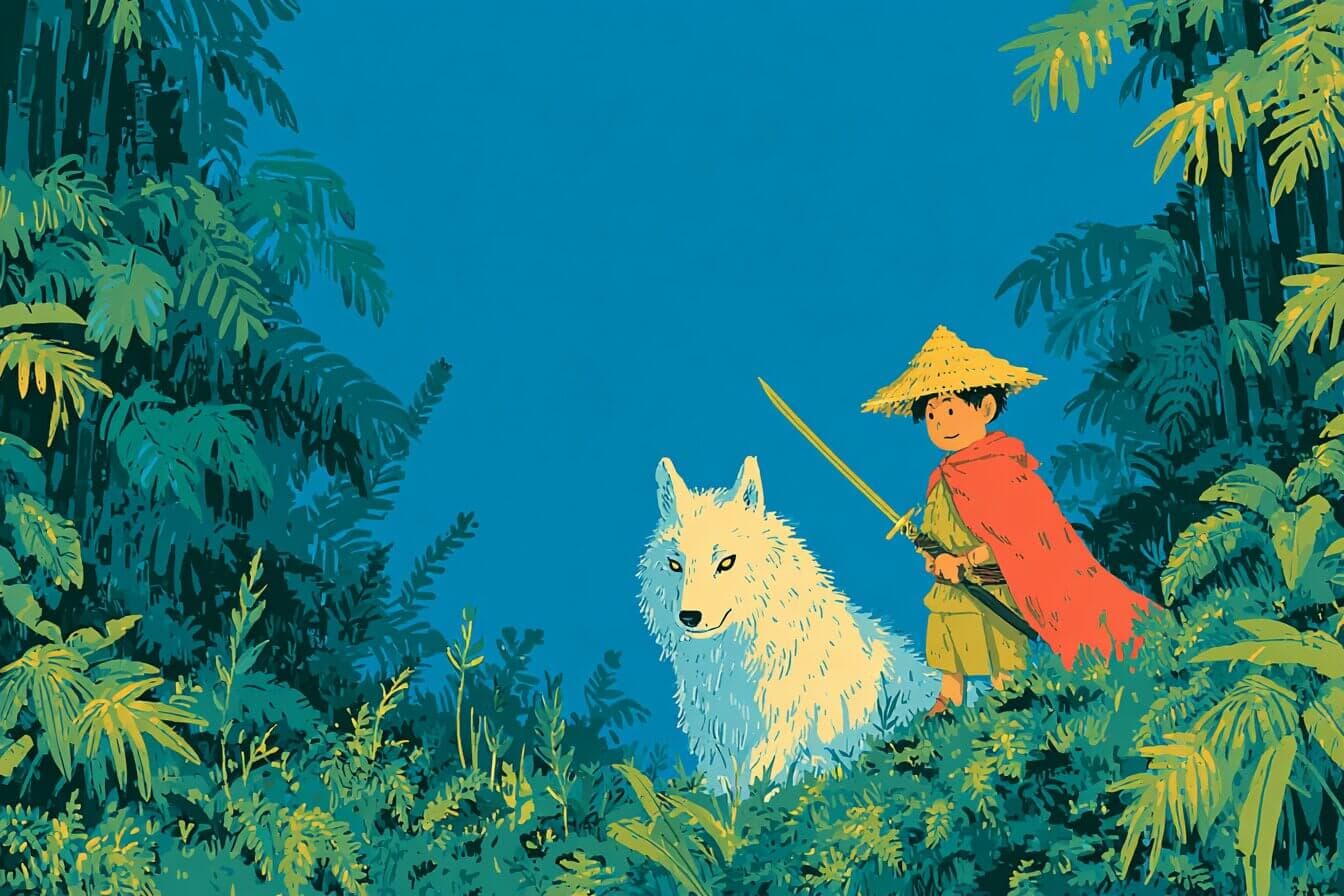
There is something about the smell of warm earth and distant rain that makes kids want to curl up and hear about jungles. This cozy retelling follows Mowgli as he discovers fresh tiger tracks near the stream, gathers every creature in the forest for a council, and turns a dangerous rivalry into a moonlit game of hide and seek. It is the kind of Jungle Book bedtime story that trades big roars for quiet wonder and wraps up just as eyelids get heavy. If your child loves it, you can create your own version with Sleepytale and swap the setting, the animals, or the ending to match whatever mood bedtime brings tonight.
Why Jungle Book Stories Work So Well at Bedtime
The jungle is a world with its own rules, its own rhythms, its own lullabies. For kids, that predictable wildness is strangely comforting. They know the panther will be wise, the bear will be funny, and the boy will figure things out by the end. A bedtime story about the Jungle Book gives children a place where danger exists but is always met with cleverness and community, not violence. That pattern mirrors exactly what a child needs to hear before sleep: the world can be big and a little scary, but you are not alone in it.
There is also something deeply settling about how jungle stories move. Leaves rustle, water trickles, animals pad softly through the dark. The pace of the natural world slows a child's breathing without them even noticing. When Mowgli listens to crickets or watches fireflies, your child is listening and watching too, their imagination trading the buzzing energy of the day for something slower and warmer.
Mowgli and the Song of the Jungle 11 min 36 sec
11 min 36 sec
The moon painted silver stripes across the clearing as Mowgli pressed his bare feet into the cool earth.
He had lived among the wolves since babyhood. But tonight, for some reason he could not name, the jungle felt bigger, as though every single leaf had turned an ear toward him and was waiting.
Mother Wolf once told him the first Law: live without fear.
Easy to say when you are a wolf with teeth.
His heart still fluttered like a trapped firefly whenever distant branches cracked, and he had learned not to be embarrassed about that. Fear was just information, Bagheera always said, and what you did with it was the interesting part.
Baloo the bear snored beneath a banyan, one paw draped over a root in a way that looked almost elegant if you squinted. Bagheera watched from a low limb, eyes gleaming like polished obsidian, tail swaying with the kind of patience that could outlast a river.
Mowgli crept to the stream, hoping to surprise his own reflection, maybe pull a face at it, but instead he saw stripes rippling in the water.
Not his.
Shere Khan. The tiger who had promised, loudly and to anyone who would listen, that the man cub did not belong. Fresh prints pressed deep into the muddy bank, each one wider than Mowgli's hand.
Something cold climbed his ribs. But before it could reach his throat, Bagheera landed beside him without a sound, close enough that Mowgli felt the warmth of the panther's shoulder against his arm.
"Courage," Bagheera whispered, "is not the absence of fear. It is the song you sing to keep fear company."
Mowgli did not fully understand that yet, but the weight of the panther beside him was enough.
Together they traced the prints until they reached a thicket of bamboo that hummed with crickets. The sound was so thick it was almost a texture, something you could lean against.
Baloo caught up, rubbing sleep from his eyes with the back of one enormous paw. He yawned so wide that a moth flew in, then flew right back out looking offended.
"Second Law," Baloo said, still half asleep. "Respect every creature's space." He demonstrated by bowing to a startled porcupine, who bristled, considered the gesture, then bowed back with a small uncertain nod.
The trio decided something together. If Shere Khan wanted to break the peace, they would not answer with claws. They would answer with the oldest jungle tradition: the Council of the Species, where every voice, even the tiniest beetle clicking on a stone, could be heard.
Word spread on the wings of parakeets. By dawn the clearing had filled with feathers, scales, fur, and one very confused tortoise who thought it was Tuesday.
Mowgli stood in the center. He felt the weight of every gaze, the heavy patience of the elephants, the twitchy curiosity of the monkeys, the quiet stillness of a king cobra coiled like a question mark in the grass.
He remembered Bagheera's words and began to hum.
It was the lullaby his wolf mother used to sing, three notes that went nowhere in particular but somehow arrived exactly where they needed to be. He turned the hum into words, inviting every animal to share one hope.
One by one they spoke.
Deer asked for safe passage through the eastern meadow. Monkeys begged for fewer tricks played on them, which caused some awkward sideways glances. Elephants requested that the old paths be remembered, the ones their grandmothers walked when the rivers ran differently. A small frog said it would simply like to finish one nap without being sat on, and everyone nodded solemnly because that seemed very reasonable.
Then Shere Khan arrived.
Muscles coiled like springs, he padded into the circle and the air changed. You could feel it, the way the temperature drops just before a storm. But the council circle held. Even a tiger must listen when the jungle itself is speaking.
Mowgli did something no one expected, least of all himself. He offered the tiger a place beside him. Not across from him. Beside him. Not as enemy, but as part of the living pattern.
And then he proposed a game.
Hide and seek. Across the seasons. If Shere Khan could catch Mowgli fairly by the next full moon, the tiger would earn the right to roar the loudest at every gathering for a full year. If not, the tiger must vow to protect rather than prey upon the weak.
Laughter rippled through the crowd, because games lighten heavy hearts, and even Shere Khan's tail twitched with something that was not quite anger anymore. Curiosity, maybe.
The challenge was sealed with the flutter of a single peacock feather drifting down from somewhere above, as if the sky itself had signed the contract.
The following weeks became the greatest lessons of Mowgli's young life, and also the messiest.
Baloo taught him to climb like a bear, hugging the trunk with steady strength, bark scraping his forearms in a way that stung but made him feel capable. Bagheera showed him how to leap between shadows, becoming a ripple in the moonlight so smooth that even the mosquitoes lost track of him.
They practiced holding their breath underwater beside patient turtles who seemed mildly amused by the whole business. They learned to count heartbeats like spotted deer, slow and measured. Mowgli tasted the flavors of different leaves so the jungle itself could hide him, bitter neem, sour tamarind, the strange peppery one nobody had a name for.
He discovered that the wild's music changes hour to hour. Dawn has drums. Noon has something like flutes, thin and reedy. Dusk brings strings. And night, if you are quiet enough, rings with tiny bells you cannot see.
One afternoon he found a baby pangolin trapped under a fallen log, its little claws scrabbling uselessly against the bark. Mowgli lifted the log, his arms shaking with the effort, and carried the creature back to its mother. The grateful pair gifted him a curled scale that, when blown into just right, produced a whistle so clear it made your teeth hum. He practiced the whistle while running, and soon butterflies followed the melody, forming living clouds that confused even sharp eagle eyes.
Shere Khan watched from the ridges.
He was growing hungrier for victory, but there was something else there too, something he would never have admitted. Respect, maybe. Or just the baffled fascination of watching someone turn survival into play.
The tiger tried to recruit jackals and peacocks as spies. But the jungle's new harmony made secrecy nearly impossible. Every creature felt like a guardian of the game now, and gossip traveled faster than the wind through tall grass.
On the final night before the full moon, Mowgli climbed the tallest banyan. Higher than he had ever dared. His arms burned. A splinter lodged itself under his thumbnail, sharp and specific and annoying in the way that real things always are. But he kept climbing until the stars looked close enough to pocket.
At the top he found a hidden hollow filled with glowing fireflies. They drifted in slow patterns that looked, if you tilted your head, like constellations. A secret library of light, tucked inside a tree.
An elderly hornbill perched among them, feathers ruffled and dignified.
"I remember the first jungle," the bird said, as casually as someone mentioning the weather. "Rivers sang louder than lions back then."
Mowgli wasn't sure he believed that, but he liked the idea of it.
The hornbill studied him for a long moment, then gifted him a single glowing tail feather. "This bends moonlight," the bird said. "And sometimes, winning is choosing not to win."
Mowgli tucked the feather behind his ear. It hummed faintly, like a hive far away.
Dawn painted the sky peach and gold. The jungle gathered.
Monkeys beat hollow logs for drums. Parrots formed arches of fluttering color above the clearing. Shere Khan padded in, stripes shimmering, and declared the chase would cover the entire western valley, from the waterfall to the elephant graveyard, boundaries marked by the scent of crushed marigolds.
Mowgli nodded. His heart was steady. Not because the fear was gone, but because it had become a familiar thing, something that sat beside him like an old friend who talked too much but meant well.
The tiger sprang first, a blur of orange and black.
Mowgli was already moving.
Through thickets and streams they raced, past sleeping hippos and curious mongooses. Each leap and turn felt like a verse in something ancient being written for the first time. Shere Khan relied on power, snapping saplings like dry bread. Mowgli trusted wit, doubling back through baboon territory where painted faces chattered directions that were only sometimes helpful.
At the waterfall he used the pangolin whistle to summon mist, hiding his scent among rainbows. Then he climbed behind the cascade where ancient vines formed a slippery ladder, water thundering so close he could feel it in his chest. Shere Khan followed the false trail toward the swamp, frustration building like clouds before a downpour.
From cliff to ravine they played the duet of hunter and hidden, until the sun began to sink and the full moon rose early, a silver coin flipped by something larger than either of them.
Mowgli reached the elephant graveyard first.
The massive bones glowed softly under the moon. It was quieter here than anywhere he had ever been, a stillness so complete it had its own sound, like the space between heartbeats. He placed the hornbill's glowing feather atop a weathered tusk, and moonlight bent around it, spreading a circle of gentle shadows across the ancient ground.
When Shere Khan arrived, panting, his expression shifted. The fury drained out like water through sand, replaced by something open and unguarded. Wonder, maybe. In that circle stood every creature, great and small, gathered by the silent call of respect.
Mowgli stepped forward. He offered the tiger water from a leaf bowl, and he did not say anything wise or important. He just held it out.
Shere Khan drank. The same water as deer and butterflies. And in that moment, the promise of protection felt mightier than any roar ever could.
The tiger bowed his head. The circle responded with a collective sigh that sounded like wind through a thousand leaves, and then through a thousand more.
From that night on, Mowgli was no longer merely the man cub raised by wolves. The jungle called him the Song Keeper, the bridge between tail and thumb, fur and skin.
Baloo danced a victory shuffle that was more enthusiasm than coordination. Bagheera purred. Even the fireflies got involved, forming a wobbly glowing version of the boy's face in the sky, though the nose was too big and nobody mentioned it.
Seasons turned. Monsoons washed. Suns dried. The tale of the great game echoed through cub play and elder dreams.
Travelers sometimes heard laughter near the waterfall and found tiny boats made of pandan leaves floating downstream, each one carrying a single glowing feather scale. Invitations, people said. To trust the wild.
Mowgli grew taller, but his heart stayed light.
Shere Khan kept watch from the ridges, no longer a shadow of threat but a guardian of balance, his stripes now symbols of lessons learned.
And deep within the banyan's hollow, the fireflies still mapped their constellations, slow and patient, waiting for the next child brave enough to listen to the jungle's gentle song.
The Quiet Lessons in This Jungle Book Bedtime Story
This story is really about what happens when you stop treating fear as something to defeat and start treating it as something to sit with. When Mowgli's heart flutters at the sound of cracking branches, he does not pretend to be brave; he lets Bagheera stand beside him, and kids absorb the idea that asking for closeness is its own kind of courage. The council scene, where even a small frog's complaint about being sat on gets a solemn nod, shows children that every voice matters, no matter how small or silly it sounds. And Mowgli offering water to Shere Khan instead of a victory speech teaches that real strength often looks like an open hand. These are reassuring ideas to carry into sleep: tomorrow you can be honest about what scares you, you can listen to someone different from you, and kindness does not make you weak.
Tips for Reading This Story
Give Baloo a deep, drowsy rumble and let Bagheera's whisper be so quiet your child has to lean in to hear it. When the frog asks to finish one nap without being sat on, pause and let your child laugh before you move on, because that beat of silliness makes the serious moments land harder. At the elephant graveyard scene, slow your voice way down and leave a long silence after Mowgli holds out the leaf bowl, so the quiet feels as big as the bones around them.
Frequently Asked Questions
What age is this story best for?
Children ages 4 to 8 tend to connect with it most. Younger listeners love the animal voices and the silly frog moment at the council, while older kids pick up on the tension of the hide and seek chase and understand why Mowgli offers water instead of gloating. The story uses familiar Jungle Book characters, so even children who know Mowgli from other versions will feel at home.
Is this story available as audio?
Yes. You can press play at the top of the story to hear it read aloud. The audio brings out moments that really shine when spoken, like Bagheera's whispered line about courage being a song, the rhythm of the animals listing their hopes at the council, and the hush that settles over the elephant graveyard scene. It works especially well if you are winding down together and want to close your eyes.
Why does Mowgli challenge Shere Khan to a game instead of a fight?
Mowgli has spent his whole life learning the jungle's Laws from Baloo and Bagheera, and those Laws are built on respect rather than violence. By proposing hide and seek, he shifts the conflict from something that could hurt creatures on both sides into something that lets every animal participate and even cheer. It also gives Shere Khan a face-saving way to join the community, which is why the tiger eventually bows his head at the graveyard instead of leaving in anger.
Create Your Own Version
Sleepytale lets you build a personalized jungle adventure with your child's name, favorite animals, or a completely different setting, maybe a misty rainforest or a moonlit savanna. You can swap the pangolin whistle for a seashell horn, add a new character like a wise old turtle, or soften the tone for younger listeners who want everything extra cozy. In just a few moments you will have a fresh story ready to read or play aloud whenever bedtime calls.
Looking for more bedtime story classics?
Once Upon A Time Stories
What happens when June opens a golden book with no title? One of the sweetest short once upon a time stories about a forest, a hedgehog, and a blank page.

Fairy Tales Written By Hans Christian Andersen
Anders discovers short fairy tales written by Hans Christian Andersen as his grandmother reads from a soft brown book by lamplight.

Bluebeard Fairy Tale
In this short bluebeard fairy tale, the forbidden room holds not horror but a music box and memories of the people Lord Corvus loved most.

Red Shoes Fairy Tale
What happens when Karen's magical red shoes refuse to stop dancing? Discover this short red shoes fairy tale tonight.
Twinkle Twinkle Little Star Bedtime Story
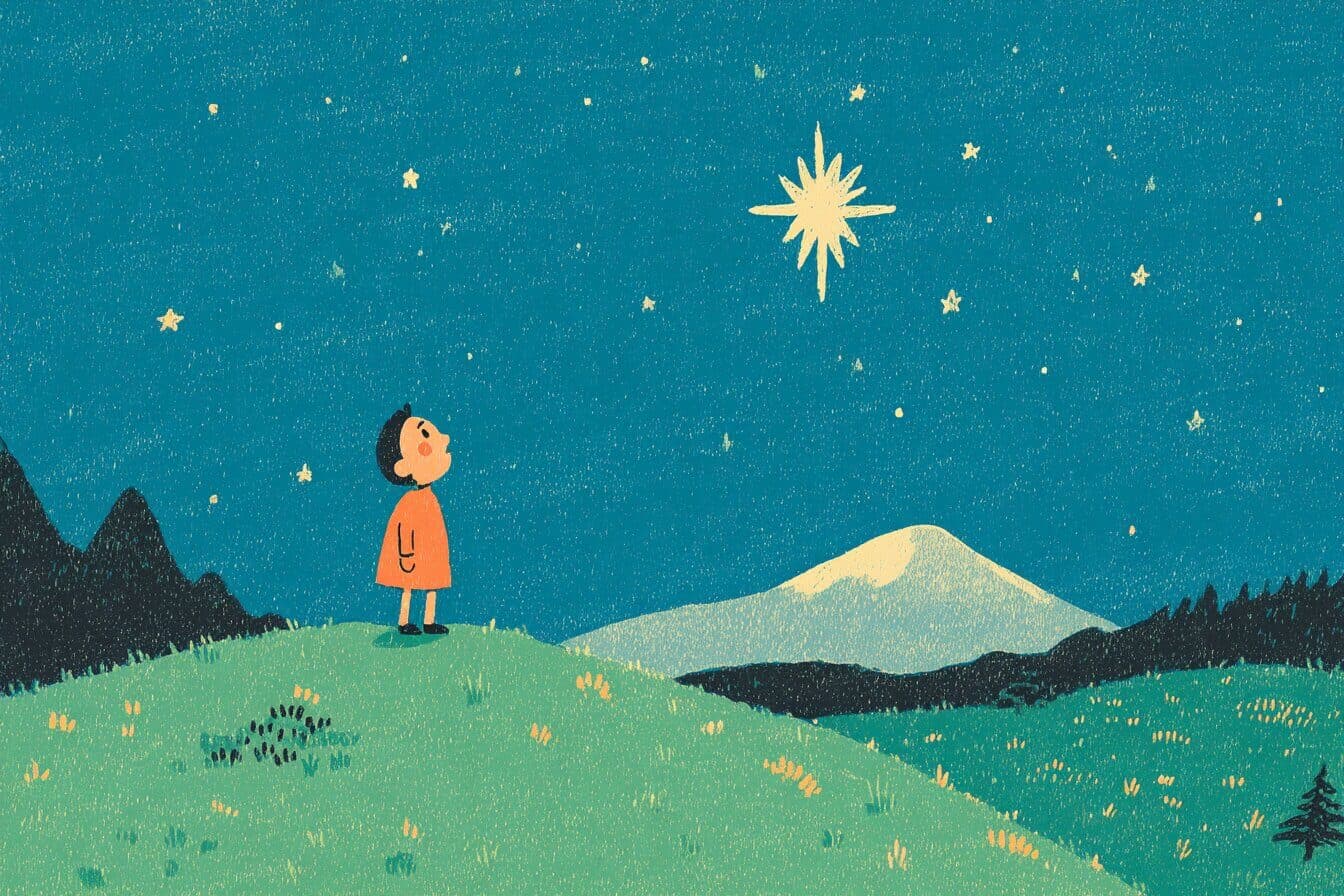
Lily watches a kind star and floats up to help deliver dreams in this short twinkle twinkle little star bedtime story. A warm, quiet tale for sleepy nights.
Through The Looking Glass Bedtime Story
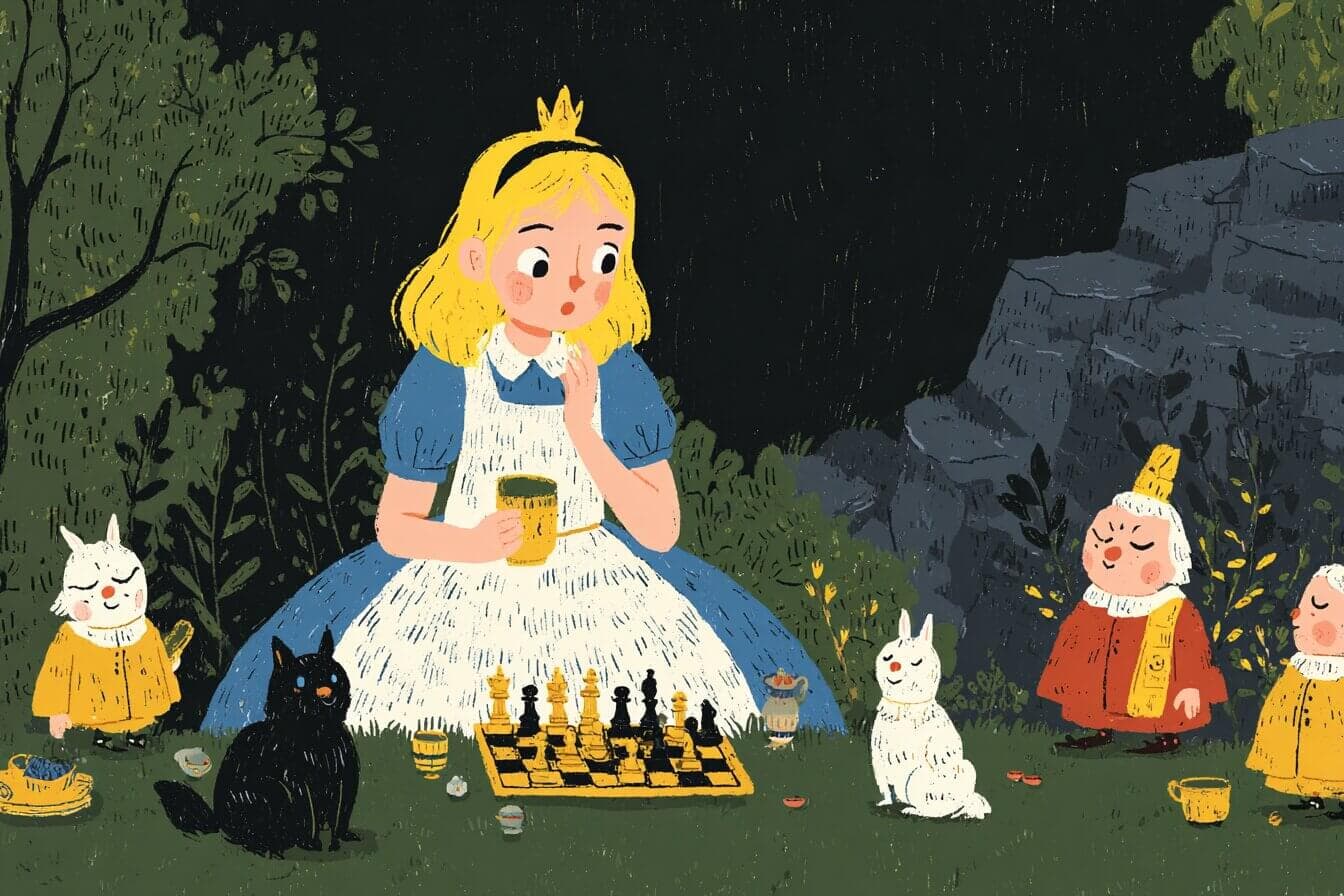
Step into a calm, magical short through the looking glass bedtime story and drift toward sleep with gentle wonder. Enjoy a soothing retelling that feels cozy from start to finish.