
The Goose That Laid The Golden Eggs Bedtime Story
By

Dennis Wang, Bedtime Story Expert
11 min 5 sec
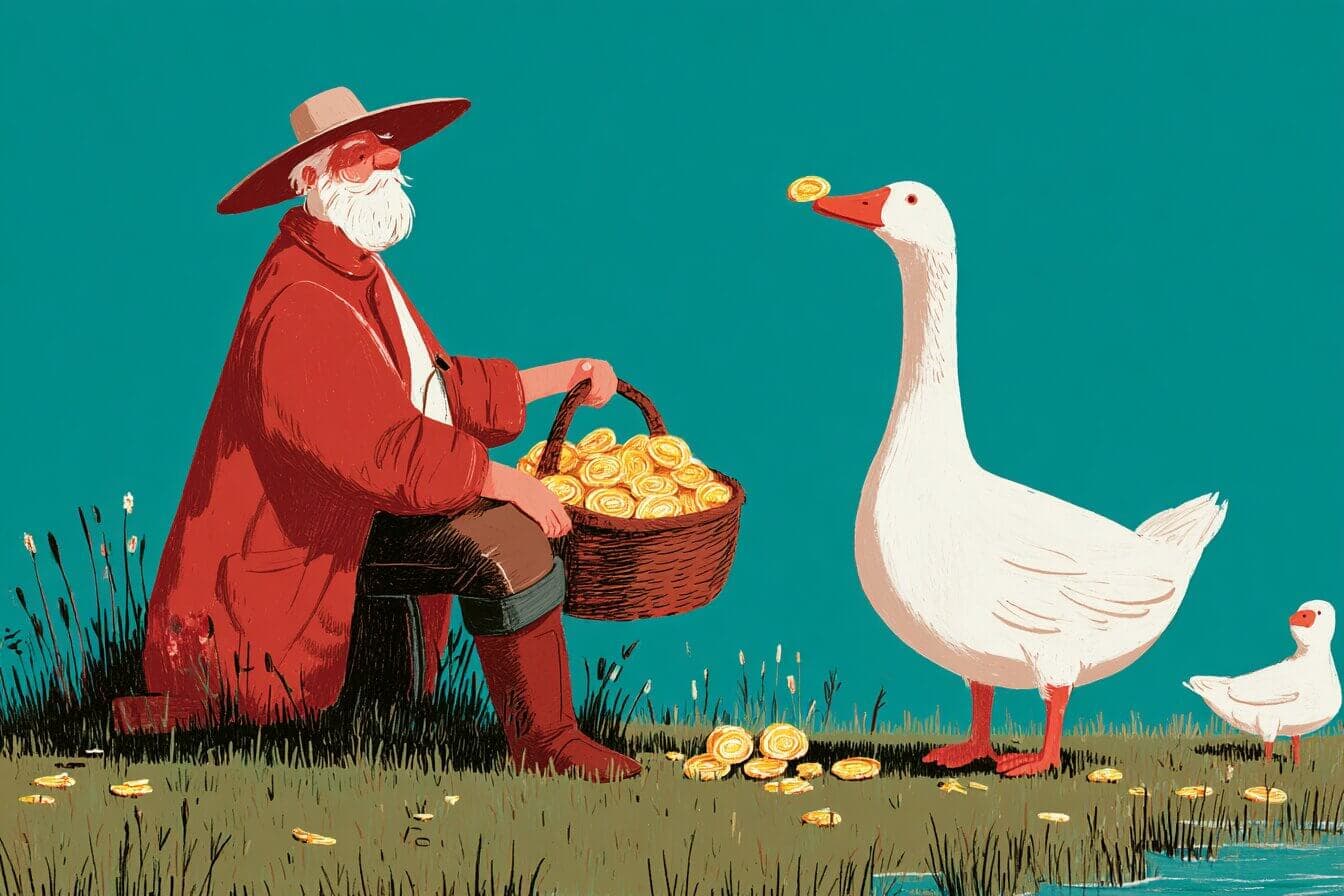
There is something about a warm barn at dawn, the smell of straw and the low hum of sleepy animals, that makes kids go still and listen. This retelling follows Farmer Gus, a kind man with empty pockets and a miraculous hen, as he wrestles with impatience and discovers that the best gifts arrive on their own schedule. It is one of our favorite versions of the goose that laid the golden eggs bedtime story, gentle enough to close out even the wiggliest evening. If you want to reshape the tale for your own family, you can build a custom version with Sleepytale.
Why Golden Egg Stories Work So Well at Bedtime
The promise of something magical waiting in a nest each morning mirrors the rhythm a child already knows: close your eyes tonight, and tomorrow holds a small surprise. Golden egg stories tap into that anticipation without making it frantic. The treasure arrives quietly, in straw, at dawn, which is about as far from loud and overstimulating as a tale can get. Kids settle into the pattern of one egg, one day, one gentle reward, and their breathing slows to match it.
There is also something reassuring about a story where rushing ruins things. At bedtime, children are often fighting the urge to stay up, to grab one more minute. A bedtime story about golden eggs gives that feeling a name and then shows, through a character they like, that slowing down is what brings the real magic back. It is a lesson that lands softly right when they need it most.
The Golden Lesson of Farmer Gus 11 min 5 sec
11 min 5 sec
Farmer Gus hummed as he carried a pail of corn to the henhouse on the first bright morning of spring.
He loved the way his hens muttered to each other like old friends sharing gossip, and the way the rooster crowed so hard his whole body tipped forward.
What he did not love was the tiny pile of copper coins in his pouch.
That was it. That was everything left after a winter that had gone on about three weeks too long.
His boots had holes. The barn roof leaked in two places, one right above the spot where he liked to sit and think. He tried not to think about the seed money he did not have.
Still, he smiled at his animals, because worry never filled a pantry.
He scattered the corn, collected the ordinary eggs, and set them in a wicker basket lined with a tea towel that had seen better decades.
Then he noticed something in the last nest.
A single egg glowed buttery yellow, warm as a candle flame held close. Gus stood there for a good ten seconds, just blinking.
He lifted it gently. It was heavy, heavier than it had any right to be, and smooth like a river stone. He carried it inside, set it on the farmhouse table, and cracked the shell, expecting yolk. Out rolled a solid gold egg. It rang against the wood like a tiny bell, and the sound hung in the kitchen for what felt like a full minute.
His heart pounded.
All that day he polished the egg, turning it over and over until he could see his own surprised face reflected in it. The next morning, he found another golden gift in the same nest. The hen responsible, an unassuming white leghorn with one slightly crooked tail feather, clucked and stepped aside as though she had done nothing remarkable.
Each sunrise repeated the miracle. Soon Gus bought new boots, fixed the roof (both leaks), and filled the pantry so full the door barely closed. He learned to whistle again. But a new thought began to peck at his mind like a hungry bird at a windowsill.
One golden egg a day was wonderful.
Yet what if he could get all the gold at once?
He pictured a mountain of coins spilling from a chest, and the picture would not leave him alone. It followed him to the barn and back. It sat beside him at supper. The idea grew like ivy, curling around every pleasant moment until the pleasant moments stopped feeling pleasant.
One afternoon he counted the days he would need for a hundred eggs. The number seemed impossibly far away, and his stomach clenched.
He decided to find out how the hen did it. That evening he carried the puzzled bird to the lamplight, turned her this way and that, peered at her feathers, lifted her wings. She merely blinked, ruffled herself with a small indignant shake, and settled to sleep in his hands.
The next morning she left him nothing.
Gus felt the first real pang of loss, but his curiosity only tightened its grip. He visited the village library, a cramped room above the bakery that always smelled like sourdough. Mrs. Maple, the baker and part-time librarian, pushed her spectacles up her floury nose and handed him a slim volume titled "The Care of Contented Chickens."
The book said happy birds lay the best eggs.
Gus frowned, certain contentment was not the secret. He borrowed a second book, "Fabulous Fowl of Faraway Lands," which described hens that hatched diamonds and ducks that laid silver spoons. The page about golden eggs warned, in bold letters, that greed could silence the magic.
He closed the book. But the warning fluttered in his head like a moth trapped behind glass.
That night he paced the kitchen, listening to the hen cluck softly out in her coop. He brewed mint tea to calm himself, yet even the steam curling off the mug reminded him of coins. He pressed his palms flat on the table and stayed very still.
At dawn he trudged outside. The nest was empty. For three days the hen gave nothing, and Gus stared at his new roof and felt the guilt settle behind his ribs.
On the fourth morning he knelt beside the nest.
"I'm sorry," he said, and he meant it in a way that surprised him. "I'll wait. However long it takes."
The hen cocked her head, considered him with one bright eye, then fluttered up to the roost.
That afternoon a warm golden egg appeared, smooth as butter. Relief hit Gus so hard he laughed, a slightly wild laugh that startled the rooster outside. He set the egg on the mantel beside the others, thirteen now, and told himself the treasure was enough.
The memory of wanting more still scratched at the door sometimes. He just stopped opening it.
One week later, a spring storm tore across the valley, ripping blossoms off the apple trees and throwing rain sideways. Gus lay in bed listening to the thunder crack directly overhead. Then he thought of the hen downstairs, probably wet, probably shaking.
He fetched a lantern, pulled his coat over his pajamas (the buttons did not line up, and he did not care), and hurried to the coop. Rain had blown through a loose board, and the hen stood soaked. She looked smaller than usual.
Shame warmed him better than any coat.
He dried her with a towel, fixed the board by lantern light with rain running down his neck, and sang a lullaby he remembered from when he was very small. He could not recall all the words, so he hummed the gaps. The hen tucked her head beneath her wing and went still.
The next morning she left him two golden eggs. A rare double gift.
Gus's eyes stung. He stood in the coop holding both eggs, one in each hand, and understood something that the books had almost said but not quite. The magic was not inside the hen alone. It lived in the space between them, in the kindness he chose and the trust she returned.
He carried both eggs to the village. One he sold to the banker for enough money to plant extra fields of corn and pumpkins. The other he placed in a small wooden box lined with velvet and brought to Mrs. Maple, in thanks for her books. She accepted it with a curtsy that left flour prints on her skirt, then surprised him by sliding the egg into the community fund for the schoolhouse roof.
News spread the way it does in small places, fast and with extra details added at every telling.
Children waved at Farmer Gus whenever he passed, calling him the Golden Egg Guardian. He tipped his cap, cheeks going pink, and hurried along. But a proud glow sat in his chest for the rest of the day.
Spring deepened into summer. The hen kept laying her daily miracle, one egg, every morning, like clockwork. Gus kept practicing patience. Whenever he felt the old impatience stir, he swept the barn, or planted flowers along the fence, or read aloud to the hens. They seemed to enjoy the mystery novels best, oddly enough.
He discovered that work done with genuine care made the day pass faster than any clock.
One afternoon a traveling scholar arrived, curious about tales of golden eggs. Gus invited him onto the porch and poured cold lemonade. The scholar asked question after question, took notes in a leather journal, and finally declared that the hen must possess a rare gift for concentrating sunlight into metal.
Gus only smiled.
He knew the real magic was simpler than any alchemy, and harder.
As golden leaves replaced golden eggs in autumn, Gus built a larger coop insulated against winter wind. He added windows facing south so sunshine could flood the straw even on short days. The hen clucked approval, walking the perimeter like a tiny inspector, and soon every hen in the yard began laying eggs of ordinary shell whose yolks stood tall and bright as marigolds.
Neighbors said the omelets tasted like happiness. Gus was not sure about that, but he noticed people smiling while they ate, which seemed close enough.
He sold these eggs at the market, and though they brought no sudden fortune, they brought steady warmth. He used the money to buy apple saplings, which he planted along the lane, one for every golden egg he had ever received.
Snow arrived, blanketing everything in white quilts.
Inside the farmhouse, Gus sat by the fire carving tiny wooden hens for each child in the village. He painted them white with golden dots and attached a note: "Patience makes the egg glow." His handwriting was not beautiful. The children did not mind.
When spring returned, the apple trees bloomed pink and white, and the first golden egg of the new year appeared like a small sun resting in straw.
Gus lifted it carefully, felt its familiar weight, and placed it in the basket between two jars of strawberry jam. He carried it to the porch, sat in the rocker, and watched the sunrise. The light crept across the valley floor, slow and unhurried, touching one field at a time.
The hen stepped out of the coop, stretched her wings until the feathers spread wide like fingers, and hopped onto the railing beside him.
They sat together, listening to the world wake.
Gus whispered a promise to share what he had learned with anyone willing to sit still long enough to hear it. The wind carried his words across the fields, across the seasons, until the story became a kind of lullaby, reminding children that good things come, like eggs, in their own perfect time.
The Quiet Lessons in This Golden Egg Bedtime Story
This story threads together patience, gratitude, and the courage to apologize, and it does so through small, concrete moments rather than speeches. When Gus kneels beside the empty nest and says sorry, children absorb the idea that admitting a mistake is not weakness but the thing that actually fixes it. When he runs out into the storm to dry a shivering hen, the story shows generosity as an instinct rather than a rule, something you do because you care, not because someone told you to. These lessons arrive quietly, which is exactly why they stick at bedtime: a child drifting off does not need a lecture, just a feeling that kindness and patience make the world warmer.
Tips for Reading This Story
Give Mrs. Maple a brisk, cheerful voice and let Gus sound a little sheepish whenever he talks to the hen, especially during the apology at the empty nest. When the storm scene arrives, slow your pace and lower your volume so the moment Gus wraps the hen in a towel feels like the room itself has gone still. At the very end, when Gus and the hen sit on the porch watching the sunrise, let the last two sentences stretch out with long pauses between them so your child's breathing has time to settle.
Frequently Asked Questions
What age is this story best for?
It works well for children ages 3 to 8. Younger listeners enjoy the repeating pattern of golden eggs appearing each morning and the cozy barn details, while older kids pick up on Gus's internal struggle with greed and the way his apology brings the magic back. The vocabulary is simple enough for a three-year-old but the emotional arc gives a seven-year-old something real to think about.
Is this story available as audio?
Yes. You can press play at the top of the story to hear it read aloud. The audio version brings out the rhythm of the daily egg routine nicely, and moments like the gold egg ringing against the table and the storm scene carry a lot of atmosphere when you hear them spoken. It is a good option for nights when you want to lie beside your child and just listen together.
Why does the story use a hen instead of a goose?
This retelling swaps the traditional goose for a white leghorn hen to ground the tale in a more familiar farmyard setting. The classic lesson stays the same: greed silences the gift, and patience brings it back. Kids who know the original will recognize the shape of the story, and kids meeting it for the first time get a version that feels cozy and close to home.
Create Your Own Version
Sleepytale lets you reshape this classic tale into something that fits your family perfectly. You could swap the farm for a mountain cabin, turn Gus into a grandmother, or replace the golden egg with a glowing seashell that washes ashore each morning. In just a few taps you will have a cozy, personalized retelling ready to read aloud or play as audio whenever bedtime calls.
Looking for more bedtime story classics?
Once Upon A Time Stories
What happens when June opens a golden book with no title? One of the sweetest short once upon a time stories about a forest, a hedgehog, and a blank page.

Fairy Tales Written By Hans Christian Andersen
Anders discovers short fairy tales written by Hans Christian Andersen as his grandmother reads from a soft brown book by lamplight.

Bluebeard Fairy Tale
In this short bluebeard fairy tale, the forbidden room holds not horror but a music box and memories of the people Lord Corvus loved most.

Red Shoes Fairy Tale
What happens when Karen's magical red shoes refuse to stop dancing? Discover this short red shoes fairy tale tonight.
Twinkle Twinkle Little Star Bedtime Story
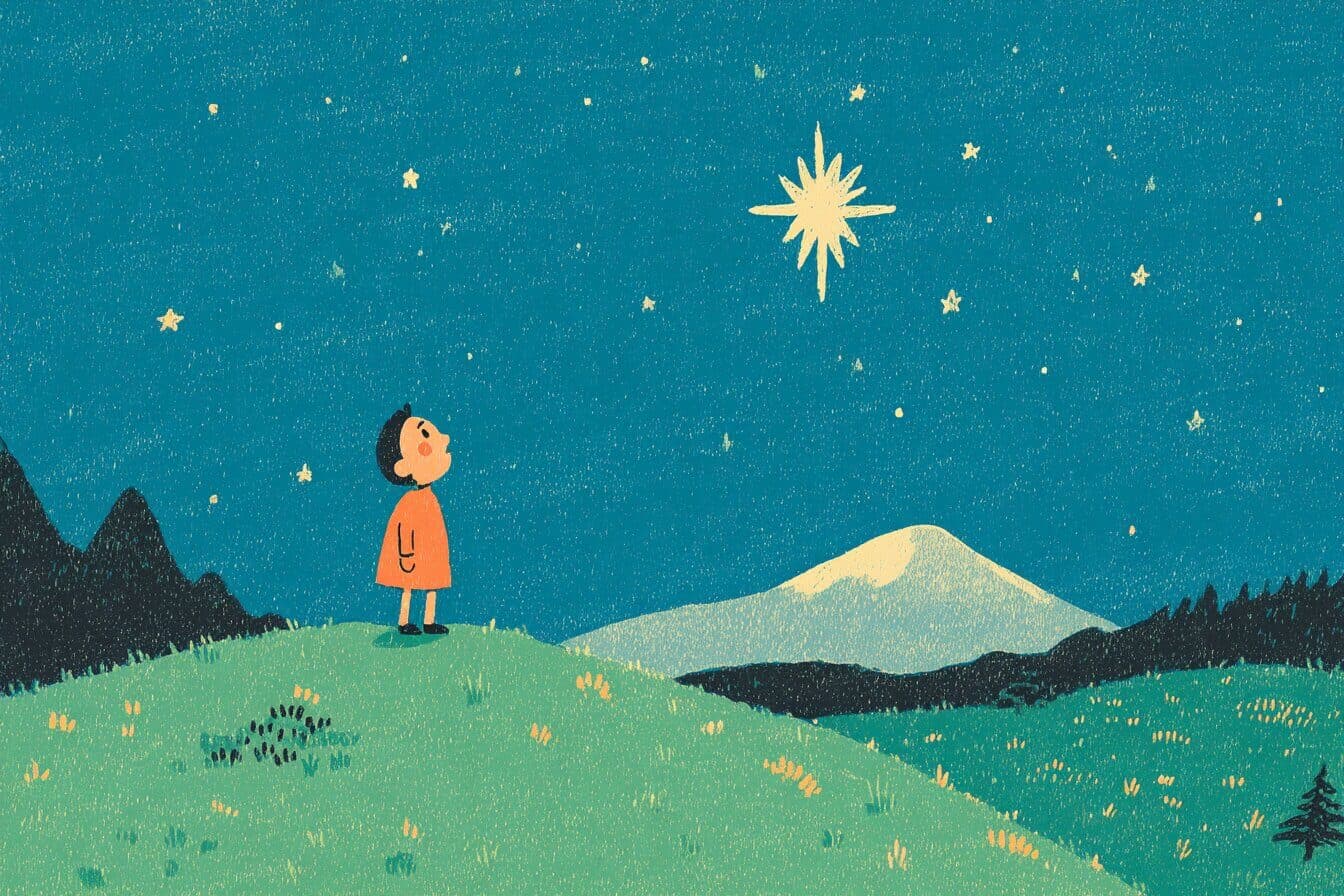
Lily watches a kind star and floats up to help deliver dreams in this short twinkle twinkle little star bedtime story. A warm, quiet tale for sleepy nights.
Through The Looking Glass Bedtime Story
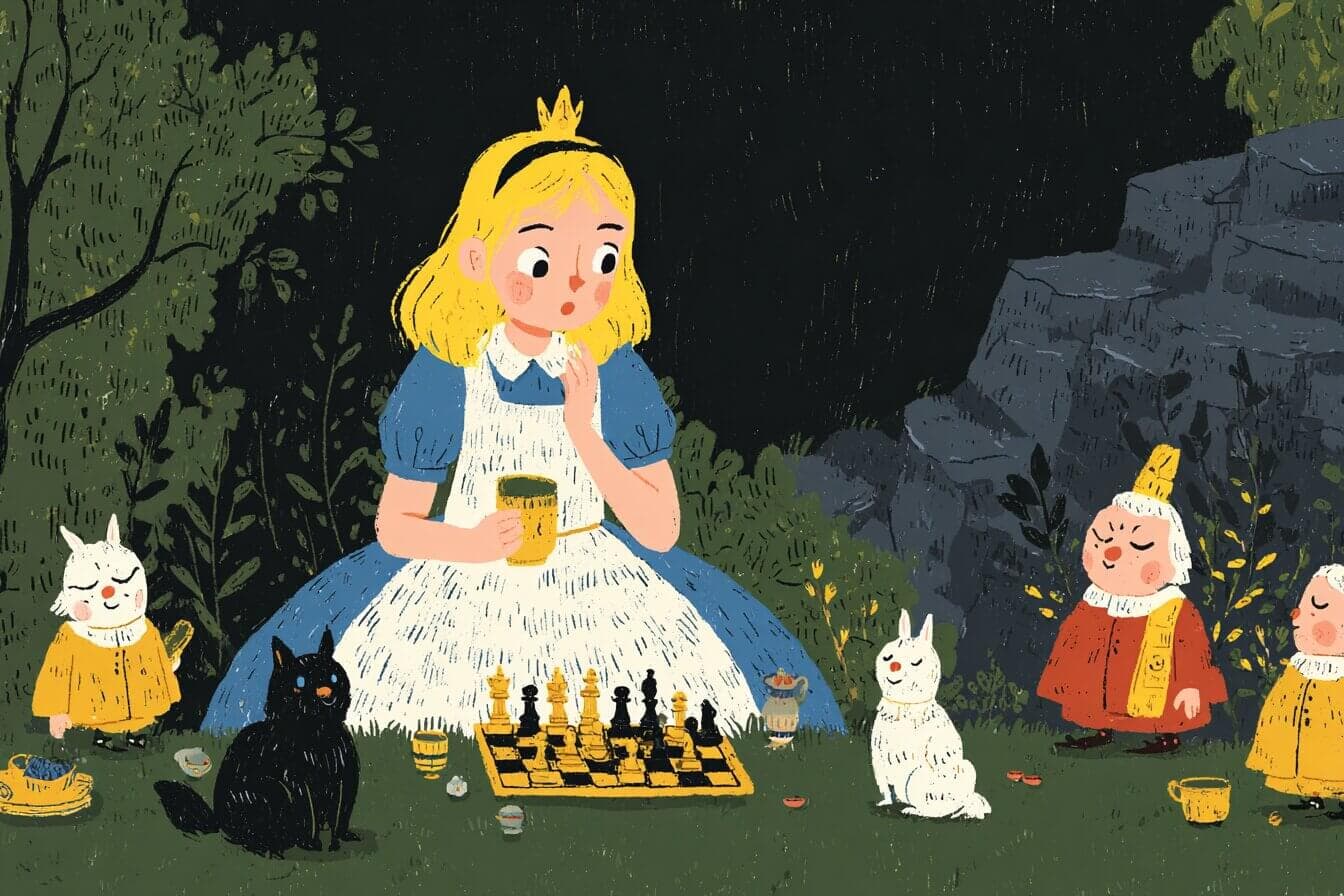
Step into a calm, magical short through the looking glass bedtime story and drift toward sleep with gentle wonder. Enjoy a soothing retelling that feels cozy from start to finish.