
The Golden Goose Bedtime Story
By

Dennis Wang, Bedtime Story Expert
9 min 58 sec
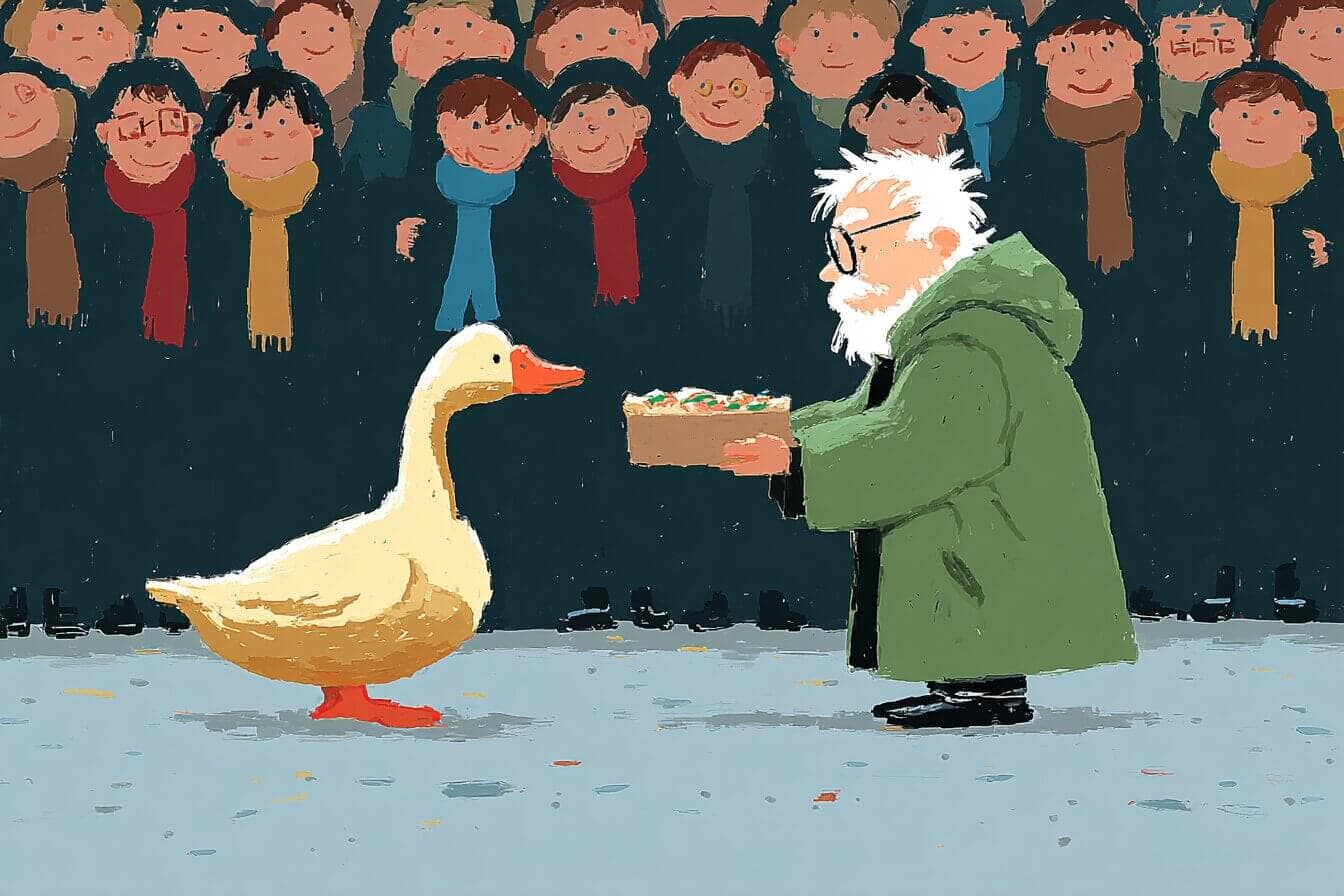
There is something irresistible about a story where one silly mistake snowballs into a whole town of people stuck together, waddling down the street like a human caterpillar. In this cozy retelling, a kind young man named Oliver shares his lunch with a stranger and ends up leading the most ridiculous parade Mapleberry has ever seen, all thanks to a shimmering goose nobody can let go of. It is the perfect the golden goose bedtime story for kids who love absurd humor mixed with a little heart. If your child wants to star in a version of their own, you can create one with Sleepytale.
Why Golden Goose Stories Work So Well at Bedtime
There is a reason kids have loved golden goose tales for centuries. The premise is simple enough to follow when eyes are getting heavy: one person touches the goose, then another, then another, and the chain keeps growing. That predictable, repeating pattern is deeply soothing for young minds. Kids know what is coming next, and that certainty helps them relax, even as they giggle at each new person joining the line.
A bedtime story about a golden goose also carries a warmth that settles well at night. The core idea, that a small act of generosity sets off a chain of connection, mirrors the feeling of being tucked in and cared for. Nobody in the story gets hurt. The stakes are low and the mood is silly. By the time the last character pops free, everything feels resolved, safe, and ready for sleep.
The Golden Goose Parade 9 min 58 sec
9 min 58 sec
In the village of Mapleberry, a young man named Oliver lived in a cottage so small you could stand in the kitchen and nearly touch every wall.
He grew carrots and squash and tomatoes that split their skins if you left them one day too long, and he sold them at the Saturday market from a table that wobbled unless he wedged a folded napkin under one leg.
Everyone in town knew Oliver because he said good morning like he actually meant it.
One afternoon, Oliver sat on the bench outside the bakery eating his lunch, bread torn in rough pieces and a wedge of cheese that was already starting to sweat in the sun.
Across the lane, an old man lowered himself onto the stone wall by the fountain.
His coat had patches on its patches. His shoes looked like they had given up. But his eyes, Oliver noticed, were almost absurdly bright, the kind of bright that made you check whether the sun had shifted.
Oliver looked at his bread. He looked at the old man. He looked at his bread again.
"You hungry?" he called across.
The old man smiled like he had been waiting for someone to ask.
They ate together on the bench, and the stranger told a story about a donkey that had once stolen a hat from a duke. Oliver laughed so hard a crumb went up the back of his nose and he had to cough for a full minute, which made the old man laugh too.
When the food was gone, the stranger stood and reached into his coat pocket, which should not have been large enough to hold what came out of it.
He produced a goose. A golden one. It shimmered the way pond water does when late sun hits it, and it was warm in Oliver's hands, warm like something alive and a little bit smug about it.
"Not an ordinary bird," the old man said, which was fairly obvious. "She brings joy. Also trouble. Often both."
He vanished. Not slowly, not with a goodbye. Just sparkles and gone, the way only mysterious old men in stories can manage.
Oliver stood there holding a golden goose that blinked at him once, then honked.
He decided to walk home.
He got about forty steps before Mrs. Tilly from next door came bustling over, reaching out to stroke the goose's gleaming feathers.
"Oh, what a pretty, what a lovely, what a, oh no."
Her hand was stuck. Completely, thoroughly, not-going-anywhere stuck to Oliver's arm.
"Well," said Oliver.
"Well," said Mrs. Tilly.
Her cat, a fat orange thing named Pudding, leapt up to investigate and landed on Mrs. Tilly's skirt. Stuck.
Pudding yowled once in protest, then settled into the kind of offended silence only a cat can produce.
The baker, Mr. Holloway, came running from his shop still trailing flour dust. "Let me help!" He grabbed Pudding. Stuck.
"Oh, for the love of sourdough," Mr. Holloway muttered.
They kept walking because there was nothing else to do.
The line grew. The mayor's assistant reached for Mr. Holloway's elbow. Stuck. The mayor reached for his assistant. Stuck. A balloon vendor tried to pull the mayor free and ended up glued at the wrist, her three red balloons bobbing above the whole procession like a tiny parade float nobody asked for.
Oliver led them through the town square, past the fountain where he had met the old man just an hour ago, down the main street where shopkeepers stepped into their doorways and stared, then started laughing so hard some of them had to hold on to the doorframes.
Children ran alongside, shrieking with delight. A dog joined the chain briefly, then somehow got free, which annoyed Mrs. Tilly enormously. "Even the dog can escape but I cannot?"
"Try wiggling," suggested the mayor, who was walking sideways and looked deeply uncomfortable.
Nobody could pull apart. Two more people tried and simply added themselves to the chain, which now stretched the length of a cricket pitch and moved with the grace of a centipede that had forgotten how legs worked.
Oliver looked at the goose. The goose looked at Oliver. It honked, and he could have sworn it sounded amused.
Something occurred to him. Every time someone in the chain laughed, really laughed, the stickiness loosened just a little. He could feel Mrs. Tilly's grip shift whenever she giggled.
So he did the only sensible thing. He started telling jokes.
They were terrible jokes. "What do you call a goose that sticks to everything? A gluese." Mrs. Tilly groaned. Mr. Holloway snorted. The mayor's assistant made a sound like a broken accordion.
He tried again. He made a face, crossing his eyes and puffing his cheeks. He told the donkey-and-the-duke story the old man had told him, except he forgot the middle and made up a part about the donkey learning to waltz, which was arguably better.
The laughter built. It started in scattered bursts and grew until the whole chain was shaking with it, the balloons bouncing, Pudding yowling in rhythm, the mayor laughing so hard his monocle fell off and dangled on its chain.
Pop. Mrs. Tilly came free and stumbled into a pile of autumn leaves the wind had pushed against the cobbler's wall.
Pop. Mr. Holloway sat down hard on the pavement, still chuckling.
Pop, pop, pop. One by one they separated, landing in leaf piles, on benches, against lampposts, every one of them breathless and grinning.
The golden goose shivered once. Its feathers dimmed from gold to plain white, like someone turning down a lamp.
It was just a goose now. A regular, slightly plump, entirely ordinary goose.
It looked up at Oliver, honked once more, and waddled after him as he headed home.
That evening, Oliver found a golden egg in the goose's nest, warm and heavy in his palm. He brought it to the market the next morning and used what it was worth to buy bread for Mrs. Tilly, flour for Mr. Holloway, and a new squeaky toy for Pudding, who did not say thank you but did purr.
The goose kept laying one golden egg each week, and Oliver kept sharing.
The village started calling the goose the Town Mascot, and she appeared at every festival after that, wearing a small ribbon collar the children made for her.
On quiet evenings, Oliver sometimes sat on the bench outside the bakery and wondered about the old man with the bright eyes. He never came back. But the goose honked softly beside him, the fountain splashed in the lane, and Mapleberry felt a little warmer than it had before, in a way that had nothing to do with the weather.
The Quiet Lessons in This Golden Goose Bedtime Story
This story slips several reassuring ideas under the laughter without ever pausing to lecture. When Oliver offers half his bread to a stranger without hesitating, children absorb the idea that generosity does not require grand gestures, just noticing someone and making room. The long, silly chain of stuck townspeople shows kids that awkward situations get smaller when you stop fighting them and start laughing instead. And Oliver's choice to share every golden egg, rather than keep the wealth to himself, reinforces that connection with others matters more than what you have. These are comforting truths to carry into sleep: that small kindnesses count, that laughter dissolves embarrassment, and that sharing makes a place feel like home.
Tips for Reading This Story
Give Mrs. Tilly a flustered, breathy voice that speeds up every time she gets more stuck, and let Mr. Holloway mutter "for the love of sourdough" in a low grumble that will get a giggle. When the chain of stuck people starts waddling through town, slow your pace down and sway a little, letting your child picture the whole ridiculous caterpillar of people shuffling along. At the pop, pop, pop moment when everyone comes free, tap your child gently on the arm with each "pop" so they feel the release along with the characters.
Frequently Asked Questions
What age is this story best for? This retelling works well for children ages 3 to 7. Younger listeners love the repeating pattern of each new person getting stuck, which is easy to follow even when they are drowsy. Older kids in the range will appreciate Oliver's bad jokes and the image of the mayor walking sideways with his monocle dangling.
Is this story available as audio? Yes. You can press play at the top of the story to hear it read aloud. The audio version is especially fun because the growing chain of stuck characters builds a rhythm that pulls kids along, and the "pop, pop, pop" sequence near the end has a satisfying sound that works beautifully when spoken by a narrator.
Why does the goose turn from gold to white at the end? In this retelling, the goose's golden shimmer represents the magic the old man left behind. Once the whole town laughs together and breaks the spell, the magic has done its job, so the goose becomes an ordinary bird. She still lays golden eggs, though, which is the story's gentle way of showing that the kindness Oliver started keeps giving back, even after the flashy magic fades.
Create Your Own Version
Sleepytale lets you reshape this classic tale into something that fits your child perfectly. You can swap Mapleberry for a seaside village, turn the goose into a glittery duck or a shimmering peacock, or change Oliver's terrible jokes to riddles your kid already knows. In just a few taps you get a cozy, personalized retelling with illustrations and a gentle pace built for winding down.
Looking for more bedtime story classics?
Once Upon A Time Stories
What happens when June opens a golden book with no title? One of the sweetest short once upon a time stories about a forest, a hedgehog, and a blank page.

Fairy Tales Written By Hans Christian Andersen
Anders discovers short fairy tales written by Hans Christian Andersen as his grandmother reads from a soft brown book by lamplight.
Bluebeard Fairy Tale
In this short bluebeard fairy tale, the forbidden room holds not horror but a music box and memories of the people Lord Corvus loved most.

Red Shoes Fairy Tale
What happens when Karen's magical red shoes refuse to stop dancing? Discover this short red shoes fairy tale tonight.

Twinkle Twinkle Little Star Bedtime Story
Lily watches a kind star and floats up to help deliver dreams in this short twinkle twinkle little star bedtime story. A warm, quiet tale for sleepy nights.
Through The Looking Glass Bedtime Story
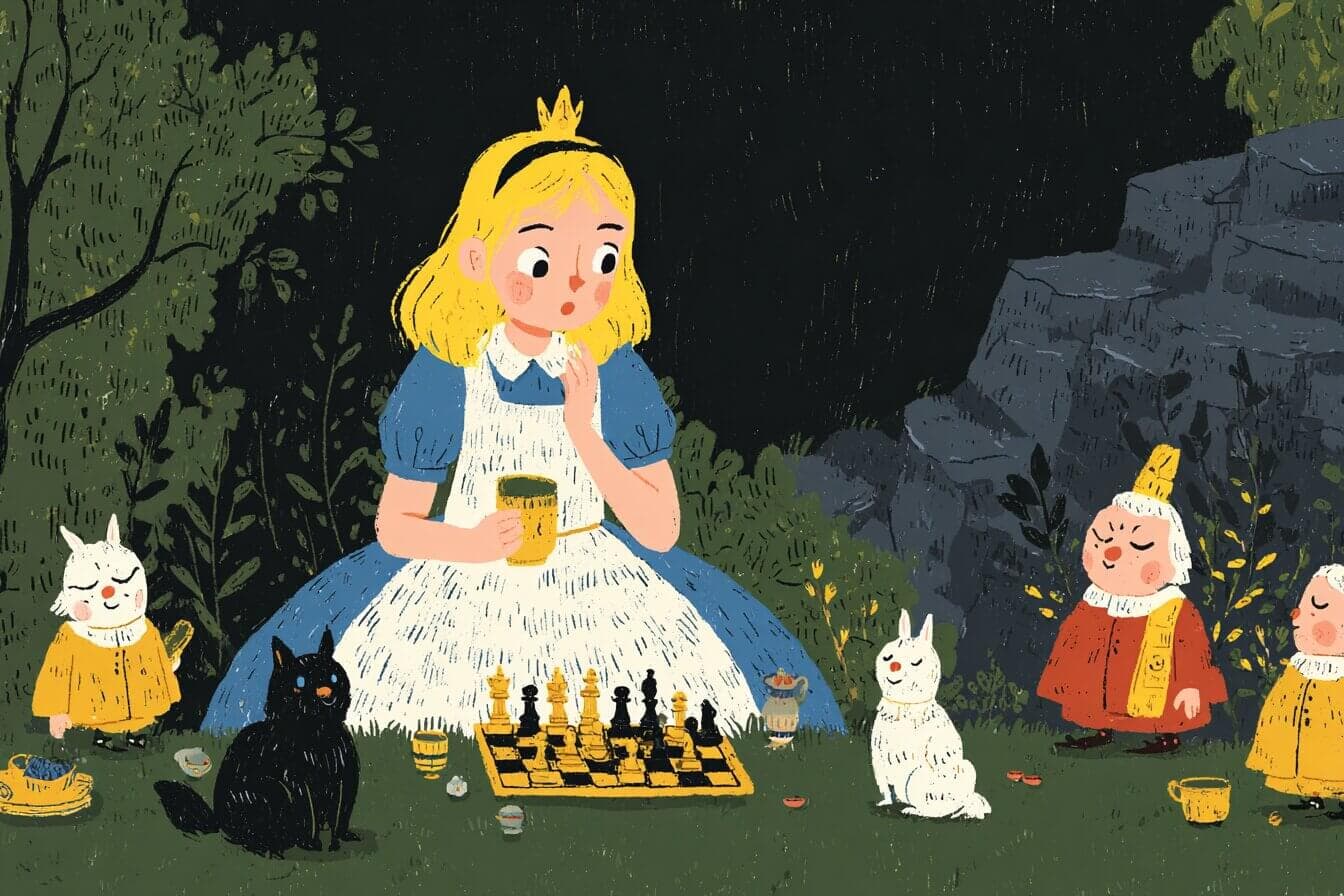
Step into a calm, magical short through the looking glass bedtime story and drift toward sleep with gentle wonder. Enjoy a soothing retelling that feels cozy from start to finish.