
The Fox And The Stork Bedtime Story
By

Dennis Wang, Bedtime Story Expert
7 min 6 sec
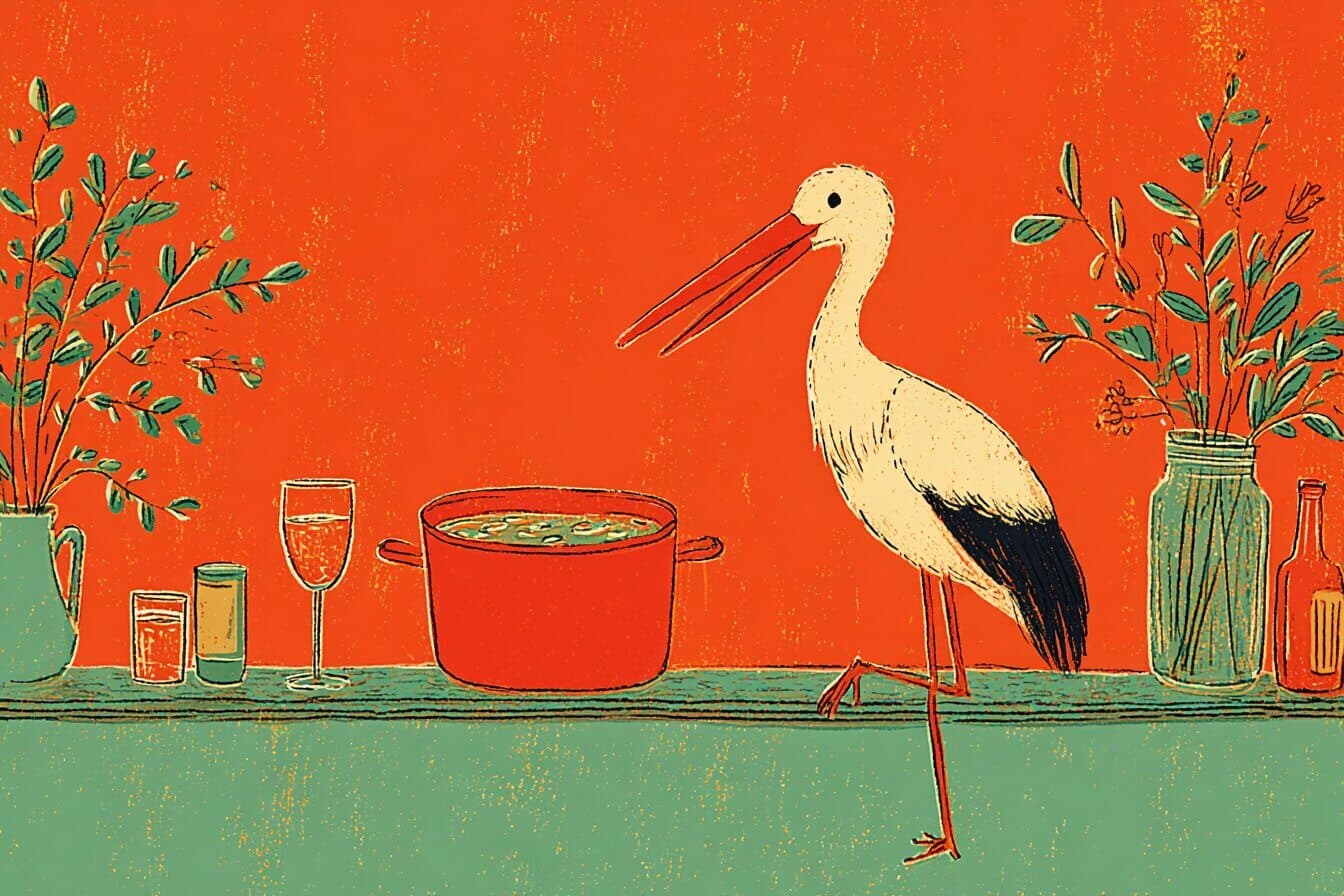
There is something about a forest at dusk, the pond going still, the first fireflies blinking on, that makes kids want to hear about the creatures who live there. This cozy retelling follows Felix the fox and Stella the stork through a dinner prank that spirals into friendship, science experiments, and a quiet lesson about thinking of others. It is our favorite kind of the fox and the stork bedtime story, one where humor and heart mix until little eyes start to close. If you would like to swap the setting or characters to fit your family perfectly, you can create your own version with Sleepytale.
Why Fox and Stork Stories Work So Well at Bedtime
Kids are drawn to animal friendships, especially ones that hit a bump and then find their way back. A fox and a stork are different in almost every way, body shape, eating style, even the way they move, and that contrast gives children a safe space to think about fairness without feeling like anyone is pointing a finger at them. The gentle tension of a dinner trick gone wrong is just enough to keep a child listening, but never so much that it keeps them awake.
Stories built around sharing a meal also carry a natural bedtime rhythm. There is the preparation, the sitting down together, the cleaning up, all things that mirror a child's own evening routine. When the characters end the night side by side with full bellies and a new understanding, it mirrors the feeling of being tucked in after a good day. A bedtime story about a fox and a stork reminds kids that tomorrow is another chance to try again.
The Fox, the Stork, and the Science of Sharing 7 min 6 sec
7 min 6 sec
Felix the fox loved a good joke. Not a mean one, exactly, but the kind where he got to feel just a little bit cleverer than everyone else, which, if we are being honest, is the most dangerous kind.
One bright morning he pushed through the blueberry bushes near the pond, his red tail leaving damp lines in the dew. Stella the stork stood at the water's edge, her beak dipping in and out with the quick, precise motion of someone threading a needle. She once told him her beak worked like a straw, sucking up water and minnows at the same time, and he had thought about it for three days straight.
An idea caught him the way a burr catches fur.
"Stella," he called, trotting over with his whiskers all aquiver, "would you come to dinner tonight? I've invented a soup that changes color when you stir it."
She tilted her head. "Changes color how?"
"Purple to pink. Chemistry." He said the word chemistry the way some foxes say rabbit, with pure hunger.
Stella agreed immediately and promised to bring dessert. Felix hurried home, humming.
He set two flat stone plates on a low stump he used as a table. The soup was beetroot and carrot, simmered until thick, with a pinch of baking soda so it would blush pink the moment a spoon touched it. Shallow plates. Stella's beak was long and narrow. He knew exactly what would happen.
When evening came, Stella flew in wearing a necklace of clover flowers that she had clearly picked in a hurry because one stem was still bent sideways. Felix poured the soup with a flourish, stirring his plate so the purple swirled into rose.
He lapped his portion easily. Stella's beak tapped the flat stone, once, twice, and came up dry both times.
"Enjoy the lesson in surface tension," Felix said, and licked his chops.
Stella looked at her plate for a long moment.
"The color reaction is lovely," she said, her voice perfectly even. "Is it the baking soda reacting with the beet acid?"
Felix launched into a lecture about acids and bases, happy enough to talk that he almost forgot what he had done. Almost. Stella asked careful questions, nodded in the right places, and then, as she stood to leave, mentioned that she would love to host him at her nest the following evening.
"Return dinner," she said lightly.
Felix accepted. Walking home, he felt a warm, self-satisfied glow that, if he had been paying better attention, might have worried him.
The next sunset he bounded across the meadow and scrambled up the oak tree to Stella's nest, which was woven from pale reeds and smelled faintly of river mud. In the center sat a tall glass jar, narrow as a chimney, filled with golden fish stew. The steam that curled from the top smelled unbelievable.
Stella dipped her beak inside and sipped. She explained, between sips, how the jar's shape used gravity to guide the liquid upward along the walls.
Felix pushed his snout against the opening. Too wide. He tipped the jar. Stella caught it. He tried licking around the rim. He got exactly one drop. It was the best drop of stew he had ever tasted, and that made everything worse.
"Can I just, you know, crack it a little?"
"Real scientists respect their equipment, Felix."
He sat back on his haunches. The stew smell hung in the air like a dare. And then, to his own surprise, he laughed. Not a polite chuckle. A real, rolling, stomach-shaking laugh, because the whole thing was so perfectly, obviously fair.
Stella watched him, and the corner of her beak curved up, which is the stork version of a grin.
She poured a generous helping into a broad sycamore leaf and set it in front of him. They ate together, and for a while the only sounds were sipping and crickets and the creak of the oak in the wind.
"I'm sorry about last night," Felix said, looking at his leaf instead of at her.
"I know."
"I could design something better. A bowl that works for both of us."
Stella pulled a pencil from behind her wing. She already had graph paper.
They sketched late into the evening, arguing about angles the way friends argue, loudly and with crumbs flying. What they ended up with was a two-part bowl: wide and shallow on one side for a fox's tongue, with a narrow straw-like tunnel on the other for a stork's beak. They painted the outside with thermochromic pigment so it shifted from cool blue to warm orange as the soup heated up. Every meal became a tiny science show.
Word traveled. A rabbit mentioned it to a raccoon who told a squirrel who told Badger, and within a week animals were lining up at the workshop stump, requesting custom tableware.
Felix measured beaks, bills, tongues, and snouts, scribbling data in a notebook whose cover was already stained with beetroot. Stella calculated sipping angles, tossing around words like parabola and angle of incidence as casually as other storks say fish. They tested prototypes. Some failed spectacularly; a spinning plate meant for hedgehogs launched a pinecone into the pond.
Young raccoons learned about volume by filling measuring cups. Squirrels figured out that friction keeps nuts from sliding off a slanted tray. Even grumpy old Badger cracked a smile when his temperature-sensitive mug turned from black to white, revealing a pattern of hidden stars he traced with one claw before admitting it was "acceptable."
Felix and Stella ended each day with a shared dessert, always served in something both could reach.
Their prank had become the forest's favorite after-school club. Parents brought pups and kits to learn, and somehow mealtimes turned into lessons in physics, chemistry, and looking out for the creature sitting next to you. Felix noticed he had stopped wanting to feel cleverer than everyone. He wanted to feel useful, and that turned out to be a much warmer feeling, like soup on the inside.
Stella tucked her pencil behind her wing each night, already planning the next experiment. Together they dreamed up edible spoons that dissolved into vitamin-rich broth, plates that spun slowly like planets to keep food warm, and cups that hummed different musical notes depending on how much liquid was left.
They wrote a tiny book called Dining Discoveries, illustrated with leaf prints pressed in walnut ink. The fox who once teased now lit up whenever someone said the words "let's test it."
Stella's favorite moment came on a cool Tuesday when Felix handed her a custom beaker shaped like a feather, complete with measurement lines etched for nectar. He did not say anything grand. He just set it down and looked at the ground the way he had looked at the sycamore leaf that night in her nest.
She rested one long wing across his back.
"Knowledge grows when you pass it along," she said quietly.
Their dinners became legendary, not for the food, though the food was good, but for the sound that drifted through the trees: laughter layered with questions layered with the clink of bowls nobody got left out of.
One night, fireflies blinked above their heads in patterns that Stella swore spelled out Newton's first law. An owl professor hooted from a branch and asked if she could give a guest lecture. Felix and Stella said yes before she finished the sentence.
They planned a potluck where every dish demonstrated a scientific principle. The whole forest was invited. Tables circled the clearing like planets around the sun.
Fireflies brought luminescent jelly that glowed through bioluminescence. Rabbits served layered carrot slices showing growth rings like tiny trees. Bears contributed honey that had crystallized into perfect hexagons. Felix poured color-changing lemonade, and Stella offered fish broth in beakers marked with volume lines.
Between courses they danced to cricket music, played hide and seek in the low fog, and launched seed rockets to demonstrate propulsion. A baby opossum washed her plate in the stream and discovered that soap bubbles are tiny examples of surface tension, which made Felix smile so wide his ears hurt.
The evening wound down the way good evenings do, slowly and without anyone wanting to say goodnight first. Stella and Felix sat side by side at the edge of the pond, her wing brushing his tail, watching the last fireflies drift over the water. Somewhere in the reeds, a frog sang one low note, then stopped, as if it had said everything it needed to say.
The Quiet Lessons in This Fox and Stork Bedtime Story
This story gently explores what happens when a joke lands on the wrong side of funny, and how repair can turn an awkward evening into a real friendship. When Felix laughs at his own comeuppance in Stella's nest, children absorb the idea that admitting you were wrong does not have to feel terrible; sometimes it is actually a relief. The designing-together scenes show that fairness is not about everyone getting the same thing but about everyone getting what they need, a distinction that sticks with kids more than any lecture. Hearing all of this just before sleep reassures a child that mistakes made today can become something better tomorrow.
Tips for Reading This Story
Give Felix a quick, slightly self-important voice that softens as the story goes on, and let Stella sound calm and dry, the kind of friend who raises one eyebrow instead of arguing. When Felix pushes his snout against the jar and gets exactly one drop of stew, pause and let your child laugh or guess what he will try next. During the potluck scene, slow your pace and drop your volume a little with each dish described, so the whole forest feast feels like it is dimming the lights toward sleep.
Frequently Asked Questions
What age is this story best for?
Children ages 3 to 8 tend to enjoy it most. Younger listeners love the color-changing soup trick and the funny image of Felix getting only one drop from the tall jar, while older kids pick up on the science vocabulary Stella tosses around and the idea of designing bowls to fit different animals.
Is this story available as audio?
Yes. Press play at the top of the story to hear the full narration. The audio version is especially fun because you can hear the difference between Felix's chatty energy and Stella's measured calm, and the potluck scene, with all its dishes and dancing, has a rhythm that carries kids right to the edge of sleep.
Does the story follow the original Aesop's fable?
It keeps the core setup, a fox serves soup on a flat plate and a stork returns the favor with a tall jar, but adds a second half where Felix and Stella team up to build tableware that works for every animal. The science details, like thermochromic paint and bioluminescent jelly, are playful additions that give curious kids something extra to ask about in the morning.
Create Your Own Version
Sleepytale lets you reshape this classic fable into something that fits your child's world perfectly. You could move the dinner from a forest pond to a seaside dock, swap the beetroot soup for hot cocoa, or add a new guest like an otter engineer who helps with the bowl designs. In a few moments you will have a calm, personal story ready to play or read aloud whenever bedtime calls.
Looking for more bedtime story classics?
Once Upon A Time Stories
What happens when June opens a golden book with no title? One of the sweetest short once upon a time stories about a forest, a hedgehog, and a blank page.

Fairy Tales Written By Hans Christian Andersen
Anders discovers short fairy tales written by Hans Christian Andersen as his grandmother reads from a soft brown book by lamplight.

Bluebeard Fairy Tale
In this short bluebeard fairy tale, the forbidden room holds not horror but a music box and memories of the people Lord Corvus loved most.

Red Shoes Fairy Tale
What happens when Karen's magical red shoes refuse to stop dancing? Discover this short red shoes fairy tale tonight.

Twinkle Twinkle Little Star Bedtime Story
Lily watches a kind star and floats up to help deliver dreams in this short twinkle twinkle little star bedtime story. A warm, quiet tale for sleepy nights.
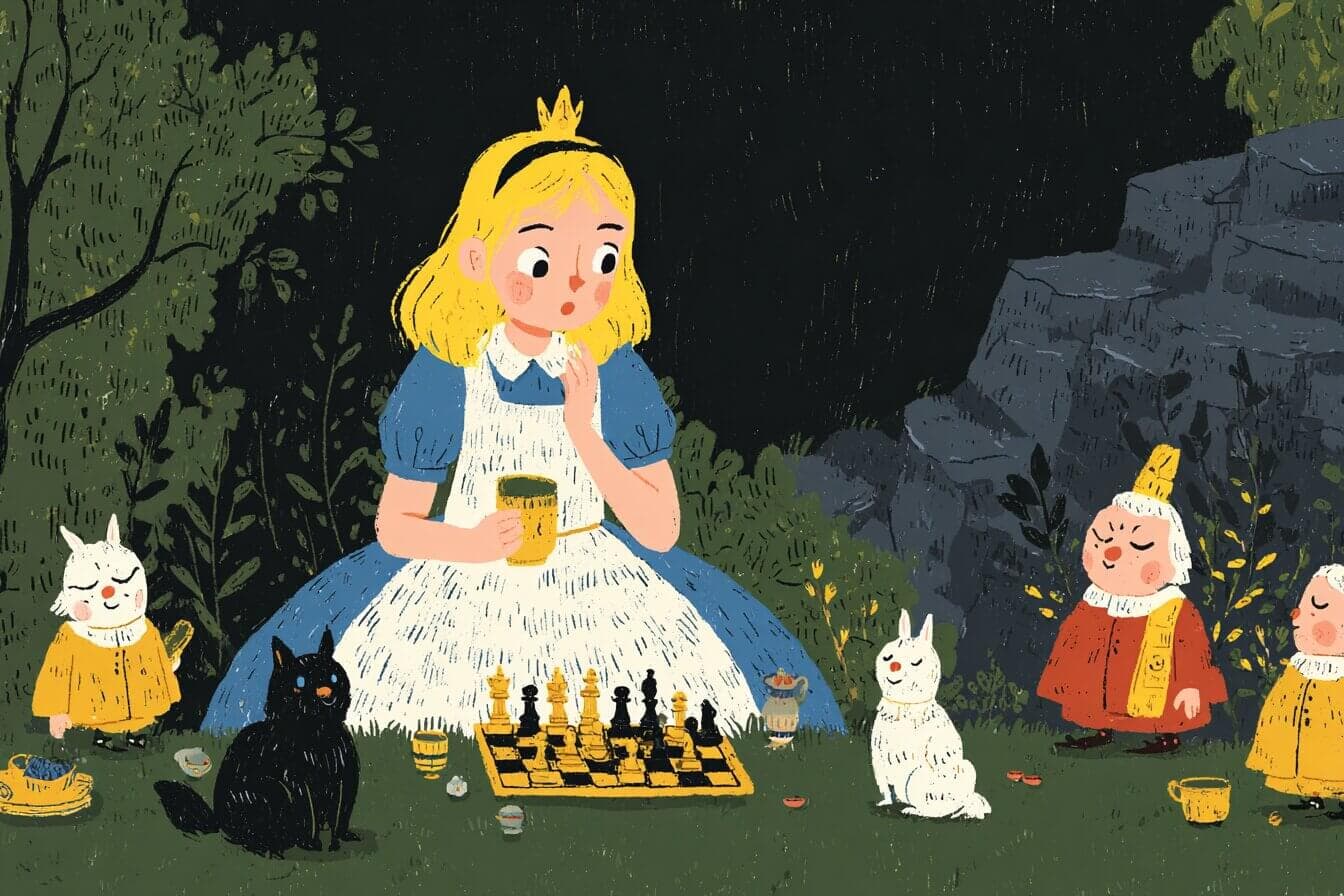
Through The Looking Glass Bedtime Story
Step into a calm, magical short through the looking glass bedtime story and drift toward sleep with gentle wonder. Enjoy a soothing retelling that feels cozy from start to finish.