
The Emperor And The Nightingale Bedtime Story
By

Dennis Wang, Bedtime Story Expert
6 min 6 sec
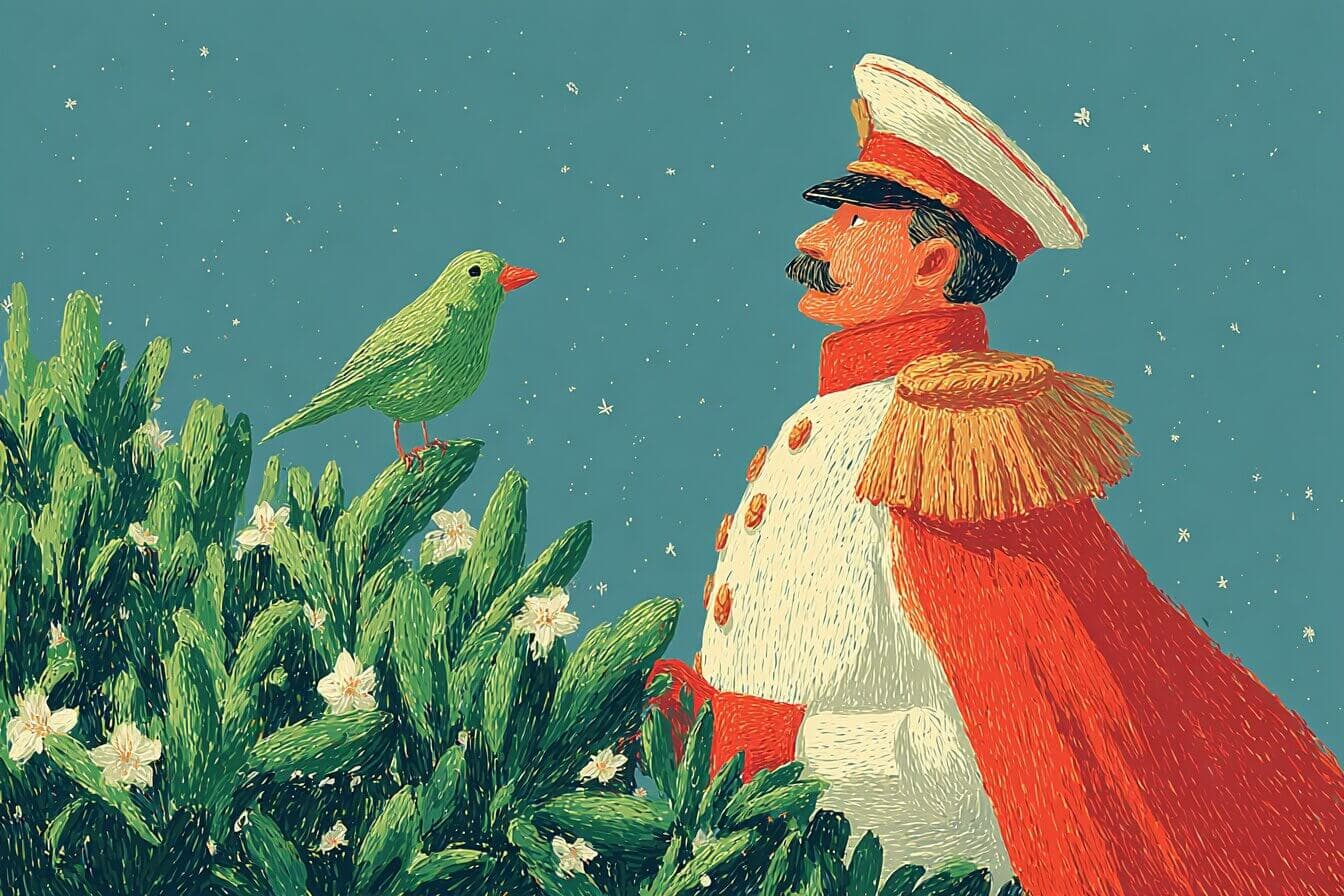
There is something about a bird singing at dusk that makes the whole world feel like it is slowing down on purpose, just for you. This classic tale follows Emperor Ming, who fills his palace with gold and gemstones yet cannot seem to fill the quiet space inside his own chest, until a plain brown nightingale lands on a branch and changes everything. It is one of those the emperor and the nightingale bedtime story retellings that leaves kids breathing a little deeper by the final line. If you would like to shape the setting or characters to match your child's mood tonight, you can create your own version with Sleepytale.
Why Nightingale Stories Work So Well at Bedtime
A nightingale's song is the kind of sound most children have never actually heard, and that is exactly what makes it so powerful in a story. It lives in the imagination. Kids picture their own version of the melody, something soft and far away and slightly magical, and that act of gentle imagining is one of the best ways to ease into sleep. A bedtime story about a nightingale taps into the same feeling as hearing a real bird outside an open window: the world is still going on, but it is peaceful, and you are safe enough to close your eyes.
There is also something reassuring about a story where the most valuable thing turns out to be something no one can put in a box. Children spend their days sorting, collecting, and competing, and a tale where freedom matters more than treasure gives them permission to let go of all that before bed. The slow rhythm of a bird returning each evening mirrors the rhythm of a bedtime routine itself, familiar, expected, and comforting every single time.
The Song of the Nightingale 6 min 6 sec
6 min 6 sec
In the grandest palace in all the land lived Emperor Ming, who owned more treasures than anyone could count. His gardens bloomed with every color you could name, his stables held horses white as fresh paper, and his robes shimmered with threads of gold so fine they caught light even in a dark room. But all of that glittering did not seem to reach the inside of him.
One afternoon, while he sat on his throne tapping his fingers against the armrest in a way that annoyed everyone but no one dared mention, his court jester cleared his throat.
"Your Majesty, have you heard about the bird?"
"What bird?"
"A little brown one. Lives out past the eastern wall. They say her song can mend a cracked heart like glue mends a teacup."
The emperor sat up straighter. He had never heard anyone compare a song to glue before, and it made him curious.
He sent his royal messengers out at once. They searched through meadows, crossed streams where the rocks were slippery with moss, and pushed through brambles that left thin scratches on their wrists. Finally, at the edge of the forest where the palace lanterns no longer reached, they found the nightingale. She was smaller than they expected, about the size of a fist, perched on a low branch and singing to the moon like the moon had asked her to.
When they explained that the emperor wanted to hear her, she tilted her head. "All right," she said. "I do not mind. I was nearly done here anyway."
The emperor heard her first note from across the throne room, and something shifted. It was not a dramatic shift. It was more like the feeling of taking off shoes you did not realize were too tight. The song moved through the high ceilings and curled into the corners where dust had gathered, and for a few minutes every person in the room forgot what they had been worrying about.
The emperor wanted that feeling to last. So he ordered a golden cage built, with a tiny door that latched with a clasp shaped like a leaf, and he asked the nightingale to stay.
She stayed. But within a week her feathers looked duller, and her song started to thin out around the edges the way paint thins when you add too much water. The emperor tried diamond seeds. He tried ruby berries arranged on a silver dish. He even had a servant fan her gently with a silk cloth, which only made her sneeze.
One evening, after a song so faint he had to lean forward to hear it, the nightingale spoke.
"I can only sing my real song when I am free. Out there, where I can visit the woodcutter's daughter who cries at night, or the old farmer who sits alone on his porch. My voice needs the open air the way your lungs need it."
The emperor looked at the golden cage. He looked at the little clasp shaped like a leaf. He reached over and unhooked it. The door swung open, and the nightingale did not rush out. She hopped to the edge, looked at him for a long moment, and then lifted into the night.
The palace was very quiet after that.
But the next morning, just as the sky turned the color of peach skin, the emperor walked into his garden and heard it. Faint, coming from somewhere past the wall, the nightingale's song threaded through the jasmine and the damp morning grass and found him standing there in his slippers with his robe half tied.
He laughed. It was the first time he had laughed in weeks, and it startled a gardener who was trimming roses nearby.
From that day, the emperor changed. He had small fountains built where birds could drink, shallow ones with rough stone edges so tiny feet could grip. He planted berry bushes along the garden paths, not in neat rows but scattered the way they would grow wild, because the nightingale seemed to prefer things that way.
He began inviting children from the village to the palace gardens. They would sit on the grass while he told them stories, and a servant would bring out sweet cakes and cups of cool milk. The emperor was not always a good storyteller. Sometimes he lost his place or forgot a character's name, and the children would correct him, and he did not mind at all.
The nightingale often appeared during these visits. She would land on a branch above the group, wait for a pause in the talking, and then sing. The children would go still. Even the ones who never sat still.
The emperor noticed something: her song sounded fuller here, richer, like it drew something from the listening. He could not explain it exactly, but he stopped trying to.
Years passed. The emperor grew older. He walked more slowly through his gardens and sometimes forgot which berry bush was which, but he always remembered to leave the gate open for travelers. People came from distant provinces just to sit among the fountains and listen for the nightingale. Some heard her, some did not. The emperor told those who did not hear her to come back tomorrow and try again, because she kept her own schedule and he had learned not to argue with it.
One winter, the emperor fell ill. The palace grew hushed, and servants whispered in corridors with worried faces. Snow piled on the windowsill of his bedroom, and the cold crept in despite the fire.
Then, in the middle of a long dark night, a sound.
The nightingale sat on the ledge outside his window, snow dusting her wings, and she sang. Not loud. Not dramatic. Just steady, the way a heartbeat is steady, each note arriving exactly when you needed it to. The emperor lay there with his eyes closed, and the song wrapped around him, not like a blanket exactly, more like the memory of every warm thing he had ever felt arriving all at once.
By morning, the fever had broken. The court physicians shook their heads and checked their notes, unable to account for it.
The emperor smiled. He did not explain.
After that, the nightingale came every evening at sunset. She would perch on the railing of his balcony, and they would watch the sky shift from gold to violet together. Sometimes she sang. Sometimes she did not, and that was fine too.
He ordered that no bird in his kingdom would ever be caged again. Every garden was to have at least one tree left unpruned, so birds could nest in their own way.
The nightingale's song became something people talked about in the same breath as hope and freedom, though nobody could quite describe what it sounded like. When children asked the emperor about his favorite treasure, he would smile and point toward the forest, where, if you listened carefully, you could just barely hear a small brown bird greeting the dawn.
The Quiet Lessons in This Nightingale Bedtime Story
This story carries a handful of ideas that settle gently into a child's mind right before sleep. When Emperor Ming opens the cage and lets the nightingale go, even though he wants the music for himself, children absorb the idea that real generosity sometimes means giving up something you love. His willingness to invite village children into his gardens and fumble through stories without embarrassment shows kids that being imperfect in front of others is not something to fear. And the nightingale's choice to return freely, night after night, teaches that trust built through kindness is stronger than any golden latch. These are exactly the kind of reassurances children need at bedtime: that letting go does not mean losing, that mistakes are allowed, and that the people who care about you will keep showing up.
Tips for Reading This Story
Give Emperor Ming a low, slightly formal voice that loosens up and gets warmer as the story goes on, especially once he starts telling bad stories to the village children. For the nightingale, try something light and unhurried, and when she says "I was nearly done here anyway," let a little playful dryness come through. Pause after the moment the emperor unlatches the cage and the nightingale looks at him before flying away; that silence is one of the most powerful beats in the story, and your child will feel it if you let it breathe.
Frequently Asked Questions
What age is this story best for?
Children ages 3 to 8 tend to connect with it most. Younger listeners enjoy the image of the tiny bird and the golden cage, while older kids pick up on the emperor's change of heart and the idea that the nightingale chooses to come back on her own terms. The simple dialogue and slow pacing keep it accessible even for toddlers winding down.
Is this story available as audio?
Yes. You can press play at the top of the story to listen along. The audio version brings out the contrast between the hushed palace scenes and the nightingale's song especially well, and the winter window scene, where the bird sings through the snow while the emperor rests, feels particularly vivid when you hear it read aloud with the right pacing.
Why does the nightingale's song stop working when she is caged?
The story suggests that her music draws its power from freedom and connection. When she can visit the woodcutter's daughter or the lonely farmer, her song carries real feeling. Locked in a golden cage with diamond seeds and ruby berries, she has comfort but no purpose, and the music fades the way any gift does when it cannot be shared. It is a gentle way to show children that the best things in life need room to move.
Create Your Own Version
Sleepytale lets you reshape this classic tale to fit your child's imagination perfectly. You could swap the palace for a houseboat on a quiet river, replace the nightingale with a singing fox, or change the emperor into a grandmother who collects seashells instead of gold. In just a few taps you will have a cozy, personalized story ready to read aloud or listen to together before lights out.
Looking for more bedtime story classics?

Once Upon A Time Stories
What happens when June opens a golden book with no title? One of the sweetest short once upon a time stories about a forest, a hedgehog, and a blank page.

Fairy Tales Written By Hans Christian Andersen
Anders discovers short fairy tales written by Hans Christian Andersen as his grandmother reads from a soft brown book by lamplight.

Bluebeard Fairy Tale
In this short bluebeard fairy tale, the forbidden room holds not horror but a music box and memories of the people Lord Corvus loved most.

Red Shoes Fairy Tale
What happens when Karen's magical red shoes refuse to stop dancing? Discover this short red shoes fairy tale tonight.

Twinkle Twinkle Little Star Bedtime Story
Lily watches a kind star and floats up to help deliver dreams in this short twinkle twinkle little star bedtime story. A warm, quiet tale for sleepy nights.
Through The Looking Glass Bedtime Story
Step into a calm, magical short through the looking glass bedtime story and drift toward sleep with gentle wonder. Enjoy a soothing retelling that feels cozy from start to finish.