
The Crow And The Pitcher Bedtime Story
By

Dennis Wang, Bedtime Story Expert
8 min 18 sec
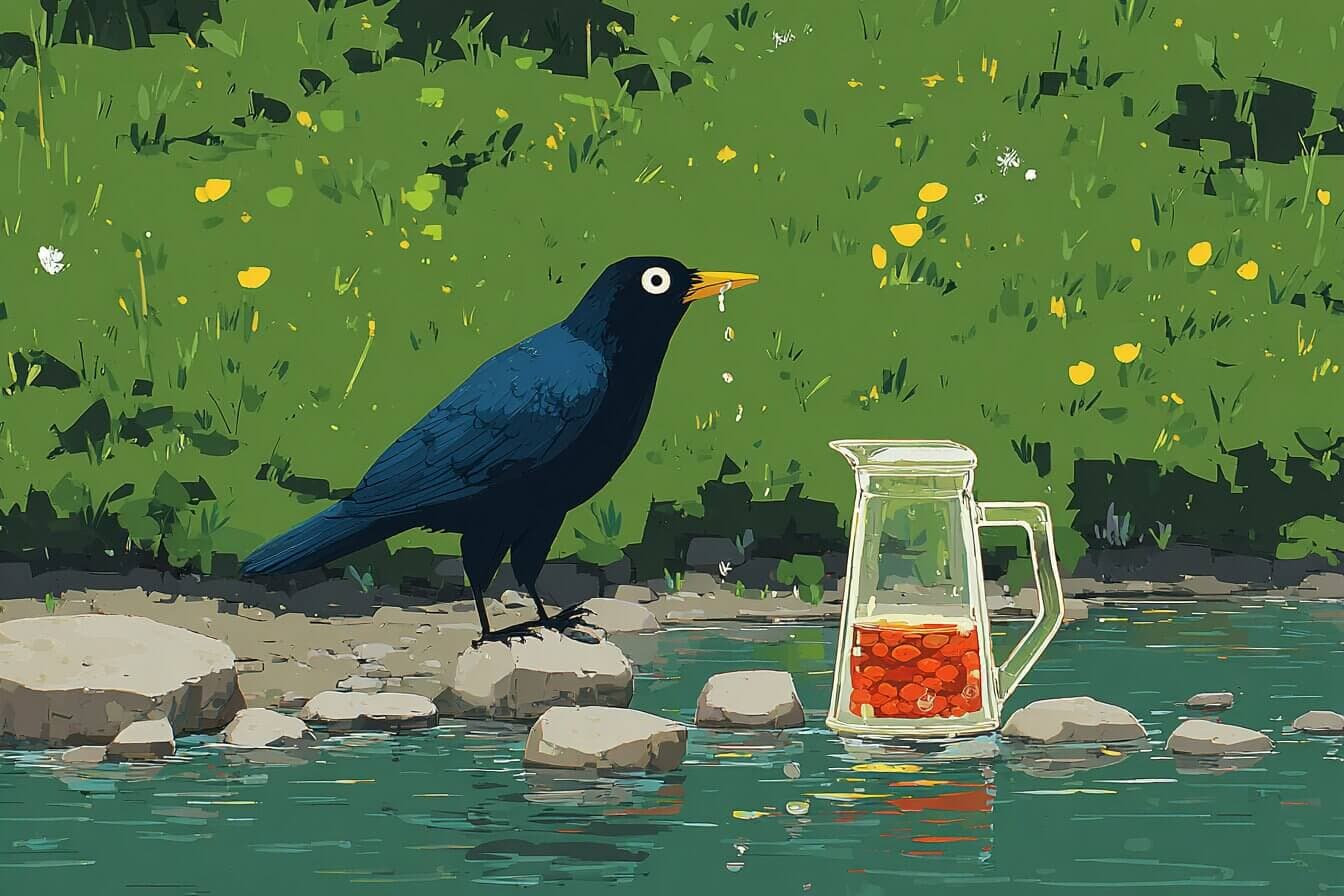
There is something about the sound of a small stone dropping into water that makes the whole body slow down. That quiet plink, and then the pause before the next one, carries a rhythm kids can practically fall asleep to. In this the crow and the pitcher bedtime story, a young crow named Clever Caw discovers a pitcher of water just out of reach and figures out, pebble by patient pebble, how to bring it closer. If you want to shape your own version with different animals, settings, or little details your child will love, Sleepytale makes it simple.
Why Crow and the Pitcher Stories Work So Well at Bedtime
The crow and the pitcher is one of the oldest problem-solving tales we tell children, and there is a reason it has lasted so long. The puzzle at its center is small and concrete: water sits too low, and the crow needs to raise it. There is no villain, no chase, no danger. Just a quiet thinker working through a challenge one step at a time. That gentle, repetitive action of dropping pebbles mirrors the kind of rhythm that helps young minds wind down.
A bedtime story about a crow solving a pitcher puzzle also gives children something reassuring to hold onto as they drift off. The message is not loud or dramatic. It simply says: you can figure things out by staying calm and trying something small. For a child lying in the dark wondering about tomorrow, that is a comforting thought to fall asleep with.
Clever Caw and the Pitcher Puzzle 8 min 18 sec
8 min 18 sec
In the sun-baked savanna, where the grass shimmered like something between gold and dust, lived Clever Caw, a young crow with feathers so black they caught blue in the light.
One hot afternoon, after chasing butterflies until his wings ached, Caw felt his throat go tight with thirst.
He flapped from acacia to acacia. Every puddle had vanished. Every stream had pulled itself underground. Even the leaves hung limp, holding nothing.
At last he spotted a clay pitcher someone had left beneath the big baobab, the one with the trunk that looked like it was holding its breath.
Caw swooped down and peered over the rim.
Water. A small shimmer of it, sitting far below.
He shoved his beak in as far as it would go. Not far enough. Not even close.
He tried tilting the pitcher, throwing his whole weight against it, but the thing was stubborn and heavy and did not care about his thirst one bit.
He kicked it once out of frustration. Dust puffed up and settled on his toes.
Caw hopped onto the rim and sat there, breathing hard. He thought about Grandpa Beak, who always said, "A problem is only a question wearing funny clothes."
It had never made sense before. It still did not entirely make sense. But it made him look around instead of giving up.
Scattered near the base of the pitcher lay hundreds of small pebbles, leftovers from some old game of knucklebones nobody had cleaned up.
Caw stared at them for a long moment.
Then he picked one up in his beak and dropped it into the pitcher.
Plink.
The water rose. Barely. The tiniest sliver of a difference, like a held breath finally released.
But it rose.
Caw grabbed another pebble. Then another. Then three more in quick succession because patience is easier once you know it is working.
Plink, plink, plink.
The water climbed slowly, like something shy deciding to trust him.
When it finally reached his beak, the first sip was so cool and so good that Caw closed his eyes and forgot about everything else for a full five seconds. The savanna, the heat, his sore wings. Just water and relief.
He flew up to the baobab branch, fluffed his feathers until he looked twice his size, and sang out to no one in particular: "Knowledge is a cup that refills itself."
A butterfly landed on his head. He let it stay.
But Caw remembered Grandpa Beak's second lesson, the one about sharing wisdom. So he glided back down and arranged pebbles on the ground in the shape of a cup, pointing toward the pitcher, so any thirsty creature passing by could figure out the trick.
A zebra foal came trotting over before the dust had settled, legs still wobbly and eyes wide.
"What is all this?" the foal asked.
Caw explained how each pebble nudged the water higher. The foal's ears twitched as he listened, and when Caw mentioned the word displacement, the foal repeated it three times under his breath like he was memorizing a spell.
Then he galloped off to tell the herd, almost tripping over his own hooves.
Next came a family of meerkats, all standing bolt upright and squeaking over one another.
Caw showed them with smaller pebbles so the littlest ones could watch the water rise faster.
They clapped their tiny paws. One of them tried to eat a pebble and had to be stopped.
They promised to remember.
By sunset, a loose circle of animals had gathered around the pitcher, and the savanna felt a fraction cooler. Maybe it was just the company.
Days passed, and the drought held on.
Caw flew farther than he ever had, scanning the cracked ground for anything wet.
Near a fence line he spotted a farmer's truck, its tailgate open, crates of shiny marbles glinting in the light.
He cocked his head. Marbles were heavier than pebbles.
He carried one to a glass jar half filled with rainwater that had collected from the dawn mist and dropped it in.
Clink.
Louder than plink. And the water jumped higher.
Caw let out a caw so sharp that two finches fell off a branch.
He flew back and forth, ferrying marbles until the jar brimmed over. His wings burned, but the sound kept him going, each clink a tiny bell ringing out across the dry grass.
The finches fluttered down, more curious than annoyed.
"Why does that one sing and the other just thuds?" asked the smaller finch, pointing her wing at a clay pebble and then a marble.
Caw did not entirely know. So they experimented together. Glass sang. Clay thudded. A bent bottle cap pinged and wobbled. A wooden bead made almost no sound at all, like it was embarrassed to be there.
The finches chirped a harmony over the clinks, and for a few strange minutes the savanna had its first water xylophone.
Word got around.
Animals brought bottle caps, buttons, bits of wire, anything they could find. The area around the baobab started to look like a junkyard crossed with a concert hall.
Even the farmer's daughter heard the commotion. She walked over, bare feet on the warm dirt, and stood watching with her mouth slightly open.
Instead of shooing Caw away, she filled a blue pail with clean water and set it in the middle of the circle. Then she sat down cross-legged and watched the crow teach a dung beetle about buoyancy.
That night, fireflies blinked in slow patterns while the animals hummed songs about clever birds and rising water.
Caw tucked his beak under his wing on the baobab branch, and for once his dreams were not about thirst. They were about sounds.
The next morning, a bright red watering can sat beneath the tree, painted with wobbly sunflowers.
A note in a child's handwriting said: "For the clever teacher."
Caw inspected it. Water sloshed inside, but a small rubber ball had gotten jammed in the spout. Nothing came out.
He tugged the ball. Suction held it fast. He tried pebbles, but the opening was too narrow.
He sat on the can's handle for a while, thinking. A ladybug crawled across his foot and he did not notice.
Then he spotted a long blade of elephant grass, stiff and thin. He poked it through the spout, nudging the ball, working the grass back and forth until the pressure shifted and the ball popped free with a sound like a small hiccup.
Water streamed into a waiting tortoise's open mouth.
"You have invented," the tortoise said, chewing the words slowly, "the first crow-powered water fountain."
Caw was not sure that was a real thing, but he liked the sound of it.
Later, he noticed the farmer's daughter reading by a window. She saw him watching and held up a page with a drawing of a man in a bathtub. She pointed at the picture, then at Caw, then at the pitcher, and grinned.
Caw did not know who Archimedes was. But he understood the grin.
Together, over the following days, they built a miniature science fair under the baobab. Twig boats that floated. Seed ships that sank. A wobbly seesaw that lifted a tiny bucket of water whenever a grasshopper jumped on the other end. The grasshopper seemed to enjoy this more than anyone.
Every creature who wandered by learned something, even if it was only that a beetle cannot steer a boat.
Caw started scratching notes into strips of bark, recording what he had found. How many pebbles raised one sip. How many marbles made a melody. How many friends it took to turn a dry afternoon into something worth remembering.
One evening, a sudden gust tore through the savanna and scattered his bark pages across the grass.
For a moment Caw panicked, wings half open.
Then he followed the trail and found something unexpected. Each animal who picked up a page read it, turned it over, and scratched their own discovery on the blank side. A meerkat drew a diagram. The zebra foal wrote "displacement" in big, crooked letters. The tortoise simply wrote "patience."
By moonrise, the journal had come back to him thicker and stranger and better than before.
Caw perched on top of the little stack, feathers ruffled by the cooling wind.
He did not say anything wise. He just looked up at the stars for a long time, listening to the savanna settle into sleep, the last fireflies dimming, the baobab creaking softly in the breeze.
Somewhere nearby, the pitcher still sat with its pebbles inside, and if you pressed your ear to the rim, you could hear the faintest echo of water, waiting.
The Quiet Lessons in This Crow and the Pitcher Bedtime Story
This story weaves together patience, resourcefulness, and generosity in ways that feel natural rather than instructional. When Caw kicks the pitcher out of frustration and then sits down to think instead of giving up, children absorb the idea that strong feelings do not have to be the end of trying. His decision to arrange pebbles on the ground so other animals can learn the trick shows kids that solving a problem for yourself is good, but passing the answer along is what makes it matter. The tortoise's slow gratitude and the meerkat who tries to eat a pebble add humor and warmth that make the lessons feel lived rather than taught. Before sleep, these small ideas settle in gently: stay calm, stay curious, and share what you figure out.
Tips for Reading This Story
Give Caw a slightly raspy, quick voice, and slow way down for the tortoise, letting each word land with deliberate weight. When the pebbles start dropping, tap your finger lightly on the book or bed frame for each "plink" and "clink," letting your child anticipate the rhythm. At the moment where the bark pages blow away in the wind, pause and ask your child what they think each animal might have written on the back.
Frequently Asked Questions
What age is this story best for?
This story works well for children ages 3 to 7. Younger listeners will enjoy the repetitive pebble-dropping sounds and the parade of animal visitors, while older kids will latch onto the science fair experiments and the idea of displacement that the zebra foal tries so hard to remember.
Is this story available as audio?
Yes. You can press play at the top of the story to listen. The audio version brings out the layered sounds beautifully, from the lonely plinks of the first pebbles to the fuller clinks of the marbles, and Caw's raspy excitement when he realizes his idea is working makes the scene come alive in a way that pairs perfectly with closing eyes.
Why does dropping pebbles in water make the water rise?
Each pebble takes up space inside the pitcher, and since water cannot squeeze through solid stone, it has to move upward. Caw figures this out by accident at first, but by the time he is teaching the zebra foal and the meerkats, he understands it well enough to explain. It is a real principle called displacement, and your child can try it at home with a glass of water and a handful of small stones.
Create Your Own Version
Sleepytale lets you build a personalized crow and pitcher tale in just a few taps. Swap the savanna for a backyard garden, trade the pebbles for acorns or seashells, or replace the zebra foal and meerkats with your child's favorite animals. You can adjust the tone to be sillier or softer, and have a cozy new version ready to read aloud before the lights go out.
Looking for more bedtime story classics?
Once Upon A Time Stories
What happens when June opens a golden book with no title? One of the sweetest short once upon a time stories about a forest, a hedgehog, and a blank page.

Fairy Tales Written By Hans Christian Andersen
Anders discovers short fairy tales written by Hans Christian Andersen as his grandmother reads from a soft brown book by lamplight.

Bluebeard Fairy Tale
In this short bluebeard fairy tale, the forbidden room holds not horror but a music box and memories of the people Lord Corvus loved most.

Red Shoes Fairy Tale
What happens when Karen's magical red shoes refuse to stop dancing? Discover this short red shoes fairy tale tonight.
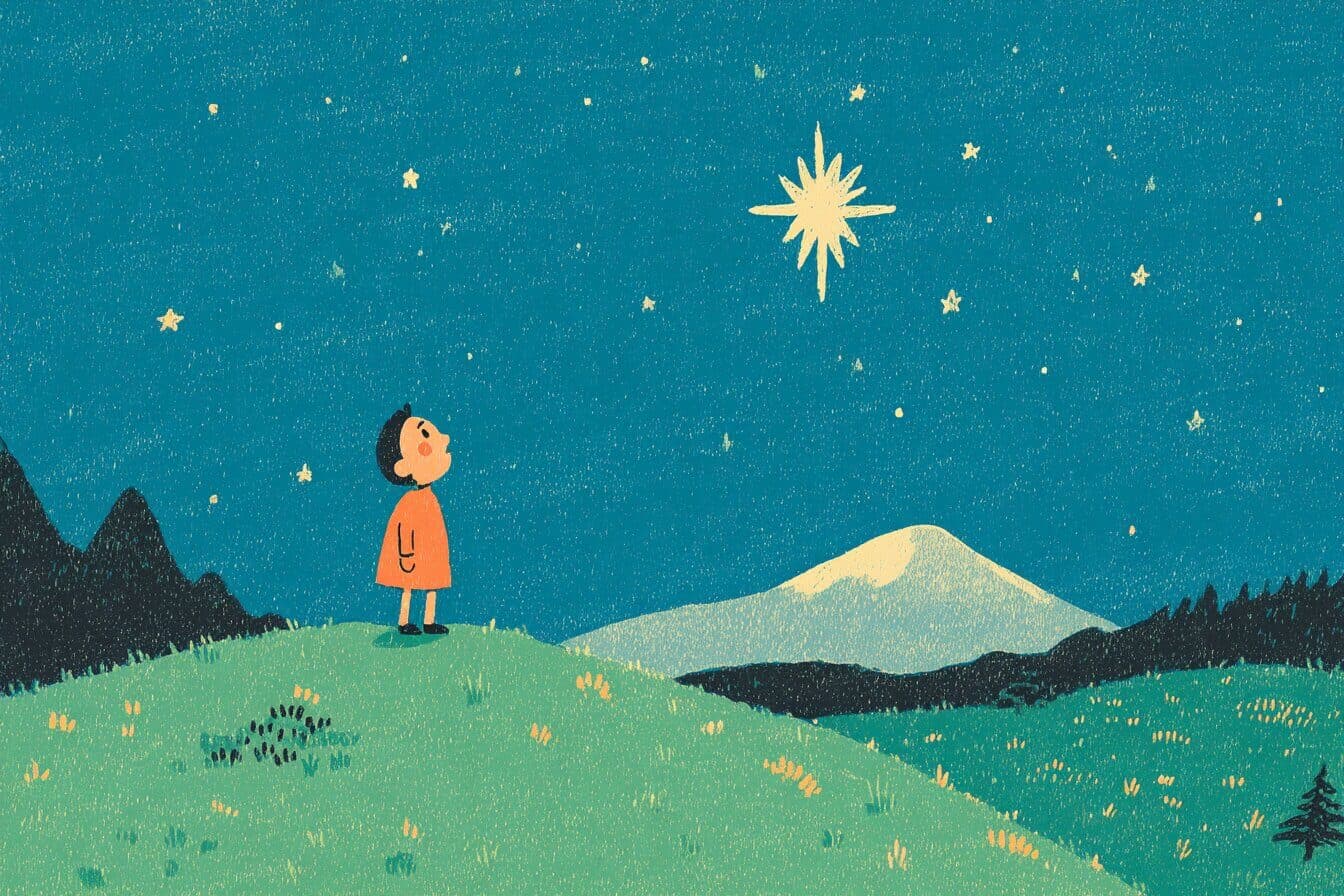
Twinkle Twinkle Little Star Bedtime Story
Lily watches a kind star and floats up to help deliver dreams in this short twinkle twinkle little star bedtime story. A warm, quiet tale for sleepy nights.
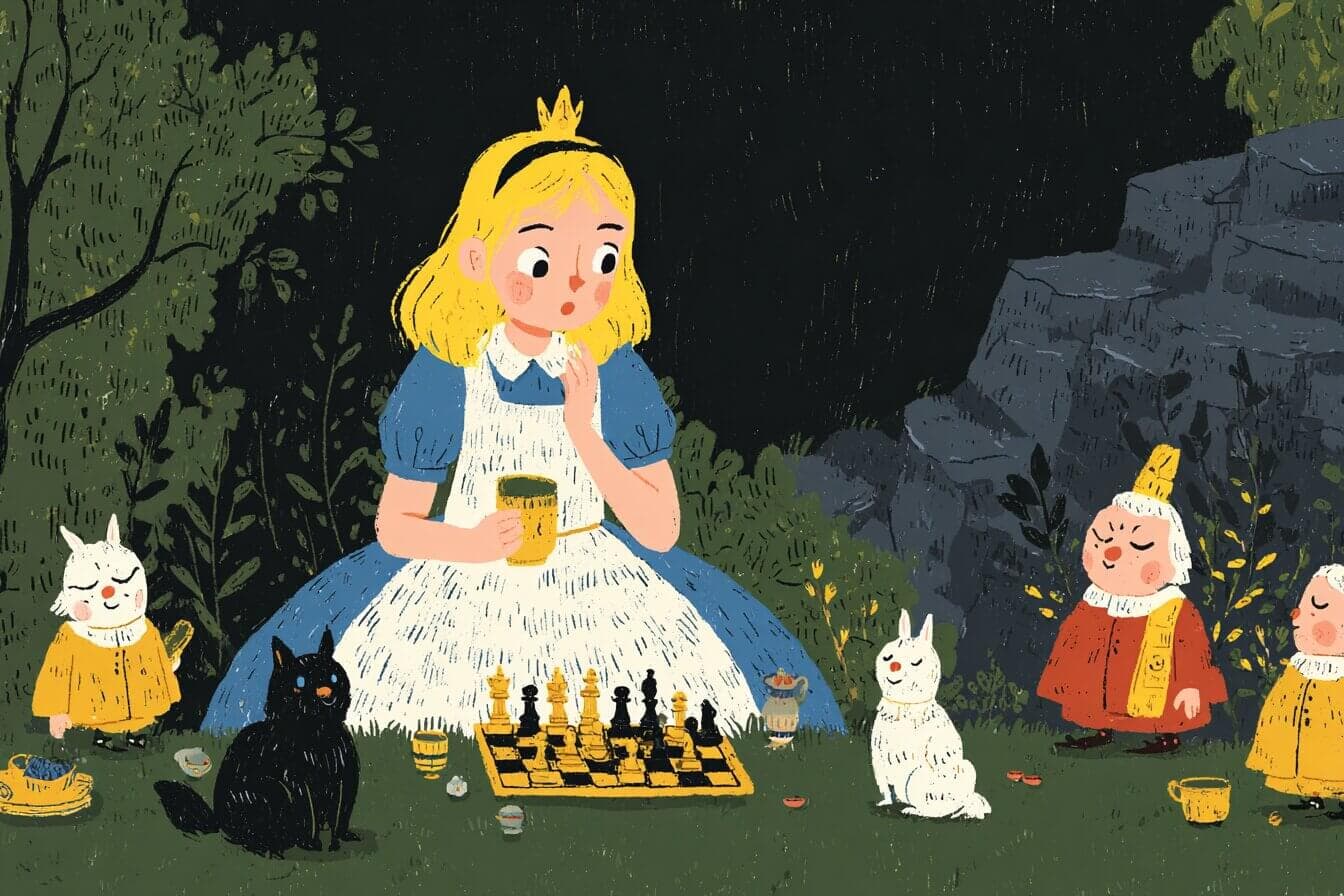
Through The Looking Glass Bedtime Story
Step into a calm, magical short through the looking glass bedtime story and drift toward sleep with gentle wonder. Enjoy a soothing retelling that feels cozy from start to finish.