
The Crane Wife Bedtime Story
By

Dennis Wang, Bedtime Story Expert
7 min 24 sec
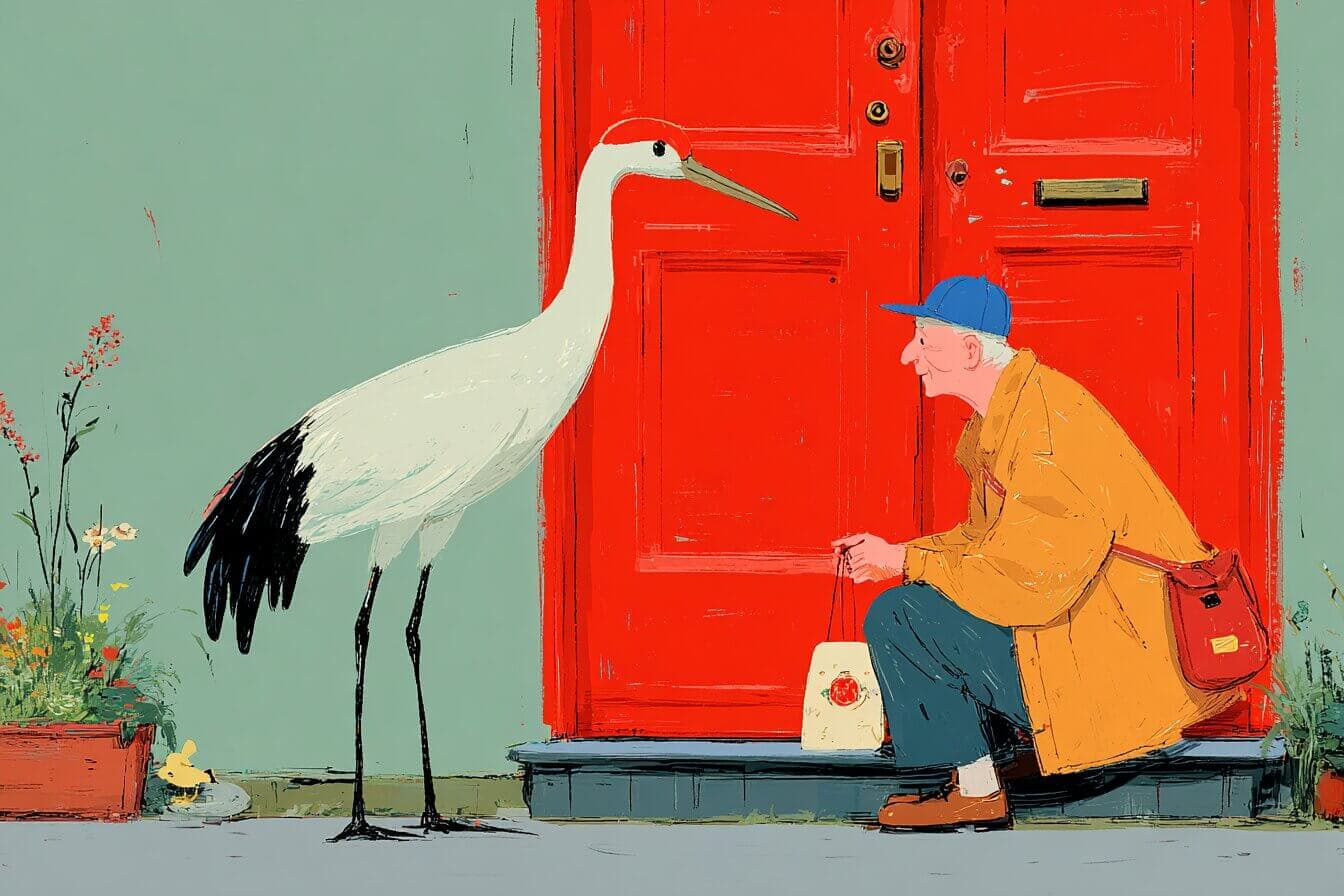
There is something about a folktale told in a low voice at the edge of sleep, one that carries the rustle of feathers and the scent of tea, that settles a child's whole body. This gentle retelling of the crane wife bedtime story follows Yuto, a kind reed gatherer who rescues an injured crane and later welcomes a mysterious weaver whose glowing cloth hides a secret. The story drifts from a frozen lake to a warm room with a small pine loom, ending on a note of gratitude that lingers like moonlight on water. If you'd like a version shaped to your family's tastes, you can create your own with Sleepytale.
Why Crane Wife Stories Work So Well at Bedtime
The crane wife tale belongs to a family of stories that trade in quietness rather than spectacle. There are no battles or chases. Instead, the tension comes from a single closed door and the question of what is behind it. That kind of suspense is gentle enough for bedtime because a child can hold it without feeling alarmed, and the resolution, a farewell that is sad but not frightening, leaves room for tenderness rather than worry.
A bedtime story about a crane also carries built-in imagery that soothes: the slow glide of wings, still water, snowfall, the rhythmic click of a loom. These are sounds and pictures that slow the breath. Children processing big feelings about love, loss, or gratitude find a safe shape for those emotions in a story like this, one where kindness is both the beginning and the ending, and no one is punished for caring too much.
The Crane Weaver's Gift 7 min 24 sec
7 min 24 sec
Long ago, beside a silver lake where lotus flowers leaned over their own reflections, there lived a man named Yuto.
He gathered reeds for baskets and sang to the wind, though nobody in the village could say exactly what the songs were about.
One winter dusk he found a red-crowned crane tangled in a hunter's snare.
Its wing hung at a wrong angle, like a paper fan someone had stepped on.
Yuto knelt in the snow. He spoke the way you'd speak to a child woken by thunder, low and even, nothing sudden. He loosened the rope, scooped the bird against his chest, and carried it home. The crane's heartbeat rattled against his ribs the whole walk.
He warmed water, tore a clean strip of cloth, and wrapped the wing. He fed the bird cooked rice, grain by grain, from the edge of a wooden spoon.
All night he sat beside it, humming whatever came to mind. By the time frost on the window had melted into morning, the crane stood, flapped once, hard enough to scatter ash from the fire pit, and lifted through the open door. A white shape against a pale sky, then nothing.
Yuto watched until his neck ached.
Then he swept the porch and brewed millet tea and thought no more of it.
That evening a knock came, quick and light, like acorns dropping on a step.
A young woman stood in the twilight. Her hair fell past her waist, and her eyes held a brightness Yuto could not quite place, the way certain streams catch light even under clouds.
She bowed and asked for shelter.
Yuto offered tea and a sweet potato he'd been saving.
She said her name was Tsuru, which means crane.
He did not think anything of it. It was a common enough name.
She asked to stay the winter and promised to weave in return. Yuto gave her the back room with paper screens and a small loom made of pine. The loom was old; one pedal squeaked. She did not seem to mind.
Each dawn she slid the door shut.
Each dusk she emerged carrying cloth that shimmered the way sunrise looks on fresh snow, if you could somehow fold that light and hold it in your hands.
Merchants came. They stared. They paid silver for a single sleeve's worth.
Yuto bought rice, tea, and a quilt stuffed with duck feathers. For the first time in years, he slept warm.
He never peeked while she worked. He thought about it, sure. He would stand near the door sometimes and hear the steady click, click, click of the shuttle, and curiosity would tug at him like a fish on a line. But he'd walk away.
Months passed. Snow melted.
Cherry petals drifted across the lake, collecting in the gaps between lily pads.
Tsuru grew quieter. She ate less. Her wrists looked thin.
One market day, a noble lord held the cloth up to the sun and offered enough gold to buy a mountain.
Yuto walked home fast, heart thumping.
He wanted to surprise her. He carried bundles of indigo powder and saffron thread, gifts so she could weave without wearing herself out, so the cloth could keep feeding them both. He wasn't thinking about the rule. He was thinking about her thin wrists.
He slid the back door open.
Inside, a white crane bent over the loom, beak clicking the shuttle forward, wings spread to guide threads that glowed like early light. Feathers lay scattered on the floor, dozens of them, plucked from her own body. Some still drifted in the air.
Yuto dropped the bundles. Indigo powder puffed across the floorboards.
The crane lifted her head. Her eyes, Tsuru's eyes, filled with something too large for the room.
A wind came from nowhere.
Papers flew off the walls. The loom cracked down its center with a sound like a branch breaking in ice. And then Tsuru stood in human form, tears running down her cheeks, feathers still caught in her hair.
She told him. She was the crane he'd saved, come to repay kindness with beauty, but the law of her kind forbade any human seeing her true shape. Now that he had, she must go.
Yuto knelt on the indigo-stained floor and asked her to stay. He said he would close his eyes forever if that was what it took.
Tsuru touched his face. Her fingers trembled.
"Love must never bind with chains," she said. She said it simply, the way someone states the weather.
She stepped outside.
White feathers burst from her shoulders, her arms, her hands. A crane lifted into the sky, circled once above the thatched roof, and flew toward the place where the sun was just beginning to rise.
Yuto ran to the shore. He called her name until his voice gave out and became part of the wind blowing across the water.
He waited every dawn beside the lake after that, basket empty, song unfinished.
Seasons turned. Lotus seeds sank and became roots locked beneath the ice.
One spring morning, a single white feather floated on the surface. Tied to its quill was a strand of that glowing cloth, no longer than his hand.
Yuto pressed it to his chest and felt warmth spread through him, steady and calm, the way a banked fire heats a room long after the flame is out. He understood then. Love can visit like a migrating bird, teach wonder, and continue its journey. Trying to cage it only breaks the thing you love.
He folded the cloth into a small square and hung it above the doorway.
From that day forward he wove baskets with patterns of feathers and waves and taught village children to do the same. He never explained what the patterns meant. The children figured it out, or they didn't, and either way the baskets were beautiful.
Travelers bought them and felt a calm they couldn't name.
At night Yuto sang to the lake, and sometimes, when the moon sat low on the water, a distant crane called back. He never tried to follow the sound or trap it. He just listened, one hand resting on the doorframe where the cloth still glowed.
Years later, a girl with long dark hair and bright, unplaceable eyes arrived at his door. She asked to learn the weaving songs.
Yuto set a cup of millet tea in front of her and began.
Together they dyed threads with cherry bark and maple leaves, making cloth that carried something of Tsuru's gift across many lands. The girl hummed while she worked, a melody Yuto recognized but could not name, and he did not ask where she'd learned it.
The Quiet Lessons in This Crane Wife Bedtime Story
This story holds several feelings children often wrestle with, packed inside a tale gentle enough for the pillow. When Yuto wraps the crane's broken wing with careful hands, children absorb the idea that noticing someone's pain and acting on it matters more than grand gestures. His later struggle at the closed door, wanting to look but choosing to walk away, gives kids a real picture of what respect and patience look like when they're difficult. And when Tsuru leaves despite their love, the sadness is honest but not overwhelming; it shows that some goodbyes carry gratitude rather than anger, which is a reassuring thought for a child settling into sleep and sorting out the big, tangled feelings of their own day.
Tips for Reading This Story
Give Yuto a warm, unhurried voice, as if he's someone who never raises it, and let Tsuru's words come out a little quieter and more precise, especially her line about love and chains. When you reach the moment Yuto slides open the back door and sees the crane at the loom, slow way down; pause after "feathers lay scattered on the floor" and let the image sit in silence for a beat. At the very end, when the distant crane calls back across the lake, try making the softest, highest sound you can manage, then let the room go still before you close the story.
Frequently Asked Questions
What age is this story best for?
This retelling works well for children ages 4 through 9. Younger listeners connect with the clear, caring actions, Yuto warming water, wrapping the wing, feeding rice grain by grain, while older children can sit with the bittersweet farewell and begin to understand why Tsuru had to leave. The pacing is slow enough for a drowsy four-year-old but the emotional layers give an eight-year-old something to think about.
Is this story available as audio?
Yes. You can press play at the top of the story to listen. The audio version brings out details that reward the ear, like the rhythmic click of the loom shuttle, the crack of the pine loom splitting, and the quiet moment when Tsuru speaks her last line. Hearing those scenes read aloud gives the tale a hush that feels almost musical.
Why does Tsuru have to leave when Yuto sees her true form?
In many versions of this Japanese folktale, the crane's magic depends on secrecy. Once her true shape is witnessed, the bond between the human and spirit world breaks. In this retelling, it also reflects a deeper idea: Tsuru gave her gift freely, but holding on to someone by uncovering what they've asked you not to see changes the nature of the relationship. It is a gentle way to talk with children about trust and boundaries.
Create Your Own Version
Sleepytale lets you reshape this classic folktale into a bedtime story that fits your child perfectly. You could move the setting to a seaside cliff or a mountain cabin, swap the gift of woven cloth for a hand-knitted scarf, or add a gentle companion like a tabby cat who keeps Yuto company while he waits by the lake. In a few taps you'll have a calm, personal retelling ready to read or listen to at lights out.
Looking for more bedtime story classics?

Once Upon A Time Stories
What happens when June opens a golden book with no title? One of the sweetest short once upon a time stories about a forest, a hedgehog, and a blank page.

Fairy Tales Written By Hans Christian Andersen
Anders discovers short fairy tales written by Hans Christian Andersen as his grandmother reads from a soft brown book by lamplight.

Bluebeard Fairy Tale
In this short bluebeard fairy tale, the forbidden room holds not horror but a music box and memories of the people Lord Corvus loved most.

Red Shoes Fairy Tale
What happens when Karen's magical red shoes refuse to stop dancing? Discover this short red shoes fairy tale tonight.
Twinkle Twinkle Little Star Bedtime Story
Lily watches a kind star and floats up to help deliver dreams in this short twinkle twinkle little star bedtime story. A warm, quiet tale for sleepy nights.
Through The Looking Glass Bedtime Story
Step into a calm, magical short through the looking glass bedtime story and drift toward sleep with gentle wonder. Enjoy a soothing retelling that feels cozy from start to finish.