
The Boy Who Cried Wolf Bedtime Story
By

Dennis Wang, Bedtime Story Expert
9 min 11 sec
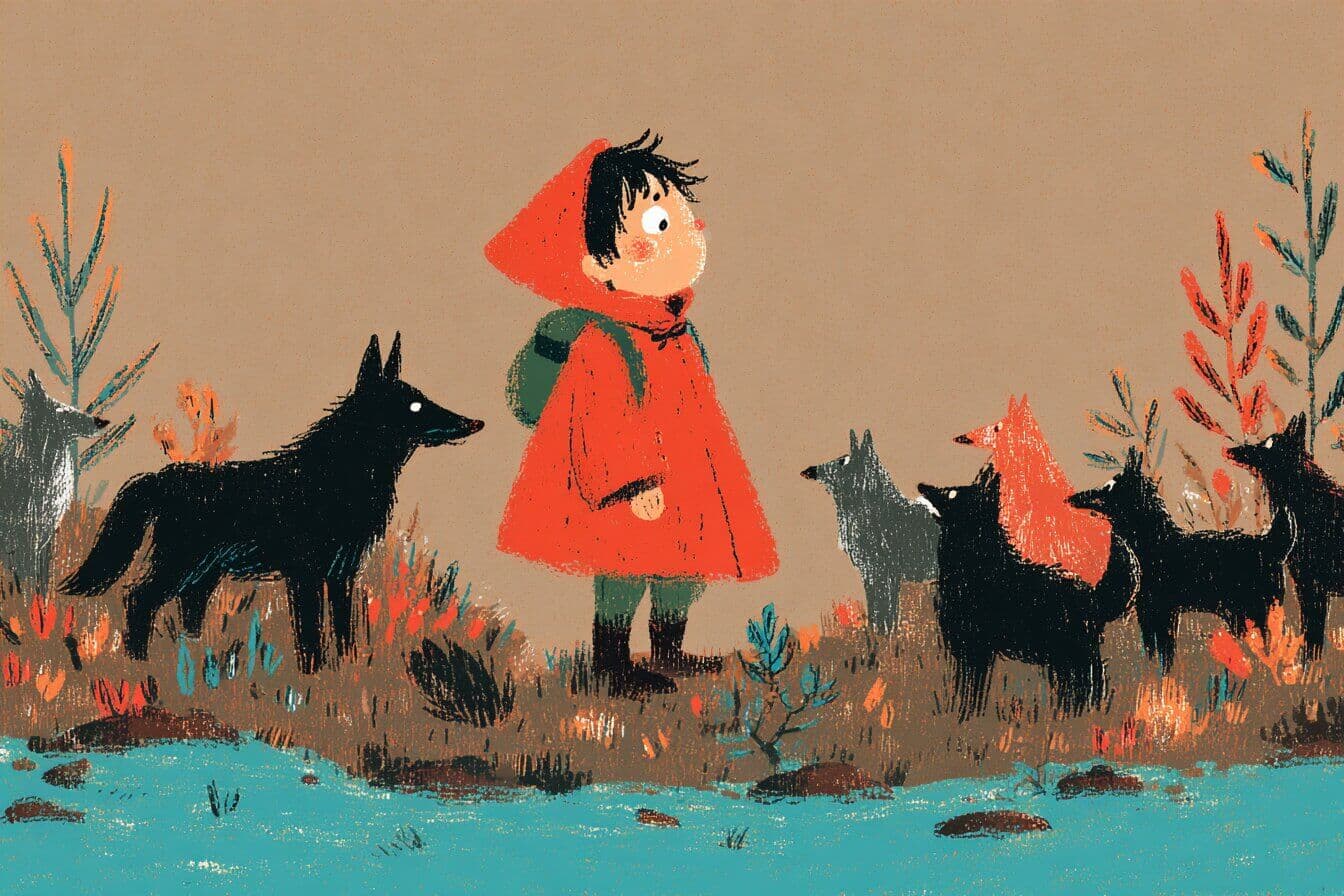
There is something about a hilltop at dusk, with sheep settling into the grass and a breeze that smells faintly of wet stone, that makes children go quiet and lean in. This retelling follows Milo, a restless young shepherd whose pranks slowly cost him the trust of his village, until one stormy evening forces him to earn it back. It is a perfect the boy who cried wolf bedtime story for winding down, because the tension melts steadily into relief and honest courage. If you would like to shape a gentler or sillier version starring your own child, you can make one in minutes with Sleepytale.
Why Wolf Stories Work So Well at Bedtime
Wolves live right at the edge of what children find thrilling and what they find scary, which is exactly where the best bedtime stories operate. A wolf prowling through pines gives kids a small, safe dose of tension they can process while tucked under a blanket, knowing the story will guide them somewhere warm by the end. That controlled spark of danger followed by calm resolution mirrors the way a child's own worries settle when a parent is close.
A bedtime story about a wolf also lets children practice courage from the safest place in the world. They get to picture themselves standing firm, making noise, protecting something small, and then breathing out as the threat fades into the trees. That rhythm of bravery followed by peace is one reason wolf tales have been told at the edges of firelight for centuries, and why they still work beautifully right before sleep.
The Boy Who Cried Wolf and Learned to Listen 9 min 11 sec
9 min 11 sec
Once upon a time, in a green valley where the clouds drifted so low they looked like stray sheep, there lived a shepherd boy named Milo who watched over a flock of snowy ewes and their bouncy lambs.
Every morning he set off with a wooden staff, a tin lunch pail that rattled when he walked, and a silver whistle that could be heard all the way to the village square.
The villagers trusted Milo because he always returned the sheep safe and sound.
But Milo grew bored while the flock grazed.
To fill the hours he practiced echoing sounds on his whistle, copying the creak of the gate, the church bell's wobble, even the mayor's sneeze, which came out more like a goose honking than anything human.
One afternoon he wondered what would happen if he pretended danger had arrived.
He climbed a boulder, filled his lungs, and shouted: "Wolf! Wolf! A big gray wolf is chasing the lambs!"
Farmers dropped hoes. Bakers left dough mid-knead. Children raced up the hill with sticks and kitchen pans.
When they arrived, huffing and red-faced, they found only Milo giggling on his rock.
"Just practice," he said, twirling his staff like a baton.
The villagers sighed. They warned him not to joke about danger. Then they trudged back down the path, and Milo watched their backs until they disappeared behind the hedgerow.
He felt important for a moment. Then the valley went quiet again, and the feeling leaked away like water through cupped hands.
Three days later boredom returned, heavier this time.
He climbed the boulder once more and cried, "Wolf! This time it's real!"
Again the village mobilized.
Again they found nothing.
Their frowns lasted longer. The baker muttered that next time they might not bother. A girl Milo's age just shook her head and walked away without saying anything at all, which stung worse than the muttering.
Guilt sat in his stomach like a cold stone, yet the thrill of all those faces turning toward him still flickered. He promised himself he would never trick them again. But promises made only to yourself are slippery things, and he knew it even as he made it.
The next week clouds piled high like gray wool. The air smelled of rain, and beside the stream Milo noticed fresh paw prints, wide ones, bigger than any dog he knew. He crouched and studied them. Master Tanner once showed him how wolf tracks have two front toes that press ahead of the others, almost like a pair of pointing fingers. These matched.
A wolf had passed through. Recently.
Nervous but determined, Milo hurried to the village square to tell someone. He got as far as the baker's doorstep before he overheard farmers talking inside.
"If that boy cries wolf again, let the wolf have him."
His cheeks burned.
He walked back up the hill without a word and sat beside his flock, staff across his knees. He would guard them alone.
Hours passed. The clouds thickened until the valley looked like the inside of a closed fist. Thunder grumbled. A cold wind carried a sharp, musky smell, something between wet dog and old leaves but stronger than either. Milo's fingers tightened on the staff.
From the shadowed pines stepped a lean gray wolf. Its amber eyes caught Milo's face and held it.
"Wolf!" His voice cracked on the word. "Please come! I'm not joking!"
No one answered. The wolf lowered its head and crept forward, belly close to the grass.
Milo backed toward the flock. His hands were shaking badly enough that the staff tapped against his boot.
Think. Master Tanner once said wolves dislike loud noises and fire.
He snatched dry branches from under a ledge, struck flint against his belt buckle, and after three tries that felt like thirty, sparked a small flame. He waved the burning branch in wide arcs and blew his whistle in hard, short blasts that split the air.
The wolf paused. Its ears flattened.
But hunger kept it there.
Then the lead ewe, old Brigid with the chipped horn, stomped her hoof and stepped in front of the lambs. She stared the wolf down with eyes that did not blink.
Something about her stubbornness cracked something loose in Milo. He beat his staff against the tin pail, and the clatter rang across the valley like a broken bell. He shouted everything he knew about wolves: that they fear groups, that they retreat when prey stands firm, that they hate unfamiliar sounds. He yelled about pack hierarchy and territory size and pup-rearing habits until his throat felt scraped raw. Half of it probably came out wrong. He did not care.
The wolf circled once, ears swiveling, confused by this noisy boy who would not run.
Then, from the valley below, answering shouts.
The villagers had heard the whistle and the metallic banging. It sounded nothing like the earlier pranks. They came up the hill with torches and drums, forming a rough line behind Milo.
The wolf looked at the fire, the noise, the wall of people.
It turned and slipped back into the dark pines without a sound, the way a candle flame goes out when you close a window.
Milo sank to his knees. Rain and tears mixed on his face, and he could not tell which was which.
The baker knelt beside him and said, quietly, "Truth may be quiet, Milo. But it carries farther than any joke."
Milo nodded. He could not speak yet, so he just nodded again.
The villagers helped herd the sheep down to the safety of the barn. The storm passed, and the valley came out the other side washed clean, smelling of grass and soaked earth.
The next morning Milo stood before the village and apologized. Not a grand speech. He looked at his boots for most of it. But the words were honest, and honest words have a weight people can feel even when the delivery is shaky.
He organized a wildlife watch. He taught the children to identify tracks, scat, and tufts of fur snagged on brambles. He showed them how to build safe campfires and how to make noise without panic. He learned that the little girl who had shaken her head at him, her name was Cora, and she turned out to be the best tracker of the group, better than Milo himself.
Over time, Milo became the valley's first young ranger, guiding hikers, guarding flocks, and sharing facts about every creature that roamed the hills.
One evening, while sketching wolf tracks in his notebook by lantern light, Cora asked him if wolves were bad.
Milo set his pencil down. "They're wild," he said. "Not good, not evil. Just hungry, and shy, mostly." He told her how wolves keep deer herds healthy, how their abandoned dens become homes for foxes, how their howls carry messages across miles of empty ridge.
Cora listened, chin on her knees.
"I'll always tell the truth," she said.
"Good start," said Milo.
Years later, when his beard grew gray and his staff had been recarved twice, travelers still sought the shepherd ranger who once cried wolf and then learned to listen to the land.
On clear nights, when the moon turned the grass silver, Milo would climb the old boulder. Not to shout. To howl, softly, joining the distant wolves in a sound that spoke of balance and respect and the quiet power of meaning what you say.
And the villagers, rather than rushing up the hill, would smile at the sound, knowing their flocks were safe, their children wiser, and their valley watched over by a boy who had learned that listening is braver than shouting.
The Quiet Lessons in This Wolf Bedtime Story
This story threads together honesty, courage, and the slow work of rebuilding trust after you have broken it. When Milo hears the villagers say they will not come again, children absorb the sting of consequences without being lectured about it. When he stands his ground alone, shaking and yelling half-remembered facts, kids see that bravery does not require feeling brave; it only requires not running. And when old Brigid the ewe steps forward to face the wolf, the story slips in a quiet idea about protecting others even when you are afraid. These are exactly the kinds of feelings that settle well at bedtime, because a child can close their eyes knowing that mistakes do not have to be permanent and that tomorrow is a good day to be a little more honest.
Tips for Reading This Story
Give Milo a slightly breathless, excited voice during the prank scenes, and let it crack a little when he shouts "Wolf!" for real during the storm. When old Brigid stomps her hoof in front of the lambs, pause for a beat and let your child react before you move on, because that moment of an old ewe staring down a wolf tends to get a grin. During the final howl on the boulder, drop your voice low and slow, almost to a whisper, and let the last line about listening linger in the quiet of the room.
Frequently Asked Questions
What age is this story best for?
Children ages 4 to 8 tend to connect with it most. Younger listeners enjoy the drama of Milo banging his tin pail and Brigid stomping her hoof, while older kids pick up on the harder moment when Milo overhears the villagers say they will not come, and they understand why rebuilding trust takes time.
Is this story available as audio?
Yes. Press play at the top of the story to listen. The audio version brings the storm scene to life, with the whistle blasts and tin-pail clanging landing differently when you hear them rather than read them. Milo's cracking voice during the real wolf encounter and the slow, quiet howl at the end also carry a warmth that works especially well for drifting off.
Does this version change the original Aesop's fable?
It keeps the core lesson about honesty but adds a hopeful second half. Instead of ending with punishment, Milo earns trust back by sharing what he knows and organizing the wildlife watch. That extension gives children a path forward, showing that one mistake does not define you if you do the patient work of making it right.
Create Your Own Version
Sleepytale lets you reshape this classic into a bedtime tale that fits your child perfectly. You can swap the valley for a seaside cliff, trade Milo's whistle for a small drum, change the wolf to a sneaky fox, or turn the shepherd into a careful older sister guarding a flock of stubborn goats. In just a few taps you will have a calm, personalized story ready to read or play aloud tonight.
Looking for more bedtime story classics?

Once Upon A Time Stories
What happens when June opens a golden book with no title? One of the sweetest short once upon a time stories about a forest, a hedgehog, and a blank page.

Fairy Tales Written By Hans Christian Andersen
Anders discovers short fairy tales written by Hans Christian Andersen as his grandmother reads from a soft brown book by lamplight.

Bluebeard Fairy Tale
In this short bluebeard fairy tale, the forbidden room holds not horror but a music box and memories of the people Lord Corvus loved most.

Red Shoes Fairy Tale
What happens when Karen's magical red shoes refuse to stop dancing? Discover this short red shoes fairy tale tonight.
Twinkle Twinkle Little Star Bedtime Story
Lily watches a kind star and floats up to help deliver dreams in this short twinkle twinkle little star bedtime story. A warm, quiet tale for sleepy nights.
Through The Looking Glass Bedtime Story
Step into a calm, magical short through the looking glass bedtime story and drift toward sleep with gentle wonder. Enjoy a soothing retelling that feels cozy from start to finish.