
Snail Bedtime Stories
By

Dennis Wang, Bedtime Story Expert
6 min 54 sec
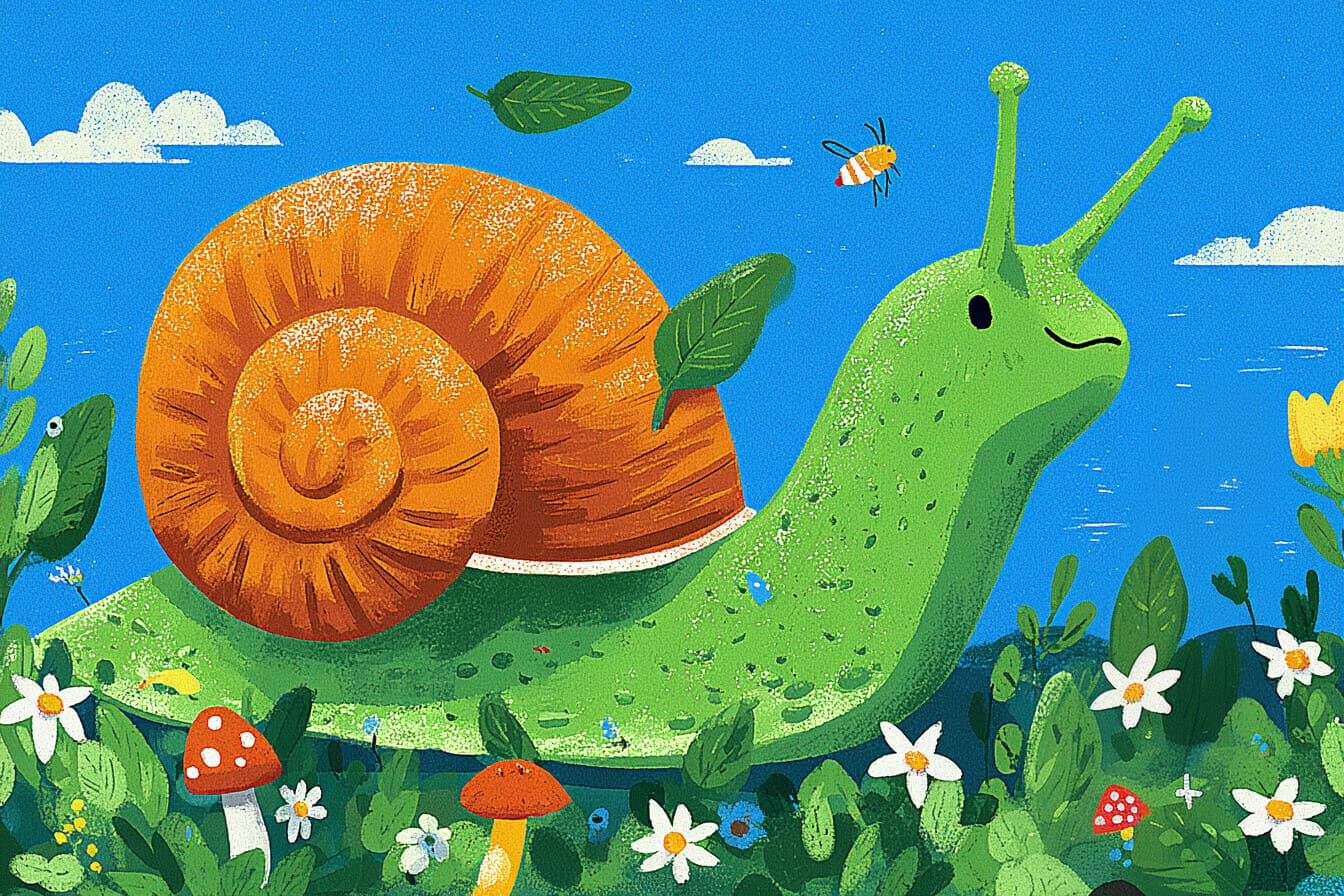
There is something deeply soothing about the pace of a snail, the way it asks nothing of you except to slow down and look more closely at the world. In this cozy story, a snail named Simon worries about arriving last to a garden party but discovers that moving slowly means noticing things no one else does. It is one of those snail bedtime stories that turns a small anxiety into quiet comfort, one mossy stone and one shared lettuce sandwich at a time. If your child would love a version with their own favorite details woven in, you can create one with Sleepytale.
Why Snail Stories Work So Well at Bedtime
Snails move at a pace that mirrors exactly what a child's body needs to do before sleep: ease down, breathe slowly, and let the rushing world fade into background noise. A bedtime story about a snail naturally resists the kind of high energy plotting that winds kids up. Instead it invites gentle observation, dew on a leaf, the quiet hum of a garden at dusk, a path measured in inches rather than miles.
There is also something reassuring about a character who is unapologetically slow. Children spend so much of their day being told to hurry, to keep up, to finish faster. A snail story at bedtime tells them the opposite: you have done enough today. The world will wait. That message settles into a child's chest the same way a warm blanket does, and it makes the transition to sleep feel safe rather than sudden.
Simon the Snail's Superslow Spectacular 6 min 54 sec
6 min 54 sec
Simon the snail woke up early on the morning of the garden party. He stretched his one slimy foot, blinked at the world, and practiced his brightest smile in a dewdrop hanging from a clover stem. The dewdrop wobbled. The smile was lopsided. Good enough.
He had received a leaf-printed invitation that read, "Grand Garden Gathering at Sun High, bring a tale to share." Simon loved stories almost as much as he loved lettuce, so he polished his shell until it caught the light like an emerald someone had dropped in the grass, and he set off at his usual pace. Which is to say, hardly moving at all.
A beetle jogged past. Then a spider on a silk unicycle, wobbling but committed. Then a parade of ants balancing crumbs like tiny waiters at a fancy restaurant where everything on the menu weighs more than you do.
"See you there, slowpoke!" they called, one after another.
Simon waved his eyestalks and inched along the pebble path, humming a tune that sounded like a squeaky toy left out in the rain. Sunlight came through the ferns in shifting patches, painting moving freckles on his shell.
He had not gone far when he spotted a caterpillar wearing three pairs of knitted socks, wailing because she had lost her last leaf lunch. One of the socks was slipping off, and she kept tugging it back up between sobs. Simon offered half of his own lettuce sandwich.
"You sure?" the caterpillar sniffed.
"I packed too much anyway," Simon said, which was not exactly true, but it felt true once he said it.
In gratitude the caterpillar promised to juggle pebbles at the party if she arrived in time. She slithered off, and Simon felt lighter, the way you sometimes do after giving something away, as if the thing you gave weighed more than it looked.
Further along, he discovered a colony of ants trying to push an enormous sunflower seed up a slippery slope. Their tiny faces looked like frowny dots. Simon wedged his shell beneath the seed, becoming a living chock, and held his breath while the ants heaved. The seed rolled up and into their storeroom with a soft thud.
They rewarded him with a thimbleful of honeydew. It was so sweet his antennae wiggled without permission.
Simon sipped, thanked them, and continued his crawl.
Next he encountered a lost ladybug who had forgotten the way to the pond. Simon had never been good at speed, but he excelled at noticing landmarks, the kind of details you only catch when the world moves past you slowly enough to study.
"Three mossy stones shaped like hearts," he told her. "Then a buttercup that looks like a yellow umbrella. You cannot miss it."
The ladybug flew off in the right direction, shouting thanks that sounded like tiny bells struck with a pin.
Each encounter added something to Simon's growing collection of memories, and he tucked them inside his shell the way some people keep ticket stubs in a drawer. The sun climbed higher. Birds chirped gossip overhead, probably about how late he would be.
Simon merely smiled and slid onward.
A sudden gust flipped an old playing card onto the path. The queen of hearts, glaring up at him like he owed her money. Simon decided she looked lonely, so he gave her a leafy hat and invited her to ride on his shell. The queen card flapped once, as if shrugging, then stood tall. She became a proud, ridiculous flag as he crept forward.
He passed under a dandelion clock that showered him in wishes. He wished for enough time to arrive, then laughed at himself, because snails always have time. That is basically the deal.
At midday he reached a puddle. To him it was as wide as a lake. A paper boat bobbed in the middle, empty, and its sailor, a peppercorn spider, clung to a reed and shivered.
Simon offered his shell as a bridge.
The spider crossed, paused, and tied a ribbon around Simon's neck. The knot was surprisingly elegant for someone with that many legs. Then the spider scurried away without another word.
Simon floated the paper boat to the other side so it could continue its own voyage. The queen card waved goodbye as the boat drifted on, catching a tiny current. Clouds overhead formed shapes of giggling sheep.
Simon waved back at them. Why not.
Eventually the path wound toward the garden's center, where tables made of toadstools waited, decked with petal confetti. Insects danced conga lines, music tinkled from a cricket quartet, and a banner read, "Welcome, Story Sharers."
Everyone gasped when Simon appeared, dead last, covered in ribbons, a playing card flag, and dandelion fluff that made him look like he had been rolling in a cloud.
They expected him to apologize. Instead he beamed, opened his shell like a suitcase, and let out the day's wonders.
He told of the caterpillar's juggling plans and the sock that kept slipping. He told of the grateful ants and the sunflower seed that nearly won. He described the ladybug's relieved buzz, the queen card's regal ride, and the spider's brave sailing. Each tale sparkled with the kind of detail only a slow traveler could collect, like the way dew acts as tiny magnifying glasses for the veins inside grass blades.
The audience squealed. They rolled laughing when Simon described trying to high-five the ants but accidentally doing pushups instead, his whole body lifting and flopping because he had no arms to speak of.
When he finished, the firefly lights dimmed. Everyone agreed that the last guest had brought the best stories.
They crowned him with a daisy chain and asked him to open every future gathering, because good things come to those who take their time. Especially if their time is measured in inches per hour.
Simon blushed green and accepted, promising to practice new stories on the long walk home.
As moonlight replaced sunlight, Simon curled beneath a strawberry leaf. He could hear distant cricket songs and the faint drip of dew collecting on fern tips. His heart beat slow and steady, like a lullaby drum someone was tapping with one finger.
Tomorrow he would wake up early again. Perhaps even earlier, because when you are the slowest you must also be the earliest to start.
He dreamed of invitations yet to come, of seeds yet to help roll, of puddles yet to bridge. Somewhere in the dream the queen card bowed and the caterpillar juggled planets made of peas, and Simon laughed so hard his shell rattled like a tiny maraca.
When dawn painted the garden pink, Simon stretched, polished his shell once more, and set off on the day's first adventure: finding breakfast, making friends, and collecting the beginning of a brand new story that he would absolutely not hurry to finish.
Wonderful tales, like wonderful snails, are best when given time.
The Quiet Lessons in This Snail Bedtime Story
This story gently explores generosity, patience, and the courage to show up even when you feel like you are behind. When Simon gives away half his sandwich and then tells the caterpillar he packed too much, children absorb the idea that kindness does not have to be a big sacrifice; it can be a small, almost casual choice that makes both people lighter. The moment where Simon uses his shell as a bridge for a shivering spider shows kids that help comes in unexpected shapes, and that what makes you different can also be what makes you useful. These are reassuring ideas to carry into sleep, because they tell a child that they already have enough inside them to make tomorrow a good day.
Tips for Reading This Story
Try giving Simon a warm, unhurried voice that sounds like he is genuinely enjoying every inch of the path, and let the caterpillar's lines come out wobbly and sniffly to contrast his calm. When Simon reaches the puddle and offers his shell as a bridge, slow your reading way down and let the silence of that moment stretch before the spider crosses. At the part where Simon opens his shell "like a suitcase" at the party, you can mime opening something and let your child guess what memory comes out next before you read each one.
Frequently Asked Questions
What age is this story best for? This story works well for children ages 3 to 7. Younger listeners love Simon's silly details like the spider on a silk unicycle and the queen of hearts wearing a leafy hat, while older kids appreciate the humor of Simon accidentally doing pushups when he tries to high-five the ants. The gentle pacing and simple acts of kindness make it accessible across that range.
Is this story available as audio? Yes, you can listen by pressing play at the top of the story. Simon's journey has a lovely rhythm in audio because each encounter along the path, the sniffly caterpillar, the cheering ants, the ladybug's tiny bell voice, gives a narrator natural chances to shift tone and pace. The slow build to the garden party also works beautifully as something to drift off to.
Why is a snail such a good character for a children's story? Snails are fascinating to kids because they carry their homes on their backs and leave a shiny trail wherever they go. In this story, Simon's slowness is never treated as a flaw; it is the reason he notices the caterpillar's slipping sock, the heart-shaped mossy stones, and the way dew magnifies grass veins. That reframe, where the "weakness" turns out to be a superpower, is something children find both funny and deeply comforting.
Create Your Own Version
Sleepytale lets you build a gentle bedtime tale around any creature or setting your child loves. You could swap Simon's garden path for a rainy windowsill, replace the cricket quartet with a chorus of frogs, or turn the caterpillar's juggling act into a firefly light show. In a few taps you will have a cozy story ready to read tonight, with exactly the details that make your child's eyes get heavy.
Looking for more animal bedtime stories?
Polar Bear Bedtime Stories
A shimmering palace appears the sea ice, and a small wish turns into shared laughter. Drift into short polar bear bedtime stories with a bright, gentle twist.
Bear Bedtime Stories
Drift off with short bear bedtime stories that feel warm and soothing, plus a simple way to create your own cozy version in Sleepytale.
Tropical Fish Bedtime Stories
Sunlight paints golden paths across a coral reef as a brave little fish leads a pattern parade. Drift into short tropical fish bedtime stories with gentle pride and calm sea sounds.
Pufferfish Bedtime Stories
Drift under turquoise waves with short pufferfish bedtime stories where a jumpy little fish turns surprise bounces into a brave stage dance. A conch charm makes the twist feel tender.
Piranha Bedtime Stories
Drift into the Amazon with short piranha bedtime stories where a toothy fish hosts a leafy picnic and wins hearts one crunch at a time.

Pigeon Bedtime Stories
Ease into comfort as Pablo delivers tiny folded notes tied with a sky blue ribbon to lift lonely hearts. Settle in with short pigeon bedtime stories that bring warmth, hope, and easy sleep.