
Short Stories For Middle School English Language Learners
By

Dennis Wang, Bedtime Story Expert
4 min 41 sec
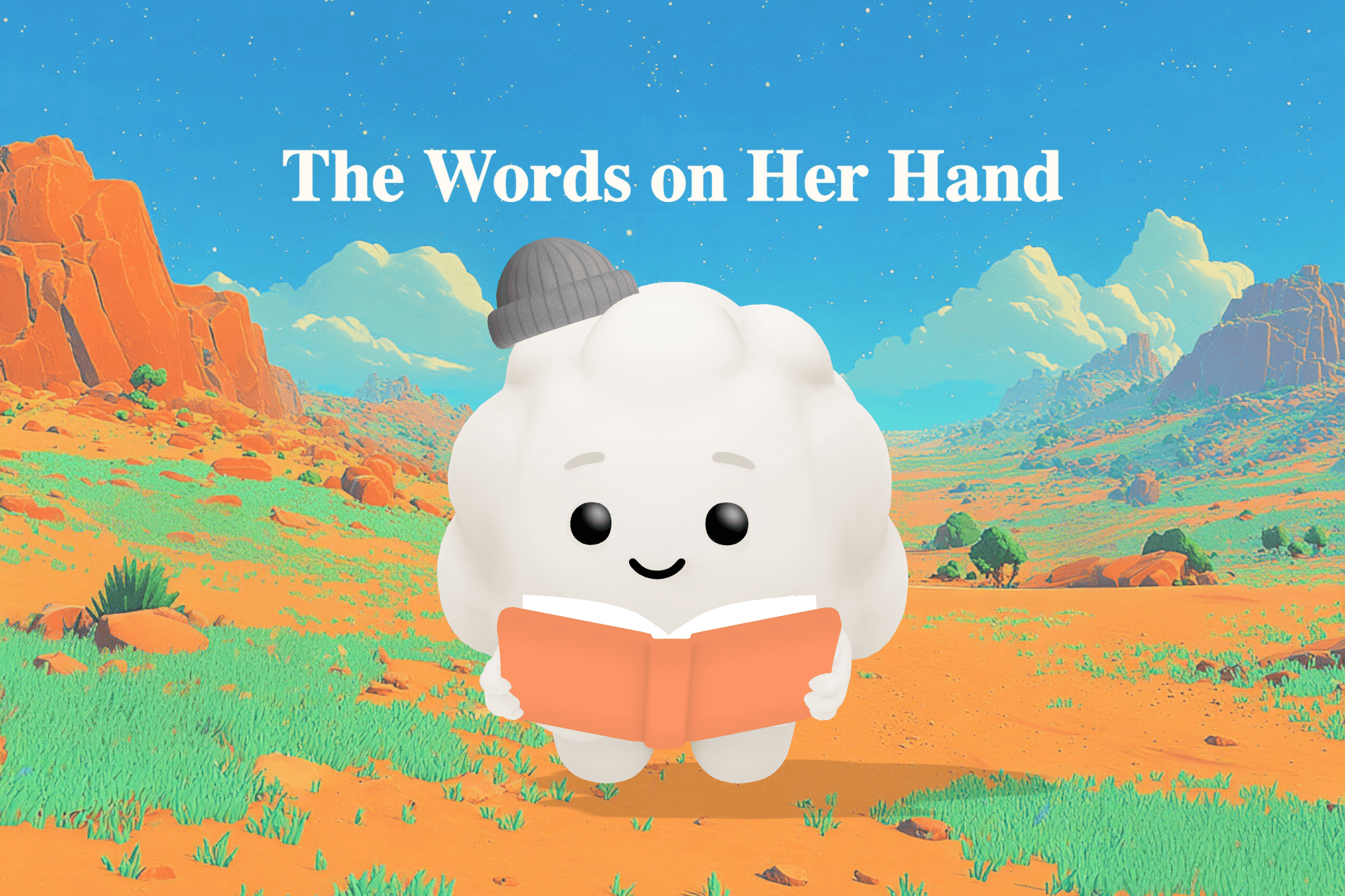
There is something deeply comforting about a story that starts with a whisper and ends with a voice finally found. In “The Words on Her Hand,“ Mei arrives in a new country carrying just twelve English words on a strip of tape and slowly writes her way toward belonging. It is one of those short stories for middle school english language learners that feels personal, tender, and perfect for winding down at night. If your child connects with Mei's journey, you can create a personalized version with Sleepytale.
Why For Middle School English Language Learners Stories Work So Well at Bedtime
Stories about navigating a new language tap into something every child understands: the feeling of not quite having the right words. At bedtime, when the house is quiet and the day's social pressures have faded, kids can sit with that vulnerability in a safe way. Mei's journey from twelve memorized words to full sentences mirrors how any young reader processes growth, slowly and with plenty of stumbles along the way. That is why for middle school english language learners stories at night feel so powerful. The bedroom becomes a place where a child can root for Mei without rush or judgment. Each scene, from the cinnamon cookie at recess to the essay about family dinners, settles like a lullaby. The emotions are real, but they arrive gently, making sleep feel like the natural next step.
The Words on Her Hand 4 min 41 sec
4 min 41 sec
The airplane sank through clouds, and Mei pressed her forehead to the window.
Twelve words.
That was all she had of English, printed on a strip of tape inside her pocket.
Mama said they would be enough to start.
Papa squeezed her shoulder and called her his little adventurer in the old language, the one that felt like warm rice and home.
She whispered the list when the seat belt sign blinked off.
Hello.
Thank you.
Water.
Bathroom.
Yes.
No.
Please.
Sorry.
Help.
Friend.
School.
Home.
The engine hummed between each syllable, eating the sounds.
Customs smelled like metal and lemon soap.
A woman in a blue uniform asked something.
Mei’s tongue stuck.
She lifted her hand, ready to read, but the strip stayed hidden.
Mama answered for her.
Heat crawled up Mei’s neck.
Outside, the August air tasted of bread and exhaust.
Welcome to your new life, Papa joked, but the words sounded heavy, like suitcases without wheels.
Their apartment had echoing rooms and a radiator that clanked like loose chopsticks.
That night Mei copied her twelve words onto her left palm with a marker that smelled of grapes.
She traced each letter until the skin memorized the shape.
When she washed in the morning, the ink blurred into pale clouds.
She rewrote them, lighter.
Breakfast tasted of nothing.
The cereal squares floated like tiny rafts.
School was a gymnasium full of shouting children.
The teacher knelt to Mei’s height and spoke slowly.
Mei showed her palm.
The teacher smiled and added a word with a ballpoint: Welcome.
Ink stung.
Thirteen.
Recess was wind and swings.
A girl with red hair pointed to the sky and said something ending in a question.
Mei searched her palm.
None of the words matched the shape of that open sky.
She shrugged.
The girl shrugged back and offered half a cookie.
It crumbled, sweet with cinnamon.
They sat in dust and silence, feet swinging.
When the bell rang, the girl waved.
Mei waved too, palm flashing purple letters.
October arrived with orange leaves that looked like they had been dipped in sunset.
Mei kept a notebook.
She wrote new words inside, one page for each day, then copied the growing list onto her hand every dawn.
The marker ran low; the words grew fainter, but her voice grew stronger.
She could ask for a library pass, explain that her stomach hurt, tell someone her shoe was untied.
She learned that squirrels gathered nuts, that pumpkins weren’t just for soup, that jackets could be called hoodies.
Forty words.
She counted them on the walk home, whispering, touching each finger twice.
One Saturday Mama took her to the supermarket.
Fluorescent lights hummed.
A boy dropped apples that rolled like marbles.
Mei knelt, collecting.
“Thank you,” he said.
She almost answered in the old language, stopped, tried again.
“You’re welcome.” The phrase surprised them both.
Mama squeezed Mei’s hand so hard it hurt.
December sky was low and white.
Paper snowflakes hung from classroom windows.
Mei’s notebook bulged.
At night she no longer translated every thought before sleeping.
She dreamed of sleds, of hot chocolate, of telling the red haired girl the plot of a movie.
In the dream her sentences curved like scarves, long and bright.
She woke laughing.
The teacher assigned essays.
My Favorite Place.
Mei chewed her pencil.
She pictured her grandmother’s courtyard with chickens and persimmon trees, then the apartment radiator that sounded like home now.
Both places tugged.
She wrote: My favorite place is wherever my family eats dinner.
She read it twice, heart thumping loud.
The words felt true and heavy as stones.
Winter break ended.
Snow turned gray along roadsides.
Mei walked to school alone, boots squeaking.
She paused by the fence where kids wrote names in frost.
Breath clouding, she pulled off her glove, uncapped the marker, now almost dry.
On her palm she wrote a sentence, not a list.
Five small words.
She looked at them all day, even while solving fractions, even while singing in music.
The letters cracked as skin moved, but they stayed readable.
After final bell she lingered.
The red haired girl, Ava, tied her shoes twice, waiting.
They walked the hallway together, past bulletin boards, past the trophy case that smelled of glass and wood.
At the exit Ava said, “See you tomorrow.” Snowflakes drifted between them, melting before landing.
Mei uncurled her fingers.
The ink had smudged, but the shape remained.
She breathed on her palm, warming skin, warming words.
“I belong here,” she said.
The sound was soft, but Ava heard.
She smiled like someone opening curtains.
Outside, boots tapped an echo off brick.
Somewhere a car started.
The marker was empty, yet the sentence stayed, written deeper than ink, glowing against cold air.
The Quiet Lessons in This For Middle School English Language Learners Bedtime Story
This story explores courage, belonging, and the value of small steps forward. Mei shows quiet bravery every morning when she rewrites words on her palm, choosing to keep trying even when the ink fades and her voice shakes. Her growing friendship with Ava teaches that connection does not always require perfect language; sometimes half a cookie and a shared shrug are enough. These lessons settle especially well at bedtime, when a child can reflect on their own small acts of courage from the day.
Tips for Reading This Story
When Mei whispers her twelve words on the airplane, read each one slowly with a gentle pause between them so your listener can feel the weight of every syllable. Give Ava a bright, curious tone, especially when she points at the sky and offers half her cookie at recess. At the very end, when Mei says “I belong here,“ lower your voice to barely above a whisper and let the silence after the sentence linger before closing the story.
Frequently Asked Questions
What age is this story best for?
This story works best for children ages 8 to 12. Younger readers will connect with Mei's nervousness about starting at a new school, while older kids will appreciate subtler moments like her essay about family dinners and her final quiet declaration in the snow. The vocabulary is accessible, and the emotions are layered enough to spark a thoughtful bedtime conversation.
Is this story available as audio?
Yes, just press play at the top of the page to hear the full story read aloud. The audio version brings out the contrast between the hushed airplane scene and the noisy gymnasium, and it gives Mei's final whispered “I belong here“ a lovely, lingering warmth. Listening to each new word Mei learns makes her progress feel even more real and rewarding.
Why does Mei write words on her hand instead of just using her notebook?
At first, Mei's twelve words fit on a small strip of tape, and copying them onto her palm keeps them close and visible whenever she needs them most. Her hand becomes a kind of comfort object, something she can glance at during scary moments like recess or talking to a stranger at the supermarket. As her vocabulary grows she does begin using a notebook, but the palm ritual stays as a symbol of how deeply each word has become part of her.
Create Your Own Version
Sleepytale turns your child's own experiences and ideas into personalized bedtime stories in seconds. You can swap Mei's airplane for a train ride, change the setting to a countryside school, or replace the grape scented marker with a favorite sticker book. In just a few clicks, you will have a cozy, calming tale your child can see themselves in.
Looking for more bedtime stories for kids by age?
Scary Stories For Kindergarteners
Are you looking for short scary stories for kindergarteners? Wisp is a tiny trembling ghost who learns to name the shadows a windowsill.
Audiobooks For Kindergarteners
A tugboat named Biscuit navigates fog by following buoy bells, making short audiobooks for kindergarteners feel like a lullaby the water.

Short Newborn Bedtime Stories
Are you searching for short newborn bedtime stories where the moon watches over a sleeping baby all night?

Baby Bedtime Stories
Enjoy a cozy night with short baby bedtime stories like The Waiting Hug, featuring a stuffed rabbit's patient wait for one perfect embrace.
Short Stories For 8th Graders
Maya spent three years saying hello to every face in her hallway, and one quiet boy replied with dragons. Discover short stories for 8th graders here.
Kindergarten Stories
A lost red crayon waits under a bookshelf until a boy named Mateo draws a smiling sun in one of the sweetest short kindergarten stories for bedtime.