
Scientist Bedtime Stories
By

Dennis Wang, Bedtime Story Expert
10 min 11 sec
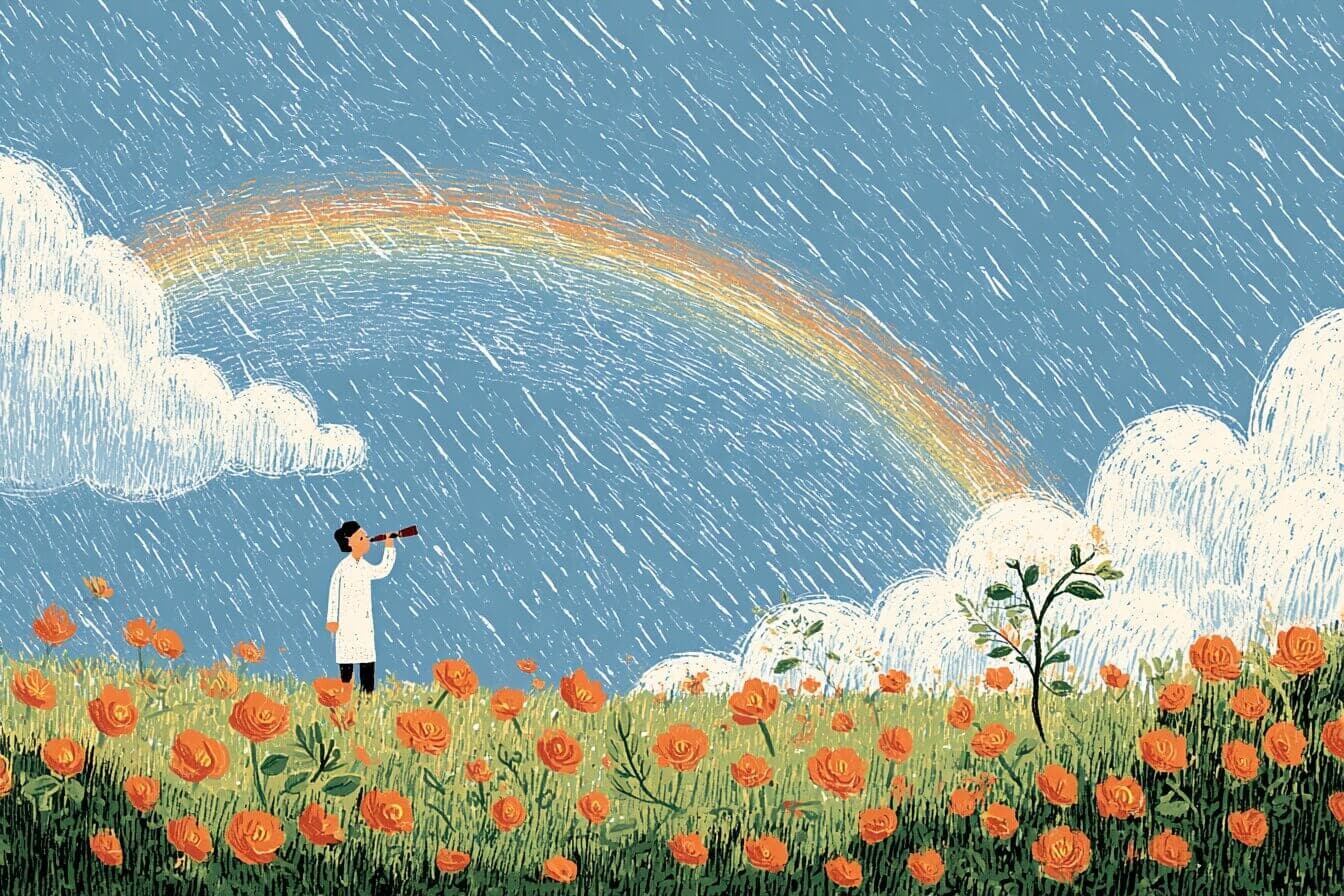
There is something about the hum of a propeller and the soft glow of clouds that makes a child's eyelids feel heavier in the best way. Tonight's story follows Preston, a pilot who turns the open sky into a gentle classroom for a group of eager kids, complete with cloud shapes, autumn leaves, and a small storm that teaches more than it frightens. It is one of those scientist bedtime stories that wraps curiosity inside a warm blanket of calm. If you would like to personalize the details, change the plane, or add your child's name, you can create your own version with Sleepytale.
Why Scientist Stories Work So Well at Bedtime
Children are natural question-askers, and the hours before sleep tend to be when those questions spill out most freely. A bedtime story about a scientist gives all that wondering a safe place to land. Instead of racing thoughts about tomorrow, a child's mind can settle into the rhythm of observation, noticing clouds, tracking wind, watching light play on water. The curiosity stays, but the urgency drains away.
Stories that frame learning as gentle exploration also remind kids that the world is understandable and not so scary after all. When a character like a pilot calmly explains why the sky is blue or how storms form, it models steadiness in the face of the unknown. That sense of "someone wise has this figured out" is exactly the reassurance a child needs before closing their eyes.
Preston and the Sky Classroom 10 min 11 sec
10 min 11 sec
Preston loved the moment his silver propeller plane left the runway. The wheels would give one last sticky kiss to the asphalt, and then the whole world would tilt and open up beneath him like a pop-up book.
From the cockpit he could see the schoolyard, a rectangle of green where children gathered most mornings to watch him fly.
Today he carried a clipboard. It was covered in pictures of clouds, half-finished maps, and two colored pencils he kept losing under the seat. He banked gently over the red brick school and tipped his wing, and twenty small bodies below erupted into waving.
Their arms swung like they were conducting an invisible orchestra.
Preston's grin stretched so wide his headset shifted.
He pressed the intercom button that connected to the small speaker he had rigged up in the control tower. The tower relayed his voice to the school through a special radio link the teachers used for story time. It crackled a little. It always crackled.
"Good morning, scientists in the making," he said. "Look at the clouds above you and tell me what shapes you see."
Hands shot into the air. Through his binoculars Preston watched the teacher point to a girl in a red jacket, who described a castle floating near the sun. He jotted the answer on his clipboard, balancing it on one knee while the plane hummed steadily.
Then he explained that clouds form when warm air rises and cools, turning invisible water vapor into visible droplets. He compared it to breathing onto a cold window and seeing fog bloom across the glass. Several children gasped, the kind of gasp that sounds almost like a hiccup.
Far below, the teacher wrote the word condensation on the whiteboard. Preston could not read it from this height, of course, but he knew. He always knew.
He circled the school again, this time asking about the wind. A boy shouted that the wind carried the smell of fresh bread from the bakery down the street, and Preston laughed into the intercom, a real laugh, slightly too loud.
"Wind moves from high pressure to low pressure," he said, "carrying scents and seeds and sometimes even tiny insects who did not plan on traveling today."
He told them that pilots use wind to save fuel, riding currents the way birds do, and he invited them to imagine invisible rivers of air flowing across the land. The children closed their eyes and stretched their arms out like wings. One boy wobbled sideways into his friend. Nobody minded.
After a gentle climb, Preston pointed his plane toward a nearby lake. From above it looked like a coin someone had dropped in the grass.
"See that sparkle?" he asked. "That is the sun reflecting off water. Clean water reflects light better than dirty water, so that shine is actually telling us good news."
He asked the students to draw the lake on their papers and circle any areas that looked darker, explaining that darker patches might mean algae blooms caused by too many nutrients washing in from farms or roads. The teacher later reported that every child drew the lake and circled the correct spots. One girl added a fish wearing sunglasses.
Preston steered toward the hills where autumn leaves blazed orange and gold. He asked the children to name the colors they saw.
"Crimson!"
"Amber!"
"Butterscotch!"
"Pumpkin!"
He explained that leaves change color because chlorophyll, the green pigment used for making food from sunlight, breaks down when the weather cools. Hidden yellows and reds were there all along, waiting underneath. He compared it to a magic trick where summer is the cloth and autumn is the magician whipping it away. The children oohed and aahed over the intercom, and he heard someone clap twice, slowly, like they were still thinking about it.
As he flew farther, he noticed a long line of cars stuck on the highway below. A tree had fallen across the lanes.
He radioed the control tower, who contacted the highway patrol, and within minutes a rescue crew was on its way. Preston described the scene to the children, explaining how communication networks connect pilots, drivers, and emergency workers, everyone passing the message along.
"It is a bit like how bees tell each other where flowers are," he said. The children buzzed. Literally buzzed.
When the road cleared, Preston dipped his wings in salute to the workers and turned back toward the school.
The sun had climbed higher by now. The sky was that particular shade of blue that looks like it could go on forever in every direction.
Preston explained that the color comes from molecules scattering short wavelengths of light more than long ones, a process called Rayleigh scattering. Then he paused, because he could hear the silence on the other end, which usually meant he had lost them.
"Think of it this way," he said. "The sky is like a big mirror that prefers to bounce blue light toward our eyes. It just likes blue."
One student asked if space looks blue to astronauts. Preston replied that above the atmosphere, space is black because there are no molecules to scatter light at all. Just darkness, and stars.
The question delighted him. Proof that curiosity had taken flight.
He announced that the class had earned honorary co-pilot certificates, and he would drop them by the school office that afternoon. The children cheered so loudly the microphone crackled like someone crinkling a chip bag.
Preston circled once more, writing each child's name on a certificate template he kept in the seat pocket. He added tiny airplane stickers beside every name. The sticker sheet was almost used up. He would need to buy a new one this weekend.
Then he noticed a small dark cloud forming to the west.
He explained to the students that puffy clouds become storm clouds when warm air rises quickly and builds tall towers of vapor. He pointed out the anvil shape at the top. "It looks a bit like a giant hair dryer pointing sideways," he said.
The children giggled. But they also listened as he described how pilots avoid storms by flying around them, the same way a hiker walks around a big rock on the trail instead of trying to climb over it.
He promised he would land before the cloud grew dangerous, and he asked the children to track the storm's movement using the clock method, with the school as the center.
"One o'clock!"
"Three o'clock!"
"Five o'clock!"
They were learning directional thinking and did not even realize it. Preston thanked them for being excellent weather watchers and began his descent.
As the runway approached, he spoke about how landing requires balancing speed, altitude, and attitude. Three words that sounded, if you thought about it, like a recipe for getting through most things in life. He compared the runway to a welcoming carpet that guides you home.
The wheels touched down. Through his headset came the muffled sound of applause.
Preston taxied to the hangar, shut down the engine, and stepped onto the tarmac carrying his clipboard and the certificates. The tarmac was warm under his shoes, and it smelled faintly of fuel and cut grass from the field next door.
The teacher met him at the gate with a bright smile and accepted the papers like they were something precious. She promised to laminate each one so the children could hang them in their rooms.
In the classroom, twenty small faces stared at him. He answered questions about how planes steer, why wings are curved, and what clouds feel like.
"They are made of tiny water droplets," he said, "so flying through one feels like touching cool mist from a spray bottle. Not dramatic at all. Just damp."
He let the children sit in the cockpit of a grounded training plane parked beside the hangar. He guided their hands over the controls and described how each instrument works like a different sense, helping the plane see, hear, and feel its world. The children practiced scanning the panel the way doctors check heartbeat, temperature, and breathing. One boy said the altimeter looked like his grandma's kitchen timer. Preston told him that was actually not a bad comparison.
After the tour, Preston opened a large map on the classroom floor and invited the students to plot a pretend flight to anywhere they wished.
A boy chose the Arctic to see polar bears, so Preston taught them about magnetic north and how compasses point to a spot in northern Canada rather than the true pole. A girl selected the Amazon rainforest, so Preston discussed how pilots navigate using rivers when clouds hide the ground below.
Each destination became a doorway to new facts. Preston felt like he could have stayed there all afternoon, pointing at places on the map and telling them everything he knew.
When the bell rang, the children hugged him goodbye. Their arms were sticky with juice, and their minds were somewhere between the cockpit and the clouds.
The teacher thanked him for turning an ordinary morning into something they would talk about for weeks. Preston walked back to his plane, already thinking about tomorrow's route.
As he climbed into the cockpit, he saw the children pressed against the playground fence, waving with everything they had.
He started the engine, taxied, and lifted into the bright afternoon sky. From above he watched them shrink until they were barely specks. But he knew the seeds he had planted did not need to be visible to keep growing.
He whispered a promise into the wind that he would return with new lessons, new maps, and new wonders.
The sky felt wider than it had that morning. Not because anything about it had changed, but because twenty young minds now saw themselves as part of it.
The Quiet Lessons in This Scientist Bedtime Story
This story weaves together curiosity, calm problem-solving, and the simple joy of paying attention. When Preston notices the storm cloud and explains it instead of panicking, children absorb the idea that understanding something unfamiliar makes it less frightening. The moment where the kids track the storm using the clock method shows that teamwork and observation can turn worry into a game. And the small detail of Preston planning to buy more stickers reminds listeners that kindness requires follow-through, not just grand gestures. These are the kinds of reassurances that settle into a child's mind right before sleep, the feeling that the world has steady people in it and that being curious is always worth the effort.
Tips for Reading This Story
Give Preston a warm, slightly crackly radio voice whenever he speaks through the intercom, and switch to a more natural, close-up tone when he is in the classroom. During the scene where the children call out cloud colors, let your child shout the colors along with them. When Preston notices the dark cloud forming to the west, slow your pace and lower your volume just a little, then bring the energy back up when the kids start calling out clock positions.
Frequently Asked Questions
What age is this story best for?
Children between ages 4 and 8 tend to enjoy it most. Younger listeners love the airplane sounds, the waving, and the silly comparisons like the hair-dryer storm cloud, while older kids engage with the real science behind condensation, Rayleigh scattering, and compass navigation. The mix of humor and genuine facts gives it a wide range.
Is this story available as audio?
Yes. Press play at the top of the story to listen. The audio version works especially well for this one because Preston's intercom announcements create a natural back-and-forth rhythm, almost like a radio show. The scene where the children shout out clock positions for the storm has a lively energy that sounds great narrated aloud.
Does this story teach real science?
It does. Preston covers condensation, wind pressure, light reflection on water, chlorophyll breakdown in autumn leaves, Rayleigh scattering, and magnetic north, all simplified for young listeners but accurate in their core ideas. If your child asks follow-up questions after the story, that is a sign the explanations landed well and you can explore further together.
Create Your Own Version
Sleepytale lets you build a personalized story with the same cozy, curious feel as Preston's sky classroom. Swap the propeller plane for a hot air balloon or a submarine, move the lesson from clouds to ocean creatures or stars, or turn the pilot into a child scientist with a magnifying glass and a big imagination. In just a few minutes you will have a story that fits your child perfectly, ready to read or listen to at bedtime.
Looking for more job bedtime stories?
Spy Bedtime Stories
Quiet halls glow before sunrise as a student agent follows kind clues in short spy bedtime stories. A gentle mystery ends with secret teamwork and warm notes.
Detective Bedtime Stories
Detective Daisy follows crumbs and a chocolatey scent in short detective bedtime stories, then finds the missing cookies in a surprising place. A cozy case for winding down.
Astronaut Bedtime Stories
Looking for short astronaut bedtime stories that feel calm and wondrous at lights out? Read Astrid's gentle starlight parade and learn how to make your own version.

Vet Bedtime Stories
A tender clinic visit turns into a thank you lick and a tiny keepsake in short vet bedtime stories. A small thorn becomes a big lesson in trust and calm care.
Teacher Bedtime Stories
Want short teacher bedtime stories that feel cozy and kind for winding down after school? Discover a gentle classroom adventure you can read aloud tonight.
Police Bedtime Stories
Looking for short police bedtime stories that feel gentle, kind, and safe for little listeners? Want one you can read aloud in just a few minutes at bedtime.