
Park Ranger Bedtime Stories
By

Dennis Wang, Bedtime Story Expert
8 min 26 sec
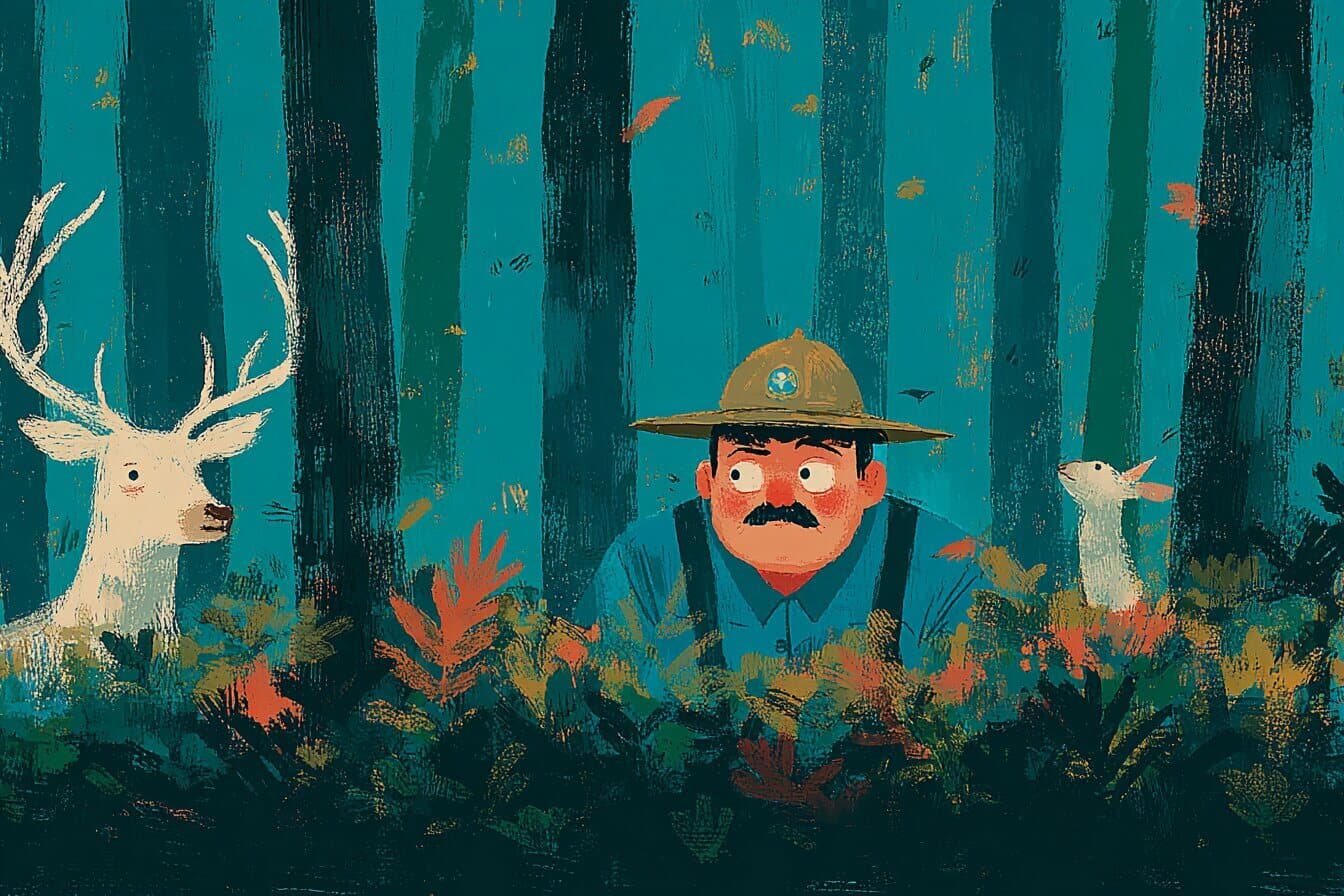
There is something about the smell of pine resin and damp earth that makes a child's shoulders drop and their breathing slow, even before the story starts. In this tale, a ranger named Randy discovers a hurt fawn in the forest and decides the best way to protect the woods is to fill visitors with wonder rather than warnings. It is one of those park ranger bedtime stories that trades action for quiet observation, letting each scene settle like leaves drifting to the forest floor. If your child loves nature and gentle adventures, you can create a personalized version with Sleepytale.
Why Park Ranger Stories Work So Well at Bedtime
A ranger's world runs on noticing small things: a bent branch, a faint birdcall, the first frost on a blade of grass. That kind of careful attention mirrors the slowing down a child needs before sleep. When the story asks them to listen alongside a character, their own breathing quiets, and the bedroom starts to feel as still as a forest clearing after dark.
There is also a deep comfort in the idea of someone who watches over wild places while everyone else is asleep. A bedtime story about a park ranger tells a child that the woods, the animals, and the trails are all looked after, even through the night. It is the same reassurance as knowing a parent is nearby, just translated into tall pines and owl calls.
Randy the Ranger and the Whispering Woods 8 min 26 sec
8 min 26 sec
Randy loved his forest from the moment the morning sun hit the treetops and turned them a shade of gold that only lasted about four minutes, if you were paying attention.
He tied his brown ranger hat snug, tucked his notebook into his breast pocket where the pen always leaked a little, and stepped onto the pine needle path.
Birds called from somewhere overhead. A breeze carried the smell of cedar, sharp and clean, almost like opening a wooden box you had not touched in a long time.
Every day he roamed the trails, checked on the fox den near the fallen birch, measured the baby firs with a piece of knotted twine, and made sure the stream ran clear enough to see the bottom stones.
He waved to hikers, reminded them to stay on the paths. He never scolded. He just said it like a neighbor mentioning rain was coming.
Randy believed that if people understood the woods, they would not need rules.
One spring morning he heard something that did not belong.
A soft, thin whimpering near the old oak grove, almost hidden under the sound of the creek.
He followed it and found a tiny fawn with its hind leg tangled in a strip of plastic picnic ribbon, the bright kind that someone probably tied to a cooler and forgot.
Randy knelt.
He spoke low, the way you talk to a dog that does not know you yet, and cut the ribbon away with his folding knife.
The fawn stood on shaky legs, turned two enormous dark eyes on him, blinked once, and trotted into the bushes without looking back.
Randy stayed kneeling for a moment longer than he needed to.
That afternoon he sat in the visitor center with his notebook open and a stub of pencil and started planning something new. Not a lecture. Not a pamphlet. A forest fun day.
He painted posters showing animal tracks, leaf silhouettes, and the names of clouds.
He set up stations where children could press their palms into safe ink and stamp paper with pretend paw prints.
He filled jars with different forest smells: minty wild bergamot, sticky pine resin, and the dark, earthy scent of morel mushrooms that always reminded him of basements in a good way.
Each jar got a riddle instead of a label, so kids had to guess.
Saturday arrived with blue sky and a light wind.
Families streamed in. Randy greeted them at the trailhead. His smile crinkled the corners of his eyes, and he had pine sap on his left sleeve that he had given up trying to remove.
He led them on a listening walk.
"Close your eyes," he said. "One minute. Just listen."
Woodpeckers drumming. Wind sighing through the canopy. A squirrel scolding from a branch, furious about something only squirrels care about.
The children giggled, but they stayed quiet, surprised by how loud nature sounded when they stopped filling the silence themselves.
Randy whispered that the forest is always speaking. You just have to stop talking first.
Next he showed them how to find tiny forests inside the forest.
He handed out magnifying glasses and pointed at rotting logs.
Under the glass, moss became a jungle. Beetle shells gleamed with colors you would not believe unless you looked.
A shy girl named Maya gasped when she spotted a salamander tucked into the bark, its skin shiny black with yellow spots like somebody had flicked a paintbrush at it.
Randy told her that salamanders need clean, wet places. Seeing one meant the woods were healthy.
Maya stared at it, barely breathing, like she had found something she did not know she was looking for.
Later they reached the meadow where Randy had hidden colorful cards, each one printed with a local flower.
Every child chose a card, then hunted for the matching bloom.
They learned names: lupine, paintbrush, shooting star.
"Names are the first step toward friendship," Randy said. "Once you know a flower's name, you start noticing it everywhere, the way you notice a classmate after you finally learn what to call them."
The children nodded. A boy held a buttercup under Maya's chin to see if yellow light reflected there. It did.
After lunch, Randy gathered everyone near the stream.
He showed them how to cup their hands and peer underwater without letting their shadow fall across the surface.
Tiny caddis fly larvae had built little pebble houses, each one slightly different.
"They glue rocks together with silk," Randy said. "Basically wearing backpacks they made themselves."
The parents leaned in. The children squealed at the wriggling architects.
Randy let each child release a single pebble downstream. "The insects will recycle it," he promised. "New building material."
A boy asked if the bugs were picky about which rocks they used. Randy admitted he did not know. "Good question for next time," he said, and wrote it in his notebook right there.
The day went fast, the way good days do.
Before leaving, Randy handed every child a seed ball made of clay, compost, and native wildflower seeds, lumpy and a little damp.
He told them to plant the balls in sunny spots near their homes so butterflies and bees could find food beyond the forest.
Maya turned her seed ball over in her hands. "Will the flowers really grow?"
Randy knelt so he was at her level. "Seeds are tiny promises. They need patience and care, same as everything worth having."
The children cheered and waved goodbye, clutching their seed balls like marbles they had won at a fair.
Randy watched them skip down the trail. He cleaned the stations, folded the posters, and swept the visitor center floor even though nobody would see it until Monday.
Evening shadows stretched across the clearing. Owls began their low calls.
Randy wrote the day's events in his notebook, listing every question he had been asked, including the pebble one he still wanted to answer.
A week later a letter arrived, the envelope covered in crayon butterflies.
Maya wrote that her seed ball had sprouted tiny green shoots and she had started a mini nature club at school. Three members so far, plus her dog, who was honorary.
Randy grinned, folded the letter, and tucked it beside the pressed lupine in his notebook.
Outside, the leaves rustled in a way that sounded, if you were in the right mood, like applause.
Seasons turned. The forest fun days became monthly.
Children learned to identify birdsong, build safe campfires, and leave no trace. They measured rainfall and posted results on the ranger board. They tracked the first trillium bloom in spring and the last maple leaf to fall in autumn.
Randy watched shy kids turn into confident junior rangers who spotted deer trails before he did.
Their parents thanked him for giving their families something to share besides screens.
He just tipped his hat. "The forest deserves the credit."
One autumn dusk, while he was closing the gate, a great horned owl swept low and landed on the fence post not three feet away.
Its golden eyes held a glow he recognized.
Randy whispered a thank you to the owl, to the children, and to the woods themselves.
He walked home under stars so bright they seemed to hum a single clear note.
The next morning he brewed strong tea, opened his notebook to a fresh page, and started sketching fox tracks in the margin for a winter wildlife tracking event.
Frost had painted the grass white overnight.
The forest waited, quiet and sparkling, ready.
Randy breathed the cold air. Every twig and stone felt as familiar as the creak of his own front door.
Somewhere far off a coyote yipped, maybe telling its pups about the ranger who guards the whispering woods.
Randy adjusted his hat, whistled a tune that had no name, and set off to greet whatever the day had waiting.
The Quiet Lessons in This Park Ranger Bedtime Story
This story weaves together gentleness, patience, and the idea that caring starts with paying attention. When Randy kneels to free the fawn without rushing or panicking, children absorb the lesson that calm hands solve problems better than frantic ones. Maya's discovery of the salamander shows the reward of looking closely at what others walk past, a kind of everyday bravery that shy kids especially need to see celebrated. And when Randy admits he does not know the answer to a child's question and writes it down instead of bluffing, the story quietly says that curiosity matters more than being right. These are the kinds of reassurances that settle well at bedtime, reminding a child that tomorrow is full of things worth noticing, and that not knowing everything is perfectly fine.
Tips for Reading This Story
Give Randy a warm, unhurried voice, the kind that sounds like it belongs outdoors, and let Maya's lines come out a little smaller and more hesitant so the contrast feels real. During the one minute listening walk, actually pause for five or six seconds of real silence and invite your child to close their eyes and name one sound they hear in the room. When the caddis fly larvae appear, slow down and linger on the word "backpacks," because that image tends to make kids laugh and ask questions, which is exactly the kind of curiosity that eases them toward sleep.
Frequently Asked Questions
What age is this story best for?
It works well for children ages 3 to 8. Younger listeners enjoy the animal moments, like the fawn rescue and Maya's salamander discovery, while older children connect with the nature activities, such as guessing the jar smells and hunting for matching flowers. The vocabulary is accessible but not oversimplified, so it holds attention across a wide range.
Is this story available as audio?
Yes. Press play at the top of the story to hear it read aloud. The listening walk scene, where everyone closes their eyes for one full minute of forest sounds, translates especially well to audio because it creates a natural pocket of quiet in the room. Randy's gentle dialogue and the rhythmic descriptions of the trail make the narration feel like a real walk through the woods.
Do the nature facts in the story reflect real wildlife?
They do. Caddis fly larvae really build protective cases from tiny pebbles and silk, and black salamanders with yellow spots are a genuine indicator of healthy, unpolluted habitat. Randy's explanations are simplified for young listeners but stay true to what a real ranger might share on a guided walk, so your child is absorbing real science along with the story.
Create Your Own Version
Sleepytale lets you build a bedtime story around your child's favorite nature setting and characters. Swap the pine forest for a tide pool beach or a mountain meadow, change the fawn to a sea turtle or a baby fox, or give the ranger a canoe instead of a notebook. In a few moments you will have a cozy, personalized tale ready to read or play whenever your family needs a gentle ending to the day.
Looking for more job bedtime stories?

Spy Bedtime Stories
Quiet halls glow before sunrise as a student agent follows kind clues in short spy bedtime stories. A gentle mystery ends with secret teamwork and warm notes.

Detective Bedtime Stories
Detective Daisy follows crumbs and a chocolatey scent in short detective bedtime stories, then finds the missing cookies in a surprising place. A cozy case for winding down.

Astronaut Bedtime Stories
Looking for short astronaut bedtime stories that feel calm and wondrous at lights out? Read Astrid's gentle starlight parade and learn how to make your own version.

Vet Bedtime Stories
A tender clinic visit turns into a thank you lick and a tiny keepsake in short vet bedtime stories. A small thorn becomes a big lesson in trust and calm care.

Teacher Bedtime Stories
Want short teacher bedtime stories that feel cozy and kind for winding down after school? Discover a gentle classroom adventure you can read aloud tonight.
Scientist Bedtime Stories
Preston turns a quiet flight into a gentle lesson for curious kids in short scientist bedtime stories. Clouds, wind, and light become soothing wonders as everyone settles down.