
Scary Bedtime Stories For Girlfriend
By

Dennis Wang, Bedtime Story Expert
14 min 28 sec
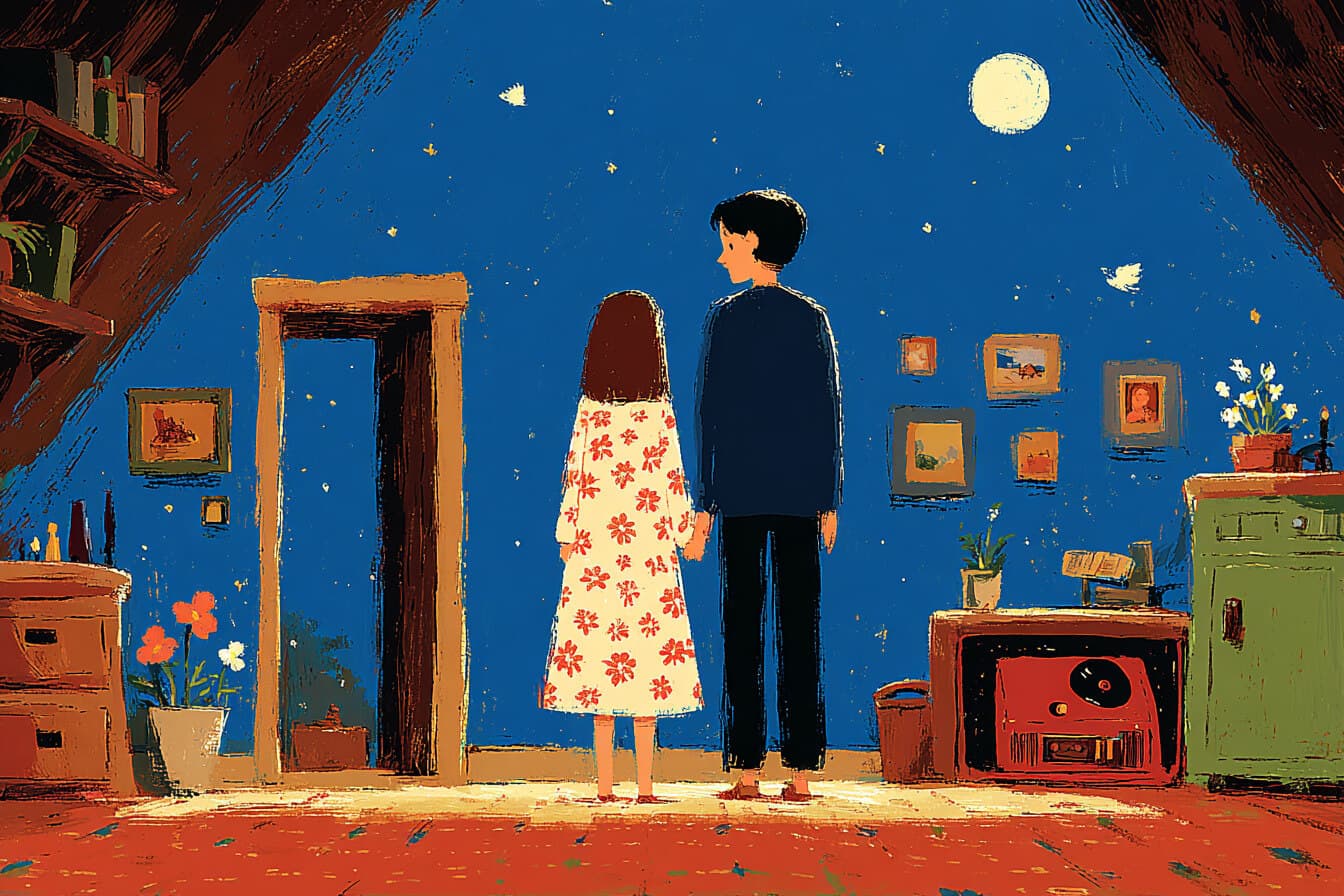
There is something magnetic about a story that makes your pulse quicken right before sleep, the kind where every creak in the house suddenly feels personal. In The Music Box at Three, Nora and Eli move into an old house and discover an attic music box that refuses to play unless both of them are touching it at once. It is one of those short scary bedtime stories for girlfriend reads that stays with you in the quiet afterward, making you pull the blanket just a little closer. You can even create your own cozy, spine tingling version with Sleepytale.
Why Scary For Girlfriend Stories Work So Well at Bedtime
Scary stories told at bedtime carry a special kind of comfort. The shivers are real, but so is the warm bed and the person beside you. When a story like this one pairs the unknown with tenderness, it turns fear into something shared rather than something lonely. That is why a scary bedtime story for girlfriend to read online works so well before sleep; the spookiness pulls you closer together instead of pushing you apart. The Music Box at Three leans into this beautifully. The hallway light blinks, the attic dust smells like cinnamon and old paper, and the music box refuses to play for just one person. Every eerie detail is softened by the warmth between Nora and Eli, reminding listeners that even a creaky old house can feel like home when you face its mysteries together.
The Music Box at Three 14 min 28 sec
14 min 28 sec
Nora carried the last box into the hallway and set it down with a thud that drifted through the old house.
The walls held their breath.
Eli pressed the switch and the hallway bulb blinked twice, then steadied, then blinked again as if it was thinking about it.
They looked up, then at each other.
A small laugh from Nora, thin and quick.
Eli scratched his eyebrow with the back of his thumb and said, We will fix that tomorrow.
They went to bed with their socks on because the floor held cold like a pocket holds coins.
At three in the morning, the light snapped on and off, on and off, slow as a blink from a sleepy cat.
Eli sat up and knocked his knee on the nightstand.
Ow, he said, and then, Nora, do you see that.
She was already peeking through the doorway.
The bulb made a small ticking sound, like it had a tiny heartbeat.
The rest of the house did not answer.
They listened to the faucet in the kitchen drip every fourth second.
An owl said something outside and then changed its mind about saying more.
Nora counted the flashes.
She held up two fingers, then three, then dropped her hand into the blanket and said, It is three.
The clock agreed with a green 3:00 that glowed like it meant it.
Eli put his feet on the floor and the board near the old radiator complained in a voice that sounded like someone’s shoes on wet steps.
In the morning, they unpacked plates and a tin of cocoa and a jar of buttons that had come with the house.
Who leaves buttons, Nora asked.
Eli slid the tin lid on and off to make a dull ring.
People who think buttons are treasure, he said.
He threw one up in the air and tried to catch it on his elbow, missed, and the button rolled under the stove like it had business there.
They laughed and then got quiet when they looked toward the hallway.
The light sat there so innocent, fat bulb with a sleepy frost on it.
Eli said, We need a ladder.
Nora said, We need to wait.
At three again, let us see.
The day stretched.
They ate soup in chipped bowls and wrote their names on an index card and taped it to the mailbox because that felt like a spell.
At three again, the bulb did its trick.
Nora did not jump this time, though her breath came short for a second and she held it like a fish in cupped hands.
She and Eli stepped out, side by side, bare feet on the cool boards.
The light was not angry, just steady, then a pause, then a blink, blink.
Listen, Nora whispered.
To what, Eli asked.
I do not know.
The hallway made a long sigh under the window.
It drew them along.
The attic pull string hung down over the end of the hall like a tail.
Eli reached up and tugged.
The ladder dropped with a furry creak, dust floating around them in a pale cloud that smelled a little like cinnamon and old paper.
Nora sneezed into her sleeve.
Bless you, Eli said.
His voice bounced up into the dark and did not come back for a second.
They climbed.
The attic spread out dim and big, with boxes and one crooked chair and the round eye of a window that did not wish to be washed.
Eli clicked his phone light and swung the beam in a circle.
Oh, Nora said.
On a low beam, right where the dust had not settled, a small wooden music box sat with its lid closed.
It looked like a sandwich made of maple and patience.
There was a little brass key on its side.
When Eli got close the air felt cooler, the tiny hairs on his arm standing as straight as a field of grass before rain.
He reached out.
Wait, Nora said.
She was not scared, not exactly.
She pressed her palm to the lid.
The grain was smooth, like a river stone with lines inside.
The box made a sound, a click, as if something inside had heard her skin.
They both bent over.
Eli tried the key, careful as he wound.
One turn.
Two.
The attic listened.
Three.
Nora looked at the lid, then up at Eli, then back to the key.
It would not spin any more.
Eli let go.
The box stayed quiet.
Maybe broken, he said.
Nora frowned at the word.
Then she pressed the latch.
The lid lifted a finger’s width and stopped.
Not a note escaped.
They waited with their heads close, knees touching in the dust.
Their breaths made little puffs of fog in the light from the phone.
Nothing.
They closed it again, and the hinge sighed.
The hallway light blinked, once, like a blink from a friend who sees you across a room.
Eli stood.
Nora, come here a second, he said.
She straightened up.
He had been kneeling on the side with the key, she on the side with the lid.
This time, he put his palm on the wood next to her hand.
The box shifted, just a tremble.
The lid nudged up.
A high note slipped out, thin as a hair.
Did you hear that, Nora whispered.
Eli nodded and did not move his mouth.
Keep your hand there.
She did.
He pressed his other hand lightly on the key.
The box woke, not all at once, but like morning opening curtains one inch at a time.
Tink, tink, tiiiink.
A tune unfolded, stitched with small silvery notes that mixed with the dust and the dim air.
The melody did not know many words, but it knew how to say come closer.
They did.
The attic felt bigger, then smaller, then big again, as if the song had pulled a string through it and made a new shape.
All at once Nora noticed that when she lifted one finger the music faltered, and when Eli eased away it hushed to a whisper.
Both, she said.
Both of us.
He smiled and leaned in so that their shoulders were one roof.
The tune brightened and found its steps.
It had a hop and then a lean, like a child skipping a crack and landing on the heel.
Eli’s eyes shone.
Nora could see a little chip in his left front tooth.
He had gotten it on a day with roller skates and a curb, the story he always told too quickly and with his hands.
The attic window held a slice of night with three stars, and they seemed to nod to the rhythm.
They did not say the word magic.
They did not need to.
They stayed like that until the song ended with a small breath, as if the box had blown out a candle.
The lid lowered itself and clicked closed.
The hallway light went steady, bright for a beat, then turned off by itself.
The owl outside said one more soft oh and settled.
Nora’s shoulders loosened.
Eli let go of the key and made a face, the I cannot believe this kind, the kind that stretches your lips without showing teeth.
He tipped his head.
Again.
Nora nodded.
They tried again the next day, but only in the late afternoon.
Nothing.
The box sat, polite and silent.
They tried after dinner.
Not a peep.
They tried a joke.
Eli said, Play, please, old friend, and bowed at the beam, which made Nora snort so hard she had to hold her sides.
Still nothing.
Around midnight they set the box back in the same dusty ring.
They went down the ladder slower than before.
Nora brushed her teeth with the water running a little too long.
Eli tried to juggle two oranges while waiting for tea and dropped both.
One rolled under the radiator with the button and the other stopped under the chair like it had changed its mind.
The kitchen clock clicked the way a cricket might click if it had a tiny hammer.
At three, the hallway light began.
Click.
Blink.
Click.
Blink.
Nora and Eli did not talk.
They climbed, bare feet again, and the attic air greeted them with a cool kiss at the top step.
They placed their hands on the small box like before.
The key turned three times.
This time the melody started without delay, like it had been practicing.
The tune had a new curl in it, a little winding path that dropped, then rose, like someone hopping down a stair and then back up two.
I know this, Nora whispered.
Eli looked at her.
He did not, but he smiled.
Her grandmother had hummed the same little figure when she washed dishes.
Nora could see a dish in a sink, the way the soap looked like clouds swallowed by a small storm.
She did not say it out loud.
She hummed along for a moment, barely, like a moth testing a lamp.
The music box did something then, small and clear.
It changed the last four notes to match her hum.
Eli’s mouth opened.
Did you hear that.
Nora’s eyes widened.
The song listened.
It was not just a song.
It was a door.
Not the kind that leads to a different place, but the kind that opens a room inside the one you stand in.
The attic was the attic.
It still had a cobweb that looked like a tiny ladder.
It still had the chair with one short leg.
But also there was the smell of cinnamon again, and a draft that tasted like apple peel.
And a feeling like holding both ends of a ribbon and gently pulling them toward each other until they met.
After the third night, they began to talk to the box.
Not words for wishes.
Plain words.
Nora told it about the jar of buttons, how one was the color of the sea on a cloudy day, and how one had teeth around its edge like a coin.
Eli told it about the mailbox and the tape that would not stick and how he had ended up spitting on the corner of the envelope to make it behave, which had made Nora laugh and say, That is not science.
The box seemed to answer with small trills that sat in the corners of its tune.
When they both laughed at the same time, a little bell chime went higher, like a bird landing on a fence.
One unexpected morning, Eli went up alone.
It was ten.
Light poured through the round attic window and pooled on the floor.
He set his hand on the lid and wound the key.
The box stayed still.
Eli talked to it anyway.
I know, he said.
I am early.
He grinned, then frowned at himself.
He touched the hinge, the side, the smooth top.
He felt silly, and that made him chuckle.
The house listened but did not change.
He left a small folded note under the box that said, Back later, see you then, as if the box could read.
He knew it could listen.
He patted the beam like you pat a friendly dog and climbed down.
That night they went up together with their mugs.
They set the mugs on the floor by the chair, and Eli set a coaster under Nora’s, even though the floor was not the type to mind a ring.
They placed both hands, breathed in together, breathed out.
The box played.
Somewhere in the house, the hallway light held perfectly still.
The tune grew.
It made a part that sounded like rain ticking on a pie tin.
Another part that sounded like running your finger around the rim of a glass.
Nora made a funny face after a squeaky note, and Eli copied it.
The music copied both faces as a zig and a zag in sound.
They were in a conversation with a thing that had no mouth.
On the fifth night, Nora brought the jar of buttons to the attic.
She set it next to the box.
She unscrewed the lid and tipped a handful into her palm.
Look, she said, as if the box had eyes.
She slid one small red button in a circle around the lid while they wound the key.
The tune added a tiny drum, the click of button touching wood.
Eli added a blue one, then a mother of pearl that flashed like a fish.
The notes and the buttons made a pattern, bright dots in a loop.
For no reason except that it made them both happy.
The owl outside stayed up late with them.
The clock downstairs forgot to be loud.
They stacked three buttons on top of each other and watched them topple when the high note arrived.
Eli clapped once like a kid at a simple trick.
Nora shook her head and smiled with one corner of her mouth, and that one corner held a whole story.
When the first month in the house had passed, they had a way.
If the light blinked at three, they climbed.
If not, they left the attic alone and made cocoa and read the tiny free newspaper that kept showing up on their steps with news about yard sales and how to keep deer out of gardens.
Eli circled a recipe for banana bread and never made it.
Nora picked up a penny from the sidewalk and put it on the windowsill head side up.
The music box waited.
It saved its song like a secret that does not want to be rushed.
One night there was a storm, rain tapping like a thousand knuckles on the roof.
The hallway bulb flickered and then stayed on, not the usual.
They looked at each other.
Should we, Eli asked.
Nora nodded.
In the attic, the box was already humming, a thin line you could feel more than hear.
Hands on.
Key turned.
The song rose like steam.
This time, instead of changing for them, it invited them to change for it.
Nora sang two notes that she did not know she knew.
Eli stepped to the left and then to the right, a dance the box seemed to suggest.
Their feet scuffed a soft circle in the dust.
The jar of buttons watched with its glassy eye.
The chair, the window, the beam, all of it grew still around the sound of their steps and the bell like tune that led them.
They stopped because their legs asked them to.
The box wound down with a sweet sigh and shut.
The hallway light blinked once more, then stilled.
They did not say anything for a while.
Nora leaned her forehead to Eli’s shoulder and counted his breaths, one, two, three.
Eli held the edge of the beam with two fingers, as if he was holding a string that reached down into the floor and through the walls and into the yard.
Below, the refrigerator coughed and settled.
Above, rain slid off the roof in strands, silver in the flash from far away.
The attic smelled like apple peel again.
Somewhere among the boxes, a single moth fluttered its wings and rested.
They never learned who had left the music box.
They did not find a note hidden under the false bottom, though Eli checked three times and Nora teased him kindly about it.
Sometimes the tune brought them a story from before.
Sometimes it brought a story they had not lived yet.
Every time, it needed both of them.
That stayed true, even on the day the hallway light finally burned out and went to sleep for good.
They replaced the bulb, but the new one did not play that trick.
It did not have to.
They knew what to do.
At three, when the clock said so and the air in the hallway leaned just a little toward the attic door, they went up.
Two sets of hands on the same smooth lid.
Two breaths, matching.
The box awoke and the room inside the room opened.
It was enough to stand there, to listen.
Enough to let the last note hang like a bead of water on the tip of a leaf and then fall, soft as a wink, into the hush that followed.
The Quiet Lessons in This Scary For Girlfriend Bedtime Story
This story explores partnership and the idea that some beautiful things only happen when two people show up together, just as the music box refuses to play unless both Nora and Eli rest their hands on it. It also gently teaches patience; the couple must wait through a full day of failed attempts before the box plays again at three in the morning, learning not to force the moment. There is a thread of curiosity woven throughout, especially when Nora chooses to press her palm to the mysterious lid instead of pulling away from the unknown. These lessons settle naturally at bedtime, when the world is quiet enough to absorb them.
Tips for Reading This Story
Give the hallway light its own slow rhythm when it blinks at three in the morning; pause between each flash so your listener can feel the suspense building. When Nora whispers “Listen“ in the hallway, drop your voice almost to nothing and let a real silence hang before Eli asks “To what.“ For the music box scene, try tapping your finger lightly on a nearby surface to mimic the “tink, tink, tiiiink“ of the melody unfolding, and let your voice warm as Nora and Eli lean their shoulders together.
Frequently Asked Questions
What age is this story best for?
This story works best for ages 10 and up, or for older teens and adults who enjoy a gentle, atmospheric scare. The suspense is built through mood rather than anything graphic; blinking lights, dusty attics, and a music box that responds to touch. Younger listeners who are comfortable with mild spookiness and love a mystery will enjoy it too, especially the tender moments between Nora and Eli.
Is this story available as audio?
Yes, you can listen to the audio version by pressing play at the top of the page. The slow rhythm of the hallway light blinking, the creaky attic ladder dropping open, and the delicate “tink, tink, tiiiink“ of the music box all come alive beautifully in audio. Hearing Nora's whispered “Listen“ followed by real silence is especially effective when spoken aloud.
Why does the music box only play when both Nora and Eli touch it?
The story never gives a direct explanation, which is part of its charm. When Nora lifts a finger the music falters, and when Eli eases away it hushes to a whisper, suggesting the box responds to togetherness rather than to any single person. It hints that some things in an old house carry memories of connection, and they only wake when that connection is present again.
Create Your Own Version
Sleepytale turns your own imaginative sparks into fully formed bedtime stories with just a few taps. You can swap the music box for a whispering clock, move the setting from an old house to a foggy lighthouse, or replace Nora and Eli with two best friends on a camping trip. In just moments you will have a cozy, spine tingling tale ready to share before the lights go out.
Looking for more couples bedtime stories?

Funny Short Bedtime Stories For Girlfriend
Ben retells Shrek so loudly the neighbor's dog barks back in this short funny short bedtime stories for girlfriend favorite.
Funny Short Bedtime Stories For Boyfriend
A guitar serenade drifts to the wrong window in this short funny short bedtime stories for boyfriend tale about Mateo and a bearded neighbor.
Cute Short Bedtime Stories For Girlfriend
Discover short cute short bedtime stories for girlfriend featuring Mia waiting for Oliver's goodnight text under the stars.
Cute Short Bedtime Stories For Boyfriend
Forget grand gestures; a silver marker and a tiny heart a wrist say everything in this short cute short bedtime stories for boyfriend gem.
Bedtime Love Story For Your Girlfriend
This short bedtime love story for your girlfriend centers two blue hoodies, a pinky promise, and the gentle joy of learning to share.

Bedtime Love Story For Your Boyfriend
A short bedtime love story for your boyfriend winds through back roads, peach stands, and three quiet hand squeezes that say everything.