
Quick Bedtime Stories For Girlfriend
By

Dennis Wang, Bedtime Story Expert
12 min 46 sec
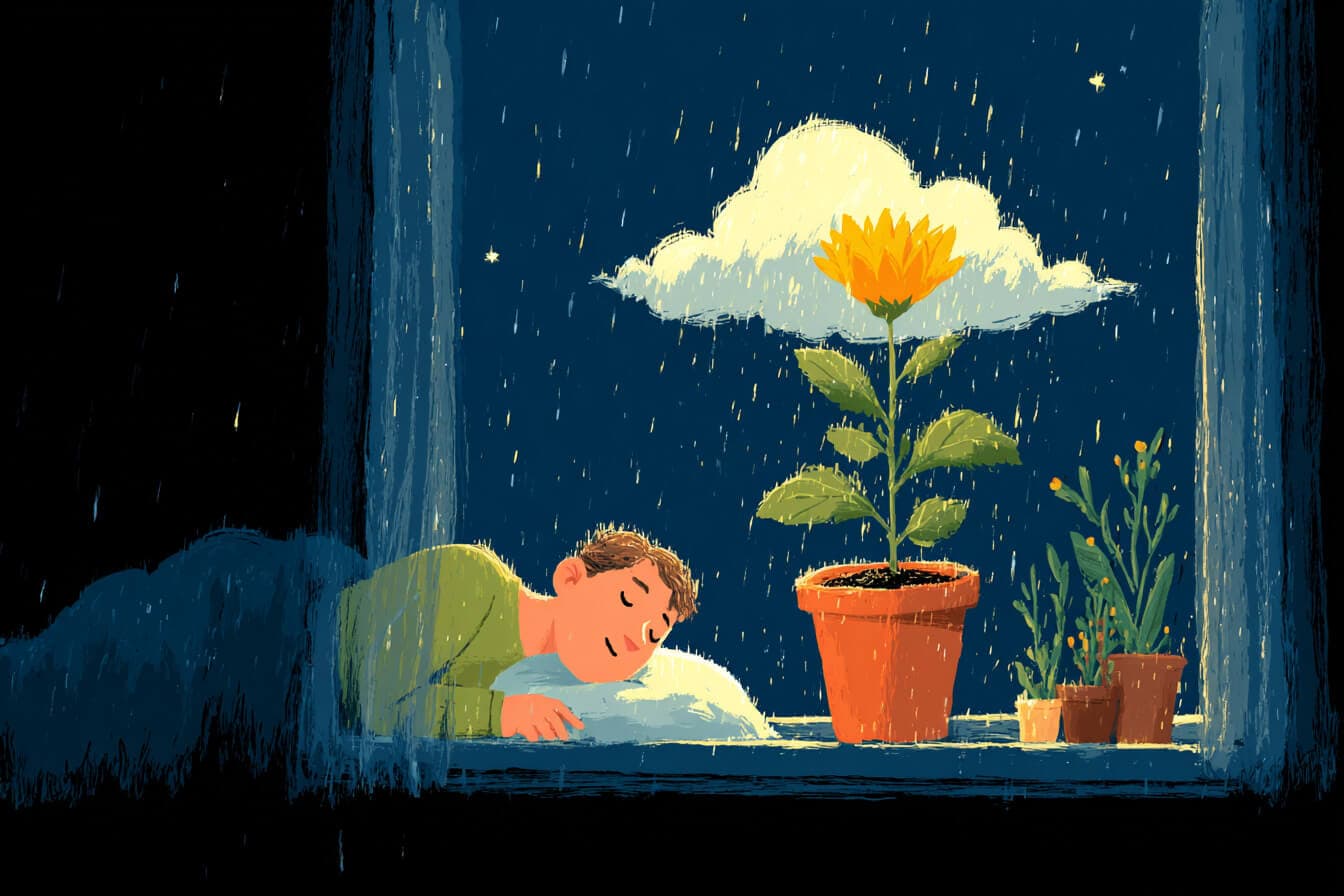
There is something magical about a story that feels like a whisper, soft enough to carry you toward sleep on a single breath. In The Lost Cloud and the House High Flower, a father sits beside his daughter Mira and tells a gentle tale about a tiny cloud that rains on one flower until it towers above the rooftops. It is one of those short quick bedtime stories for girlfriend or anyone who loves a cozy, unhurried ending to the day. If you want to create your own dreamy version, try Sleepytale to build a personalized story in moments.
Why Quick For Girlfriend Stories Work So Well at Bedtime
Stories about small, devoted acts of care have a special power at bedtime. When a child hears about a cloud that chooses just one flower and tends it drop by drop, the world shrinks to something manageable and warm. There is no rush, no loud adventure, just the steady rhythm of giving. That gentle focus mirrors the way a child's own breathing slows as sleep draws near, making quick bedtime stories for girlfriend and family alike feel like a lullaby told in pictures. The garden setting adds its own comfort. Fences, birdbaths, and familiar neighbors create a landscape that feels safe and known. Children do not need to map a strange new world before they can relax into the narrative. Instead, they settle into a place that already smells like bread and sounds like a bicycle bell, and that familiarity is exactly what bedtime asks for.
The Lost Cloud and the House-High Flower 12 min 46 sec
12 min 46 sec
The bedtime lamp clicked, and the room turned into a little island of light.
Mira tucked her toes into the gap between the blanket and the sheet, hunting the cool spot.
The curtain breathed in once, then out, as if the window itself was sleeping.
On the dresser, a snow globe leaned a little to the left and kept its secrets.
She blinked at the shadows around the rocking chair until they turned into a mountain, a sleepy dog, a loaf of bread.
She nudged the pillow toward the headboard and said, tell me something before I fall asleep.
Not loud.
The words skated across the quilt and hid in the folds.
Her father stood by the doorway and pretended to be a tall tree.
One arm raised, wrist bent, finger leaves.
He let his hand drop and came to sit on the carpet, just close enough to rest his elbow on the mattress.
You always ask for something, he said, but he was smiling with the corner of his mouth and not stopping.
How about this.
A cloud once got lost, the silly kind that forgets its shoes, and landed in a garden.
Mira blinked, and a bubble of air left her lips like a pebble slipping into a pond.
The lamp hummed along from its brass neck.
It could not find the sky, he went on.
It had wandered too low looking for a friend.
It bumped the fence with its round side.
It kissed the birdbath and made the water wrinkle.
The cloud was small enough to be held, big enough to be hugged if you were brave and did not mind damp sleeves.
It rained on one single flower, he said, and he tapped a finger against the quilt in the same spot, once and once again, as if the stitch there were a seed.
Only one.
He held up another finger to show he meant it.
The rest of the garden waited, leaves tipped up like listening cups, but the cloud chose.
Plip on the golden center.
Plip on the green stem.
Plip in time with his breathing.
The flower looked left and looked right, not with eyes, but with the tilt of its face at morning and the slow stretch of its neck by noon.
Its stem drank and drank.
Its petals turned the color of butter on warm toast.
It grew taller than the fence.
Taller than the porch roof with the missing shingle that always chattered in spring.
Taller than the house itself, the flower lifting its sunlike head to peek into the upstairs windows as if asking, anybody there.
Mira hooked a finger through the ribbon tied to the bedpost and held it loosely, the bow sliding to her knuckle and back.
She rolled the ribbon against her skin, slow and slower, and thought about a stem as thick as her leg, smooth as the leg of the dining table where the pencil marks lived.
In the rocking chair shadow dog, a new ear arrived and wagged once.
The flower was not lonely, her father said, and he leaned back on his palms, legs out, the sole of one sock gray from the rug.
Bees came in a band with a low song and small feet that made dust dance.
A ladybug took a red nap under one petal between jobs.
A spider made a silver hammock and did not say no when the wind offered to push.
Down below, in the square of dirt near the fence, lettuce leaves started gossip and peas climbed their ladder two rungs and stopped to think.
He paused to scratch his cheek with his knuckle.
Then he gave the flower a house cat.
Not really, he said, but imagine one from next door leaping and missing, then sitting with dignity beside the flower pot anyway, pretending that was the plan all along.
Imagine a child on a bike going by and ringing the bell twice for the flower, the bell sound thin and bright like a coin flicked into a glass.
Mira's eyes slid toward the ceiling where three glow stars were missing.
She had peeled them and stuck them to the underside of the drawer once to see if stars could hide.
They could.
She could still see the sticky moons on her fingertips when she pressed her thumb to her lips.
The room tasted faintly like toothpaste and the cotton of her sleeve.
What about the cloud, she said, around a yawn she tried to catch in her blanket.
Her father nodded, as if she had tugged a string that kept his story tied to the bed frame.
It liked that work, he said.
It liked choosing one thing and doing it well.
It did not cover the whole sky and make people pull their hats tighter and check the sidewalk puddles with their toes.
It rested where the fence made a corner, a soft seat against the wood, and tipped its bucket for only the flower, one drop at a time, as if playing a simple song on a toy piano and enjoying the way each note sat still after it sounded.
Mira made a face that said she could hear the notes.
She tapped the ribbon against the sheet in a beat no one else could follow, then slowed and stopped when her father glanced down at the shape her foot was making under the quilt.
He could tell where her toes were from the bump that moved and paused, moved and paused, a small mouse on a winter path.
The neighbors peered out and then did not pretend, they waved.
They put a saucer of cream on a step for luck though that is not how flowers drink.
A mail carrier leaned his bicycle against the mailbox and took a picture but only after asking permission aloud to the dahlias, who said go ahead in the dignified way dahlias have.
Somewhere, in a window with a blue paper crane taped high, a kettle whistled and then stopped as if shy.
And the house, Mira said, could the flower see inside.
She turned her head on the pillow.
Hair slid across cotton with a sound like a shy cricket.
Her father, whose hair had gone soft at the edges on damp evenings, sat up a little and made a window with his hands.
There was a kitchen full of the scent of bread and jam.
A clock with a tail that swung.
A small shoe by the door with a marble sleeping in it because that is where a marble sleeps when it has no pocket of its own.
The flower saw that and did not push its face in farther, he said.
It kept the house a house.
It did not make a mess.
It shed a petal on the porch and the petal landed on a muddy boot like a golden plate.
When the wind tried to be rude, the flower shook its head once and said, we do not do that here.
The wind turned its pockets out to prove it meant no harm and then it went to tie ribbons in the birch tree a block over because the birch did not mind a little fuss.
Mira licked a bit of lip and found a grain of sugar stuck from brushing late with a sweet toothpaste that claimed to be strawberry but was lying.
Her father caught her eye and tilted his chin.
A promise to bring water if she asked.
He had a voice that could curl around a word and keep it from falling off the bed.
The cloud grew thinner with its work.
That is what happened when you rained.
It learned the flower's tall shape as if tracing a friend with a finger on fogged glass.
It learned the times when bees were busy and when they rested on the fence and told news.
It learned to stay off the chimney so smoke could stretch and snap and put itself away.
It leaned sometimes against the house eave, cool and damp, like a dishcloth waiting for a hand.
If I were there, Mira said, I would stand on the porch rail and touch the petal.
Just one.
She held up her own finger, considered its proudness, then let it sink back under the quilt.
The quilt had a tear near her knee with threads that liked to tickle.
Her toe went looking for the tickle and found it.
She tucked her toe away.
Her father looked at the window and saw the curtain cool and almost still.
He counted to four under his breath because the rain in his story had its count too.
Then he said, when evening came, the cloud worried it would forget itself and fade before it said thank you.
So it let its last drops fall in a little row on the porch, a path of dots leading from the step to the flower's stem.
The dots dried like freckles on old paint.
Who did it say thank you to, Mira asked, but the way she said it, the edges were soft.
Less voice, more breath.
He noticed the shape of her mouth, how it turned a question round and held it a moment.
To the garden for listening, he said.
To the single flower for choosing to grow where the cloud had landed.
To the house for not minding.
To the bees for carrying the news to other yards.
To a ladybug that woke up too early and said, oh.
He reached for the glass on the nightstand.
His sleeve brushed a bookmark that had a picture of an otter holding a rock.
The rock had a tiny chip in its top right corner, the kind of chip you can only see if you tilt the paper.
He set the glass down again without drinking, and the coaster stuck to the bottom for a second and let go with a soft pop.
Mira watched his hand and then did not.
Her eyes made a path across the blanket stitches and up to the lamp switch, which had a dot of green paint stuck to its side from when they did the chair and put the paper down too late.
On the floor beside the bed, one sock lay rolled on itself like a sleepy snail.
The heater clinked once in its old way and took a rest.
The cloud finished, he said, and it was lighter than when it began.
A little nothing.
That is not bad.
It rose, slow and sure, the way a bubble finds the top of the bath.
It passed a kite string and said, excuse me.
It passed a sparrow that owed nobody anything and tipped a corner to be polite.
It found the space above the roofs and checked each direction.
North smelled like pine.
East was bread and dust.
He sniffed exaggeratedly, and Mira laughed without opening her mouth and without sound.
Then the flower, taller than the house, gave one long creak, like a door that gets used every day, and settled its stem into itself.
It did not bend back to small, it simply learned stillness.
It held a droplet in one fold until the stars came out, and when the droplet finally let go, it landed in the soil, a single small sound, the kind you hear only if you put your ear against the earth and listen for rain that has already passed.
Her father stopped.
He made a circle on the quilt where his finger had tapped before, then laid his hand flat.
He turned his head and looked at Mira, so carefully, as if the bed had a tiny bell he did not want to ring.
Her face had gone soft, her eyes slowed in their blinking, the last blink half finished and then forgotten.
He lowered his voice by accident, as people do in museums and on late trains.
That is it.
That is all, he said, but he said it like a secret.
The room answered with a small fridge hum down the hall, a distant water pipe clicking off its own story.
Mira's hand slid off the ribbon and found his forearm.
Her fingers curled in a slow hello that paused and then did not need to finish.
He waited.
He did not pull away.
He let his sleeve grow warm where her fingertips made little moons.
He looked at the window and imagined the flower's face out there, polite and tall, not peeking, just present.
He pictured a dot of water on the porch drying into an oval stain that would look like a small leaf for a week before it blurred into paint.
He thought he might take out the ladder tomorrow to check that chatty shingle.
He also thought he would leave it till the weekend because the weekend has a smoother ladder and he liked telling himself that.
At the foot of the bed, the old stuffed bear leaned on its side with an ear folded in, the same way his own ear would be if he slept on the couch by mistake.
In the hallway, a shoelace made a string shadow that touched the edge of the rug and stopped, as if shy about stepping on pattern.
He stood, slow, and the carpet sighed under his heel.
He switched off the lamp.
The room gathered itself.
Outside, not far, a train breathed along the low part of town, one long note through all the backyards at once.
The curtain moved in again, barely.
On the ceiling, the faint shapes where stars had been gave nothing away.
He backed toward the door, counting his steps without moving his lips.
Three.
Two.
One.
He did not close the door all the way.
He let it hover wide enough for a hallway nightlight to lay a pale line across the rug to the bed.
Mira's breathing found its own rhythm, a slow wave that had nothing to do with clocks.
Somewhere in her dream, a cloud lifted from a fence corner and went looking for sky with no hurry at all, and a flower as tall as a roof watched the night settle on each leaf like a cat settling after a turn.
In the kitchen, the clock with the swinging tail kept on, left, right, never losing its place.
He waited one more breath, then another, then he let the house hold its own sound.
The doorknob was smooth under his palm, a circle that remembered every turning.
He did not whisper goodnight.
He left the word on the quilt with the small circles his finger had made earlier.
It lay there, quiet, right beside the place where her hand had forgotten the ribbon.
On the porch, though no one could see it, there was one last dark dot shaped like a seed.
It would fade by morning.
For now, it held the porch light in a tiny, trembling circle.
The Quiet Lessons in This Quick For Girlfriend Bedtime Story
This story gently explores devotion, patience, and respect for boundaries. The cloud's choice to rain on just one flower, drop by careful drop, shows children that giving your full attention to one thing at a time can be powerful and meaningful. The flower's decision not to push its face farther into the kitchen window teaches that caring for someone also means honoring their space. These lessons arrive softly, wrapped in images of golden petals and bicycle bells, which makes them easy to absorb in the drowsy moments before sleep.
Tips for Reading This Story
When voicing Mira's father, keep your tone low and unhurried, especially during the “plip, plip“ rain sounds as the cloud waters the flower; tap gently on the bed to match his rhythm on the quilt. Slow your pace even further when the flower peers into the upstairs windows, letting the silence between sentences feel like the flower leaning in. Give the wind a slightly breezy, apologetic voice when it turns its pockets out to prove it meant no harm.
Frequently Asked Questions
What age is this story best for?
This story works best for children ages 3 to 7. Younger listeners will love the gentle rhythm of the cloud's rain and playful details like a marble sleeping inside a shoe, while older children will appreciate the quiet humor of a cat pretending it meant to miss its jump. The calm pacing and soft imagery make it especially good for little ones who need help winding down.
Is this story available as audio?
Yes, you can listen to the audio version by pressing play at the top of the page. The narration brings out the soft “plip, plip“ of the cloud watering its flower and the thin, bright ring of the bicycle bell passing by. Hearing Mira's father tell the story aloud adds a cozy, intimate quality that feels like someone is sitting right there beside the bed.
Why does the cloud choose to rain on only one flower instead of the whole garden?
The cloud enjoys choosing one thing and doing it well, rather than spreading itself thin across the entire sky. By focusing all its care on a single golden flower, it watches that flower grow taller than the fence, the porch roof, and even the house itself. The story uses this gentle choice to show that small, devoted attention can create something extraordinary.
Create Your Own Version
Sleepytale turns your child's favorite ideas into a soothing bedtime story crafted just for them. You can swap the cloud for a friendly fog, change the garden to a rooftop terrace, or replace the golden flower with a towering sunflower that peeks into a treehouse. In just a few clicks, you will have a calm, cozy tale ready to read aloud tonight.
Looking for more couples bedtime stories?
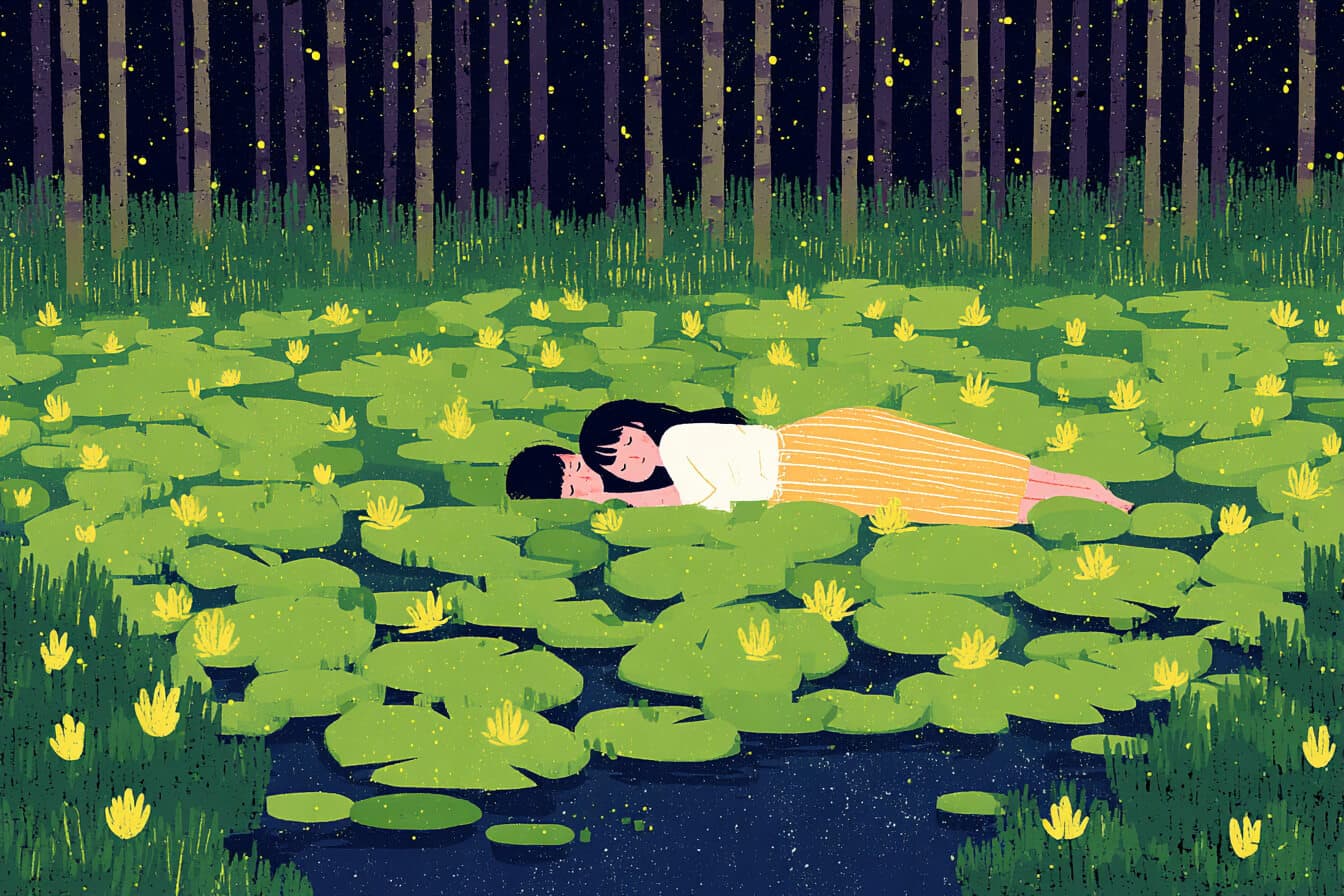
Funny Short Bedtime Stories For Girlfriend
Ben retells Shrek so loudly the neighbor's dog barks back in this short funny short bedtime stories for girlfriend favorite.
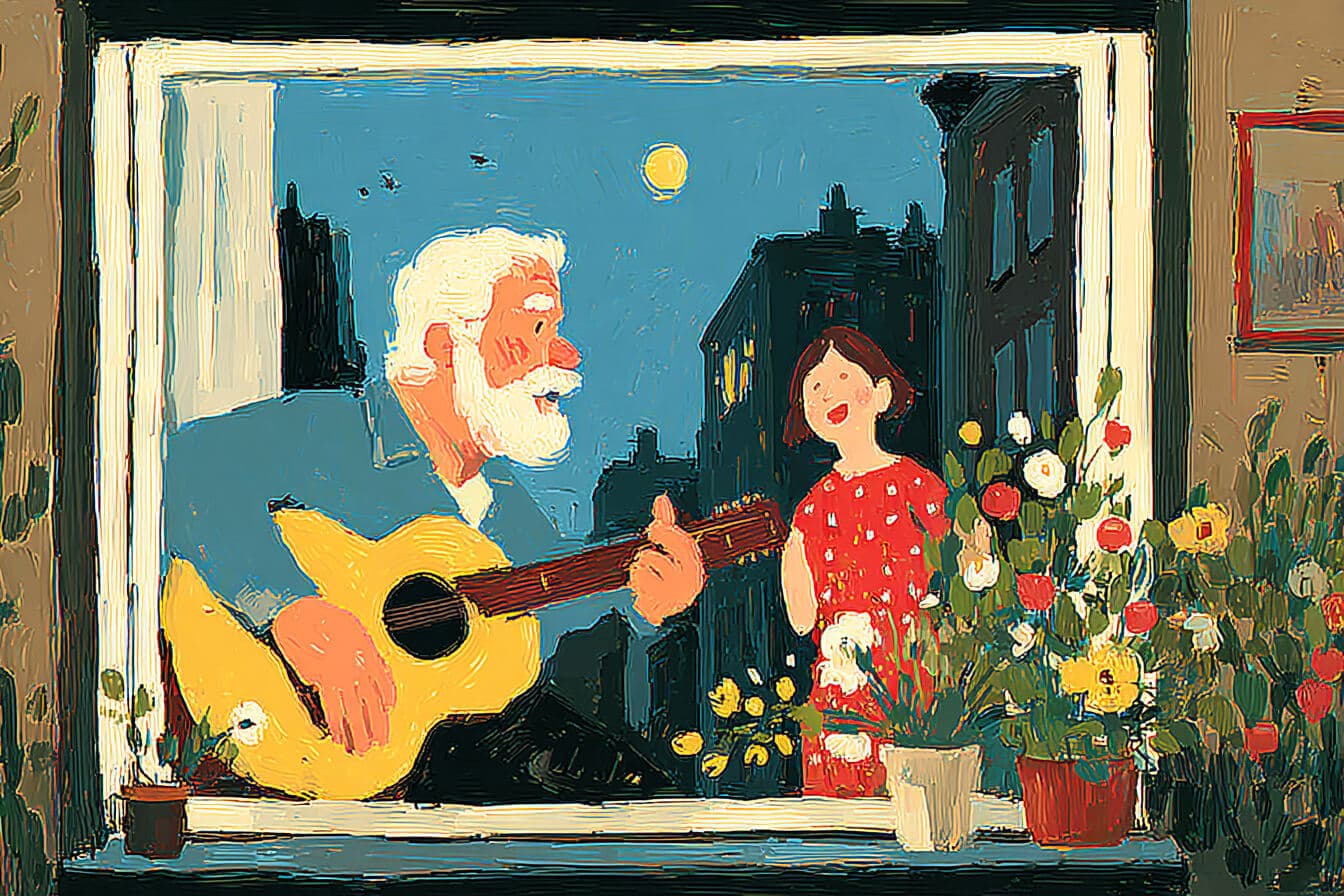
Funny Short Bedtime Stories For Boyfriend
A guitar serenade drifts to the wrong window in this short funny short bedtime stories for boyfriend tale about Mateo and a bearded neighbor.
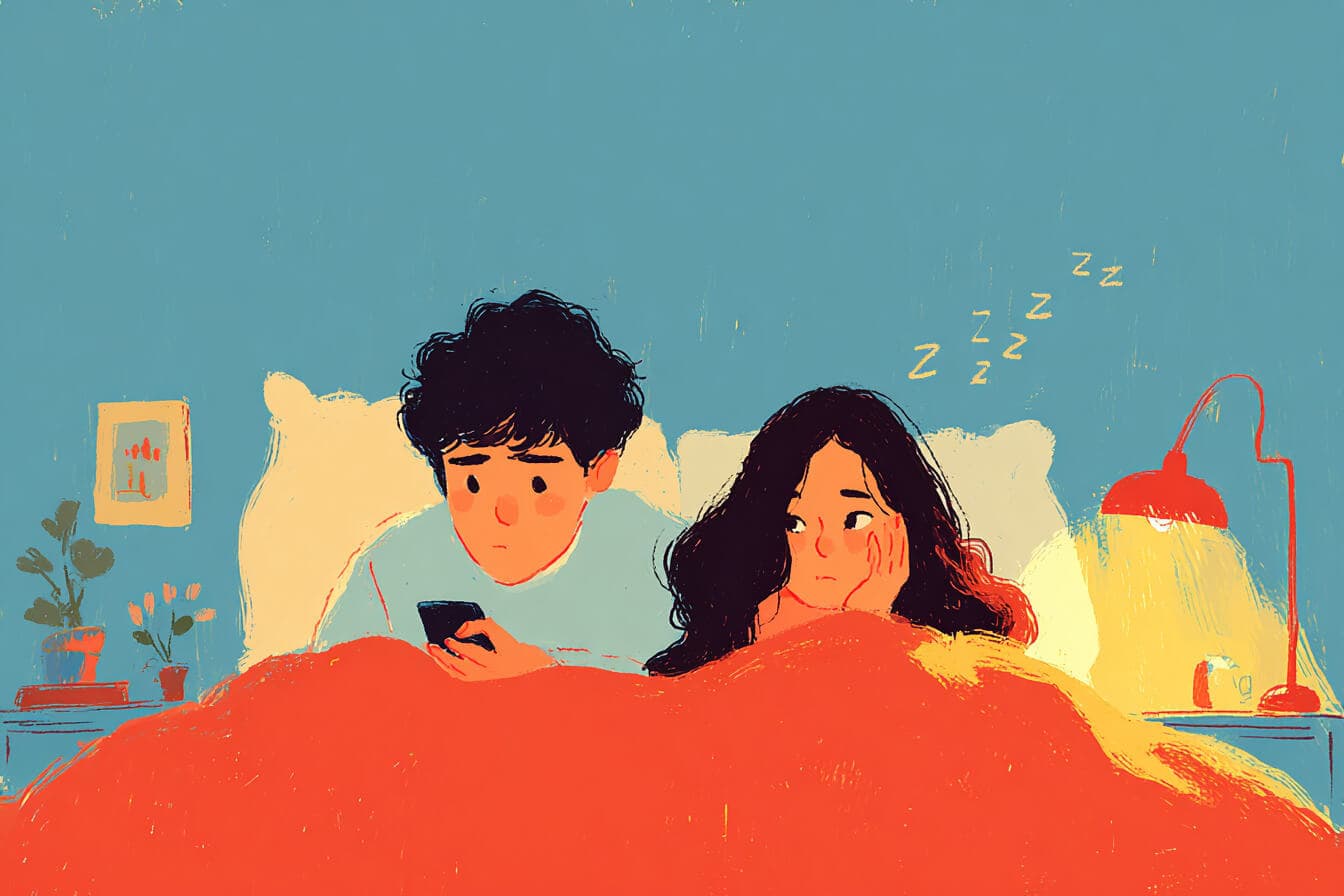
Cute Short Bedtime Stories For Girlfriend
Discover short cute short bedtime stories for girlfriend featuring Mia waiting for Oliver's goodnight text under the stars.
Cute Short Bedtime Stories For Boyfriend
Forget grand gestures; a silver marker and a tiny heart a wrist say everything in this short cute short bedtime stories for boyfriend gem.
Bedtime Love Story For Your Girlfriend
This short bedtime love story for your girlfriend centers two blue hoodies, a pinky promise, and the gentle joy of learning to share.

Bedtime Love Story For Your Boyfriend
A short bedtime love story for your boyfriend winds through back roads, peach stands, and three quiet hand squeezes that say everything.