

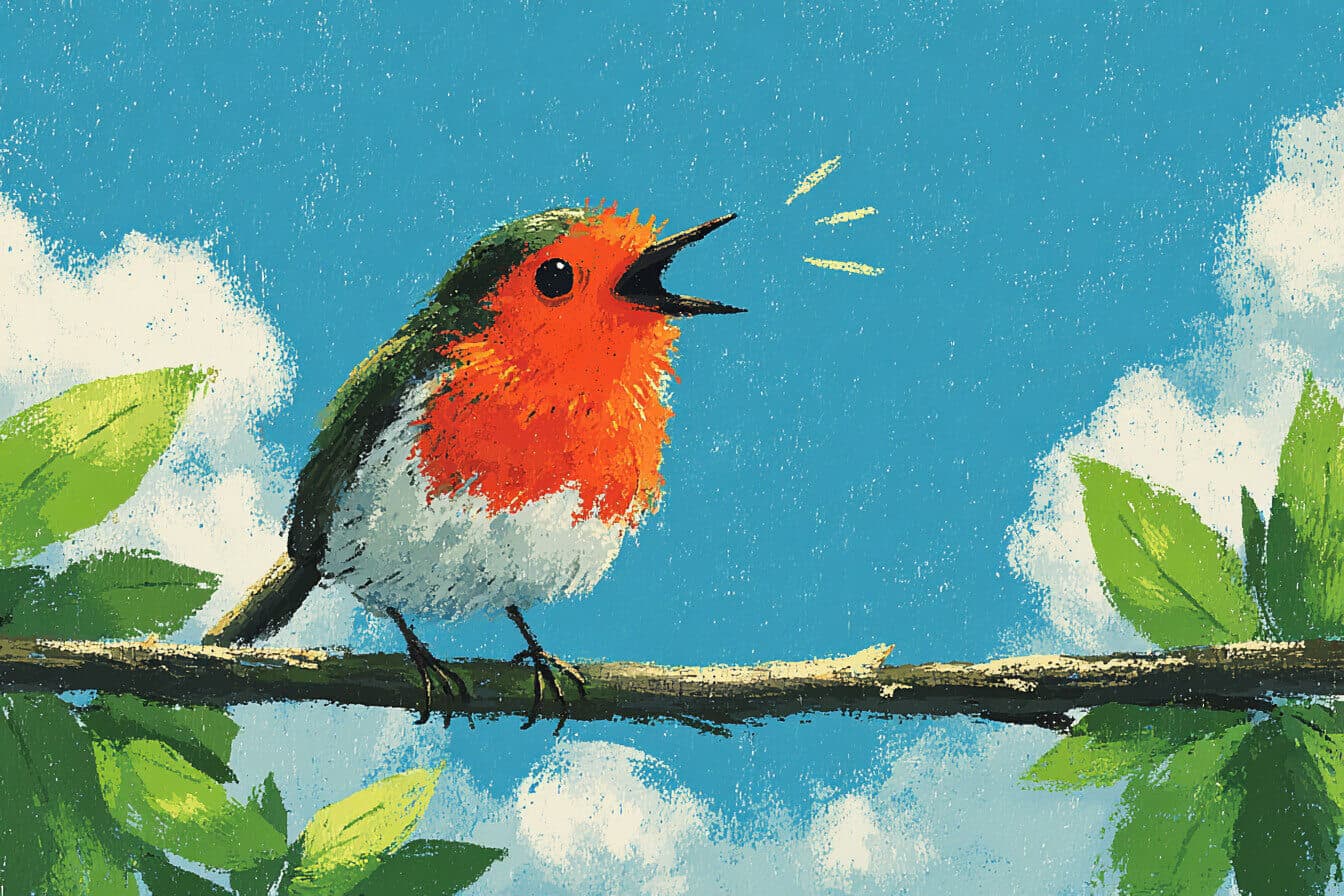
There is something about a small bird singing on a branch that makes a child go still and listen. This cozy story follows Rosie, a robin who perches on the highest limb of a maple tree and sings the dark into gentle dawn, one quiet note at a time. It is the kind of robin bedtime story that lets the whole room slow down before sleep. If your little one loves birds and soft mornings, you can create your own version with Sleepytale.
Why Robin Stories Work So Well at Bedtime
Robins show up at the edges of the day, right when things are getting quiet. That timing makes them natural bedtime companions. A child hearing about a robin settling onto a branch, tilting its head, sending one small song into the cool air, can feel that same settling in their own body. The rhythm of birdsong is repetitive and unhurried, which is exactly what a restless mind needs before sleep.
There is also something reassuring about a bird that returns every morning. A bedtime story about a robin carries a built-in promise: the night will end, the sun will come back, and your small singer will be there on the same branch. For kids working through fears of the dark or the bigness of nighttime, that kind of dependable return is worth more than any lullaby.
Rosie's Gentle Dawn 2 min 42 sec
2 min 42 sec
Before morning, when the sky was the color of an old nickel, Rosie the robin left her nest of moss and feathers and fluttered up to the highest branch of the maple tree.
She landed with a tiny scrape of claws on bark, settled her weight, and drew a breath.
Below her the world was still.
Cool shadows lay across the meadow like blankets nobody had folded yet. A single leaf turned over in a breeze so faint it barely counted. Rosie closed her eyes, listened to the small rustling sounds the tree made when it thought no one was paying attention, and opened her beak.
Her first note was light, almost nothing, the kind of sound you might miss if you were thinking about something else. The second rose a little higher, curling through the air the way steam curls off a cup of tea left on a windowsill. She did not rush. She never rushed. That was the whole point.
With each trill the darkness pulled back, not all at once but in thin layers, as though her singing were slowly peeling the night off the sky. She sang about dew sitting on clover. She sang about burrows where rabbits slept with their ears folded down. She sang about the feeling of warm sunlight landing on the back of your neck for the first time that day, and how it always surprises you even though it happens every single morning.
The horizon blushed. Pale peach first, then a gold so soft it looked almost shy.
Rosie kept singing, steady and calm, and the sun peeked over the hills like a sleepy golden eye that was not quite ready to open all the way but did it anyway because Rosie had asked nicely.
The meadow grasses leaned into the light. Leaves uncurled at their tips. Somewhere a beetle clicked its wings once and went quiet again, as if it had started to say something and then changed its mind.
Rosie finished with a chirp, a short one, not fancy. She folded her wings and watched the world wake up in slow motion. A spider's web between two stalks caught the new light and held it, trembling.
She did not need anyone to clap.
The quiet way the light spread across the land, touching the tops of things first and then sliding gently down to the roots, was enough. Every creature stirred without hurry, meeting the morning exactly as it was. Soft. New. A little cool around the edges still.
Rosie tucked her head beneath one wing, rested for a moment, and felt the sweet hush settle around her again. Tomorrow she would be here on this same branch, and the dawn would be waiting, and her song would be ready. That was the deal between them, kept in simple notes of calm and the smallest kind of joy there is.
The Quiet Lessons in This Robin Bedtime Story
When Rosie sings without waiting for applause, children absorb the idea that doing something kind or beautiful does not require an audience. Her patience, adding one note at a time rather than rushing the sunrise along, shows that good things arrive when you stop trying to force them. And the small detail of the beetle clicking its wings and going quiet again is a gentle reminder that it is perfectly fine to start something, pause, and try again later. These are reassuring thoughts to carry into sleep, especially for a child who had a day full of trying hard and not getting everything right.
Tips for Reading This Story
Give Rosie's song moments real silence. When she sings her first note, pause for a breath before reading the next line, so the room actually feels like early morning. Try making Rosie's final chirp out loud, just a quick, cheerful little sound with your mouth, because kids almost always smile at that. When you reach the line about the beetle clicking its wings and changing its mind, slow down and let your child wonder about it for a second before moving on.
Frequently Asked Questions
What age is this story best for?
This story works beautifully for children ages 2 to 6. The language is simple enough for toddlers to follow, and the slow pace of Rosie climbing to her branch, singing one note at a time, and watching the light spread gives younger listeners something calm to picture. Older preschoolers will enjoy the funny image of the sun opening like a sleepy eye and the beetle that changes its mind.
Is this story available as audio?
Yes, you can press play at the top of the story to listen. The audio version captures the gentle build of Rosie's dawn song especially well, because the pacing lets each note of description land softly before the next one begins. The moment when the horizon blushes from peach to gold sounds particularly lovely read aloud, and younger kids often drift off right around the time Rosie tucks her head under her wing.
Why does Rosie sing in the dark instead of waiting for daylight?
Real robins are among the first birds to sing each morning, often starting well before sunrise. In the story, Rosie sings because the dark does not scare her. She trusts that her steady, calm notes will meet the light halfway. It is a comforting idea for children who sometimes feel uncertain about the quiet and the dark, the morning always comes, and you can greet it gently.
Create Your Own Version
Sleepytale lets you build a cozy bird story with exactly the details your child loves. Swap the maple tree for a garden fence or a rooftop chimney, change sunrise to a moonlit evening, or give Rosie a friend like a sleepy hedgehog or a curious squirrel. In a few taps you will have a calm, personal story ready to replay whenever your family needs a gentle ending to the day.
Looking for more animal bedtime stories?
Polar Bear Bedtime Stories
A shimmering palace appears the sea ice, and a small wish turns into shared laughter. Drift into short polar bear bedtime stories with a bright, gentle twist.

Bear Bedtime Stories
Drift off with short bear bedtime stories that feel warm and soothing, plus a simple way to create your own cozy version in Sleepytale.
Tropical Fish Bedtime Stories
Sunlight paints golden paths across a coral reef as a brave little fish leads a pattern parade. Drift into short tropical fish bedtime stories with gentle pride and calm sea sounds.

Pufferfish Bedtime Stories
Drift under turquoise waves with short pufferfish bedtime stories where a jumpy little fish turns surprise bounces into a brave stage dance. A conch charm makes the twist feel tender.

Piranha Bedtime Stories
Drift into the Amazon with short piranha bedtime stories where a toothy fish hosts a leafy picnic and wins hearts one crunch at a time.

Pigeon Bedtime Stories
Ease into comfort as Pablo delivers tiny folded notes tied with a sky blue ribbon to lift lonely hearts. Settle in with short pigeon bedtime stories that bring warmth, hope, and easy sleep.