
Pinocchio Bedtime Story
By

Dennis Wang, Bedtime Story Expert
8 min 43 sec
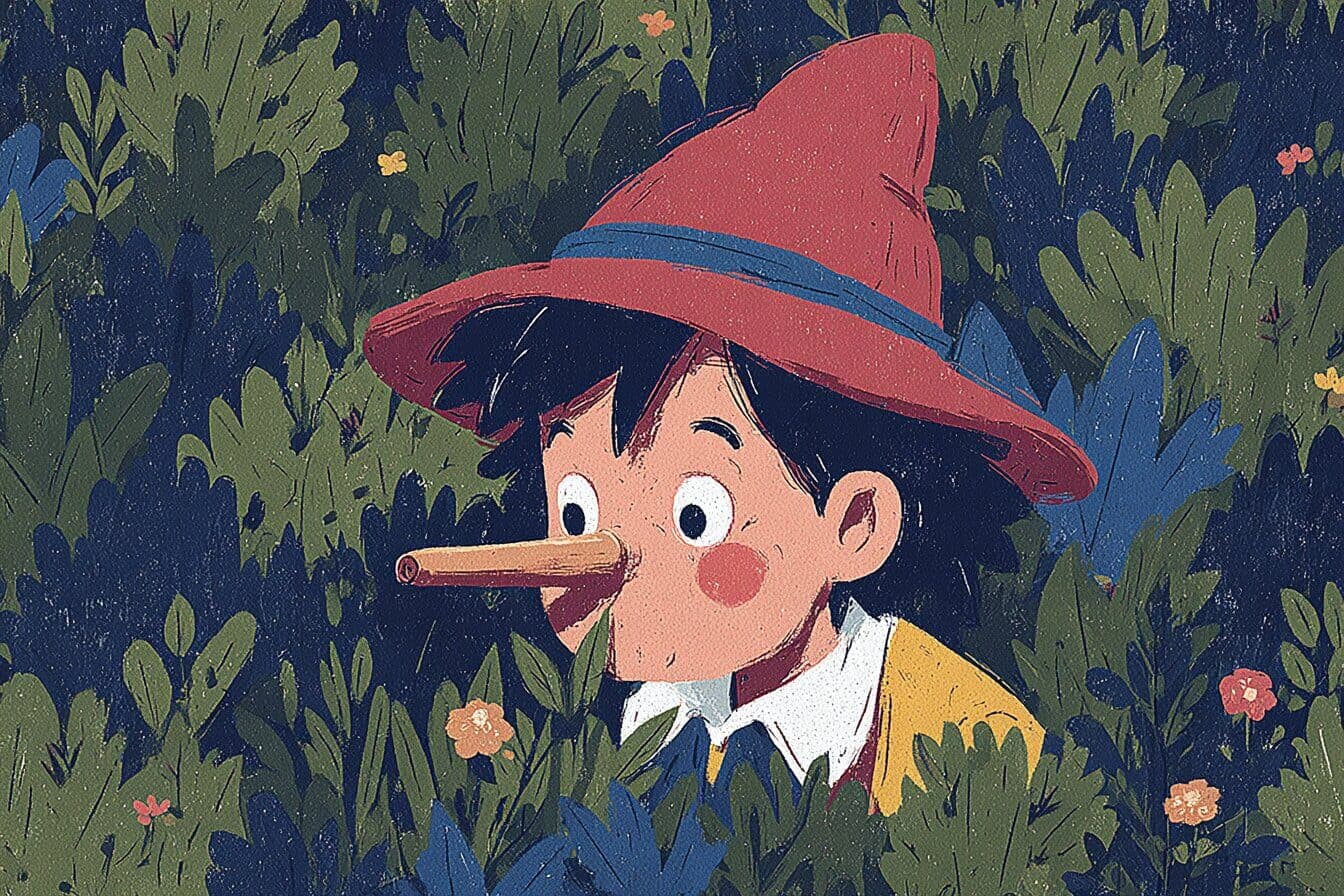
There is something about the smell of wood shavings and the flicker of a workshop lamp that makes children go still and listen. This story follows Pino, a little wooden puppet who stumbles through bravery, honesty, and sharing before earning the one thing he wants most. It is a cozy Pinocchio bedtime story with a cricket who keeps score in pebbles and a fairy who waits patiently at the finish line. If your child loves this kind of tale, you can craft your own version with Sleepytale.
Why Pinocchio Stories Work So Well at Bedtime
Children are drawn to Pinocchio tales at night because the core idea, a puppet learning to become real, mirrors what kids feel as they grow. Every day they practice telling the truth, sharing with friends, and finding courage in small moments. A bedtime story about Pinocchio puts those familiar struggles into a world just strange enough to feel like a dream, with talking crickets, blue fairies, and wooden noses that sprout leaves. That slight distance makes tough feelings easier to sit with right before sleep.
There is also a deep comfort in watching someone get a second chance. Pino makes mistakes and the story does not punish him; it lets him try again. For a child lying in the dark wondering about something they said or did not say that day, that kind of gentleness settles the mind. The workshop, the meadow, the walk home, all of it moves in a steady loop that feels safe enough to close your eyes inside.
Pino and the Talking Cricket's School of Heart 8 min 43 sec
8 min 43 sec
Inside a tiny workshop on the edge of Maplewood village, old Geppetto carved a puppet from a piece of pine that would not stop humming.
The wood vibrated under his knife, and when the last curl of shaving dropped to the floor, the puppet blinked, stretched one stiff arm, and said, "Good morning, Maker!"
Geppetto laughed so hard his spectacles bounced off his nose and landed in a jar of varnish.
He fished them out, wiped them on his apron, and named the puppet Pino.
That very night a blue fairy drifted through the keyhole. She smelled, faintly, of rain on stone.
"If you wish to be a real boy," she said, "you must learn three lessons. Be brave. Be truthful. Be unselfish."
Then she tapped the windowsill, and a cricket wearing a green cap appeared as if he had been waiting there all along.
"I am Professor Cricket," he chirped. "I will keep score."
He produced a leather pouch full of pebbles, half black, half white, and set it beside the lamp.
Pino's first test came before breakfast.
Geppetto handed him a red apple and said, "Share this with anyone who looks hungry."
Pino skipped outside. The apple was warm from Geppetto's hand, and it smelled the way mornings should but rarely do.
A black kitten with torn ears sat on the stoop, ribs showing through its fur.
"I'm starving," the kitten mewed.
Pino hugged the apple tighter. "But I'm starving too," he said, and hurried past without looking back.
The cricket dropped a black pebble into a jar on the sill. It clinked against the glass.
Pino felt a strange ache in his chest, as if one of his wooden ribs had splintered. He tried to ignore it.
That afternoon the village children marched to the Learning Meadow, where Teacher Lily stood holding a butterfly net like a flag.
"Today we study metamorphosis," she announced, and opened a jar of caterpillars so plump they looked embarrassed about it.
She explained how each one would spin a cocoon and come out the other side as a painted lady.
Pino stared.
"I thought only fairies could do magic," he whispered to the cricket.
"Knowledge is its own fairy," the cricket whispered back, and for once he sounded like he meant it rather than quoting a textbook.
When Teacher Lily asked for volunteers to tag the butterflies, Pino's hand shot up so fast his elbow squeaked.
He placed numbered stickers on wing after wing, noticing that no two patterns matched, not even close. One had a spot like a thumbprint. Another looked like a tiny map of somewhere he had never been.
The cricket smiled and added a white pebble for curiosity.
On the walk home, Pino spotted the same black kitten stuck high in an oak. The wind hissed through the branches and the kitten's claws scraped bark in little panicked circles.
Pino looked up. It was a long way.
He climbed anyway, bark biting into his joints, one handhold at a time, until he balanced on a branch beside the trembling animal.
"Hold my overall strap," he said.
The kitten dug in its claws, and together they inched down. Pino's left knee clicked with every step, a sound like someone snapping a pencil very slowly.
At the bottom the kitten licked his hand, tongue rough as sandpaper.
"Thank you," it purred.
Pino noticed its ribs still showed. He reached into his pocket, pulled out the breakfast apple he had been carrying all day, and split it with his pocketknife.
Juice ran down both their chins.
The cricket flipped the black pebble over. White.
Two lessons to go.
The following day, Geppetto sold his best pocket watch to buy Pino a spelling slate. The old man set the slate on the table and said, "Learning to read will open every door," and his eyes shone as if the doors were already swinging wide.
Pino loved the slate. But after school he found a carnival poster nailed to the bakery wall: COME SEE THE WONDROUS PUPPET SHOW.
His wooden knees knocked. If he joined the show, he could earn coins and buy Geppetto a new watch. He could fix everything.
That night he crept to the cricket's perch.
"I'll perform, but I won't tell Geppetto. He worries."
The cricket said nothing. He just folded his front legs and looked at Pino the way a librarian looks at a book someone is about to dog-ear.
The carnival glowed with paper lanterns. Pino tap-danced on a stage no bigger than a kitchen table while children clapped and coins clinked into a tin cup.
Yet each step felt hollow, like tapping on an empty box.
When the moon hung high, he hurried home clutching enough coins for a watch chain. Geppetto met him at the door, eyes red, hands still dusted with sawdust from searching the workshop as if Pino might be hiding behind a shelf.
"I searched everywhere. Promise me you'll tell the truth about where you go."
Pino opened his mouth, and a fib popped out before he could catch it.
"I was practicing letters under the moon."
His wooden nose sprouted a leaf. A single green leaf, curling at the tip, absurd and undeniable.
He gasped, then confessed everything in one fast breath.
The leaf dropped. It landed on the threshold and stayed there for days, because nobody wanted to sweep it away. It was a good reminder.
Geppetto pulled him close. Their heartbeats drummed together, one wooden, one real, both steady.
The cricket marked another white pebble.
One lesson remained.
The next afternoon a letter arrived sealed with red wax. Geppetto read aloud: "Dear Toymaker, the Royal Orphanage requests one hundred toy boats for our lake festival. Can you deliver by Saturday?"
Geppetto's shoulders sagged. "That's only three days."
Pino's gears whirred. He could help carve, but the spelling bee was Friday and he had not practiced once. Helping meant losing his study time completely.
Professor Cricket perched on the window frame.
"Unselfishness means thinking of others first," he said quietly.
Pino rolled up his sleeves.
All night they worked. Pino sanded hulls while Geppetto painted stripes, red and white and a blue that looked like the fairy's wings. To stay awake they told stories, and Geppetto explained how different trees give different wood: willow bends, oak holds, maple tastes sweet if you nick the bark in spring. Pino filed that away. It felt important somehow, knowing where things come from.
By dawn, one hundred boats stood on the workbench, each flying a paper sail. Geppetto's hands were cramped. Pino's knuckles were worn smooth.
They loaded the wagon and rattled down the bumpy road. Pino practiced spelling out loud, sounding each word against the rhythm of the wheels.
"B-r-a-v-e, brave. T-r-u-t-h-f-u-l, truthful."
At the orphanage, children cheered and launched the boats onto a glimmering pond. The water caught the sky and held it.
A girl in a wheelchair hung back near the stone edge.
"I can't reach the water," she said, so softly Pino almost missed it.
He picked up a tiny purple boat, knelt on the damp grass, and floated it right at the pond's edge where she could push it with her crutch. The boat wobbled, then caught a breeze and sailed straight toward the middle.
Her smile.
It felt warmer than anything Pino had ever carved or danced or earned.
The cricket dropped the final white pebble into the jar.
That evening the blue fairy reappeared. Her wings scattered light the way a hand scatters seeds.
She counted the pebbles and nodded.
"You have passed every lesson, dear Pino."
She touched his chest with her wand.
Wood softened. Grain lines faded like writing left in the rain. Pino felt lungs fill with cool night air, and he laughed and cried at the same time, tasting salt on real lips for the first time and not quite believing it.
Geppetto wept openly and did not bother wiping his face.
The fairy turned to the cricket.
"Your teaching certificate," she said.
A tiny scroll appeared, tied with a ribbon the color of new grass. Professor Cricket bowed so low his cap nearly fell off.
From then on, Pino went to school with the village children. He started a club called the Truthful Explorers, where members learned butterfly codes, tree names, and how to split an apple so both halves come out even.
Every full moon he returned to the orphanage with new boats, because unselfishness, like a garden, needs replanting.
And every night, before climbing into his bed, Pino wrote one new word on his slate. He never spelled out a moral. He did not need to.
Geppetto kept the white pebbles in a jar by the window, where they caught the first light of morning and looked, for a moment, like something about to hatch.
The Quiet Lessons in This Pinocchio Bedtime Story
This story weaves together generosity, honesty, and the courage to try again after a mistake. When Pino walks past the hungry kitten and then feels that strange ache in his chest, children absorb the idea that ignoring a need does not make it disappear, and that coming back to fix it is always an option. The moment his nose sprouts a leaf and he confesses in one breathless rush shows kids that the truth can feel scary and still set things right. And when Pino gives up his spelling practice to sand boat hulls all night, the story gently suggests that caring for others sometimes costs us something real, and that the cost is part of what makes it matter. These are reassuring ideas to carry into sleep: mistakes are fixable, honesty is a relief, and kindness is worth the effort.
Tips for Reading This Story
Give Geppetto a warm, gravelly voice and let Professor Cricket sound crisp and a little fussy, like a teacher who secretly enjoys his students. When Pino's nose sprouts the leaf, pause for a beat and let your child react before you read the confession; that tiny silence makes the moment land. During the all-night boat-building scene, slow your pace and drop your volume, it is the coziest stretch of the story and a perfect place to let a sleepy listener start drifting off.
Frequently Asked Questions
What age is this story best for?
It works beautifully for children ages 3 to 7. Younger listeners enjoy the talking cricket, the kitten rescue, and the simple magic of the fairy's visit, while older kids pick up on Pino's internal struggle when he hides the truth about the carnival. The vocabulary is gentle enough for a three-year-old but the emotional beats keep a seven-year-old engaged.
Is this story available as audio?
Yes. Press play at the top of the story to hear it read aloud. The audio brings out details that reward listening, like the clink of pebbles dropping into the jar, the squeak of Pino's elbow, and the shift in pace during the quiet boat-building night. Professor Cricket's lines especially come alive with a narrator's voice behind them.
Why does Pino's nose grow a leaf instead of getting longer?
This version keeps the spirit of the classic Pinocchio tale but softens the consequence into something a little more whimsical and less frightening for bedtime. A single green leaf is surprising enough to make the point about lying, but it is also natural and gentle, more like a nudge from the story than a punishment. It falls off the moment Pino tells the truth, which reinforces the idea that honesty fixes things quickly.
Create Your Own Version
Sleepytale lets you reshape this tale into something that fits your child perfectly. Swap Maplewood for a seaside village, turn Professor Cricket into a gentle moth or a tiny owl, or replace the apple with a warm bread roll from a bakery next door. In a few moments you can create a calm, personal story ready to play whenever bedtime needs a little extra magic.
Looking for more bedtime story classics?

Once Upon A Time Stories
What happens when June opens a golden book with no title? One of the sweetest short once upon a time stories about a forest, a hedgehog, and a blank page.

Fairy Tales Written By Hans Christian Andersen
Anders discovers short fairy tales written by Hans Christian Andersen as his grandmother reads from a soft brown book by lamplight.

Bluebeard Fairy Tale
In this short bluebeard fairy tale, the forbidden room holds not horror but a music box and memories of the people Lord Corvus loved most.

Red Shoes Fairy Tale
What happens when Karen's magical red shoes refuse to stop dancing? Discover this short red shoes fairy tale tonight.

Twinkle Twinkle Little Star Bedtime Story
Lily watches a kind star and floats up to help deliver dreams in this short twinkle twinkle little star bedtime story. A warm, quiet tale for sleepy nights.
Through The Looking Glass Bedtime Story
Step into a calm, magical short through the looking glass bedtime story and drift toward sleep with gentle wonder. Enjoy a soothing retelling that feels cozy from start to finish.