
Nice Bedtime Stories for Adults
By

Dennis Wang, Bedtime Story Expert
8 min 27 sec
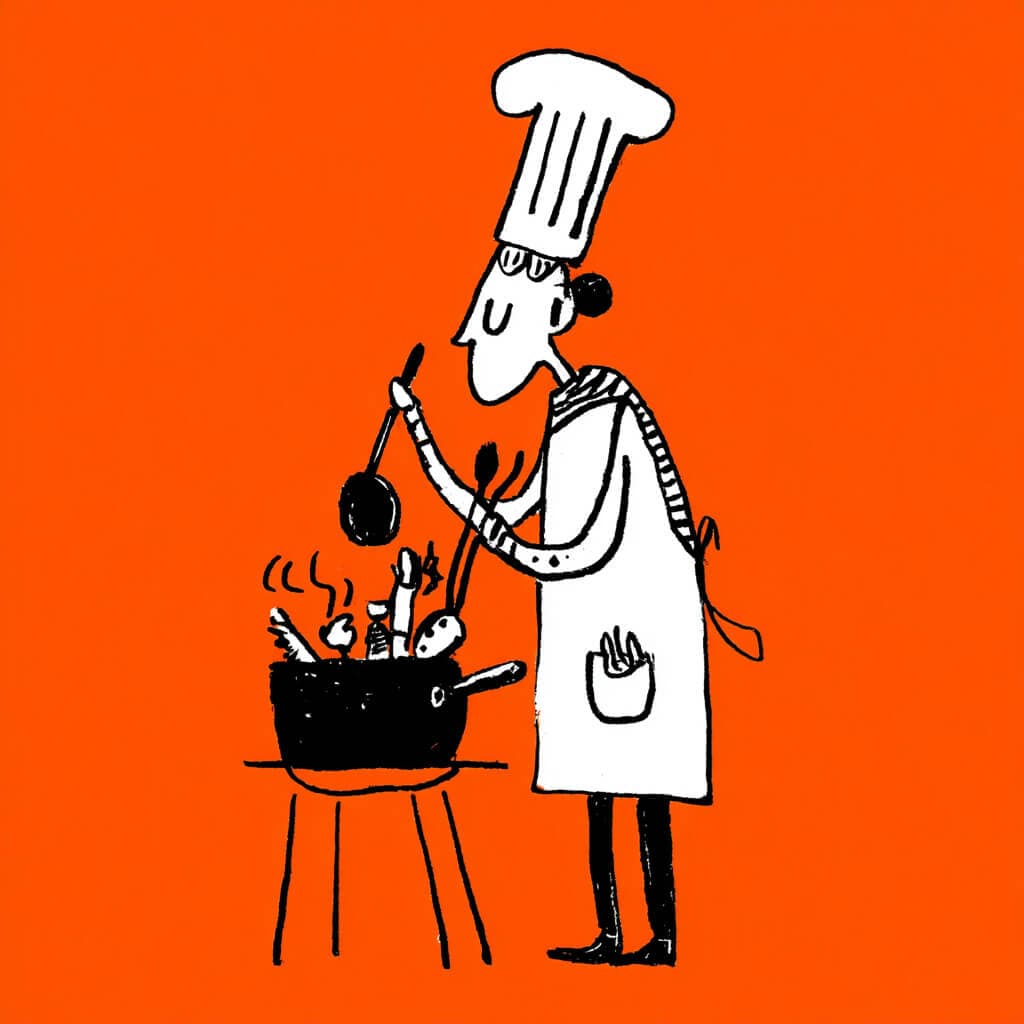
There is something about the last hour before sleep that makes grown-ups crave a story the way they once did as children, something unhurried and warm that asks nothing of them except to listen. This one follows Chef Étienne, a celebrated Parisian cook who loses his sense of taste on the biggest night of his career and must learn to prepare a royal meal using only what remains: aroma, texture, memory, and trust. It is exactly the kind of nice bedtime stories for adults that lets your thoughts soften instead of spiral. If you would like to shape a version around your own life or favorite comforts, you can create one inside Sleepytale.
Why Adult Stories Work So Well at Bedtime
Adults rarely give themselves permission to be read to, and that is part of why it works so powerfully. A story with a slow pace and sensory richness, like a meal being assembled course by course, gently pulls attention away from tomorrow's to-do list and drops it somewhere the body can relax. The rhythm of narrative gives the mind a single thread to follow instead of twenty.
A bedtime story for adults does not need to be childish to be comforting. In fact, grown-up readers often respond best to themes they recognize, like creative setbacks, the fear of losing something essential, or the quiet discovery that they are more resourceful than they thought. Those themes create a kind of emotional safety net right before sleep, the same way a warm drink or a familiar blanket does.
The King's Supper Without Taste 8 min 27 sec
8 min 27 sec
Chef Étienne had cooked under glittering chandeliers in Paris, in kitchens so hot the walls sweated, and once in a borrowed tent during a rainstorm that made the duck confit taste, improbably, better. But nothing had excited him quite like the lavender-scented letter stamped with the royal seal.
The king was inviting him to prepare a single, unforgettable evening meal in the palace garden under the moon.
As the carriage rolled past orchards and stone bridges, Étienne sat with his hands folded, picturing velvet soups, delicate tarts, slow-roasted dishes that would make the entire court sigh and then forget to speak.
The palace kitchen was enormous.
Copper pots shone on every wall, and baskets of herbs waited on the counter like a small indoor forest. He dipped a spoon into cool cream to wake his palate, expecting the usual soft sweetness. Instead: cold. Smooth. Nothing else. He tried a crumb of bread, then a pinch of salt, then a fragment of dark chocolate he kept in his coat pocket for emergencies.
Texture, yes.
Taste, nothing at all.
He sat down hard on a wooden stool. A quiet panic rose in his chest, fluttering and insistent.
The most important supper of his life was hours away and his tongue had gone entirely silent. He could hear the kitchen staff moving around him, the clatter of iron, the hiss of water meeting a hot pan. Garlic, butter, and rosemary still reached his nose, but they felt far away now, like music heard through a closed window. He imagined the king setting down his fork in polite disappointment. The courtiers trading glances. His name quietly removed from every menu in the city.
For a long moment, Étienne just sat there. A sous-chef asked if he needed anything and he waved the man off without looking up.
Then he pressed both hands flat against the worktable and took a breath so deep it seemed to reach the soles of his shoes.
Taste had vanished. But other senses stood at the ready, patient as old friends. He could see the deep green of basil, feel the spring of bread dough under his fingers, hear the snap of a carrot meeting a blade, smell the way lemon lifted the air as soon as you scored the rind. He remembered his grandmother, who used to say that good cooking was really just paying attention. She had been half-blind by the end of her life and still made the best gratin in the neighborhood because she could hear when the cheese began to bubble at exactly the right speed.
A new plan took shape, slowly, like bread rising.
Instead of chasing flavors he could not feel, he would build the supper around aroma, color, sound, and story. He asked the gardeners for lavender, thyme, and peaches still warm from the branch. He requested carrots in every shade, from pale gold to a burnt orange so deep it was almost red. He told the staff, plainly, that he would not be tasting today. He would be listening, watching, and trusting what he had learned over decades at the stove.
All afternoon he moved through the kitchen in a steady rhythm. Onions caramelized until they smelled like the very edges of toasted sugar. Tomatoes simmered with herbs until the steam carried something that felt less like a scent and more like a memory of lying in warm grass. Butter met the pan with a gentle hush, followed by the soft sizzle of mushrooms. He pressed pasta between his thumb and forefinger until it felt just firm enough, and he watched the way sauce clung to the back of a spoon, shining under lamplight.
One of the kitchen maids, a young woman named Colette who had barely spoken all day, stopped beside him.
"You keep closing your eyes when you stir," she said. "It looks like praying."
"Maybe it is," Étienne said, and he almost laughed, because it was the most honest answer he had.
When twilight slipped into the garden, candles glowed between climbing roses and the fountains murmured over stone. The long table gleamed with polished glasses and simple white plates. The king, queen, and their guests took their seats, curious about a menu no one had seen.
Étienne walked out with the first course. His heart was steady now, though his tongue remained blank.
He set down a chilled soup the color of a soft sunrise, perfumed with peach and a whisper of mint.
Before anyone lifted a spoon, he described walking through the early morning orchard, dew soaking through his shoes, hands full of fruit still warm from the tree. People smiled as they tasted, naming the notes they found.
Next came small loaves with crusts that crackled when broken, a tiny music of comfort, served alongside butter whipped with lemon zest and tarragon. A duke at the far end of the table closed his eyes and said quietly, "That is what summer sounds like."
Course by course, Étienne told stories.
He spoke of mountain fields when he served roasted root vegetables. He described sea breezes when delicate fish arrived on waves of fragrant steam. When he placed a humble dish of potatoes and caramelized onions on the table, he told them about holidays in his childhood apartment, where the kitchen was so small two people could not stand in it at once but somehow his entire family managed. Each dish invited the court to slow down, breathe, and notice what they were feeling, not just what they were chewing.
At first the king was very still.
Then the corners of his mouth lifted. He took another bite. Another. He closed his eyes for a moment as if listening to something only he could hear. By the time dessert arrived, a barely sweet custard scented with vanilla and orange blossom, the garden had grown quiet in the best possible way. Conversation had thinned to murmurs and contented sighs. Somewhere a nightingale started up, and no one tried to talk over it.
When the last plates were cleared, the king stood.
Candlelight brushed his face with gold. He told Étienne that he had expected rich flavors but instead had been given something deeper: an evening that reminded him how to notice his own life again. The queen agreed, saying she had never felt so calm at a royal meal. The young prince, cheeks still flushed from dessert, asked whether Étienne would teach him to cook by smell and sound so he could make simple soups for friends on stormy nights.
Étienne bowed.
He explained, quietly, that sometime that day he had lost all sense of taste, and that everything they had eaten had been made without a single lick or sample.
There was a long, strange silence.
Then applause, not because the meal had been perfect, but because the chef had refused to abandon his craft when one way of practicing it disappeared. He had simply found another.
The king offered him a permanent position.
Étienne thanked him, but asked instead to travel and teach. He dreamed of kitchens where no one felt broken just because one sense, one habit, or one plan had changed. The king agreed and provided a letter of introduction and a carriage with room enough for pots, dried herbs, and whatever new friends he collected along the way.
On the road home, Étienne began sketching recipes that could be made by touch, smell, and memory.
In village after village he showed children how to identify spices with their eyes closed, and elders how to simmer broth that smelled like comfort even on days they could not taste much. People laughed, and a few cried a little, and they remembered that nourishment was about far more than flavor.
When he finally opened a small school in his old Paris neighborhood, he painted above the door a simple phrase: "Cook with all of you."
Students practiced listening for the sound that meant onions were ready, watching butter foam shift from pale to nutty, and feeling the exact moment dough relaxed under their palms. Some who had doubted their abilities found that gentleness and curiosity carried them further than perfectionism ever had. One student, a retired accountant with enormous hands, turned out to have the most delicate touch with pastry anyone had seen.
Years later, Étienne returned to the palace for a visit. His tongue was still quiet. The king greeted him as an old friend, not as a problem to be solved, and they shared a simple stew at a small side table while the new royal chef worked in the grand kitchen. The king admitted that whenever life felt flat, he remembered that garden supper and tried to notice the color of his coffee, the sound of rain on the windows, or the warmth in his chest when his family laughed around the table.
Étienne smiled.
That night, in a small guest room under a plainly woven blanket, he fell asleep listening to the distant murmur of the palace kitchens. The sound was low and steady, like a heartbeat belonging to the building itself. He was grateful for a life that had turned one unexpected loss into a quieter, kinder way of seeing the world, and he did not need to explain that to anyone.
The Quiet Lessons in This Adult Bedtime Story
This story explores what happens when identity and ability suddenly shift, and how resourcefulness can grow from loss rather than from strength. When Étienne chooses to trust his remaining senses instead of panicking, adults absorb the idea that adaptation is not defeat. The prince's simple request to learn soup-making for friends on stormy nights carries a lesson about generosity that is easy to miss on first read but lingers. These themes, letting go of perfectionism, finding new paths, offering comfort without needing credit, settle especially well at bedtime, when the mind is ready to loosen its grip on the day and accept that tomorrow can be approached differently.
Tips for Reading This Story
When Étienne discovers he cannot taste the cream, slow your pace dramatically and let the short fragments, "Texture, yes. Taste, nothing at all," land with real pauses between them. Give Colette a matter-of-fact voice when she says "It looks like praying," as if she is simply reporting what she sees. During the garden supper courses, try softening your voice a little more with each dish, so that by the time you reach the custard with orange blossom, you are nearly whispering.
Frequently Asked Questions
What age is this story best for?
This story works best for listeners and readers roughly 18 and older, because its central tension, losing a professional ability at a pivotal moment, resonates with the kind of identity fears adults carry. Younger teens may enjoy it too, but the pacing is deliberately slow and reflective, built for someone ready to sit with Étienne's quiet panic and his gradual pivot rather than needing action to stay engaged.
Is this story available as audio?
Yes. You can press play at the top of the story to listen. The audio version brings out details that are easy to skim on the page, like the rhythm of the cooking sequences where butter meets the pan, mushrooms sizzle, and spoons clink against porcelain. Étienne's dialogue with Colette also lands with a warmth in narration that suits the scene perfectly.
Can food-themed stories really help with relaxation before sleep?
They can, and this one is designed to do exactly that. The slow, sensory descriptions of simmering tomatoes, crackling bread, and the scent of lavender activate the same mental pathways as a body-scan meditation, drawing attention to physical sensation rather than anxious thought. Étienne's unhurried approach to each course mirrors the kind of deliberate slowing-down that helps the nervous system settle.
Create Your Own Version
Sleepytale lets you shape a calming adult bedtime story around the themes that actually soothe you, whether that means swapping a Parisian chef for a glassblower in Venice, setting the whole thing on a houseboat, or dialing the tension even lower for nights when you need pure comfort. You choose the pacing, the sensory details, and the emotional arc, then save or share it for whenever you or someone you care about needs a softer landing before sleep.
Looking for more adult bedtime stories?

Read This When You Can't Sleep
A lighthouse keeper heats milk in a dented copper pot in this short read this when you can't sleep, and the lamp's steady turning becomes its own lullaby.

Boring History For Sleep
Fog wraps a quiet canal town as a watchman counts barges and checks doors in this short boring history for sleep.

Sad Bedtime Stories For Adults
Nora places two mugs the table each morning in one of our short sad bedtime stories for adults about loss and love.

Happy Bedtime Stories For Adults
Discover short happy bedtime stories for adults like Harold and Edna's rainy walk from their favorite restaurant, full of warmth and quiet love.

Great Bedtime Stories For Adults
Fall asleep to short great bedtime stories for adults like The Sunday Painter, where a dusty paint box sparks a quiet morning of joy.

Scary Bedtime Stories For Adults
Discover short scary bedtime stories for adults where the 3 A.M. intruder is a seven year old calmly eating shredded cheese by flashlight.