
Momotaro The Peach Boy Bedtime Story
By

Dennis Wang, Bedtime Story Expert
9 min 1 sec
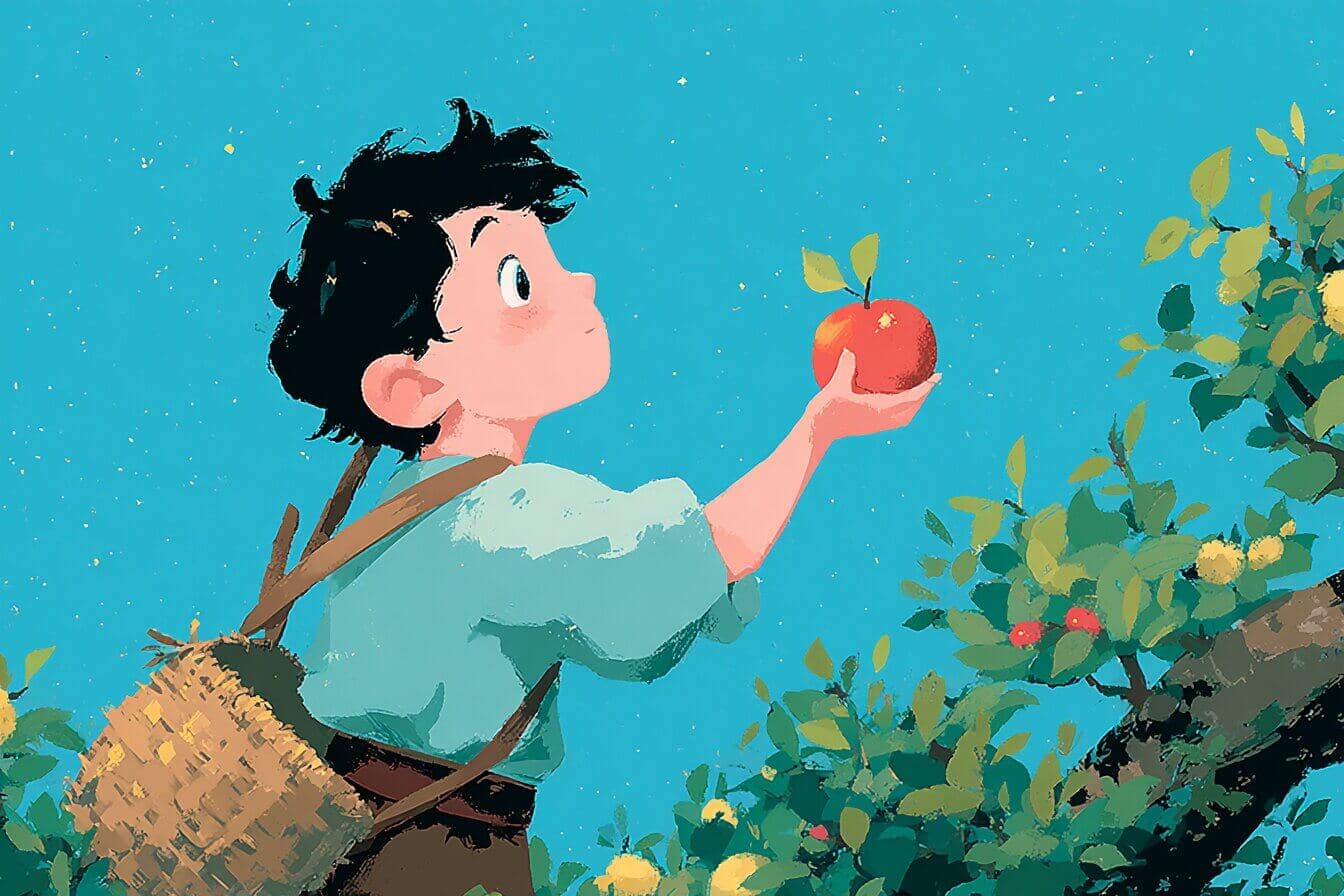
There's something about the sound of a river at night that makes kids want to lean in and listen. This retelling follows Momotaro, a boy born from a giant peach, who sets off across the sea with three unlikely animal companions to win back his village's stolen treasure. It's the kind of Momotaro the Peach Boy bedtime story that balances real adventure with the warm pull of home. If your child loves it, you can create your own personalized version with Sleepytale.
Why Momotaro Stories Work So Well at Bedtime
The Momotaro legend has been putting Japanese children to sleep for centuries, and the reason is built right into its structure. The story moves in a clear, satisfying loop: home, road, sea, island, and then safely back again. That predictable rhythm mirrors the way a child's breathing slows before sleep. And because Momotaro solves his biggest problem not with force but with shared food and friendship, the story leaves kids feeling warm rather than wired.
There's also something quietly reassuring about a hero who starts as the smallest thing imaginable, a baby tumbling out of a piece of fruit. A bedtime story about Momotaro tells children that courage doesn't require size or armor, just willingness. The gentle animals, the millet dumplings, the glowing crystal waiting at the end, all of it feels more like a lullaby than a battle tale.
The Peach Boy's Island Quest 9 min 1 sec
9 min 1 sec
Long ago, in a village where the river ran clear over smooth stones and the bamboo clicked together like chopsticks in the wind, an old woman knelt at the water's edge to wash clothes.
A peach came floating downstream. Not a normal peach. This one was the size of a washtub, and its skin glowed faintly gold, the way the sky does just after the sun drops behind a mountain.
She called to her husband, and together they rolled it home, bumping it over the threshold and into the kitchen.
When they cut it open, a baby boy tumbled out, already laughing, sticky with peach juice, his fists grabbing at the air.
They named him Momotaro. Peach Boy.
He grew fast, the way weeds do in summer, except he was useful. By seven he could carry a bucket of water in each hand without spilling. By ten he could split firewood with one clean swing, and the old couple would just look at each other, amazed, over their bowls of miso soup.
One evening a farmer stumbled into the village square, breathing hard. Oni demons on the island across the strait had stolen the village crystal, a pale stone that sat in the shrine and made the rice grow thick and gold. Without it, the fields were already turning the color of old paper.
Momotaro set his chopsticks down.
"I'll bring it back," he said, as calmly as if he were offering to fetch water from the well.
His mother packed five millet dumplings wrapped in a cloth. His father gave him a red silk scarf, slightly frayed at one corner where moths had gotten to it. At dawn, with the dumplings warm against his hip, Momotaro walked toward the coast.
He hadn't gone far when a spotted dog appeared on the road, ribs showing, nose twitching.
"Where are you going, boy?"
"Oni island. I need to get something back."
The dog sat down. "I'll come. But I haven't eaten since yesterday."
Momotaro broke a dumpling in half and held it out. The dog swallowed it in one gulp, then licked the crumbs from the dirt, and that was that. They walked together.
Later a monkey dropped from a persimmon tree and landed right in front of them, almost on the dog's tail.
"I smelled those dumplings from three branches up," the monkey said, not even bothering to introduce himself.
Momotaro laughed and handed one over. The monkey picked it apart slowly, piece by piece, examining each crumb before eating it. The dog watched this with great irritation.
Near the harbor, a pheasant with green and copper feathers stood on a pine branch, head cocked.
"You're heading to the island," the pheasant said. It wasn't a question.
"Will you fly ahead and tell us what you see?"
"For a dumpling, I'll fly anywhere."
So the four of them built a raft. It took most of the afternoon. The bamboo was slippery, and the monkey kept tying knots that fell apart until the dog held the vines steady with his teeth. It wasn't pretty, but it floated.
They pushed off at dusk. Salt spray hit their faces, and dolphins surfaced beside them, their backs catching the last light. The pheasant rode the mast, which was really just the tallest bamboo pole, and called out directions. Momotaro's scarf snapped in the wind. The monkey held the edges of the raft and looked slightly green.
By the time the moon rose, the island appeared, black rock against a dark sky, with orange fire glowing in the cracks of its cliffs. It smelled like sulfur and something burnt.
They landed on a beach of black sand. Giant footprints led into a forest of thorny palms, and somewhere deeper in, drums were pounding.
Nobody said anything for a moment.
Then the dog sniffed the air and started walking, and the rest followed.
Through the forest they crept. The pheasant flew low between branches, returning every few minutes with reports: a guard sleeping by a fire, a gate carved with snarling faces, a courtyard where shadows moved. Momotaro listened, nodded, and kept walking. His hand rested on the wooden sword he'd carved during the crossing, the handle still rough where he hadn't finished sanding it.
They reached the gate. Momotaro stepped through and shouted.
"I'm Momotaro, from the village across the sea. Give back the crystal."
The courtyard went quiet. Then a red oni with an iron club stepped forward, then a blue one holding a whip made of braided rope, then a yellow one wearing a helmet with cracked horns. They were enormous.
The red one laughed. It sounded like rocks falling down a hill.
The dog moved first, low and fast, snapping at ankles. The monkey scrambled up the blue oni's back and yanked one horn sideways so hard the demon spun in a circle. The pheasant dove at faces, wings beating a storm of dust and feathers into the yellow oni's eyes.
Momotaro swung his wooden sword. It wasn't a real weapon, but he was quick, and the oni were clumsy, tripping over each other, confused by attackers coming from every direction at once. One by one they fell, not from wounds but from losing their balance, from being outmaneuvered by a boy who was paying attention.
Then the chief oni appeared. He was larger than the gatehouse, and he carried a spiked mace that dragged a groove in the stone floor.
He swung once. Momotaro rolled sideways. He swung again. The dog pulled Momotaro's scarf, yanking him out of the way just in time.
Momotaro climbed. Up the chief's arm, across his shoulder, and stood right next to the demon's ear.
"You can give back what you took," Momotaro said quietly, "or this goes on all night."
The chief oni blinked. He set the mace down. It hit the ground with a thud that shook pebbles loose from the walls.
He opened an iron chest in the corner of the courtyard, and there it was: the crystal, glowing softly like a candle behind frosted glass.
What happened next surprised everyone, including Momotaro.
The chief oni sat down heavily, and his eyes were wet. "We took it because it was beautiful," he said. "It gets dark here."
Momotaro was quiet for a moment. He looked at the other demons, all of them sitting on the ground now, rubbing bruises, looking less terrifying and more tired.
"Come to the village festival next autumn," he said. "There's plenty of light. And the dumplings are better when my mother makes a full batch."
The raft rode lower on the way home, heavy with gifts the oni had piled on: coral, shells, bolts of strange cloth. The pheasant carried the crystal in a ribbon tied to its leg, flying just above the mast.
Dawn turned the sky the color of the inside of a peach.
The village came out to meet them. The old woman cried. The old man pretended he wasn't crying, then gave up and cried openly. The crystal went back into the shrine, and that night the rice fields already looked greener, though that might have been everyone's imagination.
The dog chased fireflies until he collapsed in the grass, tongue out, perfectly happy. The monkey sat on a rooftop eating a persimmon he'd been saving in his cheek for the entire voyage. The pheasant perched on the shrine's eave and made a sound like a tiny bell, over and over, until children gathered beneath to listen.
Grandma told the story to anyone who would sit still. Grandpa served dumplings shaped like peaches, slightly lopsided, because he'd never been good at shaping dough.
Momotaro sat between his parents on the porch. The scarf hung on the windowframe, catching moonlight.
He didn't say much. He didn't need to.
Somewhere across the water, on an island of black rock, a fire burned a little brighter. And in the village, the crystal hummed its pale light over sleeping faces and quiet fields, and the river kept singing its same old song, carrying whatever came next gently downstream.
The Quiet Lessons in This Momotaro Bedtime Story
This story is layered with small, important ideas that settle in just before sleep. Generosity appears early and often: when Momotaro breaks his dumplings in half for a hungry dog, children absorb the notion that sharing costs something real and is worth it anyway. The moment when the chief oni admits he stole the crystal simply because "it gets dark here" introduces empathy in a way kids can feel without being lectured, showing that even a villain might just be lonely. And Momotaro's quiet choice to invite the demons to a festival rather than punish them gives children permission to believe that conflicts can end in something better than winning. These are reassuring ideas to carry into sleep: that kindness is stronger than force, and that tomorrow's problems might be solved by reaching out rather than fighting back.
Tips for Reading This Story
Give the dog a gruff, slightly impatient voice, and let the monkey talk fast, like someone who's always a little too pleased with himself. When Momotaro stands on the chief oni's shoulder and speaks quietly, drop your own voice to nearly a whisper so the room gets still. At the moment the oni says "We took it because it was beautiful," pause for a breath and let your child sit with that surprise before you move on.
Frequently Asked Questions
What age is this story best for?
This version works well for children ages 4 to 8. Younger listeners love the animal companions and the humor of the monkey picking apart his dumpling crumb by crumb, while older kids can appreciate Momotaro's decision to show mercy to the oni chief instead of fighting to the end. The vocabulary is simple enough for preschoolers, and the adventure has enough tension to hold a second grader's attention.
Is this story available as audio?
Yes! You can press play at the top of the story to hear it read aloud. The audio version brings out the pacing of the sea crossing beautifully, and the contrast between the loud battle scene and Momotaro's quiet words on the oni's shoulder lands especially well when you hear it spoken. It's a great option for nights when you want to lie back and listen together.
Why does Momotaro share his dumplings with the animals?
In the original Japanese legend, millet dumplings called kibi dango are a symbol of generosity and alliance. By giving away his food, Momotaro shows he values companionship over supplies. In this version, each animal reacts differently to the gift, the dog gulps it instantly, the monkey examines every crumb, and the pheasant bargains for it, which makes the sharing feel personal rather than just a plot device.
Create Your Own Version
Sleepytale lets you reshape this classic legend into a bedtime tale that fits your family perfectly. You could swap the oni island for a misty mountain fortress, trade millet dumplings for your child's favorite snack, or add a new animal companion like a turtle or a fox. In just a few taps, you'll have a personalized Peach Boy adventure, gentle enough to replay whenever bedtime needs a little extra comfort.
Looking for more bedtime story classics?

Once Upon A Time Stories
What happens when June opens a golden book with no title? One of the sweetest short once upon a time stories about a forest, a hedgehog, and a blank page.

Fairy Tales Written By Hans Christian Andersen
Anders discovers short fairy tales written by Hans Christian Andersen as his grandmother reads from a soft brown book by lamplight.

Bluebeard Fairy Tale
In this short bluebeard fairy tale, the forbidden room holds not horror but a music box and memories of the people Lord Corvus loved most.

Red Shoes Fairy Tale
What happens when Karen's magical red shoes refuse to stop dancing? Discover this short red shoes fairy tale tonight.
Twinkle Twinkle Little Star Bedtime Story
Lily watches a kind star and floats up to help deliver dreams in this short twinkle twinkle little star bedtime story. A warm, quiet tale for sleepy nights.
Through The Looking Glass Bedtime Story
Step into a calm, magical short through the looking glass bedtime story and drift toward sleep with gentle wonder. Enjoy a soothing retelling that feels cozy from start to finish.