
Martial Arts Bedtime Stories
By

Dennis Wang, Bedtime Story Expert
13 min 12 sec
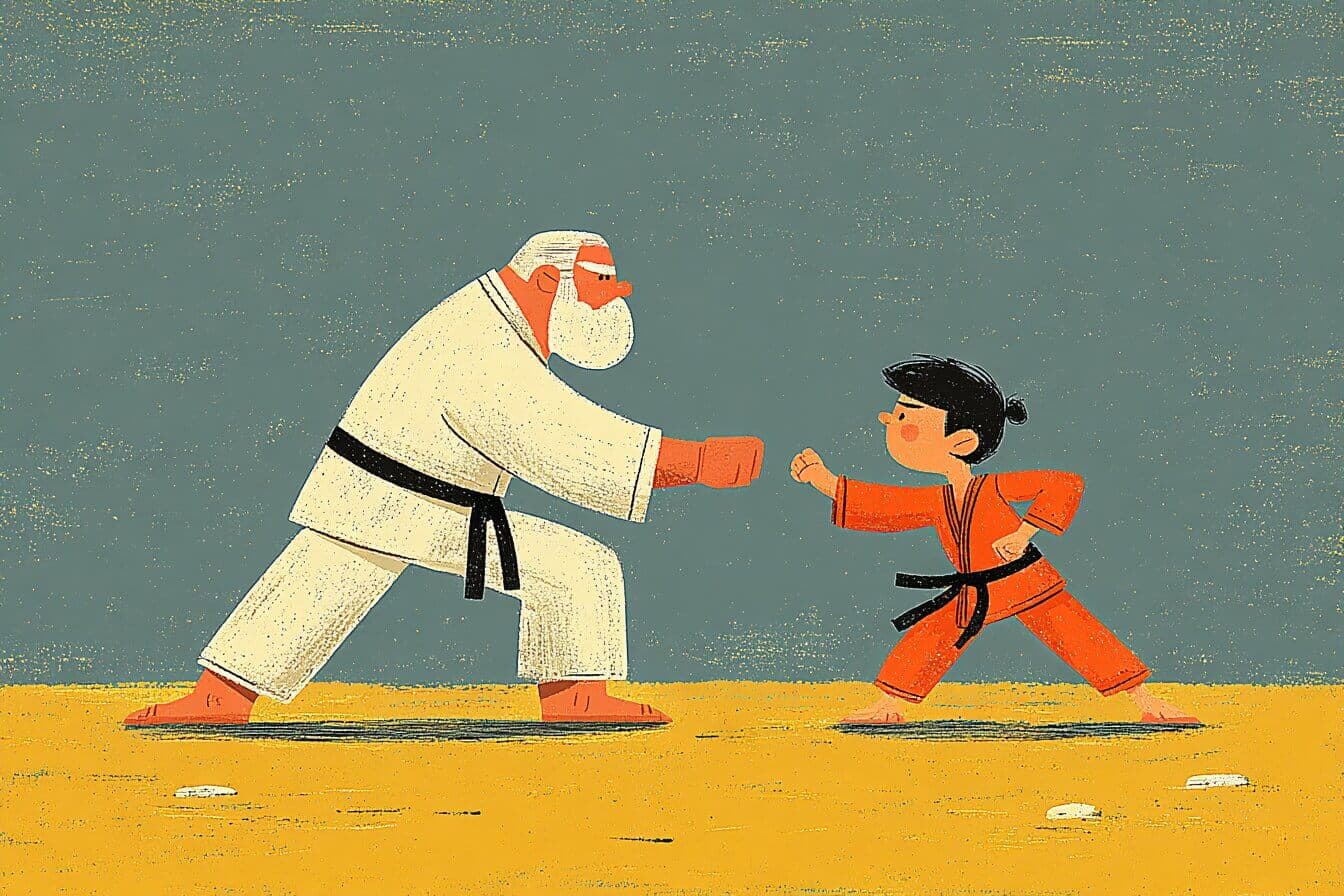
Sometimes short martial arts bedtime stories feel best when the dojo is quiet, the floor smells like pine, and each breath sounds soft and steady. This gentle martial arts bedtime story follows Marco as he expects flashy moves, meets a calm teacher, and learns that real strength can be kind. If you want bedtime stories about martial arts that match your child’s mood, you can make your own soothing version with Sleepytale and keep it simple and warm.
Marco and the Quiet Power 13 min 12 sec
13 min 12 sec
Marco loved the soft slap of his bare feet on the wooden floor as he walked into the dojo for the very first time.
Sunlight made bright squares on the boards, and the room smelled like clean pine and a little like the cotton of the white uniforms.
He had imagined spinning kicks and flying punches, fireworks of motion, and a cheering crowd that would lift him up.
He had pictured a quick path to strength, and maybe even a moment where a bully ran away just because Marco folded his arms.
What he found instead was quiet.
What he heard was his own breathing and the slow voice of the teacher.
We begin with a bow, the teacher said, and Marco saw everyone press their heels together and fold at the waist, not to the teacher alone, but to the room, and to one another.
This is a sign of respect.
We promise to care for each other and to care for ourselves.
Marco bent forward, a little stiff, and felt his cheeks warm as his eyes met the eyes of another kid, who smiled softly.
The teacher introduced herself as Sensei Aiko, and she showed them how to tie the belt so it sat like a hug around the middle.
She explained that the white belt meant beginner, and that colors did not measure how loud you were, but how much you had learned and practiced.
She taught them the names of stances, and the way to carry the body like a tree that can bend without breaking.
Marco learned how to make a fist, but he also learned how to open the hand with care.
The palm could push, the fingers could guide, and the wrist should stay safe.
The class counted together, ichi, ni, san, and Marco discovered that karate means empty hand.
Sensei said that empty does not mean nothing inside.
It means you rely on your mind and your heart more than on any weapon.
The lesson ended with everyone wiping the floor with soft cloths, moving in lines like small boats.
Marco did not expect cleaning, but he liked how the boards shone when they were done.
At home he looked at his uniform on the chair, the jacket called a gi, the belt called an obi, and he saw more than cloth.
He imagined what it meant to be ready without being angry, and to be strong without needing to show off.
When his sister asked what he learned, he showed her the bow, and she giggled and bowed back.
He told her about counting in Japanese and how the breath could be a friend you carry all day long.
The next class began with quiet again, and Marco began to feel that the quiet had its own sound.
It sounded like people paying attention.
On the second week, Sensei Aiko set a small wooden board on the floor, not to break, but to balance.
She asked them to stand with one foot on it and lift the other, like a crane in a pond, and to keep their arms loose.
Marco wobbled at first and windmilled his hands, but he did not fall.
He stared at a tiny knot in the wood in front of him and breathed.
When he breathed in, his belly rose like a balloon.
When he breathed out, it softened and dropped.
Sensei told them that deep belly breaths can calm the body by letting the heart slow and the mind clear, something that scientists call the calming part of the nervous system.
Marco liked that there was science in the class, as if each breath was like a button you could press to help yourself.
They practiced a pattern of movements called a kata.
It looked like a dance, and each turn had a place.
Sensei told a story along with it.
Long ago, people practiced patterns not to show off, but to remember safe steps.
Kata can be like writing a letter to your future self.
It says, when you feel unsure, remember this.
When you feel rushed, slow down here, and look left, then right.
Marco felt proud when he could do the first ten steps without pause.
But he was still excited about the idea of a powerful punch.
He asked, when do we learn to hit the pad hard.
Sensei smiled and said, the pad is patient.
It will still be here even if we do not.
Let us learn how to hold the pad for a partner so your partner feels safe.
Marco learned the art of being the helper.
His hands had to be firm but soft, his feet had to stay planted, and his eyes had to be kind.
The pad did not cheer, but his partner did, which felt even better.
In school, a boy named Leo bumped Marco in the hallway and dropped his books.
A few months ago, Marco might have puffed up and frowned, ready to prove he was strong.
Instead, the lessons from the dojo walked with him.
He took a deep belly breath.
He bent his knees a little, like the crane in the pond, because balance did not switch off when he left the mat.
He said, are you okay.
Leo looked surprised, then nodded and said, sorry, my hands were full.
Together they picked up the books.
One had a picture of a skeleton, and Marco pointed at the bones in the hand and said he had learned that wrapping your thumb outside your fingers made a safer fist, but also that you do not need a fist most of the time.
Leo laughed and said, I am not going to fight you.
Marco shrugged and said, me neither, I like to help.
They both smiled.
That afternoon at the dojo, Sensei asked the class to sit in a circle.
She asked, what is strength.
Marco wanted to say, a big punch, but he remembered the hallway and raised his hand instead.
He said, strength is when you can choose what to do.
Like choosing to help someone instead of getting mad, or choosing to practice even when your legs are tired.
Sensei nodded and said, that is wise.
She pulled out a small cloth bag and poured smooth stones into her palm.
Each stone had a word.
Patience.
Respect.
Focus.
Kindness.
She said they would earn a stone when they showed that skill both in the dojo and outside it.
The stones went into a small bowl by the door and, whenever a student felt a moment of pride, they could touch the bowl as a reminder.
The next week, the community center hosted a culture night.
Each group could set up a table with facts, pictures, and a short activity.
Sensei wrote history on a poster, and the kids added drawings.
She told them that many martial arts emphasize respect for teachers, partners, and the place of practice.
Bows, clean spaces, and careful practice help keep people safe and connected.
Marco learned that in some languages, the word for teacher also means the person who went before, someone you follow not because they shout, but because they show the way by walking it with care.
Marco and his friends prepared a simple demonstration of their kata.
There would be no breaking of boards, no cheers for speed.
They would move together like fish in a school, smooth and steady, each person watching and helping the others.
On the day of the event, Marco arrived early.
He helped place the mats, straighten the belts, and set bowls of fruit on the tables.
Sensei pointed out that fruit gives the body energy that lasts longer than sugar candies because of the fiber.
Marco tasted an orange slice and felt bright inside.
Then a new boy, younger than Marco, arrived without a uniform.
He looked lost and kept twisting his hands.
Marco walked over and bowed, then smiled and said hi.
He asked the boy his name and learned it was Ravi.
Marco showed Ravi how to stand, knees soft, back tall.
He taught him how to bow to the space, and how to say thank you.
When Ravi asked if he would have to punch hard, Marco grinned and said, not today, but you can learn how to breathe like a calm breeze.
Ravi copied his breath, and they both grew more steady.
During the demonstration, Marco stood in the middle row.
He tried to forget the crowd.
He focused on the knot in the floor again and on the feel of the mat under his toes.
He counted each step inside his head, and he used the breath like Sensei had taught them.
He imagined that each move was a sentence in a gentle letter.
Look here.
Step there.
Help your neighbor keep pace.
When they finished, there was quiet for a moment, and then a wave of clapping that felt warm, not loud.
People came by the table to ask about the stones, and Marco explained what each one meant.
He liked being able to tell Leo, who had come with his family, that he had touched the bowl today for patience.
A week later, Sensei announced a test.
It was not the kind of test with trick questions.
It was a chance to show what you could do and who you were while doing it.
Each student had to demonstrate a kata, answer a question about safety, help a partner do a new move, and describe a time outside the dojo when they chose respect.
Marco practiced at home, tracing his steps across the kitchen tiles like a path on a treasure map.
He taught his sister how to do the first two moves, and he made her giggle by naming them after animals so she could remember.
He even made a small poster about the heart beating slower with a calm breath.
He wrote, your breath is a friend, next to a drawing of a balloon.
On test day, Marco stood tall.
He bowed to the room, then to Sensei, then to his partner.
He felt a tiny shake in his knees, but he smiled at it.
During the kata, there was a moment when he lost the count, but instead of rushing, he paused, took a breath, and found the next step.
He held the pad for his partner with two steady hands, fingers open, wrists safe.
When it was his turn to answer a question, he spoke about using words first, and about asking for help from a grown up, and about walking away if you can.
He told the story of Leo and the hallway, and how helping felt strong.
Sensei nodded and wrote something on her clipboard.
Then she asked the last task.
Tell us how you can show respect at home.
Marco said he could listen the first time, clean up his dishes after dinner, and share his new skills by teaching his sister how to be calm with her breath.
After the test, Sensei called them up one at a time.
When she said Marco, she smiled and held out a small card and a stone.
The stone said respect.
She told him that respect is not a rule that makes you stiff.
It is a way to see the good in yourself and in others.
The card had a new stripe for his belt.
It did not look like much to anyone else, just a thin line of color, but to Marco it felt like the sky at morning.
He did not feel like cheering.
He felt like bowing to his partner and to the room and to himself.
That night, Marco placed the stone in a small dish on his desk.
He looked at his gi, bright and neat, and he thought about the pad and how it had waited.
He thought about the board they balanced on, and how the knot had helped him focus.
He thought about the poster with the heart and the balloon.
He wanted to tell someone that he had learned something bigger than a punch.
In his notebook, he wrote a letter to Sensei.
He wrote, thank you for showing me how to be quiet and strong.
Thank you for teaching me that a breath can be a friend and that respect can be a path.
He also wrote a note for Leo that said, thanks for picking up books with me.
He did not know if he would ever see a real fight, but he knew what he would do if trouble walked by.
He would breathe.
He would stand balanced.
He would use his words.
He would ask for help.
He would remember that discipline is like a lighthouse, steady and bright.
As he went to sleep, Marco imagined the dojo with the sunlight making bright squares again.
He imagined the circle of students, the gentle count, and the soft cloths sliding over the floor.
He imagined the stones in the bowl, each word a lantern.
He whispered them to himself, patience, respect, focus, kindness.
He added one more, gratitude.
He felt his belly rise like a balloon, then soften.
He smiled in the dark and thought, I am learning to be strong in the quiet, and tomorrow I will help someone else learn it too.
Why this martial arts bedtime story helps
The story begins with a small worry about needing to look tough and slowly turns that feeling into comfort and confidence. Marco notices his excitement and frustration, then uses breathing, balance, and respect to choose a calmer response. It stays focused easy steps like bowing, counting, holding pads safely, and the warm feeling of helping. The scenes move slowly from dojo practice to home sharing, then to a school hallway and back to the mat again. That clear loop makes the story feel predictable in a good way, which can help bodies settle down at bedtime. At the end, the bowl of smooth stones becomes a quiet symbol that feels a little magical without any suspense. Try reading it in a low, unhurried voice, lingering the sound of bare feet wood and the steady rise and fall of belly breaths. When Marco chooses kindness and touches the reminder stones, the listener is usually ready to rest.
Create Your Own Martial Arts Bedtime Story
Sleepytale helps you turn a simple idea into free martial arts bedtime stories that fit your family’s bedtime rhythm. You can swap the dojo for a community gym, trade the balance board for a taped line the floor, or change Marco into your child and Sensei Aiko into a favorite mentor. In just a few taps, you will have calm martial arts bedtime stories to read again and again with cozy details and a gentle ending.
Looking for more sport bedtime stories?
Yoga Bedtime Stories
Looking for short yoga bedtime stories that feel soothing and easy to read aloud? Try this gentle yoga bedtime story with rainbow breathing and a cozy cottage calm down.
Volleyball Bedtime Stories
Moonlit sand glitters beside a palm tree net as a glowing ball invites a quiet adventure in short volleyball bedtime stories. Follow Vicky into a gentle island match that ends in calm wonder.
Tennis Bedtime Stories
a quiet clay court, two best friends keep the ball floating under fireflies in short tennis bedtime stories. Their playful rally becomes a soothing song of friendship.
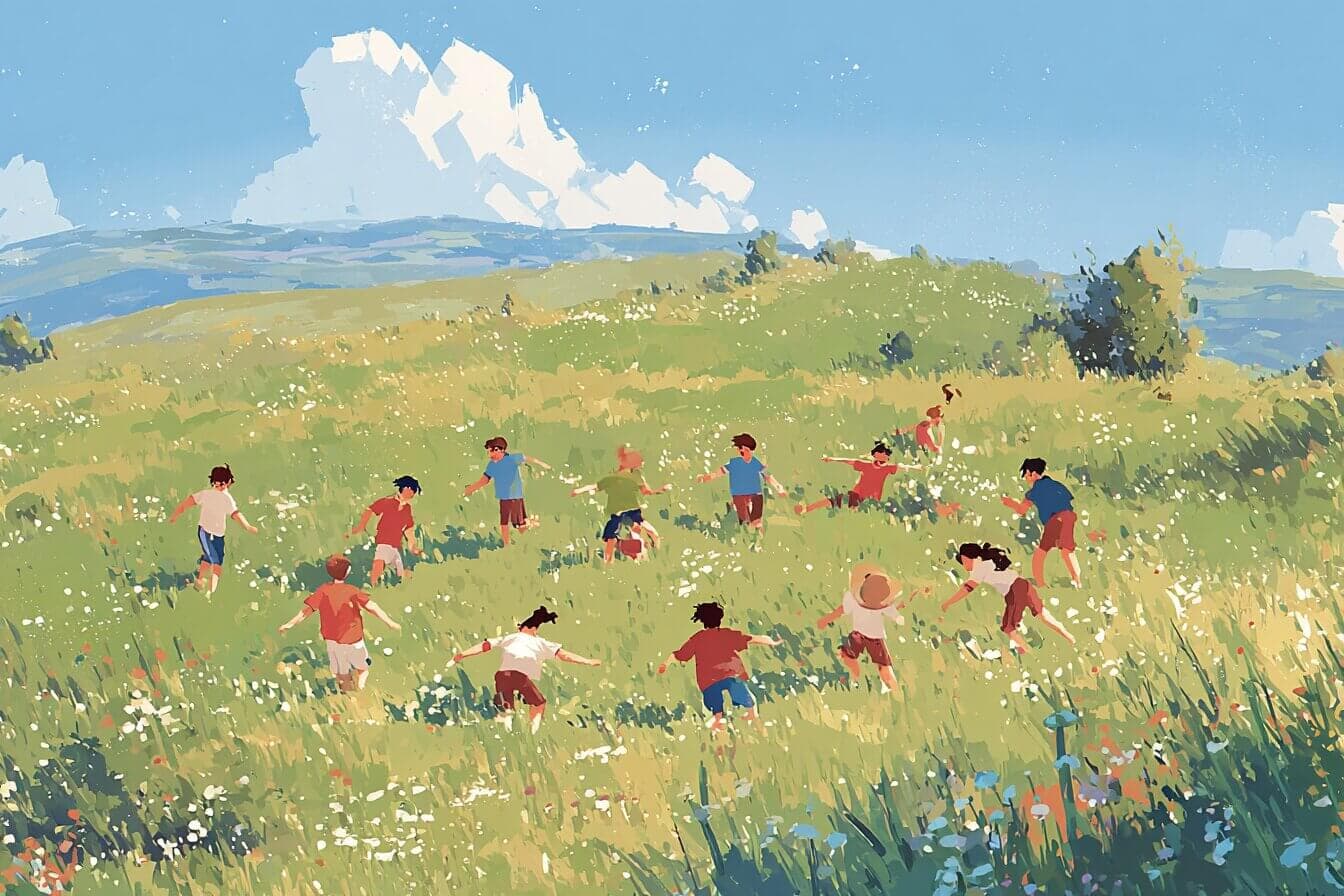
Tag Bedtime Stories
A cozy meadow game turns into a friendship ritual in short tag bedtime stories, with fireflies that remember. Read for a soothing twist that lingers.
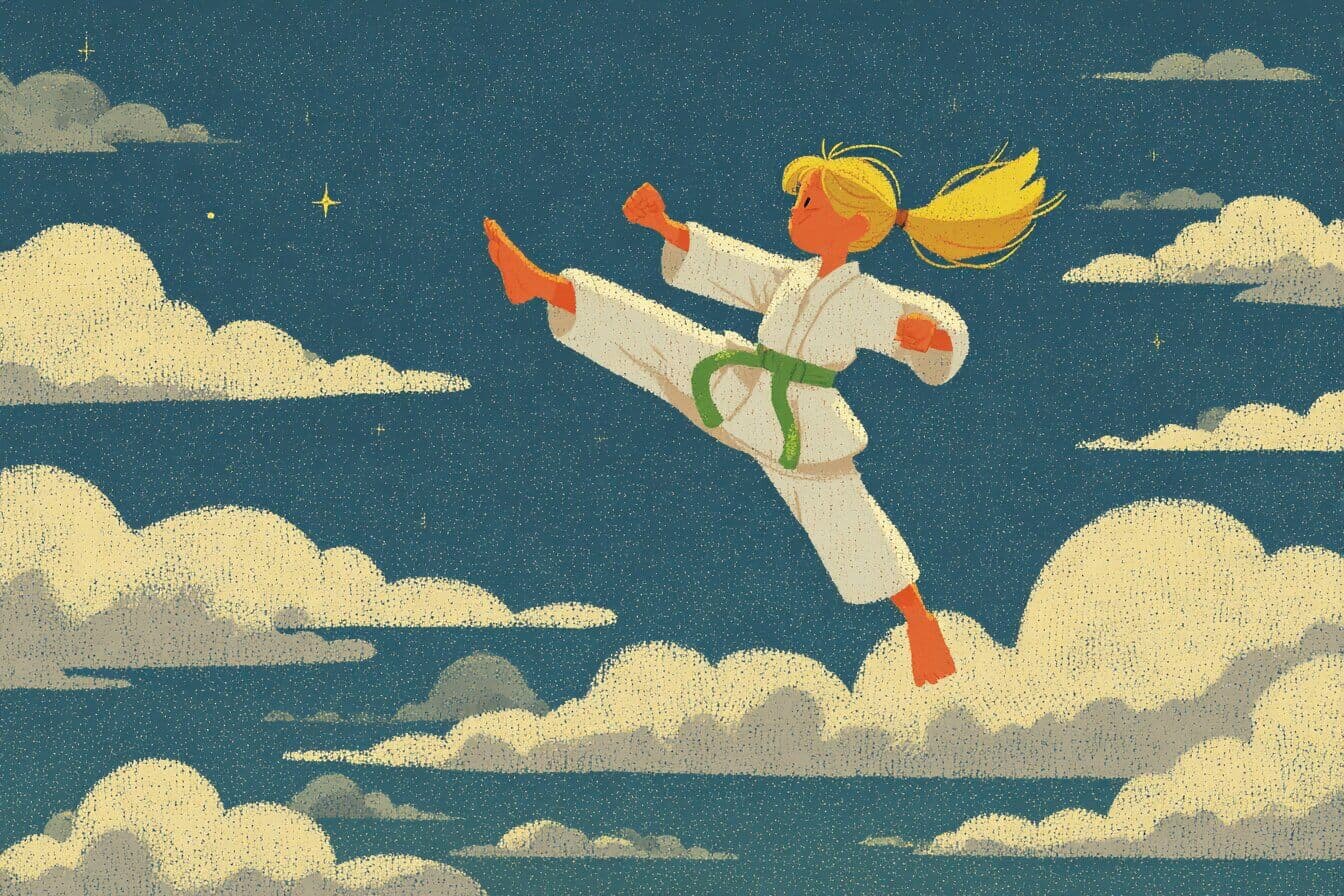
Taekwondo Bedtime Stories
Help kids unwind with short taekwondo bedtime stories that build confidence, patience, and calm breathing before sleep. Enjoy a gentle dojo adventure you can read aloud tonight.

Swimming Bedtime Stories
Dive into short swimming bedtime stories where a determined girl finds a surprising kind of victory in the pool, then drifts into a dreamy calm.