
Long Bedtime Story For Teens
By

Dennis Wang, Bedtime Story Expert
8 min 20 sec
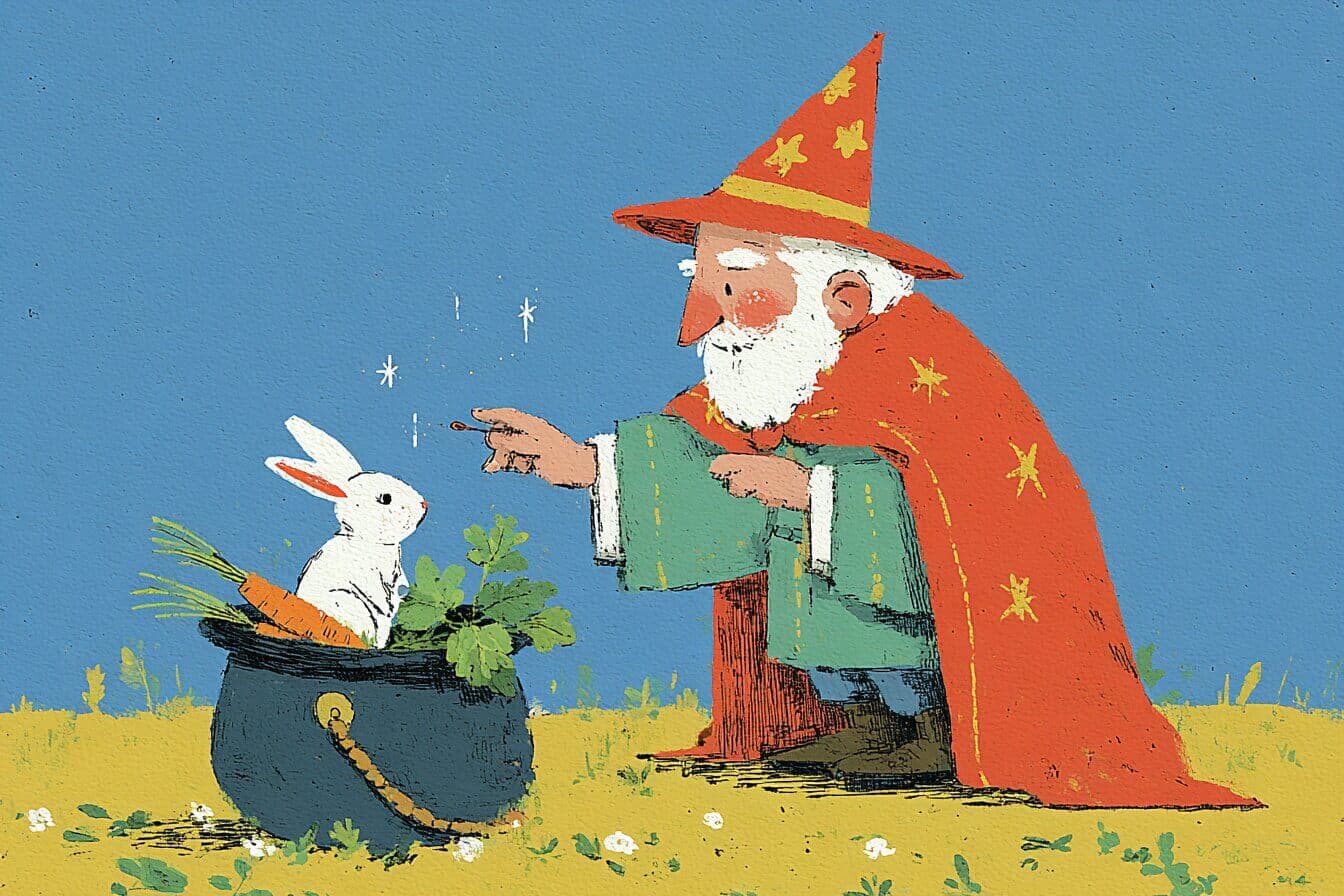
There's something about the late evening, when the house finally goes quiet and the phone is face down on the nightstand, that makes a longer story feel right. You're not rushing anywhere. In this one, a young wizard named Pip discovers that his rabbit Nibble has a peculiar talent hidden inside the most annoying habit imaginable, and the journey from frustration to wonder unfolds at exactly the pace a tired mind needs. If you're looking for a long bedtime story for teens that feels handcrafted rather than pulled off a shelf, you can build your own version with Sleepytale.
Why Long Stories Work So Well at Bedtime
Shorter tales are great for younger kids who drift off quickly, but teens often need more runway. A longer narrative gives your brain time to actually leave the day behind, scene by scene, the way a warm bath works better than splashing your face. When a story has enough room to wander through details, like the hum of lanterns or the crunch of something sweet, it pulls your attention away from tomorrow's test or that awkward text you sent. The pacing itself becomes a kind of breathing exercise.
There's also something specific about reading a longer bedtime story at night versus during the day. Your guard is down. You're more willing to care about a fictional rabbit or feel the weight of a wizard's disappointment, because the critical part of your brain is already half asleep. That openness is what lets a story settle into you instead of bouncing off, and it's why a tale told at length, with room for quiet moments, can leave you genuinely calmer by the last paragraph.
The Rabbit of Starlight Hops 8 min 20 sec
8 min 20 sec
In the kingdom of Luminara, every lantern held a tiny moon and every fountain sang crystal songs, though most people had stopped noticing either of those things years ago. That is the trouble with living somewhere beautiful. You forget.
Pip had not forgotten.
He was a young wizard who still looked up when the lanterns flickered, still paused at the fountains to listen. He owned a violet cloak stitched with silver comets, a wand made of candy glass that clinked faintly when he walked, and a tall starry hat that was, truthfully, one size too large. Inside that hat lived a small white rabbit named Nibble, who smelled perpetually of clover and whose left ear had a crook in it, like a question mark tipped sideways.
Each evening Pip climbed the marble steps of the Moonlit Amphitheater. He would bow, twirl his wand, and cry, "Behold!" expecting Nibble to leap out and perform dazzling flips, loops of light, cartwheels of stardust. The whole routine.
Instead, Nibble would hop once. Twitch his whiskers. Then start munching whatever he could find: carrot shreds, flower petals, ribbons, the tassels on Pip's cloak, once a ticket stub somebody dropped in the front row.
The crowd giggled politely at first. After a few weeks, the giggles became yawns. Children tugged their parents toward the toy stalls while Pip stood alone on a stage too big for him, next to a rabbit too busy chewing to care.
He knelt down.
"Nibble," he said, and his voice was quieter than he meant it to be, "you are turning my dreams into crumbs. Why won't you show them your magic?"
The rabbit wiggled his nose. A small piece of confetti fell from behind his ear.
Pip walked home through streets glowing with paper stars, hands in his pockets, kicking a pebble that clicked along the cobblestones in a rhythm that sounded exactly as lonely as he felt. He considered, seriously, trading his wand for a baker's apron. At least bread dough did what you told it.
That night he sat by the hearth with an enormous spell book spread across his lap. His tea went cold beside him. Page after page described dragons, storms, vanishing castles, none of which addressed the specific problem of a rabbit who preferred eating to performing. He slammed the book shut and a cloud of glitter rose from the pages, drifting through the lamplight like startled fireflies.
"Fine," Pip muttered. "If you won't dance, maybe you can at least help me conjure something. Anything."
Nibble hopped onto the closed book. Sniffed the glitter. Licked it.
The glitter vanished. The candles in the room burned brighter.
Pip sat up straight.
He scattered more glitter across the book's cover. Nibble licked again. The room brightened again, noticeably, like someone had opened a curtain that wasn't there. The shadows in the corners shrank.
Something clicked in Pip's mind, not like a grand revelation, more like a key turning in a lock he'd walked past a hundred times.
Over the next several days he experimented. He tossed pinches of starlight sugar onto the rug. Rainbow salt. Moon sugar crystals that looked like frozen breath. Nibble ate every speck, and with each bite something happened in the room: the broom swept itself in slow, lazy circles. The teapot whistled a lullaby Pip half-recognized from childhood but couldn't name. The paintings on the wall waved, a little shyly, as if they weren't sure they were allowed.
Pip filled an entire notebook, his handwriting getting messier as the excitement grew. What he understood, finally, was this: Nibble didn't need to juggle planets or backflip through hoops. The rabbit transformed magical energy into something bigger and brighter simply by eating it. That was his trick. It had always been his trick.
So Pip stopped fighting it and started designing around it.
He built tiny starlight cookies shaped like comets. Peppermints shimmering with aurora colors, green and gold and a violet so deep it looked like it had feelings. Sugar clouds that dissolved on the tongue and tasted, Pip decided after stealing one, like the memory of a good dream, not any specific flavor, just warmth.
While Nibble practiced eating, which required no practice at all, Pip practiced guiding the released magic with his hands. He learned that a slow upward sweep coaxed the light into spirals, and a quick sideways flick scattered it into sparks. If he held very still, the magic pooled like water, glowing at his feet.
For the first time in weeks, he did not dread the evening.
Word got around. It always does in small kingdoms.
On the night of the grand show, the Moonlit Amphitheater was full in a way Pip had never seen. Children perched on parents' shoulders. Merchants climbed the stone pillars for a better view. The royal astronomer arrived with a crystal telescope, though she probably didn't need it this close.
Pip stepped into the glow of a hundred floating lanterns. His heart was loud in his ears, not the drumming of fear exactly, more like the feeling just before you open a gift and you aren't sure yet whether it's what you wanted.
"Ladies and gentlemen," he said. His voice cracked slightly on gentlemen. He cleared his throat. "Prepare to witness wonder."
Nibble sat on a velvet cushion, calm as moonlight, his crooked ear tilted toward the audience as if he were listening to something no one else could hear.
Pip offered the first starlight cookie with a small flourish.
Nibble munched. A ribbon of silver light spiraled upward from the cushion, slow at first, then faster, and it formed twinkling letters that hung in the air above the stage. The word read Courage. It hovered for three heartbeats, then dissolved into a rain of soft sparks.
The audience gasped. Not the polite kind. The real kind, the kind where people forget to close their mouths.
Next came a peppermint of aurora hues. Nibble bit down and the sky above the open roof bloomed, curtains of green and gold unfurling across the darkness like someone was painting on the night itself. Every upturned face caught the colors. An old woman in the third row touched her own cheek, as if checking whether the light was real.
Then sugar clouds. As Nibble's teeth crunched through them, soft puffs floated over the crowd and it began to snow, gently, impossibly. The flakes tasted of vanilla. Children stuck out their tongues, eyes squeezed shut, laughing the way you laugh when you are surprised by something good. The flakes dissolved into sparkles on their shoulders, their hair, the rims of their cups.
Pip guided the magic with sweeping motions, and the snowflakes gathered into tiny luminous rabbits that hopped from shoulder to shoulder, pausing just long enough for someone to gasp before leaping onward and fading into glitter. One of them sat on the royal astronomer's telescope and appeared to look through it before it disappeared. She laughed so hard she snorted.
When Nibble finished the last treat, Pip knelt beside him. He didn't say anything grand. He just scratched behind the crooked ear, the spot Nibble liked best, and whispered, "Thank you."
A final burst of light rose from the cushion, slow and wide, and it formed a luminous heart above the stage. The heart pulsed once, and then a wave of silvery warmth spread outward across the amphitheater, across the rooftops, across the paper stars hanging in the streets. It felt the way a lullaby sounds when someone who loves you is singing it from the next room.
Nobody clapped. Not right away. They were too busy being still, which is sometimes the highest compliment.
Then the applause came, not like thunder, more like steady rain.
The king stepped forward. His eyes were shining, and he didn't seem embarrassed about it. "Young wizard," he said, "you have shown us that true magic is not forcing wonder but discovering it where it already lives."
He pinned a badge to Pip's cloak, shaped like a star held between two rabbit ears, and named him Royal Keeper of Gentle Wonders.
From that night on, whenever someone in Luminara needed comfort, Pip and Nibble visited. They never required grand stages. A garden path worked. A nursery windowsill. A quiet hillside where the grass was still warm from the afternoon sun. Nibble would eat something small and bright, and the world around them would soften, just a little, just enough.
And though the rabbit still loved to eat more than anything, which Pip had long since stopped trying to change, now every bite carried a kind of promise. Not a loud one. The quiet kind, the kind you feel in your chest before you can put it into words: that within the simplest things, if you stop fighting them and start paying attention, there is enough light to go around.
The Quiet Lessons in This Long Bedtime Story
Pip's journey is really about the frustration of wanting something to work your way and the relief that comes when you finally let it work its own way. When he stops trying to force Nibble into backflips and starts designing around what the rabbit actually does, kids absorb a lesson about patience and creative problem-solving without anyone spelling it out. There's also something reassuring about the moment Nibble just sits on that velvet cushion, calm and unbothered, while everything unfolds around him; it's a quiet argument for trusting your own nature, even when it looks weird to everyone else. These are exactly the kind of ideas that settle well right before sleep, because they replace the anxious question of "am I doing this right?" with the gentler possibility that you might already be enough.
Tips for Reading This Story
Give Pip a slightly earnest, cracking voice, especially on the line where he says "Prepare to witness wonder" and his voice breaks on gentlemen. For Nibble, don't use a voice at all; just pause whenever he's eating and let the silence do the work, maybe with a soft crunching sound if you're feeling dramatic. When the sugar cloud snow begins falling over the audience, slow your reading pace way down and speak almost at a whisper, because that section is where the story wants the listener to start drifting.
Frequently Asked Questions
What age is this story best for? It works best for teens around 12 to 17 who are old enough to appreciate Pip's quiet frustration and the subtlety of realizing your rabbit's "flaw" is actually the whole show. Younger readers may enjoy the spectacle of the aurora peppermints and snow scene, but teens will connect more with the feeling of wanting something to go right and learning to let go.
Is this story available as audio? Yes. You can press play at the top of the story to listen. The audio version works especially well for this one because the pacing of the grand performance scene, with each treat building on the last, creates a rhythm that pulls you deeper into relaxation as it goes. Nibble's quiet munching moments also land beautifully in audio, where the pauses feel intentional rather than empty.
Does reading longer stories at night actually help teens fall asleep? It can. A story with a steady arc, like Pip's journey from disappointment through experimentation to that final silver warmth, gives the brain a single narrative thread to follow instead of bouncing between the dozen worries that tend to surface at night. The key is a story that escalates gently rather than sharply, which is exactly what happens here as each treat Nibble eats produces something a little more wonderful than the last, easing you toward stillness rather than jolting you awake.
Create Your Own Version
Sleepytale lets you reshape this kind of story into something that fits your night perfectly. You could swap Luminara for a quiet coastal village, turn Nibble into a hedgehog or a sleepy cat, or replace Pip's candy glass wand with a worn sketchbook that brings drawings to life. In a few moments you'll have a calm, unhurried tale you can return to whenever the evening needs softening.
Looking for more teen bedtime stories?
Short Bedtime Stories For Teen Girls
Relax into soothing Short bedtime stories for teen girls with gentle wonder and kind courage. Enjoy a calm story you can read online and drift off feeling understood.
Short Bedtime Stories For Teen Boys
A tiny knight steps out of a game to guide real world quests in surprising ways. Short bedtime stories for teen boys end with a pixel feather that still glows.

Long Bedtime Stories For Teen Girls
A peppermint scented tunnel leads a teen into a candlelit gallery where paintings open into gentle quests. short Long bedtime stories for teen girls ends with keepsakes and a calm return home.
Long Bedtime Stories For Teen Boys
Wind down with short Long bedtime stories for teen boys that feel thoughtful and soothing. Enjoy a gentle time travel mystery and get ideas for your own calm bedtime read.
Funny Bedtime Stories For Teen Girls
Moonlight slips through a bedroom window as a teen and her cat trade bodies and bumble through breakfast. short Funny bedtime stories for teen girls brings cozy laughs and a gentle return to normal.
Funny Bedtime Stories For Teen Boys
In a garage lit by a single lamp, a teen inventor hits print and gets melodramatic homework lines. short Funny bedtime stories for teen boys turns the mix up into cozy laughter.