
Funny Bedtime Stories For Teen Boys
By

Dennis Wang, Bedtime Story Expert
7 min 33 sec
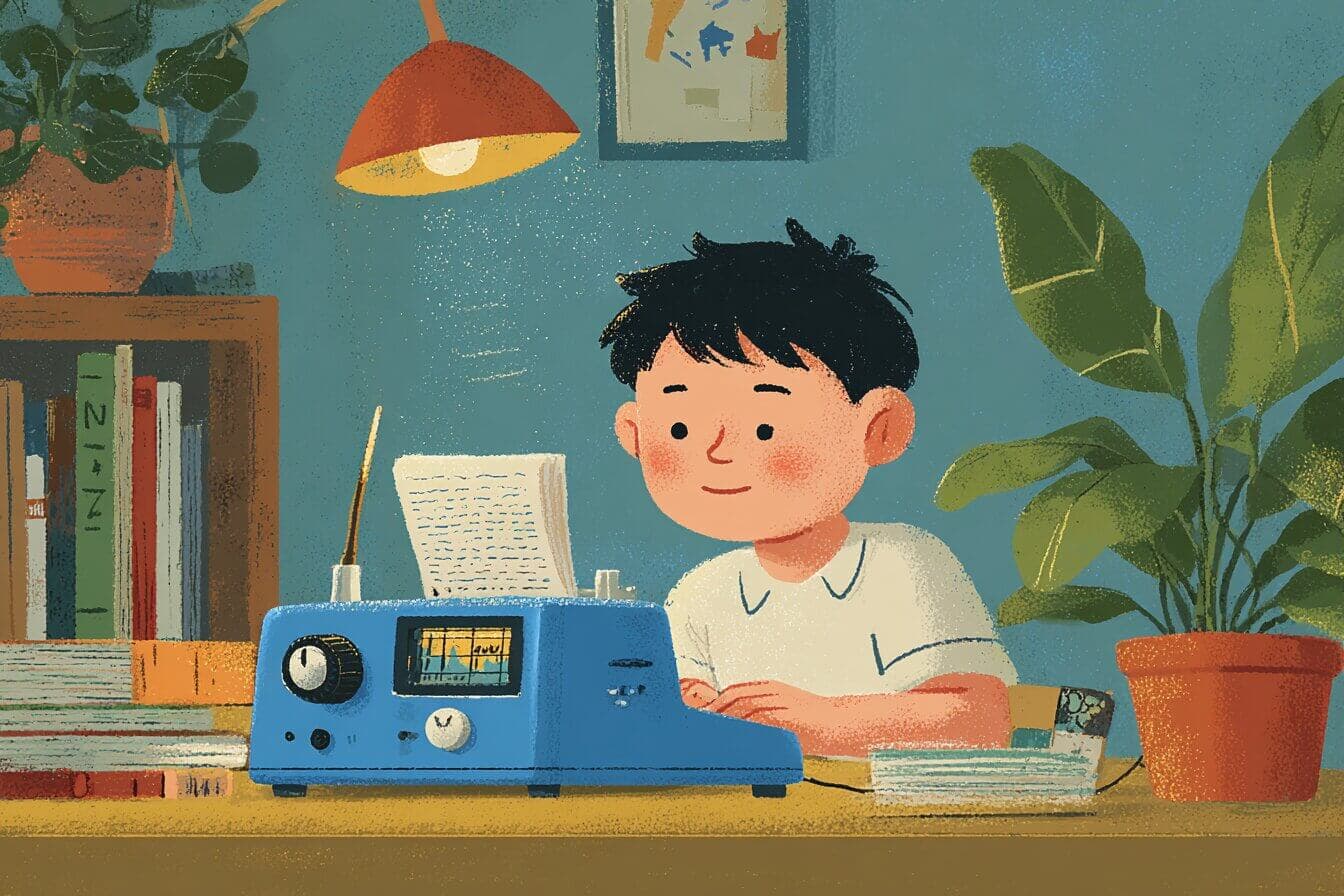
There's something about laughing right before sleep that makes the whole day loosen its grip. When a joke lands in a dim room, under a warm blanket, it doesn't just entertain; it lets go of whatever tension was still hanging around from school or practice or that weird text thread. This story follows Oliver, a teen inventor whose homemade homework machine starts printing wildly dramatic soap opera lines instead of math answers, turning an ordinary Monday into an unforgettable performance. If you want to craft your own funny bedtime stories for teen boys with different characters, settings, or levels of absurdity, Sleepytale lets you build one in minutes.
Why Funny Stories Work So Well at Bedtime
Teen boys carry a lot of unspoken pressure through the day, from grades to friendships to the constant background noise of figuring out who they are. A story that makes them laugh right before lights out gives those worries somewhere to go. Humor loosens the mental grip of the day, and when the comedy is gentle rather than frantic, it eases the body toward rest without feeling childish.
A bedtime story about something funny also gives teens permission to be silly in a low-stakes moment. There's no audience, no social risk, just a goofy tale in the dark. That private laughter is surprisingly calming. It reminds kids that not everything has to be serious, and that the world will still be there in the morning, probably doing something ridiculous.
The Soap Opera Homework Machine 7 min 33 sec
7 min 33 sec
Oliver Jenkins loved building things.
Not in a polished, YouTube-tutorial kind of way. More in a "duct tape over duct tape and hope the smoke detector stays quiet" kind of way. One Saturday, while his little sister Daisy was painting rainbows on the driveway with a brush that had seen better decades, Oliver dragged a cardboard box, a tangle of wires, and a tiny computer into the garage.
He was going to build the greatest homework machine ever made.
He taped, glued, and soldered until the overhead bulb was the only light left. The garage smelled like hot plastic and the faint ghost of his dad's old motor oil. Somewhere around hour four, he burned his thumb on the soldering iron and said a word Daisy would definitely repeat at dinner.
When he finally pressed the shiny red button, the machine hummed, flashed once, and spit out a sheet of paper.
Oliver cheered. Then he read the first answer.
Instead of a neat math solution, the page said: "Darling, if you divide these cookies between two broken hearts, each soul still hungers for more."
Oliver stared at it.
Daisy, who had wandered in to steal his water bottle, giggled so hard she snorted and had to sit down on a paint can.
He tried a science question.
The printer clicked and clacked, paused as if thinking about its life choices, and produced: "Oh Professor Lightning, your electrons race like secret love letters across the stormy sky."
Oliver closed his eyes.
The machine worked perfectly, technically. Every answer just sounded like it belonged on a daytime soap opera. He stuffed the pages into his backpack anyway, folding them small, hoping Miss Radcliffe had a cold and wouldn't read too carefully.
She did not have a cold.
Monday morning, the classroom smelled like chalk and cinnamon rolls from the cafeteria next door. Oliver slid the homework onto the teacher's desk and tiptoed to his seat like a man defusing a bomb.
Miss Radcliffe picked up the first paper, adjusted her glasses, and started reading aloud. Her voice began normal. By the third line she was clutching her chest with one hand and swooshing her scarf like she was auditioning for a regional theater company.
The class lost it.
Oliver sank behind his science textbook until only his eyebrows were visible. The kid next to him was laughing so hard no sound came out, just a red face and shaking shoulders.
But instead of scolding him, Miss Radcliffe set the paper down, smoothed it with both palms, and announced, "Children, we have discovered literary genius."
She paced between the desks, reading more answers in full theatrical voice. The history question became a tearful duel between lonely centuries. The spelling sentences turned into proposals, betrayals, and one very suspicious poisoning.
Every kid leaned forward. Even the ones who usually spent class drawing on their shoes.
Oliver's cheeks burned purple. But there was this weird bubble rising in his chest, something between embarrassment and the strangest pride he'd ever felt.
At recess, classmates crowded around him, begging for copies. Even the principal, Mr. Lopez, poked his head into the room, listened for a minute, and chuckled so hard his mustache did a little dance. He walked away shaking his head and still grinning.
By lunch, Oliver had accidental fame.
He hurried home, determined to fix the code. Daisy helped by supplying cookies and colorful markers and unsolicited opinions about what the machine should say instead. Her suggestion: "More dragons. Less kissing."
Oliver opened the laptop, typed new commands, and added a toggle switch labeled "plain" on one side and "sparkle" on the other. He pressed "plain," fed in a worksheet, and held his breath.
The printer buzzed. Out came: "Beloved integers, embraceeth thy sum beneath moonlit sorrow."
Oliver put his head on the desk.
The switch hadn't fixed anything. It just added fake Shakespearean flair on top of the existing melodrama.
"Maybe it just likes stories more than math," Daisy said, mouth full of cookie.
Oliver scratched his head. She wasn't wrong.
That night he dreamed of numbers waltzing in velvet capes. One of them stepped on another's foot and apologized in iambic pentameter.
The next morning, he loaded the machine into Daisy's old red wagon and pulled it to school. One wheel squeaked the entire way.
Miss Radcliffe actually clapped when she saw it. Oliver explained the problem, or rather, the "feature." Together, the class decided to repurpose the machine for creative writing. They fed it science facts, and it spun them into radio plays. They typed in spelling lists, and it produced mystery episodes where each letter was a clue. Even the quiet kids in the back row raised their hands to read parts.
Mr. Lopez heard about it and invited parents for a Friday performance.
The auditorium had fairy lights strung from the basketball hoops. Oliver stood backstage, heart going like a drum solo at a concert nobody asked for. His palms were damp. Daisy gave him a thumbs-up from the front row, already eating popcorn she'd smuggled in her coat.
When the curtain rose, the machine sat center stage wearing a paper top hat Oliver had made at 2 a.m.
Students read the scripts with cardboard swords and glittery gowns pulled from the costume closet. One kid delivered a monologue about photosynthesis as if it were a farewell letter. The audience laughed, then actually got quiet during one part about the sun, then laughed again. Oliver watched from the wings and noticed his hands had stopped shaking.
At the finale, he stepped out and bowed beside his invention. The paper top hat was already tilting sideways.
Miss Radcliffe handed him a certificate: "World's Most Entertaining Homework." She'd printed it on fancy paper with a gold border.
After the show, parents wandered backstage asking how to build their own story machines. Oliver shared the code freely but kept the original floppy disk with the dramatic flair tucked in his desk drawer. Some things you don't give away.
Back home, Daisy painted a portrait of the machine wearing sunglasses and what appeared to be a leather jacket. Oliver taped it above his desk next to a periodic table that now felt slightly less boring by association.
He still did his real homework by hand. But every Friday, he let the machine write a tiny soap opera about fractions, or verb tenses, or whatever subject felt like it needed more drama. Life felt balanced and wonderfully weird.
He added a small disco ball above the machine's shelf in the garage. It threw tiny squares of light on the ceiling when the lamp caught it right.
On quiet nights, he could hear the printer humming something low and tuneless, almost like a lullaby filtered through bad dialogue. He'd lie in bed, the disco light spinning faintly through the open garage window, and drift off imagining quadratic equations in velvet capes taking their bows under a painted sky.
He woke each morning ready for actual math, actual science, and actual friendship, knowing that a little bit of ridiculous could turn the most ordinary homework into something worth remembering. And whenever someone told him schoolwork had to be boring, Oliver just smiled, thinking about the day his homework declared eternal love to long division while the whole class cheered.
The Quiet Lessons in This Funny Bedtime Story
Oliver's story is really about what happens when your plan goes sideways and you decide to roll with it instead of fighting. When the machine refuses to print normal answers and Oliver brings it to school anyway, kids absorb the idea that embarrassment shrinks the moment you stop running from it. There's also a thread about generosity; Oliver shares his code, he shares the stage, and the whole class benefits from something that started as his private disaster. And Daisy, always hovering with cookies and honest opinions, shows that support doesn't have to be grand to matter. These are good things to sit with right before sleep: the reassurance that mistakes can become gifts, that asking for help is just another kind of building, and that tomorrow's problems might turn into Friday's standing ovation.
Tips for Reading This Story
Give Oliver a slightly exasperated, deadpan delivery, especially when the machine keeps printing melodrama despite his fixes. For Miss Radcliffe's dramatic reading, go full theatrical; clutch your own chest, swoosh an imaginary scarf, really commit to the soap opera voice. When Daisy says "More dragons. Less kissing," pause to let your teen laugh before moving on. Slow down during the quiet final scene with the disco ball and the printer humming, and drop your voice low enough that the room starts to feel like that garage at night.
Frequently Asked Questions
What age is this story best for?
It works best for kids around 10 to 15. The humor around melodramatic homework and Oliver's deadpan reactions lands especially well with middle schoolers who know the pain of assignments and the joy of things going hilariously wrong. Younger teens will connect with the school performance, while older ones will appreciate the running joke about the machine's refusal to be normal.
Is this story available as audio?
Yes, just press play at the top of the story. The audio version is especially fun because Miss Radcliffe's dramatic reading of Oliver's homework and the soap opera lines come alive when you hear them performed out loud. The contrast between Oliver's quiet frustration and the machine's over-the-top output works even better when you're listening in a dark room.
Why does the machine print soap opera lines instead of real answers?
In the story, Oliver's code accidentally gives the machine a flair for drama instead of precision. He tries adding a "plain" toggle, but that only layers on Shakespearean language. Eventually, rather than fighting the glitch, the class decides to use the machine for creative writing, which turns out to be a much better fit for its personality. It's a reminder that sometimes the bug is the feature.
Create Your Own Version
Sleepytale lets you remix this story however you want. Swap Oliver's garage for a bedroom closet lab, trade the printer for a talking calculator that only speaks in movie quotes, or replace Daisy with a skeptical best friend who documents everything on camera. You can dial the humor up or down, change the school setting to summer camp, or make the invention something completely different. In a few minutes, you'll have a cozy, laugh-out-loud story that winds down to a calm ending, perfect for reading right before lights out.
Looking for more teen bedtime stories?
Short Bedtime Stories For Teen Girls
Relax into soothing Short bedtime stories for teen girls with gentle wonder and kind courage. Enjoy a calm story you can read online and drift off feeling understood.
Short Bedtime Stories For Teen Boys
A tiny knight steps out of a game to guide real world quests in surprising ways. Short bedtime stories for teen boys end with a pixel feather that still glows.

Long Bedtime Stories For Teen Girls
A peppermint scented tunnel leads a teen into a candlelit gallery where paintings open into gentle quests. short Long bedtime stories for teen girls ends with keepsakes and a calm return home.
Long Bedtime Stories For Teen Boys
Wind down with short Long bedtime stories for teen boys that feel thoughtful and soothing. Enjoy a gentle time travel mystery and get ideas for your own calm bedtime read.
Funny Bedtime Stories For Teen Girls
Moonlight slips through a bedroom window as a teen and her cat trade bodies and bumble through breakfast. short Funny bedtime stories for teen girls brings cozy laughs and a gentle return to normal.

Bedtime Stories For Teen Girls
Elara follows a self writing pen into a quiet sky of paper ships, finding courage and calm in short Bedtime stories for teen girls.