
Icarus And Daedalus Bedtime Story
By

Dennis Wang, Bedtime Story Expert
8 min 9 sec
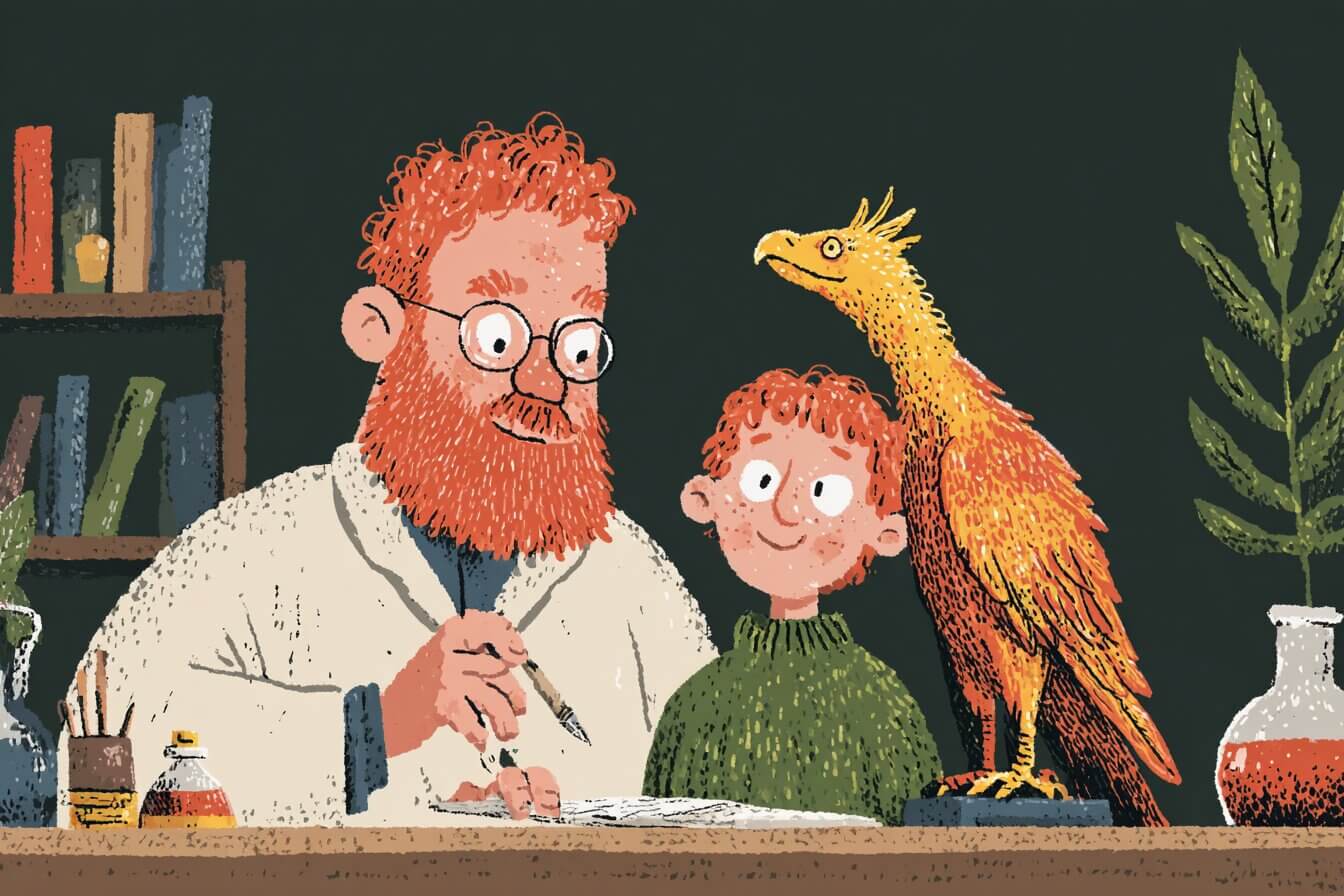
There's something about the image of feathered wings catching warm air that makes kids go quiet and still, like they can feel the breeze themselves. This gentle retelling follows Daedalus and his curious son Icarus as they craft a daring escape from a sky-high tower, held together by wax, feathers, and a promise to stay close. It's the kind of Icarus and Daedalus bedtime story that trades the myth's sharp edges for something softer, something that settles over a child like a blanket. If you'd like to shape your own version with different details and a tone that fits your family, you can make one with Sleepytale.
Why Icarus and Daedalus Stories Work So Well at Bedtime
Myths about flight tap into something deep for children. The idea of rising up, leaving the ground behind, and drifting through clouds mirrors the feeling of letting go that happens right before sleep. There's also a built-in rhythm to the Icarus and Daedalus tale: careful preparation, a quiet launch, and then the slow glide home. That arc feels a lot like a bedtime routine itself.
What makes a bedtime story about Icarus and Daedalus especially resonant is the parent-child bond at its center. Daedalus isn't a distant hero; he's a father doing his best to keep his child safe. Kids sense that. They hear about the feather-gathering and the knot-checking and they recognize the same kind of care they feel when someone tucks them in. That recognition is what makes them feel safe enough to close their eyes.
The Sky Labyrinth 8 min 9 sec
8 min 9 sec
In the ancient kingdom of Zephyria, where clouds piled thick as castle walls, Daedalus the master craftsman lived at the top of a tower he hadn't chosen.
His workshop smelled like pine shavings and old metal. Wind sang through every crack in the stone, and on cold mornings the whole room hummed.
The king had locked him up there after Daedalus helped the queen's sister slip away through one of his clever inventions.
Now the king wanted something bigger. A labyrinth in the sky, twisted enough to trap his enemies forever.
So Daedalus built it.
For weeks he shaped corridors out of cloudstuff and chambers of condensed starlight, bending the air until up became down and left became right.
His young son Icarus sat cross-legged on the workshop floor most days, handing him tools before he asked for them and peppering him with questions. "Why does the fog hold its shape?" "Can a cloud remember where it's been?"
Daedalus didn't always answer right away. Sometimes he just smiled and kept working, which annoyed Icarus more than any answer could have.
When the maze was finished, the king sent his most cunning general inside to test it.
The man wandered for days. He came out dizzy, pale, and very quiet.
The king was pleased. He sealed the labyrinth's entrance with a lock of pure moonbeams and went back to his throne room without a second glance at the tower.
That was the problem. Daedalus understood it clearly now: the sky itself had become their jailer.
He started watching the birds.
Not casually, but the way a person studies something they need. He noticed how a sparrow tucked its wings differently than a gull, how the smaller birds rode the updrafts while the larger ones cut straight through. One pigeon had a crooked tail feather that made it wobble on takeoff, and Daedalus watched that bird more than any other, because the wobble taught him about balance.
He began gathering feathers from every bird that visited the tower, tucking them into crevices behind loose stones.
Icarus helped collect wax from the palace beehives. He never asked what it was all for. Maybe he already knew. Maybe he just liked having a secret with his father.
At night they worked by candlelight, their shadows long on the walls. Daedalus shaped wings of increasing size, calculating the balance between lift and weight, strength and give.
He tested small models from the tower's lower windows. Some glided. Most didn't.
Each crash taught him something.
Spring slid into summer. The sky labyrinth drifted higher, becoming a soft white island above the kingdom. The king forgot about his inventor, busy with conquests and new gold. This suited Daedalus perfectly.
He built two great pairs of wings. One for himself. One for Icarus. The strongest feathers, the purest wax.
When they were finished, they looked almost like the wings of angels, white and faintly gleaming. Icarus ran his fingers along the edge of his pair and didn't say anything for a long time.
On the morning of the summer solstice, with the sun high and a steady north wind blowing, Daedalus sat his son down.
"Listen to me," he said, and his voice had a weight Icarus hadn't heard before. "The sun's heat will melt the wax. Fly too low, and the sea spray will soak the feathers and drag you down. You follow my path. Not higher, not lower. You follow me."
Icarus nodded. "I understand."
But his eyes were already on the sky.
They climbed to the tower's highest point. The wind pulled at their clothes and flattened their hair sideways. Daedalus strapped the wings to Icarus's arms, checking every knot twice, tugging at seams that were already tight.
He showed him the motion: slow, smooth, catching the current rather than fighting it.
They jumped.
For one awful second they fell, and Icarus's stomach dropped and his fingers went white around the wing frames. Then the wind found them. It pushed up under the feathers, and suddenly they were climbing, rising, two figures pulling away from the tower like seeds released from a pod.
Below them, the kingdom shrank. People became specks. Horses were dots on ribbons of road.
They passed over the sky labyrinth, its twisting passages visible through the cloud walls like veins in a leaf.
Icarus laughed. Not a polite laugh. A wild one, the kind that comes from somewhere deeper than the chest.
He tilted left. Tilted right. Dove a little, then climbed. The air responded to everything he did, and it was the most extraordinary feeling he had ever known.
"Icarus!" Daedalus called. But the wind shredded his voice into pieces.
The boy climbed higher.
He didn't decide to chase the sun. It just happened. Each spiral took him a little further up, and the warmth on his face felt like approval, like the sky was saying yes.
The wax softened. He didn't notice.
A feather came loose and tumbled past his shoulder. Then another. They floated upward into the bright blue like strange backwards snow.
Daedalus saw it. His wings were made for steady, careful flight, not for chasing a boy who was climbing toward something he couldn't name.
Whole sections of Icarus's wings thinned. The frames showed through, bare and useless.
His flight stuttered. He hung in the air for one strange, suspended moment, and then he was falling. Not the controlled glide his father had shown him, but a slow terrible spiral, turning and turning, growing smaller against the sea below.
Daedalus watched his son, his brilliant, curious, reckless son, disappear through the clouds.
His own wings kept working. They carried him forward because that was what they were built to do. But the sky felt different now. Heavier. Empty in a way it hadn't been an hour ago.
He landed on a distant shore where the sand was warm and the waves came in so gently they barely made a sound.
He knelt there for a long time.
Then he gathered feathers that had washed up with the tide, and wax that had hardened into pale drops on the rocks, and he built a small shrine right there on the beach. Not grand. Just careful, the way he built everything.
He never flew again.
But he taught others what he had learned about the sky's hidden roads, its currents and its traps. And sometimes, on the longest evenings of summer, when the wind settles and the light turns gold, people say they can see two figures gliding together high above the water. A father and a son, side by side, exactly where they were always meant to be.
The Quiet Lessons in This Icarus and Daedalus Bedtime Story
This story explores the tug between freedom and caution, the way a child's desire to push boundaries runs right alongside a parent's need to protect. When Daedalus checks every knot twice before the flight, kids absorb the idea that careful preparation is its own kind of love. And when Icarus climbs higher despite the warnings, the story doesn't paint him as bad; it treats his curiosity as real and understandable, which helps children feel that their own impulses are normal even when they need to be tempered. The ending, quiet and bittersweet, lets kids sit with the idea that some choices have weight, without hammering a moral into them right before sleep. That gentleness is exactly what makes it land softly at bedtime.
Tips for Reading This Story
Give Daedalus a low, steady voice, especially during the "Listen to me" scene before the flight, and let Icarus sound quicker and brighter, like someone who can't quite hold still. When they jump from the tower and fall for that one awful second, pause just long enough for your child to feel the drop before you describe the wind catching them. At the very end, when the two figures appear gliding together above the water, slow your voice almost to a whisper and let the last line hang in the room.
Frequently Asked Questions
What age is this story best for?
This version works well for children ages 5 through 9. Younger listeners connect with the workshop scenes where Icarus helps collect feathers and wax, while older kids pick up on the emotional weight of the flight and the quiet ending on the shore. The story avoids anything frightening while still treating the stakes seriously enough to hold an older child's attention.
Is this story available as audio?
Yes. You can press play at the top of the story to hear it read aloud. The audio version brings the wind and tower scenes to life in a way that draws kids in, and the contrast between Daedalus's careful instructions and Icarus's wild laugh mid-flight comes through especially well when narrated. It's a nice option for nights when you'd rather lie beside your child and just listen together.
Why is this version different from the original Greek myth?
This retelling softens the myth's sharpest edges to make it work at bedtime. The kingdom of Zephyria and the cloud labyrinth add a dreamlike quality, and the ending focuses on reunion rather than loss. The core lesson about listening, boundaries, and a parent's love stays intact, but the tone is cozy enough that kids drift off feeling safe rather than unsettled.
Create Your Own Version
Sleepytale lets you reshape this myth into something that fits your family perfectly. You could swap the sky labyrinth for a floating garden, replace wax wings with paper gliders, or add a friendly seabird who helps guide the way. Change the ending, adjust the tone, or put your child's name right into the story; in just a few minutes you'll have a cozy, personal tale ready for tonight.
Looking for more bedtime story classics?

Once Upon A Time Stories
What happens when June opens a golden book with no title? One of the sweetest short once upon a time stories about a forest, a hedgehog, and a blank page.

Fairy Tales Written By Hans Christian Andersen
Anders discovers short fairy tales written by Hans Christian Andersen as his grandmother reads from a soft brown book by lamplight.

Bluebeard Fairy Tale
In this short bluebeard fairy tale, the forbidden room holds not horror but a music box and memories of the people Lord Corvus loved most.

Red Shoes Fairy Tale
What happens when Karen's magical red shoes refuse to stop dancing? Discover this short red shoes fairy tale tonight.

Twinkle Twinkle Little Star Bedtime Story
Lily watches a kind star and floats up to help deliver dreams in this short twinkle twinkle little star bedtime story. A warm, quiet tale for sleepy nights.
Through The Looking Glass Bedtime Story
Step into a calm, magical short through the looking glass bedtime story and drift toward sleep with gentle wonder. Enjoy a soothing retelling that feels cozy from start to finish.