
Hans In Luck Bedtime Story
By

Dennis Wang, Bedtime Story Expert
8 min 18 sec
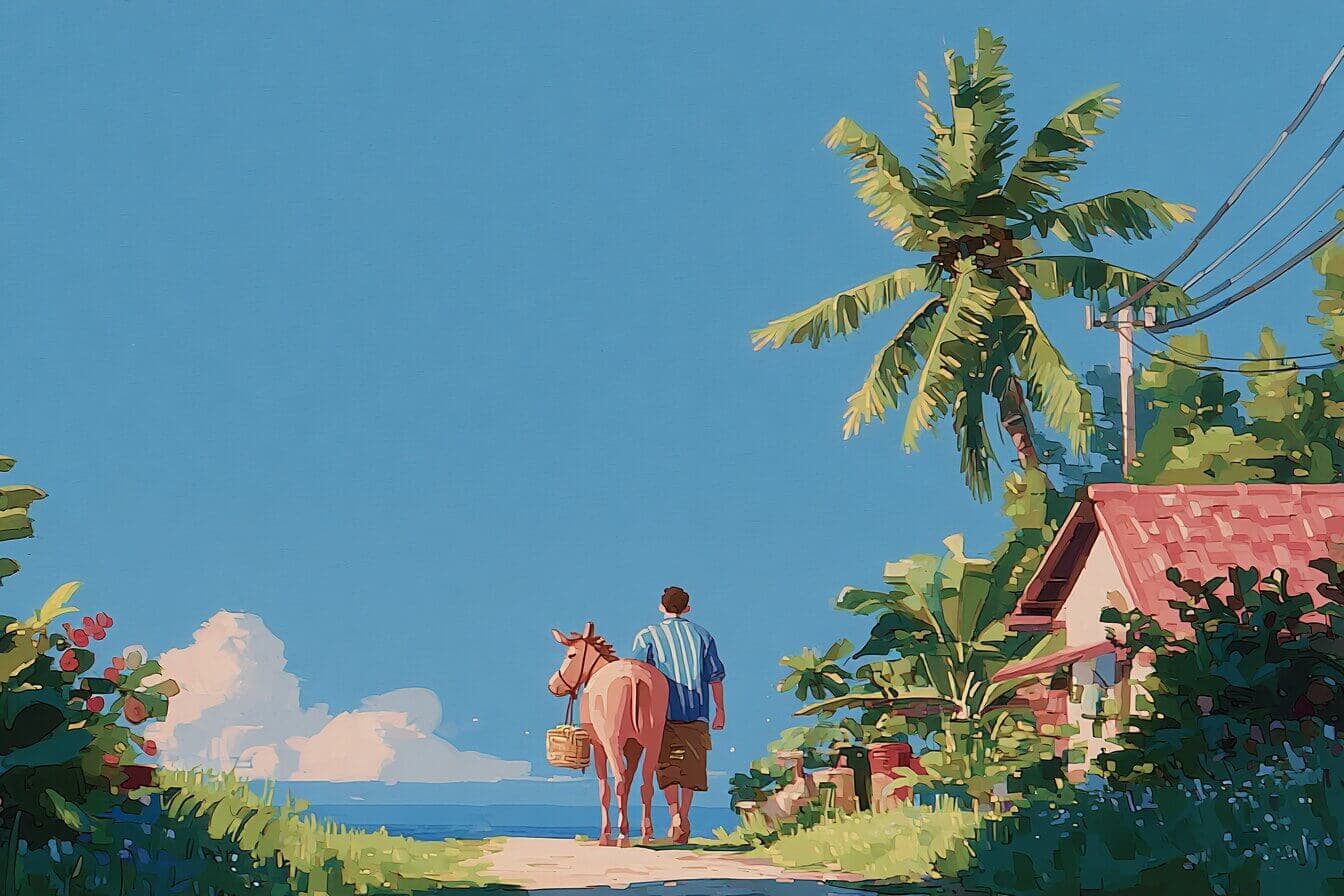
There is something deeply satisfying about a story where a child trades everything away and somehow ends up happier than when they started. In this Hans in Luck bedtime story, a cheerful boy named Milo hauls a lump of gold down a long road, swapping it for a horse, then a cow, then a goose, then a plain river stone, and grinning wider with every deal. It is the kind of tale that makes the world feel generous right before sleep, when kids need to believe tomorrow will be good. If you want to put your own child on that warm road, Sleepytale lets you create a personalized version in minutes.
Why Hans in Luck Stories Work So Well at Bedtime
The pattern at the heart of every Hans in Luck tale is a slow, happy subtraction. A child holds something valuable, meets a friendly stranger, makes a trade, and walks on lighter than before. That repeating loop is almost hypnotic for young listeners. Each swap lowers the stakes instead of raising them, so there is never a moment of real tension, just the comfortable hum of a journey winding down. For a bedtime story about Hans in Luck, that structure is practically built for relaxation.
Kids also pick up on something deeper without needing it explained. Milo is not tricked or foolish. He simply values connection over possession, and every person he meets ends up better off. That idea, that letting go can feel like gaining, settles into a child's mind the way a warm blanket settles over their shoulders. It is reassuring in a way that does not need a lecture.
The Merry Trader's Golden Journey 8 min 18 sec
8 min 18 sec
Young Milo whistled as he skipped along the road, a shining lump of gold tucked in his pocket so deep he had to pat the outside of his trousers every few steps just to make sure it was real.
His employer at the bakery had paid him for a full month of sweeping floors, wiping counters, and once rescuing a tray of rolls that slid halfway off the table.
Now he was heading home to surprise his grandmother.
The gold was heavy. His pocket sagged, and his hip ached a little where it bumped against him. But his feet were light, and the sun was doing that thing where it turns every leaf bright enough to squint at.
He rounded a bend and spotted a farmer tugging the reins of an old chestnut horse.
The horse had stopped dead in front of a patch of clover and was eating with the calm determination of someone who has absolutely nowhere to be.
The farmer's face had gone the color of a ripe plum.
"Trouble?" Milo asked.
"This horse," the farmer said through his teeth, "has not taken a willing step since Tuesday." He wiped his brow with the back of his wrist. "I'd trade her for a lump of gold if I had the chance."
Milo looked at the horse. The horse looked at Milo, still chewing.
Something about her soft brown eyes made him reach into his pocket. He held the gold out in his palm. It caught the light and threw a tiny square of brightness onto the farmer's chin.
The farmer blinked, grabbed it, shoved the reins into Milo's hands, and was halfway down the road before Milo could say goodbye.
Milo laughed. He patted the horse's neck. Her coat was warm and smelled like dust and clover. "Well, Chestnut," he said. "Shall we?"
Chestnut nickered, which Milo took as a yes.
He climbed on, and they trotted along at a pace that was slow enough to notice things: a line of ants crossing the road, a fence post with a bird's nest wedged in the top, the way the shadows of clouds moved across the hills like something breathing.
Soon they passed a dairy farm. A cow stood in the yard, mooing in a pitiful, drawn out way that sounded almost like a question.
The farmer leaned against the gate, arms folded. "She hasn't given milk in days," he said, not even waiting for Milo to ask. "What I need is a horse to plow. My back can't take another season."
Milo slid off Chestnut and rubbed the horse's flank one last time.
"Trade?" he said.
"Done."
And just like that, Milo had a cow named Buttercup who followed him down the road like she had been waiting for exactly this person to show up.
Buttercup wore a bell around her neck. It didn't ring cleanly. It made a dull, slightly off clonk with every step, and Milo found himself humming along to it without meaning to, matching the rhythm the way you match your breathing to someone sleeping beside you.
They crossed a wooden bridge over a brook that ran fast and shallow, the water sounding like a whispered argument.
On the other side, a boy sat on a stump. He was crying, but quietly, the way kids cry when they have been at it long enough that the loud part is over.
Milo crouched beside him. "What happened?"
"My goose." The boy wiped his nose on his sleeve. "She flew off. I raised her from an egg." His voice cracked on the last word.
Milo looked at Buttercup. Buttercup looked at the boy. She let out a low, gentle moo, the first sound she had made that wasn't sad.
"Tell you what," Milo said. "You take Buttercup. She's good company, and I think she likes you already."
The boy's face changed so fast it was like watching weather. "Really?"
"Really."
They shook on it, and the boy's tears turned into a hiccupy kind of laugh as Buttercup nosed his hand.
Milo walked on alone for a bit, which felt strange after all the company. The road was quieter without the bell.
Then he heard honking.
Around the next bend, a shepherd sat on a flat stone, a plump goose tucked under one arm and a look of pure bewilderment on his face. "This goose wandered into my flock an hour ago," he said. "She keeps nipping the sheep. I need something calm. A stone, even. Just something to weigh down the tarp on my shelter. The wind's been awful."
Milo looked at the goose. She had white feathers, bright orange feet, and an expression that suggested she found the entire world moderately amusing.
"I'll take her," Milo said. "But I don't have a stone."
The shepherd fished in his pocket and pulled out a smooth river stone, gray with a single stripe of white running through it like a vein of cream in marble. "Swap?"
Milo took the stone. It was cool and fit perfectly in his palm, as if someone had shaped it for exactly his hand. He handed over a handful of nothing, technically, since the goose wasn't his. But the shepherd seemed happy, and the goose, now named Fluff by Milo on the spot, waddled beside him honking at butterflies.
Wait. He looked at the stone. He looked at the road behind him.
Gold to horse. Horse to cow. Cow to a boy's smile. A wandering goose to a river stone.
He laughed so hard that Fluff startled and flapped up onto his shoulder, which made him laugh harder, because a goose on your shoulder is heavier than you expect and their feet grip like they mean it.
But here was the thing: his pocket didn't ache anymore. His hip didn't bump. The road felt like it was rolling out in front of him as a gift, not a chore.
Fluff rode on his shoulder for a while, then got bored and hopped down to waddle again.
They crested a hill. Below, his village sat in the valley, chimney smoke rising in thin lines that bent east in the breeze. He could just make out his grandmother's garden, the one with the crooked scarecrow that had scared exactly zero crows in its entire career.
He ran.
His grandmother stood at the gate, arms already open, as if she had been standing there since morning.
Milo buried his face in her shoulder. She smelled like bread and dried lavender and the wool of her shawl.
"Well?" she said. "How was it?"
He pulled the stone from his pocket and told her everything. Every trade, every face, every moment where he should have felt poorer and didn't. By the end he was laughing again, and so was she, wiping her eyes with the corner of her apron.
"You traded gold for a pocketful of good stories," she said. "That's not a bad deal."
Milo set the stone on the mantel, next to a chipped teacup and a photograph of his grandfather.
That evening, he helped bake bread. He fed the chickens, who were suspicious of Fluff but tolerated her once she settled near the water trough. He told the neighbor children about the farmer's plum-colored face and the cow's broken bell, and they shrieked with laughter.
Night came the way it does in small villages, all at once, as if someone gently closed a curtain. The frogs started up. A dog barked twice down the lane and then stopped, satisfied.
Milo lay in bed. The stone sat on the mantel in the next room, holding no magic, worth nothing at a market.
He closed his eyes and saw Chestnut standing in clover, Buttercup nudging a boy's hand, the shepherd tucking the tarp tight against the wind. He saw the brook running fast and the bridge with its creaky middle plank. He saw the road, long and sun-warmed, unrolling ahead.
He was already asleep when the last thought drifted through: that the lightest pockets make for the easiest dreams.
Morning came with birdsong and the smell of porridge. Grandmother had packed him a lunch, a thick slice of bread with cheese and an apple so red it looked painted.
Milo tucked the stone into his pocket, kissed her cheek, and stepped out the door. Fluff honked from the yard, but she seemed content to stay.
He walked the road again. A breeze carried the scent of lilacs from somewhere he couldn't see. The baker waved from his doorway and tossed him a warm roll, still steaming, and Milo caught it one-handed and bowed like it was a standing ovation.
He passed the meadow where he'd met the shepherd. Fluff's replacement, apparently, because there was a different goose there now, black-feathered, sitting among the sheep like she owned them.
The shepherd called out, "That first goose laid a golden egg yesterday, if you can believe it. Want to trade your stone for one?"
Milo grinned, shook his head, and kept walking.
The stone clicked softly against his hip. The road stretched ahead, patient and bright.
He didn't know what he would find around the next bend, and that was exactly why he was smiling.
The Quiet Lessons in This Hans in Luck Bedtime Story
Milo's journey is really about generosity and the strange freedom that comes from letting go. When he hands over the gold without a second thought, children absorb the idea that clinging to things can weigh you down more than losing them. The moment with the crying boy at the bridge is where the story's heart lives, because Milo does not just trade a cow, he trades it for the chance to turn someone's sadness into laughter, and kids notice that. At bedtime, these ideas settle in gently: that being kind does not cost you anything real, and that waking up tomorrow lighter is better than waking up richer.
Tips for Reading This Story
Give the farmer with the stubborn horse a huffy, exasperated voice, and let Milo sound breezy and slightly amused every time he offers a trade. When Buttercup's broken bell goes "clonk," tap your finger on the bed frame or nightstand to give it a real sound, and slow your pace during the bridge scene where the boy is crying quietly so the moment has room to breathe. After the shepherd offers the golden egg and Milo says no, pause and let your child react before you read the last few lines.
Frequently Asked Questions
What age is this story best for?
Children ages 3 to 8 tend to enjoy it most. Younger listeners love the repeating swap pattern and the animal sounds, especially Buttercup's bell and Fluff's honking. Older kids pick up on the humor of Milo happily trading gold all the way down to a plain stone and start to understand why he is smiling at the end.
Is this story available as audio?
Yes. Press play at the top of the story to listen. The audio version works especially well here because the rhythm of Milo's trades builds a gentle, almost musical repetition, and the scene where Fluff lands on his shoulder is the kind of moment that gets a real laugh when you hear it out loud rather than just read it.
Why does Milo keep trading for less valuable things?
That is the heart of the Hans in Luck tradition. Milo is not being tricked. Each trade solves a problem for someone he meets, and each time he walks away lighter and happier. The story shows children that value is not always about price. A smooth stone that fits perfectly in your hand and reminds you of every friend you made along the way can feel richer than gold.
Create Your Own Version
Sleepytale lets you build a personalized version of this tale with your child as the cheerful trader walking the road. Swap the chestnut horse for a fluffy dog, change the village to a seaside town, or turn the river stone into a seashell, whatever details make your family's version feel like home. In just a few taps, you will have a cozy, ready to read story you can return to every night.
Looking for more bedtime story classics?

Once Upon A Time Stories
What happens when June opens a golden book with no title? One of the sweetest short once upon a time stories about a forest, a hedgehog, and a blank page.

Fairy Tales Written By Hans Christian Andersen
Anders discovers short fairy tales written by Hans Christian Andersen as his grandmother reads from a soft brown book by lamplight.

Bluebeard Fairy Tale
In this short bluebeard fairy tale, the forbidden room holds not horror but a music box and memories of the people Lord Corvus loved most.

Red Shoes Fairy Tale
What happens when Karen's magical red shoes refuse to stop dancing? Discover this short red shoes fairy tale tonight.
Twinkle Twinkle Little Star Bedtime Story
Lily watches a kind star and floats up to help deliver dreams in this short twinkle twinkle little star bedtime story. A warm, quiet tale for sleepy nights.
Through The Looking Glass Bedtime Story
Step into a calm, magical short through the looking glass bedtime story and drift toward sleep with gentle wonder. Enjoy a soothing retelling that feels cozy from start to finish.