
Grandpa Bedtime Stories
By

Dennis Wang, Bedtime Story Expert
11 min 42 sec
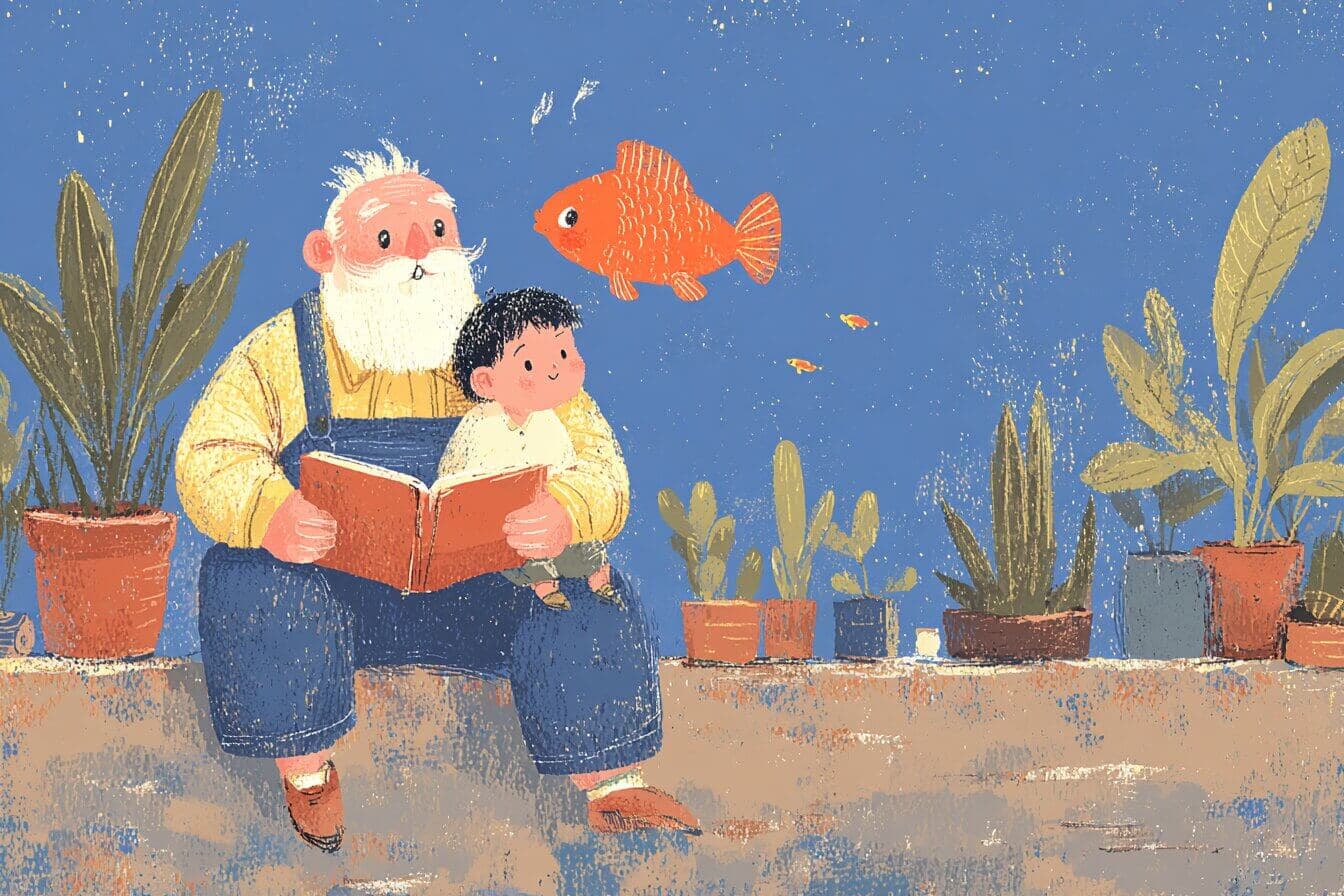
There is something about a low, unhurried voice in a dim room that makes the whole world shrink down to exactly the right size. In this story, a child curls up beside Grandpa as he opens his memory like a drawer full of small, precious things, turning a wobbly day into something warm and steady. It is one of those grandpa bedtime stories that feels less like reading and more like being wrapped in a quilt someone made by hand. If your family has its own rhythms and details you would love woven in, Sleepytale lets you shape a version that sounds like it came from your own living room.
Why Grandpa Stories Work So Well at Bedtime
A grandpa's voice carries a particular kind of gravity. It is older and slower, and kids can feel the difference. When a story comes from someone who has already lived a long life, it signals to children that the world has been turning safely for a very long time. That reassurance settles into the body the way a heavy blanket does, pressing gently against restlessness until it quiets.
There is also the way grandpa stories tend to circle back home. The adventures are small and the stakes are tender, which is exactly what a child's mind needs before sleep. A bedtime story about a grandpa sharing memories teaches kids that ordinary days hold things worth keeping, and that someone they love has been collecting those ordinary treasures for years. That thought alone can make closing your eyes feel like a safe, interesting thing to do.
Grandpa's Pocket of Stars 11 min 42 sec
11 min 42 sec
Every evening, when the sky traded its bright face for a softer one and the first cricket tried out a note or two, I waited for the creak of Grandpa's chair.
He would settle by the window where the curtains hung like little clouds and pat the cushion beside him. The lamp by his elbow glowed like a friendly moon, the kind that doesn't try to light the whole room, just the two of you.
When I curled up, he would smile. The room itself seemed to take a deep breath.
Grandpa had a way of speaking that made every word feel warm but never hurried. He said stories were like boats on a gentle river, carrying us from one shore to another. He said love was the river that held the boats up. If my day had been bumpy, the river inside his voice smoothed the bumps until I forgot where they were.
Sometimes I brought a blanket. Sometimes a cookie. I always brought my quiet listening ears.
Grandpa would look out into the evening and say, Do you want to hear a true one, or a true one that feels like a dream.
I would say both, because with Grandpa, both could be the same thing.
He laughed. Not the kind of laugh that shakes a room, but the kind that nudges your heart a little closer to his. Then he would begin, and the first words fit around me like a sweater that somehow knew my name, even though he just called me dear.
Once, he said, when I was young enough to race the wind and old enough to know the wind was kind, I carried a paper boat in my pocket.
My mother folded it while she hummed. She had a hum for everything, one for cooking, one for worry, one for folding paper boats. She told me a paper boat needs care, and that the best kind of care is the kind that listens.
I listened to the little river that ran behind our house.
It sounded like a secret song, the same three notes, over and over.
I set the boat down and watched it float. I walked along the bank to see how far it could go. The boat shivered, dipped, and kept on. A dragonfly landed on its tip and stayed, balanced perfectly, like a tiny traveler who had been expecting this particular ride.
I thought about my mother, who had tied my scarf that morning and pressed my hands between hers to make them warm.
Love was there in the scarf and the press of her hands.
Then the sky opened with a sweet rain that smelled like grass tea. My paper boat tilted, and I wondered if it would sink. I reached with my stick and nudged it toward the calm side where the water went flat as a mirror.
The boat steadied. The dragonfly lifted into the air and zipped away, as if it were saying thank you with wings.
Another day, Grandpa said, leaning back so the chair sang its one note, I had a kite made from spare cloth and two thin sticks.
I did not have much. But I had the wind, and I had clever fingers, and I had my sister's smile, which sometimes felt like a kite string for my heart.
We drew a red heart on the tail because we wanted our kite to tell the sky we loved it.
We ran to the field where the grass waved at our ankles. I held the spool and my sister held the kite. We counted to three and she tossed it high.
It leaped. Sagged. Then opened up and flew as if it had been waiting its whole life for that one breath.
The heart on the tail flickered like a tiny flame. People walking by lifted their heads. A small boy stopped and pointed, his mouth a perfect circle, and I gave him the string for a turn. He grinned with all his teeth, even the ones he was clearly still growing into.
When the wind softened, the kite started to fall, and my sister ran to keep it from landing in the muddy patch by the fence. She slipped. I caught her by the sleeve. We sat in the grass and laughed until our ribs ached at our almost tumble, at the mud we barely missed, at nothing in particular.
Love is there in the sleeve and in the quick hand. It is there in the sharing of a string, and in the way you pay attention to someone's step.
When we walked home, we wiped the kite tail clean and hung it by the window. The red heart glowed whenever morning light passed through it, and it kept glowing until the cloth finally wore thin, long after we had grown too tall to fly kites together.
There was a winter, Grandpa said, when the snow was deep but not lonely.
The trees wore white hats. The pond was tucked under a blanket of ice so thick the ducks stood on it and looked confused, as if someone had moved the floor.
On the far side of the village, an old painter lived in a house with blue shutters that blinked when the breeze came. I helped shovel his path because his legs were stiff and slow. He taught me how to mix colors that could make a sunset inside a teacup.
Look for the loving color in everything, he said.
I did not understand at first. Then I watched his hands move, slow and sure, and I saw how his eyes softened when he looked at a crooked fence or a bird hopping for crumbs. He found something worth painting in every broken, ordinary thing.
We painted together, the old man and I, and we did not speak very much. Our brushes spoke for us. I painted a lantern with a yellow heart in its center. He painted a pair of mittens reaching for each other, left and right.
When I returned home, my grandmother warmed my hands by the stove and I showed her the lantern painting. She kissed my forehead and said the painting warmed her more than the fire did.
That is how I learned love can be painted, and shoveled, and held, and poured into tea.
The winter passed slowly and kindly, like a friend walking you all the way to your door. When the painter's shutters blinked in the first spring breeze, I waved at them as if they were eyes that knew me.
Grandpa's chair sighed as he paused. He rubbed the arm of it, worn down to a glossy smoothness where his thumb always rested, and it seemed to help him remember the next part.
He told me about a day with no wind at all, when he learned to read the air anyway.
A neighbor's baby had lost a small knitted shoe in the tall grass near the pond. The grass had a hundred green hands and a thousand narrow rooms. Grandpa closed his eyes and listened. He did not listen for sound. He listened for love, the way a bee listens for the center of a flower.
He remembered the blue ribbon on the shoe. He remembered the way the mother had tucked a strand of hair behind her ear while she spoke, the worry folded into such a small gesture.
He searched slowly, looking for the color of the ribbon, the curve of the knit, the way a mother's fingers would have tied a knot.
He was patient, and he let the grass tell him where it had hidden the treasure.
He found the shoe on a small mound of earth, all by itself, with the ribbon curled like a sleepy smile.
When he brought it back, the mother's eyes shone with the kind of thanks that fills up a whole day. Then he laughed and told me the neighbor paid him with warm bread and honey, and that he brought a slice home for his father, and a jar lid of honey for the ants in the yard, who looked like tiny knights carrying gold. He paused, then added, They were very serious about it.
While he spoke, the room felt larger, as if the walls slid back to make space for all the days he had lived.
I could almost see the paper boat drifting along the baseboard, leaving a path of silver light. I could almost hear the kite tail whispering by the lamp. I could almost smell the snow on the painter's mittens and the sweet bread on the air.
I reached for Grandpa's hand.
He squeezed mine. His hand was a map full of rivers and soft hills.
He said, That is enough of yesterday, dear. Let us make a little adventure of love tonight.
He stood, and I followed him to the kitchen. We filled a glass jar with tiny slips of paper. On each slip we drew a small heart with one word beside it.
Kindness.
Patience.
Listening.
Sharing.
We put in Warmth and Laughter and Quiet. Then we placed a small marble at the bottom, just heavy enough to make the jar sit steady. Grandpa said the marble was the weight of a promise.
He tied a ribbon around the lid and set the jar on the windowsill. It caught the lamp light and sent it back out in soft squares onto the wall.
We each chose one slip and acted it out. For Kindness, Grandpa tucked my blanket around my toes where it always comes loose. For Listening, I sat very still while he told me his favorite sound, which he said was the sigh a book makes when it is closed after a good story.
We were not done.
Grandpa took a small cloth bag from his pocket and poured out five buttons. Each one had a sort of smile, a nick here, a chip there, and a picture of its old coat in its shine. One was brass with a faint anchor stamped into it, and I wondered what coat it had come from and who had worn it.
We made a tiny trail of buttons across the living room rug and took turns stepping from one to the next without touching the spaces between. It felt like crossing a river on silver stones.
When we reached the last button, we whispered the name of someone we loved.
I said mother.
Grandpa said everyone.
We tiptoed back, and the buttons winked at us like friendly stars. He told me that love teaches you how to walk carefully, and how to sing with your feet, and how to laugh when a button spins away and you have to search the quiet for it.
I flicked one button and it did a little dance before it settled.
We were both still for a long time. It was the best kind of stillness, the kind that hums.
Before sleep, we stepped onto the porch to find a patch of night that had the smell of mint.
The sky was a velvet pocket, and we pretended to tuck bright stars into it to save for tomorrow. A breeze passed and told us a secret in a language we almost understood.
Grandpa said the breeze was telling us that love is like starlight. It travels a long way to find you, and it keeps going after you close your eyes.
We listened until our shoulders dropped and our mouths made soft circles for yawns.
Back inside, Grandpa opened a book that once belonged to his father. The pages rustled like leaves. He did not read every word. He traced the edge of a page and told me that when he was young, a friend moved away, and they promised to look at the moon at the same time on clear nights. They did not speak on those nights, but it still felt like talking. It still felt like care.
When he finished, he kissed the top of my head and tucked the blanket in, not too tight and not too loose.
He set the jar of paper hearts on the bedside table so the quiet light could keep me company. He whispered that tomorrow we would draw a new heart with the word Courage, and we would use it to try something kind that felt a little brave.
As my eyes drifted closed, I held all the pieces of the evening in my mind.
The paper boat and the dragonfly that said thank you with wings. The kite that told the sky it was loved. The mitten painting that warmed more than a fire. The blue ribbon of the tiny shoe. The jar of words, the five smiling buttons, the star pocket, and the promise marble that kept everything steady.
I thought of Grandpa as a lighthouse, quietly turning light in a wide circle so that anyone who looked up would know the way home.
My last thought before sleep was a soft wish. I wished that my heart would always be a river that could carry boats made by hands that hum.
Just before dreams opened like curtains, I heard Grandpa's chair creak and his voice say good night.
It sounded like every good morning I could imagine.
The Quiet Lessons in This Grandpa Bedtime Story
This story is gently threaded with patience, attentiveness, and the courage to care for others in small, ordinary ways. When Grandpa searches the tall grass for a baby's lost shoe, children absorb the idea that slowing down and really looking is itself an act of love. When the child and Grandpa step across buttons on the rug and whisper the names of people they love, it shows that connection does not need grand gestures, just presence and intention. These are exactly the kinds of lessons that settle well at bedtime, because a child heading into sleep can carry the quiet thought that tomorrow holds chances to be kind, to notice, and to share a string or a turn or a tucked blanket.
Tips for Reading This Story
Give Grandpa a low, rumbly voice that slows down a little more each time he starts a new memory, and let the child narrator sound wide awake at the beginning and gradually softer as the evening goes on. When you reach the moment where the dragonfly lifts off the paper boat, pause and let your child imagine the wings buzzing away. During the button trail scene, try tapping your finger along your child's arm for each button step, so the crossing feels real under the covers.
Frequently Asked Questions
What age is this story best for?
It fits best for children ages 3 to 8. Younger listeners will love the sensory details like the button trail and the star pocket, while older kids can appreciate Grandpa's layered memories of the paper boat, the kite, and the old painter. The gentle pacing and repeating warmth make it accessible even for children who are still learning to follow longer stories.
Is this story available as audio?
Yes. You can press play at the top of the story to listen. The audio version brings out the rhythm of Grandpa's voice especially well, and moments like the cricket singing at the opening and the quiet hum of the button trail scene have a soothing, almost musical quality that works beautifully when heard aloud rather than read.
Why does the story use so many small objects like buttons and paper boats?
Grandpa's memories are built around things a child can picture holding in their own hands, which makes the story feel close and real rather than abstract. The paper boat, the kite, the jar of heart slips, and the five buttons all give kids something concrete to imagine touching, and that physical connection helps the story land as comfort rather than just words.
Create Your Own Version
Sleepytale lets you build a bedtime story around the grandparent your child actually knows and the details that make your family yours. You could swap the paper boat for a fishing trip, trade the snowy village for a warm porch in summer, or give Grandpa a dog who tags along to every memory. In a few moments, you will have a cozy, personal story ready to read tonight.
Looking for more family bedtime stories?
Sibling Bedtime Stories
A cozy twist short sibling bedtime stories where a blanket fort becomes a quiet lesson in sharing and forgiveness. One rainbow thread turns small messes into warm teamwork.
Parent Bedtime Stories
A tender kitchen moment turns a child's worry into wonder in short parent bedtime stories, where love stays steady through spills and giggles.

Mom Bedtime Stories
Settle in with short mom bedtime stories that soothe worries with warm hugs and gentle magic. Read a cozy tale and learn how to make your own in Sleepytale.
Grandma Bedtime Stories
A cozy kitchen fills with cinnamon and whispers as short grandma bedtime stories turn into cookies that taste like memories. One bite reveals a surprising wish you can share.
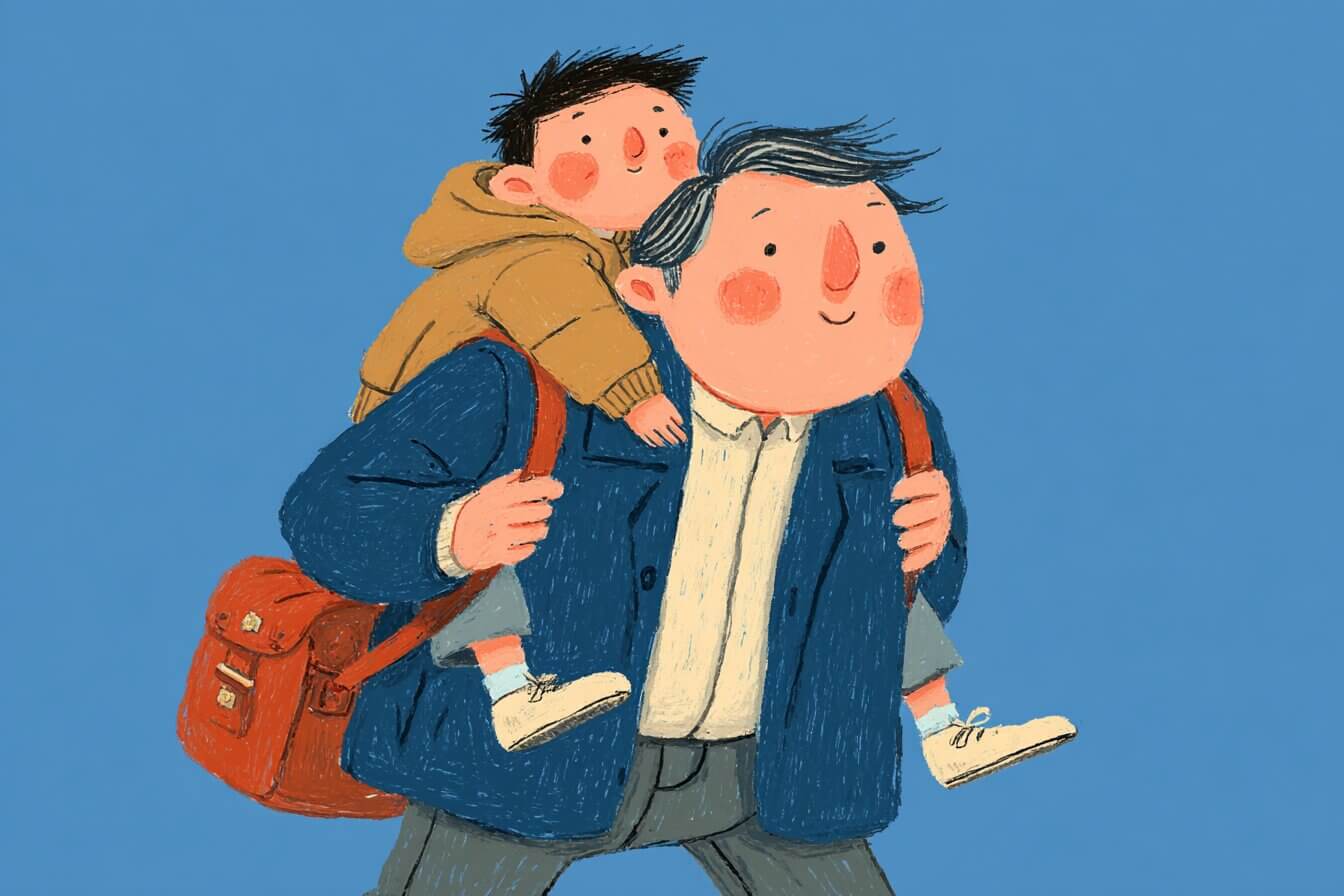
Dad Bedtime Stories
Unwind into cozy giggles as Dad flips rubber duck pancakes in his yellow polka dot apron. Read Dad's Giggle Parade for short dad bedtime stories that help kids settle fast.
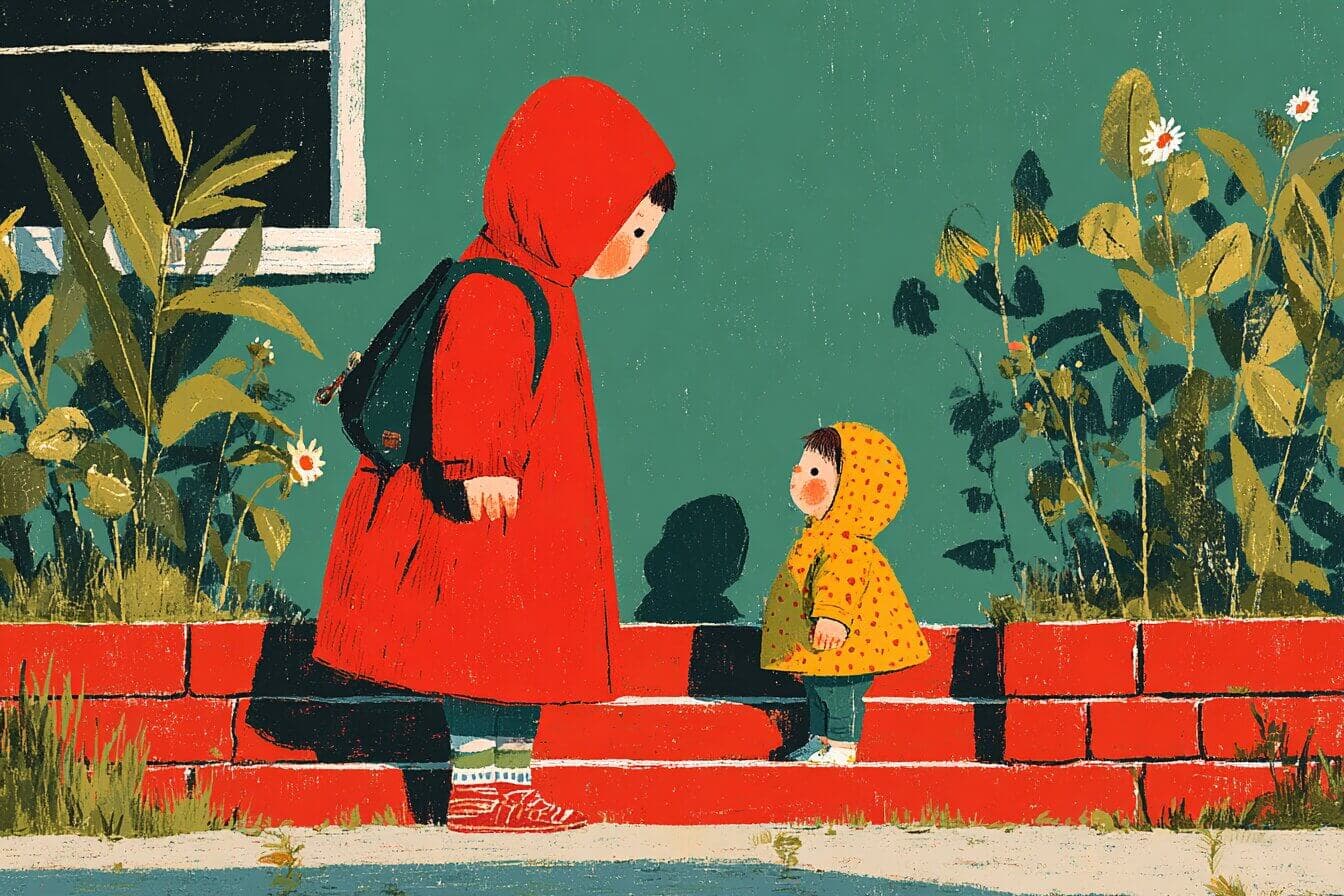
Baby Sister Bedtime Stories
Lantern light drifts over a stroller as a brother guides his tiny sister through a gentle night. Settle in with short baby sister bedtime stories that feel warm and safe.