
Five Children And It Bedtime Story
By

Dennis Wang, Bedtime Story Expert
9 min 56 sec

There's something about the idea of finding a strange creature buried in the sand that makes kids pull their blankets closer and listen harder. In this cozy retelling, five siblings stumble upon a grumpy wish-granting fairy in a gravel pit, and every wish they make spirals into a gentle disaster before they discover what really matters. It's the perfect five children and it bedtime story for nights when your little one wants a bit of magic mixed with a bit of mischief. And if you'd like to reshape the adventure with your own family's names and ideas, you can build a custom version with Sleepytale.
Why Five Children And It Stories Work So Well at Bedtime
Kids are drawn to stories where wishes go hilariously wrong because it mirrors the small frustrations of their own day, the ice cream that dripped, the tower that toppled, the plan that didn't quite work. A bedtime story about five children and a fairy lets them laugh at those mishaps from a safe distance, then settle into the reassuring rhythm of things turning out okay by the end. The repetition of wish, trouble, and sunset reset creates a pattern young listeners can anticipate, and that predictability is deeply calming before sleep.
There's also something comforting about siblings sticking together through messes they created themselves. Kids who have brothers, sisters, or close friends recognize that dynamic instantly. And the gravel pit, a small, enclosed, slightly wild space, feels like the kind of secret place children already build in their imaginations. It becomes a world they can return to each night, which helps the transition from wakefulness to rest feel like revisiting somewhere familiar rather than drifting into the unknown.
Five Wishes and a Grumpy Fairy 9 min 56 sec
9 min 56 sec
Cyril, Anthea, Robert, Jane, and Hilary were digging in the gravel pit behind their new country house. Their spade clinked against something hard.
They scraped the gritty sand away and found a tiny door studded with seashells, one of them cracked down the middle like a thumbnail. A muffled voice grumbled from inside: "Stop that infernal tapping!"
The door creaked open and out flew a creature no taller than a teacup, with dragonfly wings, sand-colored curls, and a scowl that could curdle milk. It hovered there, adjusting a waistcoat that had a button missing.
"I am the Psammead, guardian of this pit, and you have disturbed my nap."
The children apologized, tripping over each other's words. The creature studied them for a long moment, then sighed.
"Because you have manners, I grant each of you one wish per day until the moon is full. But mind you, every wish fades at sunset. And they always, always end in bother."
Cyril wished first. "Make us as beautiful as the day!"
Sparkles swirled. The siblings became dazzling, hair shimmering, eyes bright, their ordinary clothes turned to silk. Townsfolk stopped and stared, then followed them down the lane in a giggling parade. The attention felt splendid at first. Then a gust of wind blew Robert's cap away, and when he chased it, the crowd surged forward, cheering, "Catch the pretty boy!" They nearly lifted him right off the ground.
The children fled to the gravel pit. At sunset the glamour melted like sugar stirred into tea.
They looked ordinary again. Muddy and relieved.
Next morning Anthea whispered, "I wish we had wings."
The Psammead sneezed, and bright feathers burst from their shoulder blades, stiff at first, then loosening like fingers stretching after sleep. They soared above hedges and rivers, laughing at the tiny world below. Then a hawk mistook Robert for a plump pigeon and dove straight for him. Jane screeched, her wings flapping like wet laundry caught in a storm.
They tumbled into a briar patch, wings tangling with thorns. Robert got a scratch on his elbow that he kept showing everyone for the rest of the evening. Sunset came just in time; the feathers vanished, leaving only scratched arms and a lesson about sky traffic.
On the third day Robert said, "I wish for a fortress of gold!"
He said it too loudly, the way Robert said most things.
A gleaming castle rose from the gravel, its towers thick with coins. They ran inside, pockets clinking. But the walls reflected the sun so fiercely the children squinted and tears streamed down their faces. Nearby farmers noticed the glare, assumed treasure, and hurried toward the pit with pickaxes.
The siblings barred the golden gates. Heat rose under the mirrored glare. Jane's hair ribbon started to smolder at the edges.
They begged the Psammead to undo it early.
"Rules are rules," the fairy snickered, not even looking up from his fingernails.
At sunset the castle crumbled into dust that smelled faintly of caramel, which was the only nice thing about it.
Hilary, the youngest, decided gentler wishes might work. "I want our garden to bloom every flower on earth."
The pit erupted into color. Orchids, roses, and strange silver blossoms carpeted the sand. Bees arrived in humming clouds. The perfume was heavenly until the flowers began to sneeze, spraying sticky pollen that glued the children's eyelashes together. They stumbled about, bumping into each other like blindfolded kittens.
Hilary sneezed eleven times. She counted.
Sunset washed the garden away, leaving only the ordinary gravel and four sneezing siblings.
On the fifth morning Cyril tried cleverness. "I wish for a magic carpet that obeys only me."
A splendid rug appeared, tasseled in sapphire. It bowed, then whisked them into the sky. Robert shouted, "Higher!" The carpet obeyed and pierced a rain cloud. Cold water drenched them. "Lower!" Anthea cried, and it dove so fast their stomachs lurched.
Commands tangled. The carpet spiraled like a dazed bumblebee with somewhere important to be and no memory of where. They finally ordered, "Land us by mother!"
The rug dropped them through an open window into the kitchen, where their mother stared at five dripping children on her freshly scrubbed floor. She opened her mouth, closed it, and opened it again.
Sunset dissolved the carpet into a puddle that smelled of lavender soap.
Day six arrived cloudy. Jane sighed. "I wish the baby next door could talk. He always looks wise."
The Psammead yawned, and across the garden the infant sat up in his pram and began describing the mathematics of starlight in a voice far too deep for someone wearing a bonnet.
His nanny fainted.
The baby's eloquence drew scholars, reporters, and a traveling magician who tried to sell tickets. The house overflowed with flashing cameras. The baby, thoroughly annoyed, lectured everyone on proper nap schedules until the entire village rang with his booming voice.
At sunset he returned to coos. The relieved nanny swaddled him tight and vowed never to speak of the day again.
On the seventh morning the siblings sat in a circle around the Psammead, who polished his spectacles on his waistcoat.
"One wish left before the moon is full. Choose wisely."
They whispered among themselves, recalling beauty mobs, sneezing flowers, carpets gone wild. The gravel pit was quiet except for the sound of a wren hopping along the rim, pecking at nothing in particular.
Finally Anthea stepped forward.
"We wish that today, whatever we do, we will know the right thing to wish for others."
The fairy blinked. His scowl softened by a fraction, which on the Psammead's face was practically a grin. He snapped his fingers.
A gentle warmth filled their chests.
They spent the day helping. Cyril carried groceries for Mrs. Holly, who had a bad knee and pretended she didn't. Robert found a lost puppy and knew exactly which gate to bring it to. Jane shared sandwiches with a hungry boy sitting on the church wall. Hilary sang to the baby, who listened with wide, ordinary, delighted eyes. And Anthea mended a tear in father's coat, one he hadn't mentioned but kept checking with his fingers.
Each time, they sensed exactly what someone needed, and the wishes they silently offered came true in small, lasting ways.
The puppy bounded home wagging. Mrs. Holly baked them honey biscuits, the kind with crunchy edges and soft middles. Father's coat stayed whole. The baby giggled. And the hungry boy saved half his sandwich for a sparrow.
When sunset approached, the siblings returned to the pit.
The Psammead waited. His expression had gone quiet, not grumpy, not cheerful, just still.
"Your final wish was a wise one. Because you wished for wisdom rather than riches, its kindness will not fade. Remember, the best magic is the sort you give away."
The moon rose, round and silver. The children thanked the fairy for the lessons hidden in every disaster. He gave a tiny bow, sprinkled sand that glowed like fireflies, and vanished into his shell door. It clicked shut.
The gravel pit looked ordinary once more. But the siblings felt different inside, the way you feel after a long day that tired you out in a good way.
They walked home hand in hand, pockets full of ordinary pebbles that somehow felt precious.
From that day on, whenever they faced a problem, they paused. They thought of others first. They never found the Psammead again, but they discovered that everyday kindness worked its own quiet magic, lasting long after sunset and shining brighter than any castle of gold.
And sometimes, on warm evenings, a breeze carried the faint scent of salt and sun-warmed sand. The children smiled, remembering the grumpy fairy who lived under a cracked seashell door and taught them that wishes, like hearts, work best when shared.
The Quiet Lessons in This Five Children And It Bedtime Story
This story weaves together humility, empathy, and the difference between wanting something for yourself and wanting something for someone else. When the children chase beauty and gold and end up blinded, tangled, or drenched, kids absorb the idea that wanting more doesn't always mean getting better. And when Anthea's final wish fills them with warmth instead of sparkle, it shows that the deepest kind of magic doesn't need to be loud or flashy. These are reassuring ideas at bedtime, when a child's mind is sorting through the day's small victories and frustrations, because they suggest that tomorrow's best moments will come from paying attention to the people around you, not from chasing something dazzling.
Tips for Reading This Story
Give the Psammead a scratchy, slightly irritated voice, like someone who just woke up from a very good nap, and let each child sound a little different: Robert loud and hasty, Anthea calm, Hilary small and earnest. When the golden castle crumbles into caramel-scented dust, slow down and let your child breathe in the moment. At the end, when the siblings walk home with pebbles in their pockets, lower your voice almost to a whisper and let the last sentence trail off gently.
Frequently Asked Questions
What age is this story best for? Children ages 4 through 8 tend to enjoy it most. Younger listeners love the repeating pattern of wish, disaster, sunset reset, and the silly moments like the baby lecturing on nap schedules. Older kids appreciate the way the final wish is different from the rest and start noticing why Anthea's choice matters.
Is this story available as audio? Yes. You can press play at the top of the story to hear it read aloud. The audio version works especially well for this tale because the Psammead's grumpy dialogue, the chaotic carpet ride, and the quiet final scene at the gravel pit all come alive with narration. It's a nice option for nights when you want to listen together rather than read.
Why does the Psammead make wishes fade at sunset? In the original E. Nesbit novel, the sunset rule is what makes every wish feel temporary and a little risky, which is exactly what pushes the children to think more carefully each day. In this retelling, the same rule gives the story its comforting rhythm: no matter how wild the wish gets, everything resets by evening, and the children always end up safe back at the gravel pit.
Create Your Own Version
Sleepytale lets you reshape this adventure into something that fits your family perfectly. Swap the gravel pit for a garden path, trade wishes for helpful riddles, change the Psammead into a shy sea sprite, or add your child's name to the list of siblings. In just a few moments, you get a calm, cozy story you can read aloud or play back whenever bedtime needs a bit of magic.
Looking for more bedtime story classics?

Once Upon A Time Stories
What happens when June opens a golden book with no title? One of the sweetest short once upon a time stories about a forest, a hedgehog, and a blank page.

Fairy Tales Written By Hans Christian Andersen
Anders discovers short fairy tales written by Hans Christian Andersen as his grandmother reads from a soft brown book by lamplight.

Bluebeard Fairy Tale
In this short bluebeard fairy tale, the forbidden room holds not horror but a music box and memories of the people Lord Corvus loved most.

Red Shoes Fairy Tale
What happens when Karen's magical red shoes refuse to stop dancing? Discover this short red shoes fairy tale tonight.

Twinkle Twinkle Little Star Bedtime Story
Lily watches a kind star and floats up to help deliver dreams in this short twinkle twinkle little star bedtime story. A warm, quiet tale for sleepy nights.
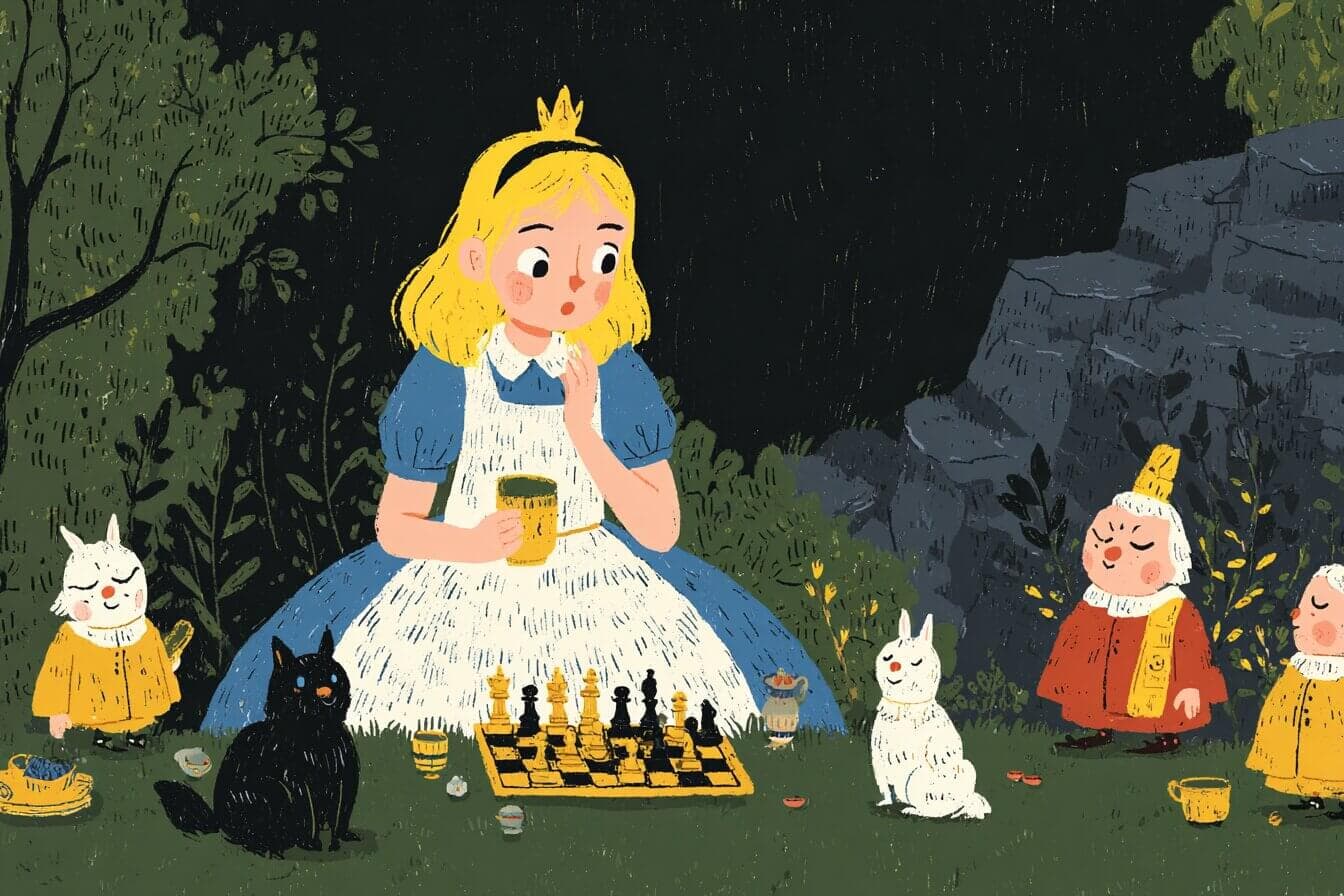
Through The Looking Glass Bedtime Story
Step into a calm, magical short through the looking glass bedtime story and drift toward sleep with gentle wonder. Enjoy a soothing retelling that feels cozy from start to finish.