
Donkey Bedtime Stories
By

Dennis Wang, Bedtime Story Expert
8 min 43 sec
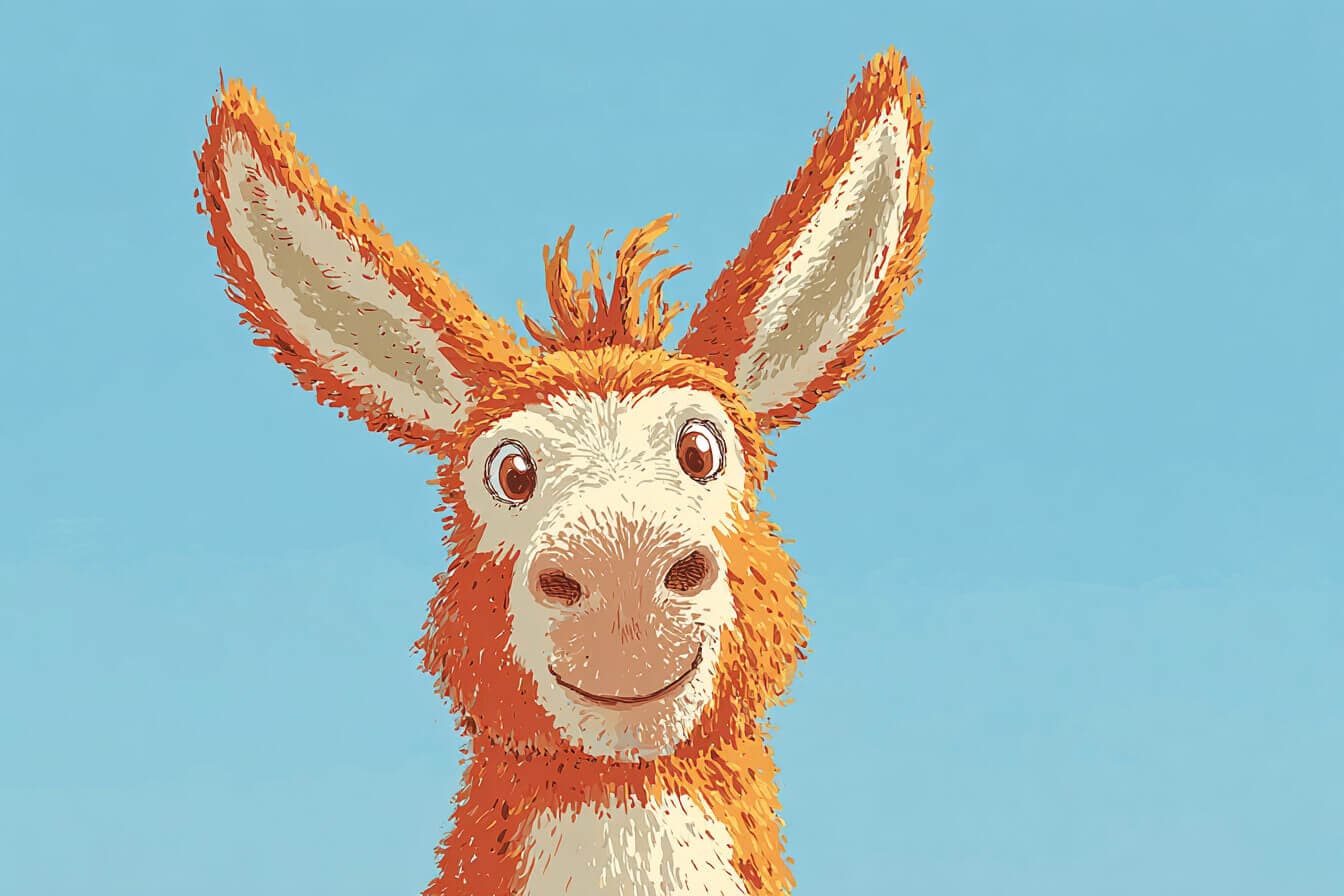
There is something about a donkey's long, soft ears that makes children want to whisper secrets into them. In this story, a young donkey named Doug feels embarrassed by those very ears, until they become the one thing his meadow friends need most. It is exactly the kind of donkey bedtime stories that turn a small worry into a warm feeling right before sleep. If your child would love a version with their own name or favorite animal friend tucked in, you can create one with Sleepytale.
Why Donkey Stories Work So Well at Bedtime
Donkeys are steady, unhurried creatures, and something about their calm presence translates perfectly into nighttime reading. A story about a donkey rarely needs car chases or explosions. Instead, the pace stays gentle, matching the rhythm a child's breathing naturally falls into as they settle under the covers. Kids sense that donkeys are strong but quiet, and that combination feels safe.
There is also something deeply relatable about a donkey who feels a little different. Many children carry a small worry about standing out, whether it is their glasses, their freckles, or just being the new kid. A bedtime story about a donkey who learns to love what makes him unusual gives those worries a soft landing place, right before the lights go out and the world gets still.
Doug's Marvelous Ears 8 min 43 sec
8 min 43 sec
Doug the donkey stood at the edge of the pond, peering down at his own face in the water.
Two enormous ears flopped forward like flags on a windless day, then caught a gust and straightened.
He looked, in his opinion, ridiculous.
A butterfly drifted onto his left ear, sat there for half a second, and left.
Not even butterflies wanted to stay.
He kicked a pebble. It skipped three times and sank with a tiny gulp.
The pond smoothed itself over as if nothing had happened, which was more or less how Doug felt about most things involving his ears.
He walked toward the meadow's edge where clover grew so thick you could smell the sweetness from ten paces. Eating usually helped.
But instead of peace, he got the squirrel twins, chattering high above in the oak about a circus coming to the valley. They needed performers with special tricks.
Doug's stomach flipped. He pictured himself onstage, ears spread wide, the audience pointing.
No. Absolutely not.
He bit off a clover top and chewed hard, as if that settled it.
Then the breeze shifted, and somewhere far past the hill, somebody was crying.
Doug's ears swiveled before he even told them to, cupping the sound the way you might cup water in your hands. Each sob arrived clear and close, though it had to be coming from the grove on the other side of the bramble thicket.
He went, because not going felt worse than going.
Tilly the turtle lay upside down beside a mossy log, all four legs waving slowly in the air. A fat strawberry sat on the ground just out of reach, which was apparently what had started the whole disaster.
Her tears left small wet spots on the dry leaves beneath her.
Doug hesitated. He half expected her to stare at his ears and laugh.
Instead, Tilly sniffed and said, "I've been yelling for hours. You're the first one who heard."
He knelt beside her, pressed his shoulder against the curve of her shell, and rocked. Once, twice, and on the third push she flipped upright with a soft thud.
She shook herself, picked up the strawberry, and broke it in half.
They ate together without saying much. The juice was warm from sitting in the sun, almost too sweet, the kind of sweet that makes your eyes close for a second.
Word got around Sunlit Meadow quickly, the way things do in small places. Animals who used to snicker behind their paws started nodding at Doug instead.
He nodded back, though something in his chest still felt like a question mark rather than an exclamation point.
The next afternoon, clouds stacked themselves into dark towers and thunder cracked across the valley.
The lantern festival was supposed to start at dusk, so everyone scrambled to haul paper lanterns, instruments, and trays of honey cakes into the big red barn before the rain hit.
Lightning. Then rain, hard and sudden, turning the path into a river of mud.
A gust slammed the barn door shut from outside, and the latch clicked into place.
Inside: silence first, then nervous voices piling on top of each other. The only key hung on a nail above the doorframe, out of reach, out on the wrong side of the wall.
Doug pressed one ear flat against the planks. He could hear old Mrs. Badger telling everyone to breathe, and the younger rabbits not listening to her at all.
"Stay calm," he called through the wood. "I'll figure this out."
He looked around the clearing. A willow branch. Too short. A stick. Shorter.
Then he looked up at his own ear, long and bendy and, for once, exactly right.
He asked the barn mice, who had been watching from under a feed bucket, to tie a thin piece of string around his ear tip. He threaded the other end through a gap near the nail.
Deep breath.
He flicked his ear upward in one smooth motion, looping the string over the key ring. A gentle tug, and the key slid down into the waiting paws below.
The door swung open. The cheer that burst out honestly startled the thunder.
That night the festival happened anyway, just indoors. Lanterns hung from every rafter, casting soft circles of gold on the wooden floor.
Rain tapped the roof in a rhythm that the crickets tried to keep up with on their fiddles, while two bears slapped washtubs like they had a personal grudge against silence.
Doug sat near the stage. His ears glowed faintly pink in the warm light. He realized he had been tapping one hoof along with the music without noticing.
When the master of ceremonies asked for a closing act, every hoof, paw, and claw in the barn pointed at Doug.
His knees wobbled. He went up anyway.
What he did was simple. He flapped his ears in time with the melody, and the breeze they made set the lanterns swaying, sending gold light sliding across the walls like something alive. The crowd went quiet first, then clapped so hard the barn mice had to hold onto their bucket.
After the applause, the circus ringmaster appeared in the doorway. He had been sheltering from the rain and had seen the whole thing.
"You'd be a star," he told Doug. "Come travel with us."
Doug looked out at his friends. They were nodding, but their eyes said something else, something like please stay.
He turned back to the ringmaster. "I think Sunlit Meadow still needs these ears nearby. In case someone cries for help again."
The ringmaster tipped his hat, smiled without a trace of disappointment, and promised front-row seats whenever the show returned.
Weeks passed. Doug did not grow into his ears physically; they stayed enormous. But the way he carried them changed. He held his head a little higher, and the ears moved like they knew what they were for.
Baby birds tumbled from nests and Doug heard the frantic flutter before anyone else, arriving in time to break their fall with a soft nudge.
Old Mr. Hedgehog wandered off one Tuesday and got completely turned around near the creek. Doug's ears found the shuffle of those lost footsteps and guided him home before supper got cold.
One morning in early autumn, fog swallowed the meadow whole. You could hold your hoof in front of your face and barely see it.
The Great Meadow Race was set to start at dawn, and the course ran right along the creek bank, which was a disaster waiting to happen.
Doug offered a plan. He would stand at the sharpest bend and listen for hoofbeats. When he heard a runner approaching, he would bray, one loud honest bray, so they knew to slow down before the turn.
It worked. Every single racer rounded that bend safely, guided by a sound that cut through the fog like a lantern cuts through the dark.
Afterward, the mayor pinned a ribbon of braided golden straw to Doug's chest. He blushed underneath his freckles. But he did not look away this time.
The fog lifted. The sky behind it was the color of bluebells, clean and enormous.
Somewhere across the meadow, someone called his name, and his ears found it instantly, the way they always would.
He trotted toward the voice, and the breeze whistled through the soft hair inside those big, unmistakable ears. They felt lighter than they used to. Not smaller. Just lighter.
From that morning on, whenever a young animal pointed at his ears and stared, Doug wiggled them slowly, one at a time, and leaned down close.
"Want to hear a secret?" he would ask.
And they would whisper something small and important, knowing those ears would keep it safe.
The Quiet Lessons in This Donkey Bedtime Story
This story is really about three things: self-acceptance, listening, and choosing where you belong. When Doug kneels beside Tilly and uses the very ears he hates to hear her cries, children absorb the idea that the parts of ourselves we wish away might be the parts someone else desperately needs. His decision to stay in Sunlit Meadow instead of joining the circus shows kids that loyalty to a community is its own kind of bravery, not a consolation prize. These themes land especially well at bedtime because they leave a child feeling that whatever makes them different is not a problem to solve tonight; it is something that might quietly save the day tomorrow.
Tips for Reading This Story
Give Doug a low, slightly uncertain voice at the beginning, the kind that trails off at the end of sentences, and let it grow steadier each time he helps someone. When he flicks his ear to loop the string over the key, pause for a beat and let your child guess whether it will work. During the lantern festival scene, slow your pace way down and soften your volume so the golden, rainy mood of the barn really settles in.
Frequently Asked Questions
What age is this story best for?
It fits children ages 3 to 7 nicely. Younger listeners love the physical comedy of Tilly flipped on her back and Doug's ears flapping lanterns around, while older kids connect with the feeling of being embarrassed about something you cannot change. The plot stays simple enough to follow but carries enough emotional texture for early readers to think about.
Is this story available as audio?
Yes. You can press play at the top of the story to hear it read aloud. The audio version brings out moments that really benefit from voice, like the contrast between the quiet pond scene at the beginning and the loud cheer when Doug opens the barn door. Doug's earnest, hesitant way of talking also comes alive when you hear it rather than just read it.
Why do kids relate to donkeys so much?
Donkeys have expressive faces, big eyes, and a reputation for being stubborn, which children find both funny and familiar. In Doug's case, his oversized ears give kids a visible, easy-to-understand symbol for feeling different. That makes the emotional journey of the story simple to follow, even for very young listeners who might not have words for self-consciousness yet.
Create Your Own Version
Sleepytale lets you build a personalized donkey story that fits your child's world perfectly. Swap Sunlit Meadow for a beach, replace the lantern festival with a birthday party, or give Doug a sidekick who matches your child's favorite stuffed animal. In a few taps you will have a cozy, unhurried tale ready to play whenever bedtime needs a gentle landing.
Looking for more animal bedtime stories?
Polar Bear Bedtime Stories
A shimmering palace appears the sea ice, and a small wish turns into shared laughter. Drift into short polar bear bedtime stories with a bright, gentle twist.
Bear Bedtime Stories
Drift off with short bear bedtime stories that feel warm and soothing, plus a simple way to create your own cozy version in Sleepytale.
Tropical Fish Bedtime Stories
Sunlight paints golden paths across a coral reef as a brave little fish leads a pattern parade. Drift into short tropical fish bedtime stories with gentle pride and calm sea sounds.
Pufferfish Bedtime Stories
Drift under turquoise waves with short pufferfish bedtime stories where a jumpy little fish turns surprise bounces into a brave stage dance. A conch charm makes the twist feel tender.
Piranha Bedtime Stories
Drift into the Amazon with short piranha bedtime stories where a toothy fish hosts a leafy picnic and wins hearts one crunch at a time.
Pigeon Bedtime Stories
Ease into comfort as Pablo delivers tiny folded notes tied with a sky blue ribbon to lift lonely hearts. Settle in with short pigeon bedtime stories that bring warmth, hope, and easy sleep.