
Construction Worker Bedtime Stories
By

Dennis Wang, Bedtime Story Expert
7 min 30 sec
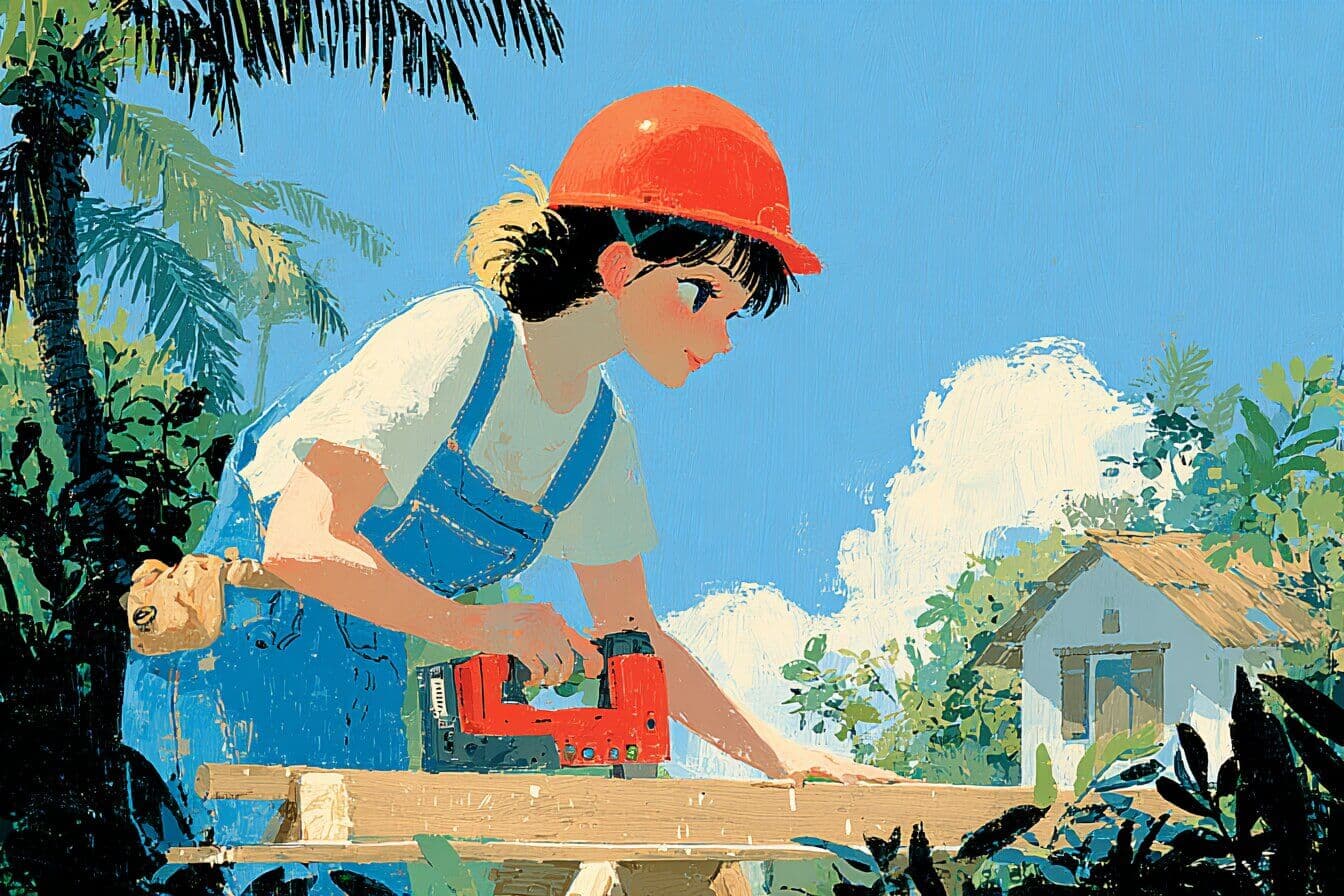
There is something deeply satisfying about the slow, rhythmic sounds of building, the tap of a hammer, the low hum of a saw, the scrape of a trowel smoothing things into place. In this story, a builder named Connie sets out to construct a house on an empty lot, but her real project is filling every beam and shingle with enough care to make a family feel welcomed before they even arrive. It is one of those construction worker bedtime stories that turns hard hats and blueprints into something surprisingly tender and sleepy. If your child would love a version with their own name on the hard hat, Sleepytale lets you build one in minutes.
Why Construction Worker Stories Work So Well at Bedtime
Kids are fascinated by building. They stack blocks, dig in sandboxes, and study every excavator that rumbles past the car window. At bedtime, that fascination becomes a kind of anchor. A story about a construction worker doing patient, step-by-step work mirrors the ritual of winding down: one task, then the next, then rest. The predictable sequence of measuring, hammering, and finishing gives a child's mind something orderly to follow instead of spinning off into restless thoughts.
There is also a quiet reassurance in the idea that someone is out there making safe places for people. A bedtime story about a construction worker who builds with care tells a child, without spelling it out, that the walls around them were put there on purpose, by someone who wanted them to be warm and protected. That feeling settles into the body like a heavy blanket, which is exactly where you want a child to be at the end of the day.
Connie's House of Happy Hearts 7 min 30 sec
7 min 30 sec
Connie tied her yellow safety helmet beneath her chin and looked at the empty lot on Maple Street. Just dirt and dandelions and one lopsided mailbox post left over from whatever stood here before.
Today she would start building a house. Not just any house.
This one would be a home where love could stretch out, put its feet up, and stay awhile.
She unrolled her blueprints across the hood of her truck and weighted the corners with a thermos, a tape measure, a half-eaten granola bar, and her left boot, which she had kicked off because the morning was warm. She pictured the walls going up like arms opening wide.
"All right," she said to nobody. "Let the love begin."
The sun painted gold stripes across the grass as she lifted the first wooden beam. It was heavier than it looked. They always were.
She imagined children tearing down the hallway, bare feet slapping floors she had not even laid yet. She saw parents in the kitchen flipping pancakes, trying to make heart shapes and mostly getting blobs, which the kids would love anyway. She pictured grandparents by a fireplace, telling stories that wandered and circled and never quite ended the same way twice.
Every nail she drove felt like a small promise.
Connie hummed while she worked. The saw buzzed underneath her tune, a duet she did not plan. By lunchtime the frame stood tall, a wooden skeleton waiting for walls and warmth and the smell of someone's cooking.
She sat on an upturned bucket, unwrapped a peanut butter sandwich, and closed her eyes. In her mind she painted the rooms: soft lavender for the dreaming room, sky blue for the giggling room, buttercup yellow for the room where morning light would land first. She saw birthday candles on a chocolate cake, the frosting slightly lopsided. She saw a scraped knee getting a superhero bandage and a kiss that did more healing than the bandage ever could. She saw a rainy afternoon pillow fort with a flashlight and a pile of picture books.
She opened her eyes. Wiped a crumb from her lip. Got back to work.
The afternoon brought helpers.
Mr. Rivera the electrician showed up with coils of wire slung over his shoulder and a pencil behind each ear, though he only ever used one. Mrs. Kim the plumber arrived carrying shiny pipes that would bring cool water for baths and warm water for cocoa. Each of them carried memories of their own homes, and Connie told them the same thing she always told her crew: "Put something of yourself in there."
Mr. Rivera installed a tiny outlet plate shaped like a little house, right at night-light height. Mrs. Kim fitted a bathtub faucet with a spout curved like a heart, so the water poured in a funny swooping arc that would make a kid laugh every single time.
Connie wrote their names on the inside of a wall stud where no one would ever see them. Secret signatures of care, sealed behind drywall forever.
As the sun dropped low, Connie walked through the half-finished rooms. She ran her fingers along the studs the way you might run your hand along a fence as you walk past it, just to feel it there. The house had a heartbeat now. Faint, but real.
She imagined a girl taping her first crayon drawing to a wall, purple lines forming a house that looked a lot like this one. She imagined a boy pulling himself up on a doorframe, standing on his own for the very first time. She imagined two parents in the dark hallway whispering, "I love you," in voices too quiet for anyone else to hear.
Those pictures floated in her chest like bright balloons. She let them lift her all the way home.
Next morning she arrived early with a box of donuts, the good kind with the crackly glaze. She wore her lucky purple work boots because today the roof was going on, and a house without a roof is just a suggestion.
Shingles moved hand to hand down a friendly line. Each one settled into place like a page in a book someone would read years from now. Connie imagined the family pointing at the ceiling during a storm. "Listen," they would say. "Hear the rain drumming? That means the roof is doing its job."
She imagined snowflakes melting into tiny rivers that slid safely into gutters.
When the last shingle was down, Connie climbed the ladder and sat on the ridge. The wind pulled at her ponytail. She could see other houses from up here, each one with its own set of memories stacked inside like boxes in a closet. She thought about every builder who had ever raised walls for people they would never meet.
She sat there longer than she needed to. Sometimes you just want to look.
Weeks passed. Connie came back every day.
She installed windows she secretly thought of as the house's eyes, wide and kind. She hung a front door painted cherry red because red says "come in" without making a sound. She planted a sapling in the yard, a tiny maple that would need years before it could hold a swing but would get there eventually. She pressed a copper penny beneath its roots, dated the year the house was born.
Inside, she sanded the floors until they glowed like honey. Perfect for sock-sliding contests, she thought, and grinned.
She painted the walls: lavender, sky blue, buttercup yellow, just the way she had pictured them on that first lunch break. One wall in the living room she covered with chalkboard paint so the family could leave each other notes, draw terrible portraits, keep score in games that only they understood. At the bottom corner of that wall she signed her name in small letters. A quiet hello from a builder who would not be there to say it in person.
On the final day Connie arrived with a tiny golden key on a ribbon.
She walked through every room, flipping light switches, opening closets, listening to the echo of spaces that were finished but still waiting. In the big bedroom she knelt and pressed her palm flat against the floor. She pictured parents dancing here after the kids were asleep, swaying to something slow with the volume turned way down.
In the kitchen she opened the oven door and peeked inside, imagining cookies, chocolate chips going soft and gooey, the smell reaching every room.
In the small bedroom she crouched low and looked out the window. From down here the maple sapling looked enormous. Good. That was the right view.
She left a note on the counter, written in crayon because she wanted it to feel like it belonged.
"Dear Family, this house has been waiting for you. Fill it with laughter, fill it with hugs, fill it with memories as bright as the sun. Love, Connie the Builder."
She tucked the golden key beneath the note, stepped outside, and pulled the door shut. The lock clicked, small and definite.
She turned for one last look.
The house stood there, patient and proud, its windows catching the last of the sunset so they glowed orange and pink. Connie pressed her hand over her heart. It was full of love for people she had never met, and that was a strange feeling, but a good one.
Someday she would drive past and see bikes tipped over on the lawn, balloons tied to the porch rail, little footprints in fresh snow. Someday she would hear birthday singing through an open window and slow down just long enough to smile.
She adjusted her yellow helmet and climbed into her truck.
Tomorrow there would be another house, another empty lot, another set of blueprints. Each one a promise that love always has a place to live. But tonight she would go home, make cocoa, and sit at her own kitchen table writing in her journal about the strange magic of building rooms for hearts she had never met.
She closed her eyes and pictured every family in every house she had ever built, all of them safe, all of them warm, tucked inside the invisible work of a builder who knew that the best homes are made not just of wood and nails, but of hope, small hidden pennies, and the kind of love that outlasts the lumber.
The Quiet Lessons in This Construction Worker Bedtime Story
Connie's story is woven through with generosity, patience, and the particular kind of love that asks for nothing in return. When she writes the crew's names inside the walls where no one will see them, children absorb the idea that meaningful work does not need an audience. When she crouches to see the yard from a child's height, she models the empathy of imagining life through someone else's eyes. And the penny buried beneath the maple roots, a small, hidden act of hope, shows kids that caring about the future is something you do quietly, one gesture at a time. These are lessons that settle well at bedtime, when a child is already wrapped in the safety of their own walls and ready to believe that the world holds more kindness than they can see.
Tips for Reading This Story
Give Mr. Rivera a gruff, cheerful voice and Mrs. Kim a brisk, no-nonsense tone, then let Connie sound warm and a little tired by the end of a long workday. When Connie sits on the roof ridge and looks out over the neighborhood, slow down and drop your volume so the quiet of that moment lands. At the part where she crouches in the small bedroom and sees the maple sapling looking enormous, pause and ask your child what they can see from their own bedroom window.
Frequently Asked Questions
What age is this story best for?
It works well for children ages 3 to 7. Younger listeners enjoy the sensory details like the sock-sliding floors and the heart-shaped faucet, while older kids can appreciate Connie's note in crayon and the hidden penny beneath the tree. The language is simple enough for a three-year-old but layered enough to hold a first grader's attention.
Is this story available as audio?
Yes. Press play at the top of the story to hear it read aloud. The audio version is especially nice for this one because the rhythm of Connie's workday, the humming, the sawing, the quiet walk through empty rooms at sunset, has a natural cadence that carries beautifully in narration. The scene where the lock clicks shut at the end lands with just the right weight when you hear it spoken.
Why do kids find construction stories so calming?
Building follows a visible, logical order: foundation, frame, roof, walls, paint, done. That progression mirrors the bedtime routine itself, one clear step after another leading toward rest. In Connie's story, each phase of the house comes with its own cozy image, pancakes in the kitchen, pillow forts on rainy days, so the forward motion always points toward comfort rather than excitement.
Create Your Own Version
Sleepytale lets you reshape this story into something that fits your child perfectly. Swap the house for a treehouse, a library, or a cozy cabin in the mountains. Change the cherry-red door to your child's favorite color, add a pet cat who supervises from the lumber pile, or put your child's name on the crayon note at the end. In a few minutes you will have a gentle builder story ready for tonight.
Looking for more job bedtime stories?

Spy Bedtime Stories
Quiet halls glow before sunrise as a student agent follows kind clues in short spy bedtime stories. A gentle mystery ends with secret teamwork and warm notes.

Detective Bedtime Stories
Detective Daisy follows crumbs and a chocolatey scent in short detective bedtime stories, then finds the missing cookies in a surprising place. A cozy case for winding down.

Astronaut Bedtime Stories
Looking for short astronaut bedtime stories that feel calm and wondrous at lights out? Read Astrid's gentle starlight parade and learn how to make your own version.

Vet Bedtime Stories
A tender clinic visit turns into a thank you lick and a tiny keepsake in short vet bedtime stories. A small thorn becomes a big lesson in trust and calm care.

Teacher Bedtime Stories
Want short teacher bedtime stories that feel cozy and kind for winding down after school? Discover a gentle classroom adventure you can read aloud tonight.

Scientist Bedtime Stories
Preston turns a quiet flight into a gentle lesson for curious kids in short scientist bedtime stories. Clouds, wind, and light become soothing wonders as everyone settles down.