
Artist Bedtime Stories
By

Dennis Wang, Bedtime Story Expert
8 min 54 sec
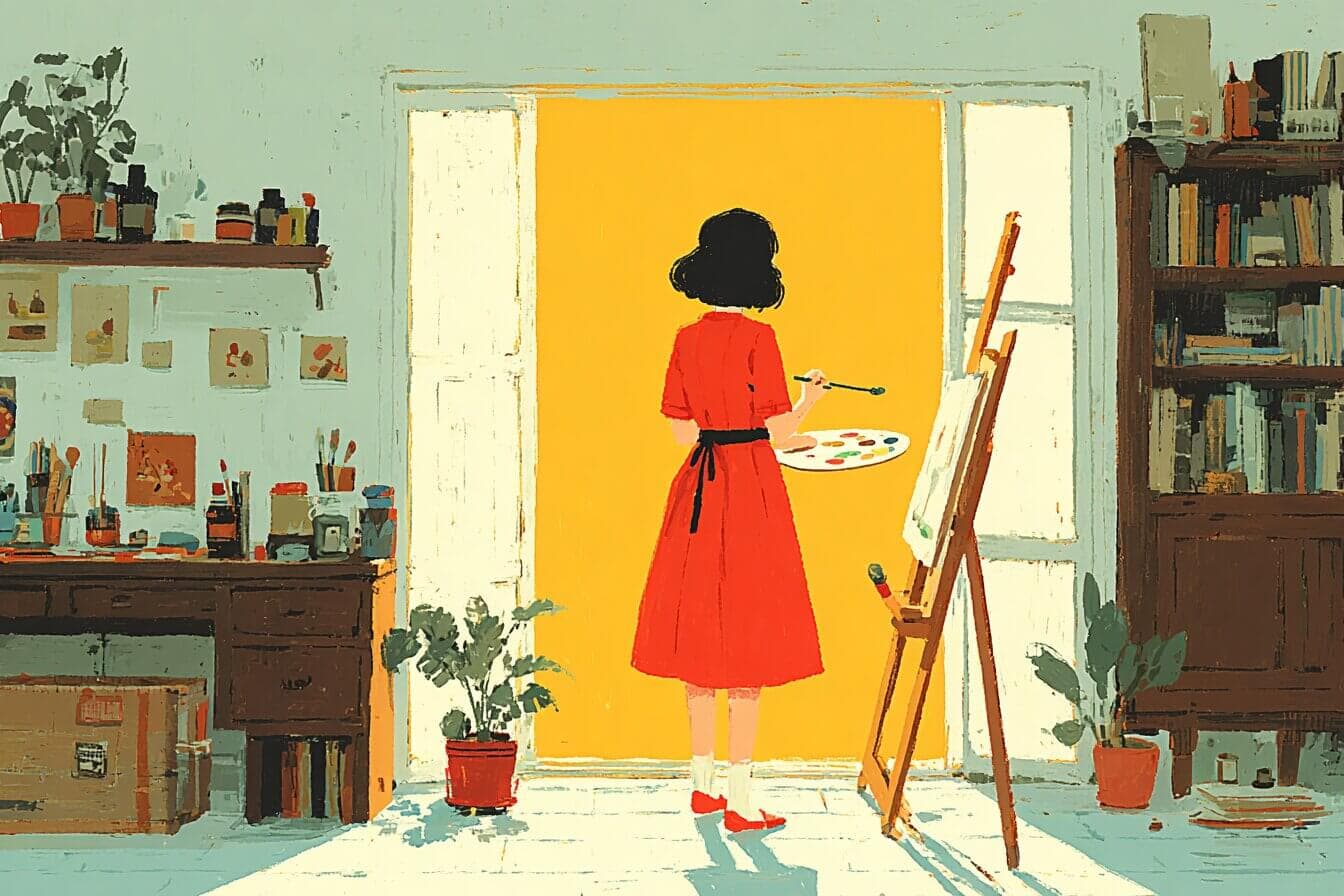
There is something about the smell of paint and the hush of a brush on canvas that slows the world down, which is exactly what bedtime needs. In this gentle tale, a young painter named Annie discovers that her pictures can step off the canvas and into the real world, and she has to figure out what to do with that quiet, enormous gift. It is one of our favorite artist bedtime stories because the magic unfolds slowly, like color soaking into wet paper, and nothing ever gets too loud or too fast. If you would like a version shaped around your own child's name and favorite details, you can create one with Sleepytale.
Why Artist Stories Work So Well at Bedtime
Art is one of the few activities where kids are encouraged to go slow, pay attention, and stay quiet with their own thoughts. That makes painting and drawing a natural bridge into sleep. A bedtime story about a young artist gives children permission to let their mind wander into color and shape instead of noise and speed, which is exactly the kind of thinking that helps a busy brain wind down.
There is also something reassuring about watching a character create things with care. It tells kids that the world rewards patience, that small careful steps lead to something beautiful. When the story wraps around brushstrokes and soft light rather than chase scenes and countdowns, the whole room seems to settle a little. Even restless listeners tend to lean in when someone is making something.
Annie and the Living Paintings 8 min 54 sec
8 min 54 sec
Annie loved to paint more than anything else in the whole wide world.
Every Saturday morning she hauled her wooden easel, a dented tin of paints, and a jar of water up the little hill behind her house. The jar always sloshed on the way, and by the time she reached the top her left shoe was damp. She did not mind.
Under the old apple tree she propped the canvas, squeezed out her colors, and let whatever was in her head pour down through the brush. Golden suns with grinning faces. Purple cows in polka dot bow ties. Emerald dragons breathing out gentle clouds of rainbow bubbles.
Her parents called them lovely. They never guessed how extraordinary Annie's art truly was.
One crisp spring morning she loaded her brush with cobalt blue and painted a tiny bird perched on a branch. She gave it a ruby chest, two small onyx eyes, and feathers so carefully layered you could almost count them. When the last stroke dried she clapped her hands, the way she always did when she finished something she liked, and the bird blinked.
It chirped once, tilted its head as if deciding whether Annie was trustworthy, and then fluttered straight off the canvas.
It looped around her head singing a melody she had never heard before, then climbed into the sky until it was only a speck against the clouds.
Annie stared at the empty painted branch. Her fingers were still wet with blue.
She tested the magic again. An orange fish in a painted pond. She barely finished the last fin before it wagged its tail, leaped off the canvas, and splashed into the real pond at the bottom of the hill. The water rings caught the sunlight and held it there, wobbling.
Annie laughed so hard she fell backwards onto the grass and lay looking straight up through the apple branches. She had a secret gift hidden inside her paints, and it felt like carrying shooting stars in her pockets.
All afternoon she kept going. A fluffy bunny that bounded into the bushes. A butterfly that rose above the daisies without looking back. A kitten that curled in her lap for three warm minutes, then stretched, yawned, and trotted off to see the world. Each time the canvas shimmered and then went still, like a pond after a stone sinks.
By sunset she was dizzy. She tucked her canvases under one arm and skipped home.
Her mother was making spaghetti, stirring the pot with one hand and holding a paperback open with the other. Annie told her everything, about the bird and the fish and the kitten, talking so fast she forgot to breathe between sentences. Her mother smiled, kissed the top of her head, and said she had a wonderful imagination.
Nobody believed her paintings actually stepped into life. Annie lay in bed that night watching moonbeams slide across the ceiling. The house creaked the way it always did after nine o'clock. She wondered what would happen if she painted something bigger.
The next day she carried a larger canvas to the hill and leaned it against the apple tree.
She sketched a puppy with floppy ears and spots the color of caramel. She worked slowly, layering browns and whites, paying extra attention to the soft wrinkle above the nose. As soon as she signed her name in the corner the painted tail wagged, the canvas rippled like a curtain in a breeze, and out jumped a real puppy.
It yipped, licked her cheek before she could dodge, and bounded in circles around the easel, knocking over her water jar.
She named the pup Splash because he splashed joy wherever he went. Also because of the water jar.
They played fetch with sticks, chased butterflies that were still just regular butterflies, and practiced sitting, which Splash was terrible at. When the sun slipped low, Splash followed Annie home, trotting beside her like a small loyal knight who happened to smell like wet paint.
Her father opened the door, looked at the puppy, looked at Annie, and raised one eyebrow.
"He came from my painting," Annie said.
Her father chuckled. "Well, he's going to need a bowl for kibble."
Annie did not mind the disbelief. Splash's warm wagging tail beside her felt like proof enough.
Monday brought rain so heavy the gutters roared. Annie set her easel by the living room window and watched gray clouds roll across the sky.
She decided to paint something useful.
With sunny yellow she created a tiny sun no larger than a coin. When it dried the sun lifted off the canvas, floated to the ceiling, and began to beam gentle heat through the room. The rain kept falling outside, but inside, everything shifted. Her little brother stopped shivering. The cat unfolded from its blanket. Even the flowers on the windowsill straightened up as if remembering something important.
Annie painted a second tiny sun. Then a third. Then four more, until seven golden suns hovered near the ceiling like balloons nobody could reach, filling every corner with warmth.
Her mother made hot cocoa and hummed a tune without knowing why she felt so cheerful. The mug had a chip on the rim and Annie drank from that side anyway because she always did.
She realized her power could bring comfort as well as delight. That knowledge settled inside her chest, warm and steady.
The following weekend she returned to the hill with a plan: she would help others with her gift.
First she painted a pair of ladybugs with shiny scarlet shells and watched them crawl onto the rosebushes where aphids had been chewing leaves all month. They got to work immediately, better than any gardener.
Next she painted a wise owl and set it free in the woods near Mrs. Patel's vegetable patch, where mice had been stealing seeds. The owl swooped along the moonlit rows, silent and sure. The next morning Mrs. Patel found her lettuce untouched and stood in her garden with both hands on her hips, smiling at nothing in particular.
Word spread through the neighborhood that garden pests had vanished. Nobody suspected Annie. She felt like a secret superhero whose cape was made of paint and possibility, which is a cape that folds up very small.
Each Saturday she painted something new: a hummingbird for wilting flowers, a hedgehog for slugs, a gentle little dragon whose warm breath protected early strawberries from frost. She noticed that when she painted with kindness in her heart the creatures seemed brighter somehow, more sure of themselves.
She kept her secret. But she always smiled when neighbors chatted about their sudden good luck.
One bright afternoon she decided to paint something just for fun.
She stretched the biggest canvas she owned and imagined a treehouse perched in the clouds. Turquoise sky. Pearly white platforms. Candy colored rooms. Slides that spiraled down like licorice. Swings that soared between stars. Hammocks woven from what she could only describe as moonlight, which on the palette looked like silver mixed with the tiniest drop of lavender.
When she finished the last detail, the entire painting shimmered.
The treehouse peeled away from the canvas and rose into the air like a floating castle. A rope ladder unrolled itself and tapped against the apple tree trunk, swaying.
Annie held her breath and climbed, rung by rung. Splash barked encouragement from below, running back and forth so fast he wore a little path in the grass.
At the top she stepped onto a cloud that felt exactly like whipped cream looks. She explored the rooms. She bounced on cotton candy beds that made no sound at all. She slid down a slide that ended not in a thud but in a rush of something that could only be described as giggles made solid. She swung so high she could wave to a passing finch, which looked startled but waved back with one wing.
Hours passed like minutes.
The sun began to set, and the sky turned rose and lavender, almost the same shades she had mixed for the hammocks. Annie knew she could not live up here forever. She climbed carefully down, patted the last rung of the ladder, and promised the treehouse she would come back.
On the grass she knelt and hugged Splash, who smelled like evening and damp fur. She felt grateful, not in a big dramatic way, but in the quiet way you feel grateful for a blanket on a cold night.
She understood that art could build bridges between what is and what could be. And she did not need to say it out loud, because she was already thinking about what she might paint tomorrow.
The Quiet Lessons in This Artist Bedtime Story
This story carries a few ideas that settle well into a child's mind right before sleep. When Annie's family does not believe her paintings are alive and she simply keeps creating, kids absorb the idea that you do not always need applause to keep doing what matters. Her choice to paint ladybugs and owls for the neighbors shows generosity without expecting thanks, a kind of kindness children can picture themselves trying. And when Annie climbs down from her cloud treehouse and hugs Splash on the grass, there is a gentle message about returning to the real world after a big dream and finding that it is still good. These themes, quiet confidence, secret generosity, and gratitude for ordinary moments, are exactly the kind of ideas that help a child feel safe and settled as they close their eyes.
Tips for Reading This Story
Give Splash a quick, breathy little "yip" each time he appears, and let Annie speak slightly faster when she is describing her paintings to her mother, the way kids actually talk when they are excited and forget to breathe. When the seven tiny suns float up to the ceiling, slow your voice down and almost whisper, so the warmth of the scene feels real in the room. At the moment Annie steps onto the cloud at the top of the rope ladder, pause for a beat and ask your child what they think a cloud would feel like under their feet.
Frequently Asked Questions
What age is this story best for?
It works well for children ages 3 to 8. Younger listeners love the simple magic of a painted bird flying off the canvas and a puppy jumping out of a picture, while older kids appreciate Annie's decision to help her neighbors in secret and the way she handles not being believed. The language is gentle enough for a three year old but the plot has enough layers to hold a seven or eight year old's attention.
Is this story available as audio?
Yes. You can press play at the top of the story to hear it read aloud. The audio version is especially nice for this one because the rhythm of Annie painting, the chirp of the bird, and the quiet hum of the tiny suns lend themselves to a listening experience that feels almost musical. It is a good choice for nights when you want to lie beside your child and let someone else do the reading.
Why does Annie keep her gift a secret instead of telling people?
Annie tries once to tell her mother, and her mother simply smiles and calls it imagination. After that, Annie does not push the point. She lets her creations speak for themselves by helping the neighborhood gardens and warming the house on a rainy day. It is a gentle way for children to see that sometimes actions carry more weight than explanations, and that quiet helpfulness can be its own reward.
Create Your Own Version
Sleepytale lets you reshape this story around your own child's world in just a few taps. Swap the apple tree hill for a rooftop terrace, trade Annie's paints for chalk or crayons, or change Splash into a painted cat, parrot, or turtle. You can even add your child's name so the painter in the story is them, which tends to make the whole bedtime routine a little more magical.
Looking for more job bedtime stories?

Spy Bedtime Stories
Quiet halls glow before sunrise as a student agent follows kind clues in short spy bedtime stories. A gentle mystery ends with secret teamwork and warm notes.
Detective Bedtime Stories
Detective Daisy follows crumbs and a chocolatey scent in short detective bedtime stories, then finds the missing cookies in a surprising place. A cozy case for winding down.

Astronaut Bedtime Stories
Looking for short astronaut bedtime stories that feel calm and wondrous at lights out? Read Astrid's gentle starlight parade and learn how to make your own version.

Vet Bedtime Stories
A tender clinic visit turns into a thank you lick and a tiny keepsake in short vet bedtime stories. A small thorn becomes a big lesson in trust and calm care.
Teacher Bedtime Stories
Want short teacher bedtime stories that feel cozy and kind for winding down after school? Discover a gentle classroom adventure you can read aloud tonight.

Scientist Bedtime Stories
Preston turns a quiet flight into a gentle lesson for curious kids in short scientist bedtime stories. Clouds, wind, and light become soothing wonders as everyone settles down.